
Infinix Zero Ultra vs OnePlus 11R: A Deep Dive into Speed, Power, and Value
| Phones Images | |||||
|---|---|---|---|---|---|
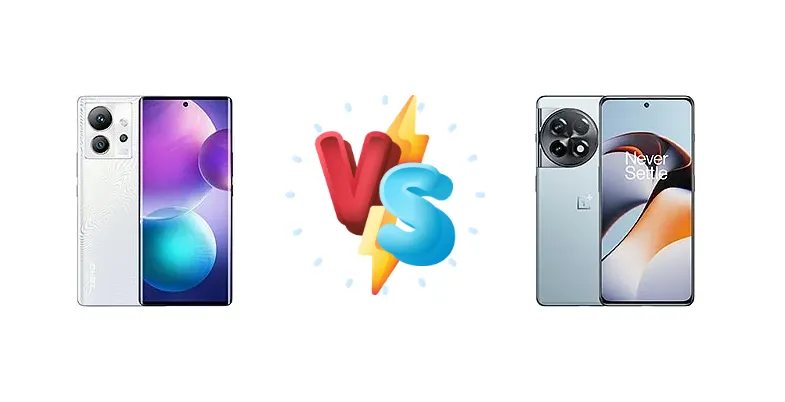
|
🏆 Quick Verdict
For the average user prioritizing sustained performance and a more refined software experience, the OnePlus 11R emerges as the stronger choice. While the Infinix Zero Ultra’s 180W charging is undeniably impressive, the Snapdragon 8+ Gen 1’s superior processing power and thermal management provide a smoother, more consistent experience, especially during demanding tasks.
| PHONES | ||
|---|---|---|
| Phone Names | Infinix Zero Ultra | OnePlus 11R |
| Network | ||
|---|---|---|
| 2G bands | GSM 850 / 900 / 1800 / 1900 | GSM 850 / 900 / 1800 / 1900 |
| 3G bands | HSDPA 850 / 900 / 1700(AWS) / 1900 / 2100 | HSDPA 850 / 900 / 1700(AWS) / 2100 |
| 4G bands | 1, 2, 3, 4, 5, 7, 8, 20, 28, 38, 40, 41, 66 | 1, 3, 4, 5, 8, 28, 34, 38, 39, 40, 41 |
| 5G bands | 1, 2, 3, 5, 20, 28, 38, 40, 41, 71, 77, 78, 79 SA/NSA/Sub6 | 1, 3, 5, 8, 28, 40, 41, 77, 78 SA/NSA |
| Speed | HSPA 42.2/11.5 Mbps, LTE Cat7 300/75 Mbps, 5G | HSPA, LTE (3CA), 5G |
| Technology | GSM / HSPA / LTE / 5G | GSM / CDMA / HSPA / LTE / 5G |
| 1, 3, 5, 7, 8, 20, 28, 38, 40, 41, 77, 78 SA/NSA/Sub6 | CDMA 800 | |
| Launch | ||
|---|---|---|
| Announced | 2022, October 05 | 2023, February 07 |
| Status | Available. Released 2022, October 25 | Available. Released 2023, February 21 |
| Body | ||
|---|---|---|
| Build | - | Glass front, glass back (Gorilla Glass 5), plastic frame |
| Dimensions | 165.5 x 74.5 x 8.8 mm - Coslight Silver165.5 x 75.1 x 9.2 mm - Genesis Noir | 163.4 x 74.3 x 8.7 mm (6.43 x 2.93 x 0.34 in) |
| SIM | Nano-SIM + Nano-SIM | Nano-SIM + Nano-SIM |
| Weight | 213 g (7.51 oz) | 204 g (7.20 oz) |
| Display | ||
|---|---|---|
| Protection | Corning Gorilla Glass 3 | - |
| Resolution | 1080 x 2400 pixels, 20:9 ratio (~387 ppi density) | 1240 x 2772 pixels, 20:9 ratio (~451 ppi density) |
| Size | 6.8 inches, 111.6 cm2 (~90.5% screen-to-body ratio) | 6.74 inches, 109.2 cm2 (~90.0% screen-to-body ratio) |
| Type | AMOLED, 120Hz, 900 nits (HBM) | Fluid AMOLED, 1B colors, 120Hz, HDR10+, 1450 nits (peak) |
| Platform | ||
|---|---|---|
| CPU | Octa-core (2x2.5 GHz Cortex-A78 & 6x2.0 GHz Cortex-A55) | Octa-core (1x3.0 GHz Cortex-X2 & 3x2.5 GHz Cortex-A710 & 4x1.80 GHz Cortex-A510) |
| Chipset | Mediatek Dimensity 920 (6 nm) | Qualcomm SM8475 Snapdragon 8+ Gen 1 (4 nm) |
| GPU | Mali-G68 MC4 | Adreno 730 |
| OS | Android 12, XOS 12 | Android 13, upgradable to Android 15, OxygenOS 15 |
| Memory | ||
|---|---|---|
| Card slot | No | No |
| Internal | 256GB 8GB RAM | 128GB 8GB RAM, 256GB 16GB RAM, 512GB 18GB RAM |
| - | UFS 3.1 | |
| Main Camera | ||
|---|---|---|
| Features | Dual-LED flash, HDR, panorama | Color spectrum sensor, LED flash, HDR, panorama |
| Single | 32 MP, f/2.0, (wide) | 16 MP, f/2.4, 24mm (wide), 1/3.09", 1.0µm |
| Triple | 200 MP, f/2.0, (wide), 1/1.22", 0.64µm, dual pixel PDAF, OIS 13 MP, f/2.4, (ultrawide), AF 2 MP | 50 MP, f/1.8, 24mm (wide), 1/1.56", 1.0µm, multi-directional PDAF, OIS 8 MP, f/2.2, 120˚ (ultrawide), 1/4.0", 1.12µm 2 MP (macro) |
| Video | 4K@30fps, 1080p@30/60fps | 4K@30/60fps, 1080p@30/60/240fps, gyro-EIS |
| Selfie camera | ||
|---|---|---|
| Features | Dual-LED flash | HDR |
| Single | 32 MP, f/2.0, (wide) | 16 MP, f/2.4, 24mm (wide), 1/3.09", 1.0µm |
| Video | 1080p@30fps | 1080p@30fps |
| Sound | ||
|---|---|---|
| 3.5mm jack | No | No |
| 35mm jack | No | No |
| Loudspeaker | Yes, with dual speakers | Yes, with stereo speakers |
| - | 24-bit/192kHz audio | |
| Comms | ||
|---|---|---|
| Bluetooth | Yes | 5.3, A2DP, LE, aptX HD |
| Infrared port | - | Yes |
| NFC | Yes (market/region dependent) | Yes |
| Positioning | GPS | GPS (L1+L5), GLONASS (G1), BDS (B1I+B1c+B2a), GALILEO (E1+E5a), QZSS (L1+L5) |
| Radio | FM radio | No |
| USB | USB Type-C 2.0, OTG | USB Type-C 2.0 |
| WLAN | Wi-Fi 802.11 a/b/g/n/ac/6, dual-band | Wi-Fi 802.11 a/b/g/n/ac/6, dual-band |
| Features | ||
|---|---|---|
| Sensors | Fingerprint (under display, optical), accelerometer, gyro, proximity, compass | Fingerprint (under display, optical), accelerometer, gyro, proximity, compass |
| Battery | ||
|---|---|---|
| Charging | 180W wired, 100% in 12 min | 100W wired |
| Type | 4500 mAh | Li-Po 5000 mAh |
| Misc | ||
|---|---|---|
| Colors | Coslight Silver, Genesis Noir | Galactic Silver, Sonic Black, Solar Red |
| Models | X6820 | CPH2487 |
| Price | About 500 EUR | About 600 EUR |
| SAR | - | 1.16 W/kg (head) 0.61 W/kg (body) |
Infinix Zero Ultra
- Blazing-fast 180W charging
- Potentially lower price point
- Aggressive design aesthetic
- Dimensity 920 chipset may throttle under heavy load
- Software experience likely less refined than OnePlus
- Potential long-term battery health concerns with extreme charging
OnePlus 11R
- Powerful Snapdragon 8+ Gen 1 processor
- Efficient thermal management
- More polished software experience (OxygenOS)
- Charging speed is slower than the Infinix Zero Ultra
- May be slightly more expensive
- Design is more conservative
Display Comparison
Neither device boasts a standout display, but subtle differences exist. While both likely feature AMOLED panels (based on brand trends), the specifics are missing. The OnePlus 11R, given its positioning, likely benefits from a higher peak brightness and potentially a more accurate color calibration. The absence of LTPO technology on either device suggests standard 120Hz refresh rates, meaning less dynamic power saving compared to flagship models. Bezels are expected to be similar, with both aiming for a modern, immersive viewing experience.
Camera Comparison
Without detailed camera specs, analysis relies on brand tendencies. OnePlus typically focuses on balanced image processing, aiming for natural-looking photos. The Zero Ultra, given Infinix’s marketing, may prioritize vibrant, saturated images. The Snapdragon 8+ Gen 1’s ISP (Image Signal Processor) in the OnePlus 11R is likely more advanced, offering better noise reduction and dynamic range. Sensor size is critical, and without that data, it’s difficult to definitively declare a winner. However, the OnePlus 11R’s overall processing power gives it an edge in computational photography. We can safely assume both phones will include standard wide, ultrawide, and potentially macro lenses, but the quality will vary significantly based on sensor and lens choices.
Performance
The core difference lies in the chipset. The OnePlus 11R’s Snapdragon 8+ Gen 1 (4nm) is a significant step up from the Infinix Zero Ultra’s MediaTek Dimensity 920 (6nm). The Snapdragon 8+ Gen 1’s Cortex-X2 prime core, clocked at 3.0 GHz, provides a substantial performance advantage in single-core tasks, while its Adreno 730 GPU offers superior graphics processing. The 4nm process node also translates to better thermal efficiency, mitigating throttling during extended gaming sessions. The Dimensity 920, while capable, is geared towards efficiency rather than raw power, and its Cortex-A78 cores will likely exhibit more thermal throttling under sustained load. The OnePlus 11R’s LPDDR5x RAM further enhances performance compared to the likely LPDDR4x found in the Zero Ultra.
Battery Life
The Infinix Zero Ultra’s 180W charging is its headline feature, promising a full charge in just 12 minutes. This is a game-changer for users who prioritize speed. However, faster charging often comes at the cost of battery health over the long term. The OnePlus 11R’s 100W charging is still very fast, but less extreme. While battery capacity is unknown for both, the Snapdragon 8+ Gen 1’s superior efficiency means the OnePlus 11R will likely deliver longer real-world battery life despite potentially having a similar or even slightly smaller battery capacity. The Zero Ultra’s focus on charging speed suggests a smaller battery to facilitate faster fill times.
Buying Guide
Buy the Infinix Zero Ultra if you absolutely prioritize the fastest possible charging speeds and are willing to potentially compromise on sustained performance and software polish. This phone is ideal for users who frequently find themselves needing a quick power boost. Buy the OnePlus 11R if you value consistent performance, a more mature software experience, and efficient thermal management, making it the better choice for gamers and power users who demand reliability.