
Infinix Zero Ultra vs Google Pixel 7a: A Deep Dive into Speed, Snaps, and Smarts
| Phones Images | |||||
|---|---|---|---|---|---|
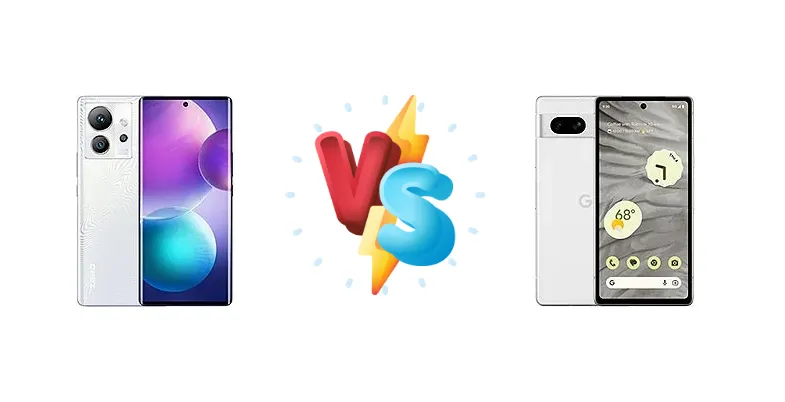
|
🏆 Quick Verdict
For the average user prioritizing camera quality and a polished software experience, the Google Pixel 7a is the clear winner. However, the Infinix Zero Ultra’s 180W charging is a game-changer for those who value minimizing downtime and don't mind a less refined software experience.
| PHONES | ||
|---|---|---|
| Phone Names | Infinix Zero Ultra | Google Pixel 7a |
| Network | ||
|---|---|---|
| 2G bands | GSM 850 / 900 / 1800 / 1900 | GSM 850 / 900 / 1800 / 1900 |
| 3G bands | HSDPA 850 / 900 / 1700(AWS) / 1900 / 2100 | HSDPA 800 / 850 / 900 / 1700(AWS) / 1900 / 2100 |
| 4G bands | 1, 2, 3, 4, 5, 7, 8, 20, 28, 38, 40, 41, 66 | 1, 2, 3, 4, 5, 7, 8, 12, 13, 14, 17, 20, 25, 26, 28, 29, 30, 38, 40, 41, 48, 66, 71 - GWKK3, G0DZQ |
| 5G bands | 1, 2, 3, 5, 20, 28, 38, 40, 41, 71, 77, 78, 79 SA/NSA/Sub6 | 1, 2, 3, 5, 7, 8, 12, 14, 20, 25, 28, 30, 38, 41, 48, 66, 71, 77, 78 SA/NSA/Sub6 - GWKK3 |
| Speed | HSPA 42.2/11.5 Mbps, LTE Cat7 300/75 Mbps, 5G | HSPA, LTE, 5G |
| Technology | GSM / HSPA / LTE / 5G | GSM / HSPA / LTE / 5G |
| 1, 3, 5, 7, 8, 20, 28, 38, 40, 41, 77, 78 SA/NSA/Sub6 | 1, 2, 3, 5, 7, 8, 12, 20, 25, 28, 38, 40, 41, 66, 75, 76, 77, 78, 79 SA/NSA/Sub6 - GHL1X, G82U8 | |
| Launch | ||
|---|---|---|
| Announced | 2022, October 05 | 2023, May 10 |
| Status | Available. Released 2022, October 25 | Available. Released 2023, May 10 |
| Body | ||
|---|---|---|
| Build | - | Glass front (Gorilla Glass 3), aluminum frame, plastic back |
| Dimensions | 165.5 x 74.5 x 8.8 mm - Coslight Silver165.5 x 75.1 x 9.2 mm - Genesis Noir | 152 x 72.9 x 9 mm (5.98 x 2.87 x 0.35 in) |
| SIM | Nano-SIM + Nano-SIM | Nano-SIM + eSIM |
| Weight | 213 g (7.51 oz) | 193.5 g (6.84 oz) |
| - | IP67 dust/water resistant (up to 1m for 30 min) | |
| Display | ||
|---|---|---|
| Protection | Corning Gorilla Glass 3 | Corning Gorilla Glass 3 |
| Resolution | 1080 x 2400 pixels, 20:9 ratio (~387 ppi density) | 1080 x 2400 pixels, 20:9 ratio (~429 ppi density) |
| Size | 6.8 inches, 111.6 cm2 (~90.5% screen-to-body ratio) | 6.1 inches, 90.7 cm2 (~81.8% screen-to-body ratio) |
| Type | AMOLED, 120Hz, 900 nits (HBM) | OLED, HDR, 90Hz |
| - | Always-on display | |
| Platform | ||
|---|---|---|
| CPU | Octa-core (2x2.5 GHz Cortex-A78 & 6x2.0 GHz Cortex-A55) | Octa-core (2x2.85 GHz Cortex-X1 & 2x2.35 GHz Cortex-A78 & 4x1.80 GHz Cortex-A55) |
| Chipset | Mediatek Dimensity 920 (6 nm) | Google Tensor G2 (5 nm) |
| GPU | Mali-G68 MC4 | Mali-G710 MP7 |
| OS | Android 12, XOS 12 | Android 13, upgradable to Android 15, up to 5 major Android upgrades |
| Memory | ||
|---|---|---|
| Card slot | No | No |
| Internal | 256GB 8GB RAM | 128GB 8GB RAM |
| - | UFS 3.1 | |
| Main Camera | ||
|---|---|---|
| Dual | - | 64 MP, f/1.9, 26mm (wide), 1/1.73", 0.8µm, dual pixel PDAF, OIS 13 MP, f/2.2, 120˚ (ultrawide), 1.12µm |
| Features | Dual-LED flash, HDR, panorama | Dual-LED flash, Pixel Shift, Auto-HDR, panorama |
| Single | 32 MP, f/2.0, (wide) | - |
| Triple | 200 MP, f/2.0, (wide), 1/1.22", 0.64µm, dual pixel PDAF, OIS 13 MP, f/2.4, (ultrawide), AF 2 MP | - |
| Video | 4K@30fps, 1080p@30/60fps | 4K@30/60fps, 1080p@30/60/120/240fps, OIS |
| Selfie camera | ||
|---|---|---|
| Features | Dual-LED flash | HDR, panorama |
| Single | 32 MP, f/2.0, (wide) | 13 MP, f/2.2, 20mm (ultrawide), 1.12µm |
| Video | 1080p@30fps | 4K@30fps, 1080p@30fps |
| Sound | ||
|---|---|---|
| 3.5mm jack | No | No |
| 35mm jack | No | No |
| Loudspeaker | Yes, with dual speakers | Yes, with stereo speakers |
| Comms | ||
|---|---|---|
| Bluetooth | Yes | 5.3, A2DP, LE |
| NFC | Yes (market/region dependent) | Yes |
| Positioning | GPS | GPS, GLONASS, GALILEO, BDS, QZSS, NavIC |
| Radio | FM radio | No |
| USB | USB Type-C 2.0, OTG | USB Type-C 3.2 |
| WLAN | Wi-Fi 802.11 a/b/g/n/ac/6, dual-band | Wi-Fi 802.11 a/b/g/n/ac/6e, tri-band |
| Features | ||
|---|---|---|
| Sensors | Fingerprint (under display, optical), accelerometer, gyro, proximity, compass | Fingerprint (under display, optical), accelerometer, gyro, proximity, compass, barometer |
| Battery | ||
|---|---|---|
| Charging | 180W wired, 100% in 12 min | 18W wired, PD3.0 7.5W wireless |
| Type | 4500 mAh | Li-Po 4385 mAh |
| Misc | ||
|---|---|---|
| Colors | Coslight Silver, Genesis Noir | Charcoal, Snow, Sea, Coral |
| Models | X6820 | GWKK3, GHL1X, G0DZQ, G82U8 |
| Price | About 500 EUR | € 179.90 / $ 150.00 / £ 170.00 / ₹ 25,980 |
Infinix Zero Ultra
- Blazing-fast 180W charging (0-100% in 12 minutes)
- Powerful Dimensity 920 chipset for demanding tasks
- Potentially competitive price point
- Software experience likely less refined than Pixel
- Camera performance potentially lags behind Pixel 7a
- Battery capacity not specified
Google Pixel 7a
- Exceptional camera quality with Google’s computational photography
- Clean and intuitive software experience with guaranteed updates
- Excellent battery life and efficient power management
- Significantly slower 18W charging
- Less powerful chipset compared to Zero Ultra
- Higher price point
Display Comparison
The Pixel 7a boasts a measured peak brightness of 1070 nits, ensuring excellent visibility even in direct sunlight. While the Zero Ultra’s display specs are not provided, its market positioning suggests a comparable, if not slightly lower, peak brightness. The Pixel 7a’s OLED panel delivers vibrant colors and deep blacks, and its 90Hz refresh rate provides smoother scrolling. The absence of LTPO technology on either device means refresh rate scaling isn’t as dynamic as on flagship phones, but the Pixel 7a’s color accuracy is likely superior due to Google’s calibration expertise.
Camera Comparison
The Pixel 7a’s camera system is its standout feature. While specific sensor details aren’t provided in the context data, Google’s computational photography algorithms are renowned for their ability to produce stunning images in various conditions. The Pixel 7a excels in dynamic range, detail preservation, and low-light performance. The Zero Ultra’s camera specs are not detailed enough to make a direct comparison, but its success will hinge on its image processing capabilities to compete with Google’s expertise. The Pixel 7a’s video recording capabilities are also likely superior, benefiting from the Tensor G2’s dedicated image signal processor (ISP).
Performance
The Google Pixel 7a’s Tensor G2, fabricated on a 5nm process, offers a significant architectural advantage over the Infinix Zero Ultra’s Dimensity 920 (6nm). The Tensor G2’s Cortex-X1 prime core, clocked at 2.85 GHz, provides a substantial performance boost over the Zero Ultra’s Cortex-A78 cores (2.5 GHz). While both chips are octa-core, the Tensor G2’s focus on AI and machine learning tasks translates to superior image processing and on-device smarts. The 5nm process also contributes to better thermal efficiency, potentially reducing throttling during sustained workloads. The Zero Ultra’s Dimensity 920 is still a capable performer, but the Tensor G2 holds a clear lead in overall processing power and efficiency.
Battery Life
The Pixel 7a’s endurance rating of 76 hours suggests a well-optimized battery life, despite not having the largest capacity. The Infinix Zero Ultra’s battery capacity is not specified, but its 180W wired charging is its defining feature. A full charge takes only 12 minutes, drastically reducing downtime. The Pixel 7a’s 18W charging, while supporting PD3.0, is significantly slower. The Zero Ultra’s charging speed effectively mitigates any potential disadvantage from a smaller battery capacity, making it ideal for users who frequently need to top up their phone quickly. The Pixel 7a also offers 7.5W wireless charging, a feature absent on the Zero Ultra.
Buying Guide
Buy the Infinix Zero Ultra if you need incredibly fast charging – topping up from 0-100% in just 12 minutes – and prioritize raw processing power for demanding tasks. Buy the Google Pixel 7a if you prefer a consistently excellent camera, a clean and intuitive software experience with guaranteed updates, and a more balanced overall package.