
Honor Magic Vs3 vs. Infinix Zero Flip: A Deep Dive into Foldable Performance and Value
| Phones Images | |||||
|---|---|---|---|---|---|
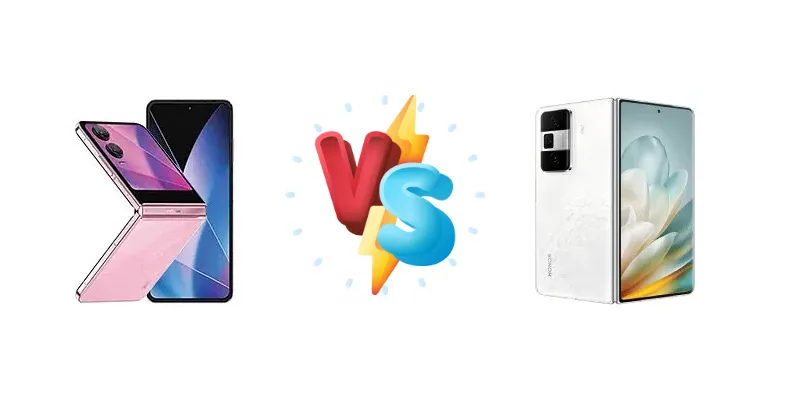
|
🏆 Quick Verdict
For users prioritizing raw performance and wireless charging convenience, the Honor Magic Vs3 is the clear winner. However, the Infinix Zero Flip delivers exceptional value with its 70W wired charging and respectable performance from the Dimensity 8020, making it ideal for budget-conscious foldable enthusiasts.
| PHONES | ||
|---|---|---|
| Phone Names | Infinix Zero Flip | Honor Magic Vs3 |
| Network | ||
|---|---|---|
| 2G bands | GSM 850 / 900 / 1800 / 1900 | GSM 850 / 900 / 1800 / 1900 |
| 3G bands | HSDPA 850 / 900 / 1700(AWS) / 1900 / 2100 | HSDPA 800 / 850 / 900 / 1700(AWS) / 1900 / 2100 |
| 4G bands | 1, 2, 3, 4, 5, 7, 8, 12, 13, 17, 20, 28, 34, 38, 39, 40, 41, 42, 66 | 1, 2, 3, 4, 5, 7, 8, 12, 17, 18, 19, 20, 26, 28, 34, 38, 39, 40, 41, 66 |
| 5G bands | 1, 3, 5, 7, 8, 12, 20, 28, 38, 40, 41, 66, 77, 78 SA/NSA | 1, 3, 5, 8, 28, 38, 41, 77, 78 SA/NSA |
| Speed | HSPA, LTE, 5G | HSPA, LTE, 5G |
| Technology | GSM / HSPA / LTE / 5G | GSM / CDMA / HSPA / CDMA2000 / LTE / 5G |
| Launch | ||
|---|---|---|
| Announced | 2024, September 27 | 2024, July 12 |
| Status | Available. Released 2024, October | Available. Released 2024, July 19 |
| Body | ||
|---|---|---|
| Dimensions | Unfolded: 170.4 x 73.4 x 7.6 mmFolded: 87.5 x 73.4 x 16 mm | Unfolded: 156.8 x 145.2 x 4.65 mm or 4.8 mmFolded: 156.8 x 74.0 x 9.8 mm or 10.1 mm |
| SIM | · Nano-SIM· Nano-SIM + Nano-SIM | · Nano-SIM + eSIM· Nano-SIM + Nano-SIM |
| Weight | 195 g (6.88 oz) | 229 g or 231 g (8.08 oz) |
| Display | ||
|---|---|---|
| Protection | - | King Kong Rhinoceros |
| Resolution | 1080 x 2640 pixels (~413 ppi density) | 2156 x 2344 pixels (~402 ppi density) |
| Size | 6.9 inches, 107.6 cm2 (~86.1% screen-to-body ratio) | 7.92 inches, 201.6 cm2 (~88.6% screen-to-body ratio) |
| Type | Foldable LTPO AMOLED, 120Hz, 1400 nits (peak) | Foldable LTPO AMOLED, 1B colors, Dolby Vision, 120Hz |
| Platform | ||
|---|---|---|
| CPU | Octa-core (4x2.6 GHz Cortex-A78 & 4x2.0 GHz Cortex-A55) | Octa-core (1x3.2 GHz Cortex-X3 & 2x2.8 GHz Cortex-A715 & 2x2.8 GHz Cortex-A710 & 3x2.0 GHz Cortex-A510) |
| Chipset | Mediatek Dimensity 8020 (6 nm) | Qualcomm SM8550-AB Snapdragon 8 Gen 2 (4 nm) |
| GPU | Mali-G77 MC9 | Adreno 740 |
| OS | Android 14, up to 2 major Android upgrades, XOS 14.5 | Android 14, MagicOS 8.0.1 |
| Memory | ||
|---|---|---|
| Card slot | No | No |
| Internal | 256GB 8GB RAM, 512GB 8GB RAM | 256GB 12GB RAM, 512GB 12GB RAM, 1TB 16GB RAM |
| Main Camera | ||
|---|---|---|
| Dual | 50 MP, f/1.9, 24mm (wide), 1/1.57", 1.0µm, PDAF, OIS 50 MP, f/2.2, 115˚ (ultrawide), 1/2.8", 0.64µm, PDAF | - |
| Features | Dual-LED flash, HDR, panorama | Laser AF, LED flash, HDR, panorama |
| Triple | - | 50 MP, f/1.9, (wide), 1/1.56", PDAF, OIS 8 MP, f/3.4, (periscope telephoto), PDAF, OIS, 5x optical zoom 40 MP, f/2.2, 112˚, (ultrawide), AF |
| Video | 4K@30fps, 1080p@30/60/120fps | 4K@30/60fps (10-bit), 1080p@30/60fps, gyro-EIS, OIS |
| Selfie camera | ||
|---|---|---|
| Features | Dual-LED flash | HDR |
| Single | 50 MP, f/2.5, 25mm (wide), 1/2.76", 0.64µm, PDAF | 16 MP, f/2.2, 90˚, (wide) Cover camera: 16 MP, f/2.2, 90˚, (wide) |
| Video | 4K@30/60fps, 1080p@30/60/120fps | 4K@30fps, 1080p@30fps, gyro-EIS |
| Sound | ||
|---|---|---|
| 35mm jack | No | No |
| Loudspeaker | Yes, with stereo speakers | Yes, with stereo speakers |
| Comms | ||
|---|---|---|
| Bluetooth | 5.4, A2DP, LE | 5.3, A2DP, LE, aptX HD, LDAC |
| Infrared port | - | Yes |
| NFC | Yes | Yes |
| Positioning | GPS | GPS (L1+L5), GLONASS (L1), BDS (B1I+B1c+B2a), GALILEO (E1+E5a) |
| Radio | FM radio | No |
| USB | USB Type-C, OTG | USB Type-C 3.1, OTG, Display Port 1.2 |
| WLAN | Wi-Fi 802.11 a/b/g/n/ac/6, dual-band | Wi-Fi 802.11 a/b/g/n/ac/6e/7, dual-band, Wi-Fi Direct |
| Features | ||
|---|---|---|
| Sensors | Fingerprint (side-mounted), accelerometer, gyro, proximity, compass | Fingerprint (side-mounted), accelerometer, gyro, proximity, compass, barometer |
| Battery | ||
|---|---|---|
| Charging | 70W wired 10W reverse wired | 66W wired 50W wireless 5W reverse wired |
| Type | 4720 mAh | Li-Po 5000 mAh |
| Misc | ||
|---|---|---|
| Colors | Rock Black, Blossom Glow | Velvet Black, Snow, Tundra Green |
| Models | X6962 | FLC-AN00 |
| Price | ₹ 39,999 | About 980 EUR |
Infinix Zero Flip
- 70W Wired Charging: Extremely fast top-ups.
- More Affordable: Offers a lower entry point into the foldable market.
- Respectable Performance: Dimensity 8020 handles everyday tasks well.
- Less Powerful Chipset: Snapdragon 8 Gen 2 offers superior performance.
- No Wireless Charging: Lacks the convenience of wireless power transfer.
Honor Magic Vs3
- Snapdragon 8 Gen 2: Top-tier performance for gaming and demanding apps.
- Wireless Charging: 50W wireless charging adds convenience.
- Superior Efficiency: 4nm process node reduces heat and improves battery life.
- Slower Wired Charging: 66W is good, but not as fast as the Zero Flip’s 70W.
- Higher Price: Flagship features come at a premium.
Display Comparison
While specific display specs (resolution, refresh rate) are missing, the Honor Magic Vs3 likely benefits from a higher-quality panel given its flagship positioning. The Snapdragon 8 Gen 2’s image signal processor (ISP) also contributes to superior display processing. The Infinix Zero Flip, while likely offering a competent display, will likely prioritize cost optimization in this area. Bezels and hinge quality are key differentiators in foldables, and Honor typically excels in these aspects.
Camera Comparison
Without detailed camera specs, it’s difficult to make a definitive judgment. However, the Honor Magic Vs3, as a flagship, is expected to feature a more sophisticated camera system with larger sensors and advanced image processing capabilities. The Snapdragon 8 Gen 2’s ISP plays a crucial role in image quality, offering superior noise reduction and dynamic range. The Infinix Zero Flip will likely focus on providing a functional camera experience, but may lack the refinement and low-light performance of the Honor.
Performance
The core difference lies in the chipsets. The Honor Magic Vs3’s Snapdragon 8 Gen 2 (4nm) is a significant leap ahead of the Infinix Zero Flip’s MediaTek Dimensity 8020 (6nm). The Snapdragon 8 Gen 2’s Cortex-X3 prime core, clocked at 3.2 GHz, provides substantially higher peak performance. The 4nm process node also translates to improved thermal efficiency, reducing throttling during sustained workloads. The Dimensity 8020 is still a capable chip, but it will struggle to match the Snapdragon in graphically intensive games or demanding applications. The Snapdragon 8 Gen 2 also supports faster LPDDR5x RAM, further enhancing performance.
Battery Life
The Infinix Zero Flip’s 70W wired charging is a standout feature, significantly faster than the Honor Magic Vs3’s 66W wired charging. This means the Zero Flip can replenish its battery much quicker. However, the Honor Magic Vs3 compensates with 50W wireless charging, a feature absent on the Zero Flip. The Infinix Zero Flip’s active use battery score of 11:01h is a good baseline, but the Snapdragon 8 Gen 2 in the Honor Magic Vs3 is more power efficient, potentially offsetting any capacity differences.
Buying Guide
Buy the Infinix Zero Flip if you need blazing-fast wired charging and are willing to trade some processing power for significant cost savings. It’s perfect for users who frequently top up their phones and prioritize battery convenience. Buy the Honor Magic Vs3 if you demand the best possible performance for demanding tasks like gaming and video editing, and value the added convenience of wireless charging and a more refined overall experience.