
Infinix GT 20 Pro vs Motorola Edge 50 Pro: A Deep Dive into Performance and Value
| Phones Images | |||||
|---|---|---|---|---|---|
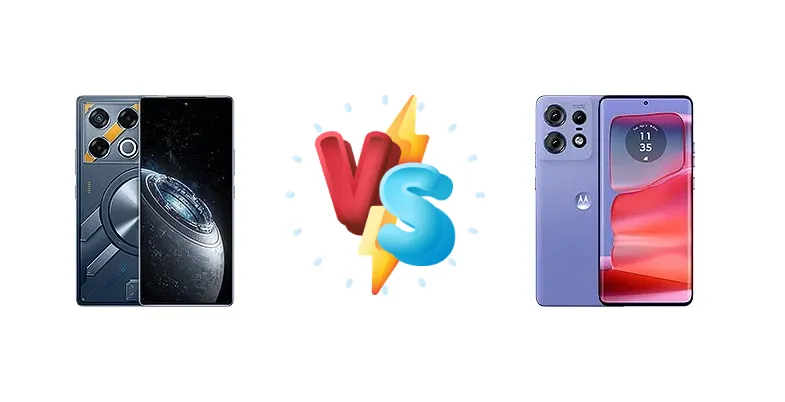
|
🏆 Quick Verdict
For the average user prioritizing a smooth, all-around experience and exceptionally fast charging, the Motorola Edge 50 Pro emerges as the winner. Its Snapdragon 7 Gen 3 offers excellent efficiency, complemented by a brighter display and 125W charging. However, gamers on a budget may find the GT 20 Pro’s raw processing power appealing.
| PHONES | ||
|---|---|---|
| Phone Names | Infinix GT 20 Pro | Motorola Edge 50 Pro |
| Network | ||
|---|---|---|
| 2G bands | GSM 850 / 900 / 1800 / 1900 | GSM 850 / 900 / 1800 / 1900 |
| 3G bands | HSDPA 850 / 900 / 1700(AWS) / 1900 / 2100 | HSDPA 850 / 900 / 1700(AWS) / 1900 / 2100 |
| 4G bands | 1, 2, 3, 4, 5, 7, 8, 12, 17, 20, 28, 38, 40, 41, 42, 66 | 1, 2, 3, 4, 5, 7, 8, 12, 13, 17, 18, 19, 20, 26, 28, 32, 38, 39, 40, 41, 43, 48, 66 |
| 5G bands | 1, 3, 5, 7, 8, 12, 20, 28, 38, 40, 41, 66, 77, 78 SA/NSA | 1, 2, 3, 5, 7, 8, 20, 26, 28, 38, 40, 41, 66, 77, 78 SA/NSA/Sub6 |
| Speed | HSPA, LTE, 5G | HSPA, LTE, 5G |
| Technology | GSM / HSPA / LTE / 5G | GSM / HSPA / LTE / 5G |
| Launch | ||
|---|---|---|
| Announced | 2024, April 26 | 2024, April 03 |
| Status | Available. Released 2024, April 26 | Available. Released 2024, April 08 |
| Body | ||
|---|---|---|
| Build | - | Glass front, plastic back or silicone polymer back (eco leather), aluminum frame |
| Dimensions | 164.3 x 75.4 x 8.2 mm (6.47 x 2.97 x 0.32 in) | 161.2 x 72.4 x 8.2 mm (6.35 x 2.85 x 0.32 in) |
| SIM | Nano-SIM + Nano-SIM | · Nano-SIM + eSIM· Nano-SIM + Nano-SIM |
| Weight | 194 g (6.84 oz) | 186 g (6.56 oz) |
| Display | ||
|---|---|---|
| Protection | - | Corning Gorilla Glass (unspecified version) |
| Resolution | 1080 x 2436 pixels (~388 ppi density) | 1220 x 2712 pixels, 20:9 ratio (~446 ppi density) |
| Size | 6.78 inches, 112.7 cm2 (~91.0% screen-to-body ratio) | 6.7 inches, 107.4 cm2 (~92.0% screen-to-body ratio) |
| Type | AMOLED, 1B colors, 144Hz, 2304Hz PWM, 1300 nits (peak) | P-OLED, 1B colors, 144Hz, HDR10+, 2000 nits (peak) |
| Platform | ||
|---|---|---|
| CPU | Octa-core (1x3.1 GHz Cortex-A78 & 3x3.0 GHz Cortex-A78 & 4x2.0 GHz Cortex-A55) | Octa-core (1x2.63 GHz Cortex-A715 & 4x2.4 GHz Cortex-A715 & 3x1.8 GHz Cortex-A510) |
| Chipset | Mediatek Dimensity 8200 Ultimate (4 nm) | Qualcomm SM7550-AB Snapdragon 7 Gen 3 (4 nm) |
| GPU | Mali-G610 MC6 | Adreno 720 |
| OS | Android 14, XOS 14 | Android 14, up to 3 major Android upgrades |
| Memory | ||
|---|---|---|
| Card slot | Unspecified | No |
| Internal | 256GB 8GB RAM, 256GB 12GB RAM | 128GB 8GB RAM, 256GB 8GB RAM, 256GB 12GB RAM, 512GB 12GB RAM |
| Main Camera | ||
|---|---|---|
| Features | Quad-LED flash, HDR, panorama | Laser AF, LED flash, panorama, HDR |
| Triple | 108 MP, f/1.8, 24mm (wide), 1/1.67", 0.64µm, AF, OIS 2 MP (macro) Auxiliary lens | 50 MP, f/1.4, 25mm (wide), 1/1.55", 1.0µm, multi-directional PDAF, OIS 10 MP, f/2.0, 67mm (telephoto), 1/3.94", 1.0µm, PDAF, OIS, 3x optical zoom 13 MP, f/2.2, 16mm, 120˚ (ultrawide), 1/3.0", 1.12µm, PDAF |
| Video | 4K@30/60fps, 1080p@30/60/120/240fps | 4K@30fps, 1080p@30/60/120/240fps, 10-bit HDR10+, gyro-EIS |
| Selfie camera | ||
|---|---|---|
| Features | Dual-LED flash | HDR |
| Single | 32 MP, f/2.2, 22mm (wide) | 50 MP, f/1.9, 21mm (wide), 0.64µm, AF |
| Video | 1440p@30fps, 1080p@30/60fps | 4K@30fps, 1080p@30/60fps |
| Sound | ||
|---|---|---|
| 35mm jack | No | No |
| Loudspeaker | Yes, with stereo speakers | Yes, with stereo speakers |
| Comms | ||
|---|---|---|
| Bluetooth | Yes | 5.4, A2DP, LE |
| Infrared port | Yes | - |
| NFC | Yes | Yes |
| Positioning | GPS, GLONASS, GALILEO | GPS, GLONASS, GALILEO, BDS, QZSS, NavIC |
| Radio | FM radio | No |
| USB | USB Type-C 2.0, OTG | USB Type-C 3.1, OTG, DisplayPort 1.4 |
| WLAN | Wi-Fi 802.11 a/b/g/n/ac/6, dual-band, Wi-Fi Direct | Wi-Fi 802.11 a/b/g/n/ac/6e, tri-band, Wi-Fi Direct |
| Features | ||
|---|---|---|
| Sensors | Fingerprint (under display, optical), accelerometer, proximity, compass, gyro | Fingerprint (under display, optical), accelerometer, gyro, proximity, compass |
| Battery | ||
|---|---|---|
| Charging | 45W wired, PD3 | 125W wired, 100% in 18 min 50W wireless 10W reverse wireless |
| Type | 5000 mAh | Li-Po 4500 mAh |
| Misc | ||
|---|---|---|
| Colors | Mecha Blue, Mecha Orange, Mecha Silver | Luxe Lavender, Black Beauty, Moonlight Pearl, Vanilla Cream |
| Models | X6871 | XT2403-2 |
| Price | About 250 EUR | € 410.57 / $ 399.00 / £ 369.99 / ₹ 22,995 |
| SAR | - | 1.08 W/kg (head) 1.08 W/kg (body) |
Infinix GT 20 Pro
- Potentially higher peak CPU performance for gaming
- Competitive price point (likely)
- 45W fast charging
- Less efficient chipset compared to Snapdragon 7 Gen 3
- Unknown display brightness and quality
- Limited charging options
Motorola Edge 50 Pro
- 125W wired charging (18 minutes to full)
- Brighter display (1295 nits)
- Efficient Snapdragon 7 Gen 3 chipset
- Slightly lower peak CPU performance
- Potentially higher price
- Wireless charging may not be universally supported
Display Comparison
The Motorola Edge 50 Pro boasts a significantly brighter display, reaching a measured 1295 nits, compared to an unstated peak brightness for the Infinix GT 20 Pro. This translates to superior visibility under direct sunlight. While the GT 20 Pro’s panel technology isn’t specified, the Edge 50 Pro’s brightness advantage is a clear win for outdoor users. The Edge 50 Pro’s panel likely benefits from a more advanced backlight configuration, contributing to its higher peak output. Color accuracy and refresh rate data are missing for both, but the Edge 50 Pro’s brightness alone makes it the more visually impactful option.
Camera Comparison
Without detailed camera specifications for the Infinix GT 20 Pro, a direct comparison is limited. However, the Motorola Edge 50 Pro’s camera system is expected to prioritize image quality and versatility. The absence of information regarding sensor sizes and OIS on the GT 20 Pro suggests a potentially less sophisticated camera experience. The Edge 50 Pro’s image processing is likely tuned for natural colors and dynamic range, while the GT 20 Pro may lean towards more saturated, social media-friendly images. The inclusion of OIS on the Edge 50 Pro would provide a significant advantage in low-light photography and video recording.
Performance
Both phones utilize 4nm chipsets, but the architectures differ significantly. The Infinix GT 20 Pro’s MediaTek Dimensity 8200 Ultimate features a core configuration leaning towards raw performance with its Cortex-A78 cores, while the Motorola Edge 50 Pro’s Snapdragon 7 Gen 3 employs newer Cortex-A715 cores. The Snapdragon 7 Gen 3 prioritizes efficiency, potentially leading to better sustained performance and thermal management during extended gaming sessions. While the Dimensity 8200 Ultimate may win in benchmark scores, the Snapdragon 7 Gen 3’s architecture is designed for a smoother, more consistent experience. The lack of RAM specifications for the GT 20 Pro makes a direct comparison difficult, but the Edge 50 Pro’s efficient chipset will likely translate to better multitasking.
Battery Life
The Motorola Edge 50 Pro’s charging capabilities are a standout feature, offering 125W wired charging, achieving a full charge in just 18 minutes. It also includes 50W wireless and 10W reverse wireless charging. The Infinix GT 20 Pro’s 45W wired charging, while respectable, pales in comparison. The Edge 50 Pro’s active use battery score of 11:59h demonstrates solid endurance, and the faster charging mitigates any concerns about battery life. The GT 20 Pro’s battery capacity is unknown, but the Edge 50 Pro’s combination of fast charging and respectable battery life provides a significant convenience advantage.
Buying Guide
Buy the Infinix GT 20 Pro if you need maximum CPU performance for demanding games and applications, and are comfortable with potentially shorter battery life. Buy the Motorola Edge 50 Pro if you prefer a more refined user experience, a brighter and more vibrant display, and the convenience of incredibly fast wired and wireless charging, even if it means a slight trade-off in peak CPU performance.