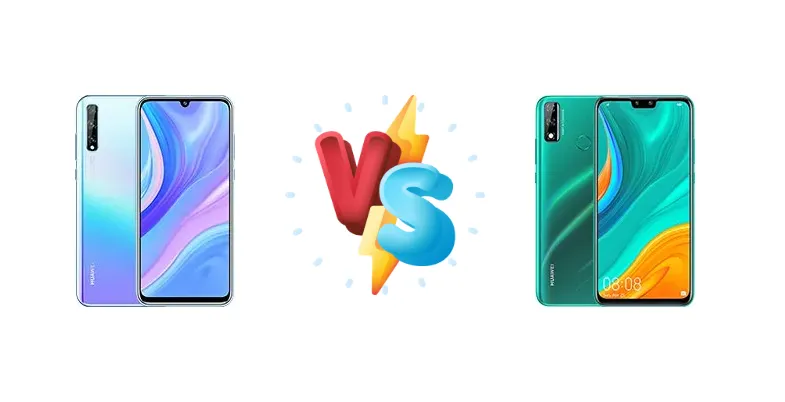
Huawei's Y-series offers compelling budget-friendly smartphones. The Y8p and Y8s are two popular contenders, boasting similar specs but subtle differences. This comprehensive comparison will break down their strengths and weaknesses to help you choose the right one for your needs.
🏆 Quick Verdict
The Huawei Y8p edges out the Y8s primarily due to its slightly improved camera features and potentially better software support. Both offer solid performance for the price, but the Y8p's minor advantages make it the slightly better overall choice for most users.
| Network |
|---|
| 2G bands | GSM 900 / 1800 / 1900 | GSM 850 / 900 / 1800 / 1900 |
| 3G bands | HSDPA 850 / 900 / 1700(AWS) / 1900 / 2100 | HSDPA 850 / 900 / 2100 - JKM-LX2 |
| 4G bands | 1, 2, 3, 4, 5, 7, 8, 26, 20, 28, 38, 40, 41 | 1, 3, 5, 7, 8, 28, 38, 40, 41 - JKM-LX2 |
| Speed | HSPA, LTE | HSPA, LTE |
| Technology | GSM / HSPA / LTE | GSM / HSPA / LTE |
| | - | 1, 3, 5, 7, 8, 20 - JKM-LX1 |
| Launch |
|---|
| Announced | 2020, May 18. Released 2020, June 15 | 2020, May 6. Released 2020, May 21 |
| Status | Discontinued | Discontinued |
| Body |
|---|
| Dimensions | 157.4 x 73.2 x 7.8 mm (6.20 x 2.88 x 0.31 in) | 162.4 x 77.1 x 8.1 mm (6.39 x 3.04 x 0.32 in) |
| SIM | Nano-SIM + Nano-SIM | · Nano-SIM· Nano-SIM + Nano-SIM |
| Weight | 163 g (5.75 oz) | 180 g (6.35 oz) |
| Display |
|---|
| Resolution | 1080 x 2400 pixels, 20:9 ratio (~418 ppi density) | 1080 x 2340 pixels, 19.5:9 ratio (~396 ppi density) |
| Size | 6.3 inches, 95.8 cm2 (~83.2% screen-to-body ratio) | 6.5 inches, 103.7 cm2 (~82.8% screen-to-body ratio) |
| Type | OLED | IPS LCD |
| Platform |
|---|
| CPU | Octa-core (4x2.2 GHz Cortex-A73 & 4x1.7 GHz Cortex-A53) | Octa-core (4x2.2 GHz Cortex-A73 & 4x1.7 GHz Cortex-A53) |
| Chipset | Kirin 710F (12 nm) | Kirin 710 (12 nm) |
| GPU | Mali-G51 MP4 | Mali-G51 MP4 |
| OS | Android 10, EMUI 10.1, no Google Play Services | Android 9.0 (Pie), EMUI 9.1, Google Play Services |
| Memory |
|---|
| Card slot | Nano Memory (uses shared SIM slot) | microSDXC |
| Internal | 128GB 4GB RAM, 128GB 6GB RAM | 64GB 4GB RAM, 128GB 4GB RAM |
| Main Camera |
|---|
| Dual | - | 48 MP, f/1.8, (wide), 1/2.0", 0.8µm, PDAF
Auxiliary lens |
| Features | LED flash, HDR, panorama | LED flash, HDR, panorama |
| Triple | 48 MP, f/1.8, 27mm (wide), 1/2.0", 0.8µm, PDAF
8 MP, f/2.4, 120˚ (ultrawide)
Auxiliary lens | - |
| Video | 1080p@30fps | 1080p@30fps |
| Selfie camera |
|---|
| Dual | - | 8 MP, f/2.0, (wide)
2 MP, f/2.4, (depth) |
| Features | HDR | HDR |
| Single | 16 MP, f/2.0 | - |
| Video | 1080p@30fps | 1080p@30fps |
| Sound |
|---|
| 3.5mm jack | Yes | Yes |
| 35mm jack | Yes | Yes |
| Loudspeaker | Yes | Yes |
| Comms |
|---|
| Bluetooth | 5.0, A2DP, LE | 4.2, A2DP, LE |
| NFC | Yes | No |
| Positioning | GPS, GLONASS, BDS | GPS, GLONASS, BDS |
| Radio | FM radio | FM radio |
| USB | USB Type-C 2.0, OTG | microUSB 2.0 |
| WLAN | Wi-Fi 802.11 a/b/g/n/ac, dual-band, Wi-Fi Direct | Wi-Fi 802.11 b/g/n, Wi-Fi Direct |
| Features |
|---|
| Sensors | Fingerprint (under display, optical), accelerometer, proximity, compass | Fingerprint (rear-mounted), accelerometer, proximity, compass |
| Battery |
|---|
| Charging | 10W wired | 10W wired |
| Type | Li-Po 4000 mAh | Li-Po 4000 mAh |
| Misc |
|---|
| Colors | Breathing Crystal, Midnight Black | Emerald Green, Midnight Black |
| Models | AQM-LX1 | JKM-LX1, JKM-LX2, JKM-LX3 |
| Price | About 240 EUR | About 140 EUR |
Huawei Y8p
- Better camera system (ultrawide lens, higher resolution)
- Potentially longer software support
- Slightly more modern software experience
- Good overall value
- 10W charging is slow
- Plastic build quality
Huawei Y8s
- Potentially lower price
- Sleek design
- Good battery life
- Less versatile camera system
- Potentially shorter software support
- 10W charging is slow
- Plastic build quality
Display Comparison
Both phones feature a 6.3-inch IPS LCD display with a resolution of 1080 x 2340 pixels. While the specs are identical, slight variations in color accuracy or brightness might exist, but these are generally negligible in everyday use. The Y8s might have a slightly more modern design.
Camera Comparison
The Y8p boasts a triple-camera setup (48MP main, 8MP ultrawide, 2MP depth sensor) while the Y8s has a dual-camera setup (13MP main, 2MP depth sensor). The Y8p's ultrawide lens and higher resolution main sensor give it a clear advantage in versatility and image quality, particularly in low light.
Performance
Powered by the Kirin 710 chipset, both devices offer adequate performance for everyday tasks like browsing, social media, and light gaming. Don't expect flagship-level speeds, but they handle their intended use cases well. The Y8p's slightly newer software might offer marginally smoother performance.
Battery Life
Both phones are equipped with a 4000mAh battery. Battery life is generally good, providing a full day of moderate use. Charging speeds are identical at 10W wired, which is relatively slow by modern standards.
Buying Guide
The Huawei Y8p is ideal for users prioritizing camera quality and potentially longer software updates. The Huawei Y8s is a good option for those seeking a very similar experience at potentially a slightly lower price point, especially if camera features are less critical.
Frequently Asked Questions
❓ Is the Kirin 710 chipset good for gaming?
The Kirin 710 is adequate for casual gaming, but don't expect to play demanding titles at high settings. It can handle less intensive games smoothly.
❓ What is the difference in software between the Y8p and Y8s?
The Y8p likely shipped with a slightly newer version of EMUI (Huawei's Android skin) and may receive updates for a longer period, although this can vary depending on Huawei's update policies.