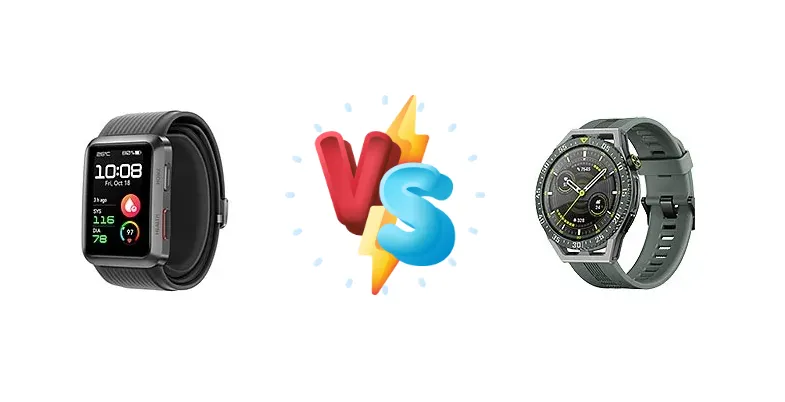
Huawei continues to innovate in the smartwatch space, offering compelling options for fitness enthusiasts and tech lovers. The Watch D stands out with its unique health monitoring capabilities, while the GT 3 SE provides a more streamlined and accessible experience. Let's dive into a head-to-head comparison to see which smartwatch comes out on top.
🏆 Quick Verdict
The Huawei Watch D is the clear winner for those prioritizing advanced health tracking, particularly blood glucose monitoring. However, the GT 3 SE offers a more affordable, stylish, and user-friendly experience with excellent battery life, making it a great all-around smartwatch for everyday use.
| Network |
|---|
| 2G bands | N/A | N/A |
| 3G bands | N/A | N/A |
| 4G bands | N/A | N/A |
| EDGE | No | No |
| GPRS | No | No |
| Speed | No | No |
| Technology | No cellular connectivity | No cellular connectivity |
| Launch |
|---|
| Announced | 2022, May 18 | 2022, November 10 |
| Status | Available. Released 2022, October 12 | Available. Released 2022, November 10 |
| Body |
|---|
| Build | Glass front, aluminum frame | Glass front, plastic back, plastic frame |
| Dimensions | 51 x 38 x 13.6 mm (2.01 x 1.50 x 0.54 in) | 46.4 x 46.4 x 11 mm (1.83 x 1.83 x 0.43 in) |
| SIM | No | No |
| Weight | 40.9 g (1.45 oz) | 35.6 g (1.27 oz) |
| | IP68
Blood Pressure Measurement & ECG with built-in pump & inflatable strap | 50m water resistant
5 ATM
Compatible with standard 22mm straps (46mm model) |
| Display |
|---|
| Resolution | 456 x 280 pixels (~326 ppi density) | 466 x 466 pixels (~326 ppi density) |
| Size | 1.64 inches | 1.43 inches |
| Type | AMOLED | AMOLED |
| Platform |
|---|
| OS | HarmonyOS 2.1 | HarmonyOS 2.0 |
| Memory |
|---|
| Card slot | No | No |
| Internal | 4GB | 4GB |
| Sound |
|---|
| 3.5mm jack | No | No |
| 35mm jack | No | No |
| Loudspeaker | No | Yes |
| Comms |
|---|
| Bluetooth | 5.1, LE | Yes |
| NFC | Yes (market/region dependent) | No |
| Positioning | GPS | GPS |
| Radio | No | No |
| USB | No | No |
| WLAN | No | No |
| Features |
|---|
| Sensors | Accelerometer, gyro, heart rate, SpO2, thermometer (skin temperature), differential pressure sensor | Accelerometer, gyro, heart rate, barometer, compass, SpO2 |
| Battery |
|---|
| Charging | 3.5W wireless | Wireless |
| Type | Li-Ion 451 mAh | 455 mAh |
| Misc |
|---|
| Colors | Graphite Black | Graphite Black, Wilderness Green |
| Models | MLY-B10, MLY-B11, MLY-B19 | RUNE-B29 |
| Price | About 350 EUR | About 200 EUR |
Huawei Watch D
- Revolutionary non-invasive blood glucose monitoring
- Advanced health tracking features (ECG, heart rate, SpO2)
- Bright and vibrant AMOLED display
- Stylish design
- Higher price point
- Shorter battery life due to health monitoring
- Potentially more complex user interface
Huawei Watch GT 3 SE
- Excellent battery life (up to 14 days)
- Stylish and lightweight design
- Comprehensive fitness tracking features
- Affordable price
- Lacks advanced health features like blood glucose monitoring
- Smaller display compared to potential Watch D size
- Limited app ecosystem compared to Wear OS
Display Comparison
Both watches feature AMOLED displays, offering vibrant colors and sharp details. The Watch D likely has a slightly larger display, potentially offering more screen real estate for data visualization. The GT 3 SE prioritizes a sleek, compact design, which may result in a slightly smaller display, but still provides excellent readability.
Camera Comparison
Neither the Huawei Watch D nor the GT 3 SE includes a built-in camera. This is a common omission in smartwatches, as camera quality is typically limited.
Performance
The Watch GT 3 SE, with its HarmonyOS, generally offers smooth and responsive performance for everyday tasks like notifications and fitness tracking. The Watch D's performance might be slightly impacted by the more intensive health monitoring features, but should still be adequate for most users. Expect both to handle app navigation and basic functions without significant lag.
Battery Life
The GT 3 SE is expected to have significantly better battery life than the Watch D, potentially lasting up to 14 days on a single charge due to its more efficient chipset and less demanding features. The Watch D's advanced health monitoring, particularly continuous glucose monitoring, will likely drain the battery faster, potentially requiring charging every 2-3 days.
Buying Guide
The Huawei Watch D is ideal for individuals actively managing their health, especially those with diabetes or pre-diabetes who can benefit from its non-invasive blood glucose monitoring. The Huawei Watch GT 3 SE is perfect for users seeking a stylish, feature-rich smartwatch with long battery life for fitness tracking and notifications, without the premium price tag of the Watch D.
Frequently Asked Questions
❓ Does the Huawei Watch D require calibration for blood glucose monitoring?
Yes, the Watch D's blood glucose monitoring feature requires occasional calibration using a traditional blood glucose meter for accuracy. Refer to the user manual for specific instructions.
❓ Is the Huawei Watch GT 3 SE compatible with iOS devices?
While primarily designed for Android, the GT 3 SE offers limited compatibility with iOS devices. Functionality may be restricted compared to Android pairing.