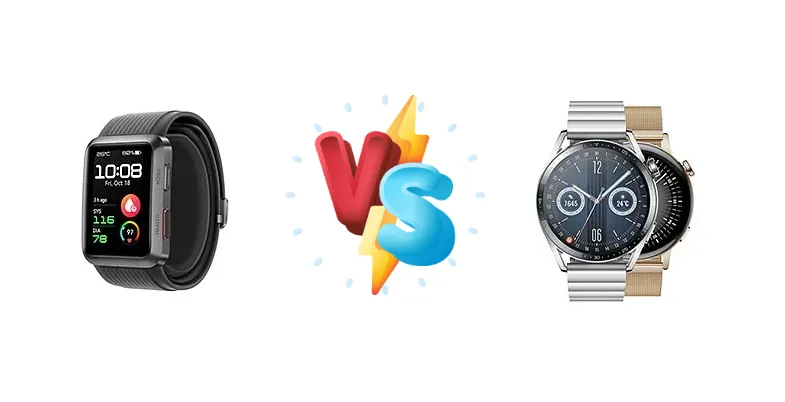
Huawei continues to push boundaries in the wearable tech space. The Watch D introduces groundbreaking health monitoring capabilities, while the Watch GT 3 refines the classic smartwatch experience. But which one deserves a spot on your wrist? Let's dive into a comprehensive comparison.
🏆 Quick Verdict
The Huawei Watch D stands out with its unique blood glucose monitoring feature, making it ideal for health-conscious users. The Watch GT 3 offers a more polished, stylish design and longer battery life for everyday wear. Ultimately, the best choice depends on your priorities: health tracking or overall smartwatch experience.
| Network |
|---|
| 2G bands | N/A | N/A |
| 3G bands | N/A | N/A |
| 4G bands | N/A | N/A |
| EDGE | No | No |
| GPRS | No | No |
| Speed | No | No |
| Technology | No cellular connectivity | No cellular connectivity |
| Launch |
|---|
| Announced | 2022, May 18 | 2021, October 21 |
| Status | Available. Released 2022, October 12 | Available. Released 2021, November 11 |
| Body |
|---|
| Build | Glass front, aluminum frame | Glass front, plastic back, stainless steel frame |
| Dimensions | 51 x 38 x 13.6 mm (2.01 x 1.50 x 0.54 in) | 45.9 x 45.9 x 11 mm (1.81 x 1.81 x 0.43 in) |
| SIM | No | No |
| Weight | 40.9 g (1.45 oz) | 35 g (42mm) / 42.6 g (46mm) (1.23 oz) |
| | IP68
Blood Pressure Measurement & ECG with built-in pump & inflatable strap | 50m water resistant
5 ATM
Compatible with standard 22mm straps (46mm model), 20mm straps (42mm model) |
| Display |
|---|
| Resolution | 456 x 280 pixels (~326 ppi density) | 466 x 466 pixels (~326 ppi density) |
| Size | 1.64 inches | 1.43 inches |
| Type | AMOLED | AMOLED |
| Platform |
|---|
| OS | HarmonyOS 2.1 | HarmonyOS 2.0, upgradable to 4.0 |
| Memory |
|---|
| Card slot | No | No |
| Internal | 4GB | 4GB 32MB RAM |
| Sound |
|---|
| 3.5mm jack | No | No |
| 35mm jack | No | No |
| Loudspeaker | No | Yes |
| Comms |
|---|
| Bluetooth | 5.1, LE | 5.1, LE, EDR |
| NFC | Yes (market/region dependent) | No |
| Positioning | GPS | GPS (L1+L5), GLONASS, BDS, GALILEO, QZSS |
| Radio | No | No |
| USB | No | No |
| WLAN | No | No |
| Features |
|---|
| Sensors | Accelerometer, gyro, heart rate, SpO2, thermometer (skin temperature), differential pressure sensor | Accelerometer, gyro, heart rate, barometer, compass, SpO2, thermometer (body temperature) |
| Battery |
|---|
| Charging | 3.5W wireless | Wireless |
| Type | Li-Ion 451 mAh | Li-Po 455 mAh |
| Misc |
|---|
| Colors | Graphite Black | Black, Steel, Gold |
| Models | MLY-B10, MLY-B11, MLY-B19 | MIL-B19 |
| Price | About 350 EUR | About 120 EUR |
Huawei Watch D
- Unique blood glucose monitoring
- Comprehensive health tracking
- Clear display for health data
- Stylish design
- Shorter battery life
- Potentially slower performance
- Limited app ecosystem compared to Wear OS
Huawei Watch GT 3
- Longer battery life
- Stylish and premium design
- Smooth HarmonyOS performance
- Excellent fitness tracking features
- Lacks blood glucose monitoring
- Limited third-party app support
- Can be pricier than some competitors
Display Comparison
Both watches feature AMOLED displays, offering vibrant colors and sharp details. The Watch GT 3 generally has a slightly more refined and customizable interface. The Watch D's display is functional and clear, prioritizing health data presentation.
Camera Comparison
Neither watch has a built-in camera. This is a common omission in smartwatches, and both devices rely on smartphone connectivity for photography.
Performance
The Watch GT 3 typically offers smoother performance for everyday tasks and app navigation due to its optimized HarmonyOS. The Watch D's performance is adequate, but the focus on health features might occasionally impact responsiveness.
Battery Life
The Watch GT 3 consistently delivers longer battery life, often exceeding 7-10 days with typical usage. The Watch D's battery life is shorter, typically around 3-5 days, due to the power demands of its advanced health sensors.
Buying Guide
The Huawei Watch D is perfect for individuals actively managing their health, particularly those interested in non-invasive blood glucose monitoring. The Watch GT 3 is a great choice for users seeking a stylish, feature-rich smartwatch with excellent battery life and a focus on fitness tracking.
Frequently Asked Questions
❓ Does the Huawei Watch D require a smartphone for blood glucose monitoring?
Yes, the Watch D requires a compatible smartphone and the Huawei Health app to view and manage blood glucose data. It doesn't provide standalone readings.
❓ Can I use the Huawei Watch GT 3 for contactless payments?
Yes, the Watch GT 3 supports Huawei Pay in regions where it's available. Check compatibility with your bank and region.