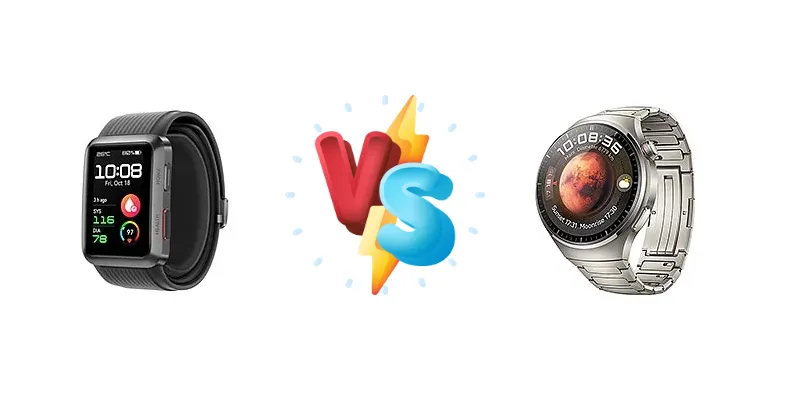
Huawei's smartwatch lineup continues to evolve, offering compelling options for health tracking and smart features. The Watch D and Watch 4 Pro represent different tiers within this ecosystem. But which one is right for you? This comprehensive comparison dives deep into their strengths and weaknesses.
🏆 Quick Verdict
The Watch 4 Pro offers a more premium experience with its larger display, enhanced design, and advanced features like LTE connectivity. However, the Watch D's unique health monitoring capabilities, particularly its blood pressure tracking, make it a strong contender for health-conscious users, especially at a potentially lower price point.
| Network |
|---|
| 2G bands | N/A | N/A |
| 3G bands | N/A | HSDPA 850 / 900 / 1800 / 1900 / 2100 / 800 |
| 4G bands | N/A | LTE |
| EDGE | No | - |
| GPRS | No | - |
| Speed | No | HSPA, LTE |
| Technology | No cellular connectivity | HSPA / LTE |
| Launch |
|---|
| Announced | 2022, May 18 | 2023, May 10 |
| Status | Available. Released 2022, October 12 | Available. Released 2023, June 22 |
| Body |
|---|
| Build | Glass front, aluminum frame | Glass front, ceramic back, TC4 titanium frame |
| Dimensions | 51 x 38 x 13.6 mm (2.01 x 1.50 x 0.54 in) | 47.6 x 47.6 x 12.9 mm (1.87 x 1.87 x 0.51 in) |
| SIM | No | eSIM |
| Weight | 40.9 g (1.45 oz) | 65 g (2.29 oz) |
| | IP68
Blood Pressure Measurement & ECG with built-in pump & inflatable strap | 50m water resistant
5 ATM
Compatible with standard 22mm straps |
| Display |
|---|
| Protection | - | Sapphire crystal glass |
| Resolution | 456 x 280 pixels (~326 ppi density) | 466 x 466 pixels (~310 ppi density) |
| Size | 1.64 inches | 1.5 inches |
| Type | AMOLED | LTPO AMOLED |
| | - | * the display resolution is unconfirmed
Always-on display |
| Platform |
|---|
| OS | HarmonyOS 2.1 | HarmonyOS 3.0 |
| Memory |
|---|
| Card slot | No | No |
| Internal | 4GB | 32GB 2GB RAM |
| Sound |
|---|
| 3.5mm jack | No | No |
| 35mm jack | No | No |
| Loudspeaker | No | Yes |
| Comms |
|---|
| Bluetooth | 5.1, LE | 5.2, A2DP, LE |
| NFC | Yes (market/region dependent) | Yes |
| Positioning | GPS | GPS (L1+L5), GLONASS, BDS, GALILEO, QZSS |
| Radio | No | No |
| USB | No | No |
| WLAN | No | Wi-Fi 802.11 b/g/n (market/region dependent) |
| Features |
|---|
| Sensors | Accelerometer, gyro, heart rate, SpO2, thermometer (skin temperature), differential pressure sensor | Accelerometer, gyro, heart rate, barometer, compass, SpO2, thermometer (body temperature) |
| Battery |
|---|
| Charging | 3.5W wireless | Wireless |
| Type | Li-Ion 451 mAh | Li-Ion |
| Misc |
|---|
| Colors | Graphite Black | Titanium |
| Models | MLY-B10, MLY-B11, MLY-B19 | MDS-AL00, MDS-AL10 |
| Price | About 350 EUR | About 550 EUR |
Huawei Watch D
- Unique blood pressure monitoring capabilities
- Potentially more affordable
- Solid fitness tracking features
- HarmonyOS interface
- Smaller display
- Less premium design
- Charging speed (3.5W) is slower
Huawei Watch 4 Pro
- Larger, brighter AMOLED display
- Premium design and build quality
- LTE connectivity option
- Advanced fitness tracking features
- Faster Wireless Charging
- Higher price point
- Blood pressure monitoring less advanced than Watch D
- HarmonyOS ecosystem limitations
Display Comparison
The Watch 4 Pro boasts a significantly larger AMOLED display (1.4 inch) compared to the Watch D (1.32 inch), offering more screen real estate for notifications and apps. Both displays are vibrant and sharp, but the 4 Pro's size advantage makes it easier to read and interact with. The 4 Pro also likely has higher peak brightness.
Camera Comparison
Neither watch has a dedicated camera. This is a common omission in smartwatches, relying instead on smartphone integration for photography.
Performance
Both watches utilize Huawei's HarmonyOS, providing a smooth and responsive user experience. While specific chipsets aren't always detailed, expect comparable performance for everyday tasks like notifications, fitness tracking, and app navigation. The 4 Pro might have a slight edge due to potentially more RAM.
Battery Life
The Watch 4 Pro, despite its larger display, is expected to offer comparable or slightly better battery life than the Watch D, potentially lasting 2-3 days with moderate use. The Watch D's blood pressure monitoring features might impact battery life more significantly depending on usage frequency.
Buying Guide
The Huawei Watch D is ideal for users prioritizing advanced health monitoring, especially blood pressure tracking, and are comfortable with a slightly less premium design. The Huawei Watch 4 Pro is best suited for those seeking a flagship smartwatch experience with a larger, brighter display, more robust features, and a more stylish aesthetic, and are willing to pay a premium.
Frequently Asked Questions
❓ Does the Huawei Watch D require calibration for blood pressure monitoring?
Yes, the Huawei Watch D requires a brief calibration process using a traditional blood pressure cuff to ensure accurate readings. Regular recalibration is recommended.
❓ Is the Huawei Watch 4 Pro compatible with iOS devices?
While the Watch 4 Pro works with both Android and iOS, functionality may be limited on iOS compared to Android. Some features, like calling and certain notifications, might not be available.