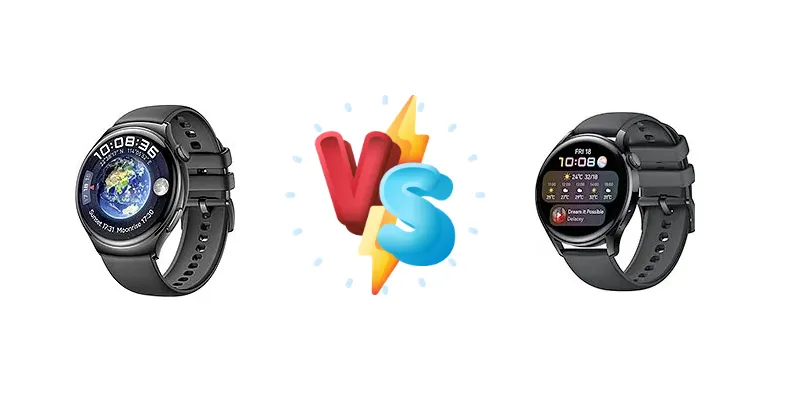
Huawei has consistently delivered impressive smartwatches, and the Watch 4 and Watch 3 are prime examples. But with incremental upgrades, which one offers the best value? This comprehensive comparison dives deep into their features, performance, and design to help you make an informed decision.
🏆 Quick Verdict
The Huawei Watch 4 boasts a significantly faster processor (Snapdragon W5 Gen 1) and improved efficiency, resulting in a smoother experience. While the Watch 3 remains a capable device, the Watch 4’s performance and newer features make it the clear winner for those seeking the latest tech.
| Network |
|---|
| 2G bands | N/A | N/A |
| 3G bands | HSDPA 850 / 900 / 1800 / 1900 / 2100 / 800 | HSDPA 850 / 900 / 1800 / 1900 / 2100 / 800 |
| 4G bands | LTE | 1, 3, 5, 6, 7, 8, 9, 18, 19, 20, 26, 38, 39, 40, 41 |
| Speed | HSPA, LTE | HSPA, LTE |
| Technology | HSPA / LTE | HSPA / LTE |
| Launch |
|---|
| Announced | 2023, May 10 | 2021, June 02 |
| Status | Available. Released 2023, June 22 | Available. Released 2021, June 11 |
| Body |
|---|
| Build | Glass front, ceramic back, stainless steel frame | Glass front, ceramic back, stainless steel frame |
| Dimensions | 46.2 x 46.2 x 10.9 mm (1.82 x 1.82 x 0.43 in) | 46.2 x 46.2 x 12.2 mm (1.82 x 1.82 x 0.48 in) |
| SIM | eSIM | eSIM |
| Weight | 48 g (1.69 oz) | 54 g (1.90 oz) |
| | 50m water resistant
5 ATM
Compatible with standard 22mm straps | 50m water resistant
5 ATM
Compatible with standard 22mm straps |
| Display |
|---|
| Resolution | 466 x 466 pixels (~310 ppi density) | 466 x 466 pixels (~326 ppi density) |
| Size | 1.5 inches | 1.43 inches |
| Type | AMOLED | AMOLED |
| | * the display resolution is unconfirmed
Always-on display | - |
| Platform |
|---|
| CPU | Quad-core 1.7 GHz Cortex-A53 | - |
| Chipset | Qualcomm Snapdragon W5 Gen 1 (4 nm) | - |
| GPU | Adreno 702 | - |
| OS | HarmonyOS 3.0 | HarmonyOS 2.0, upgradable to 3.0 |
| Memory |
|---|
| Card slot | No | No |
| Internal | 32GB 2GB RAM | 16GB 2GB RAM |
| | - | eMMC 5.1 |
| Sound |
|---|
| 3.5mm jack | No | No |
| 35mm jack | No | No |
| Loudspeaker | Yes | Yes |
| Comms |
|---|
| Bluetooth | 5.2, A2DP, LE | 5.2, A2DP, LE |
| NFC | Yes | Yes |
| Positioning | GPS, GLONASS, BDS, GALILEO, QZSS | GPS, GLONASS, BDS, GALILEO, QZSS |
| Radio | No | No |
| USB | No | No |
| WLAN | Wi-Fi 802.11 b/g/n (market/region dependent) | Wi-Fi 802.11 b/g/n (market/region dependent) |
| Features |
|---|
| Sensors | Accelerometer, gyro, heart rate, barometer, compass, SpO2, thermometer (body temperature) | Accelerometer, gyro, heart rate, barometer, compass, SpO2, thermometer (body temperature) |
| Battery |
|---|
| Charging | Wireless | 10W wireless |
| Type | Li-Ion 530 mAh | Li-Ion |
| Misc |
|---|
| Colors | Black | Black, Silver |
| Models | ARC-AL00 | - |
| Price | About 450 EUR | About 200 EUR |
Huawei Watch 4
- Faster Processor (Snapdragon W5 Gen 1)
- Improved Performance & Responsiveness
- Potentially Brighter/Higher Resolution Display
- More Efficient Battery Usage
- Newer Features & Software
- Potentially Higher Price
- Minor Design Changes (may not appeal to all)
Huawei Watch 3
- More Affordable
- Familiar Huawei Interface
- Robust Functionality
- Good Battery Life (still)
- Established Ecosystem Integration
- Slower Processor
- Less Responsive
- Older Technology
- Potentially Shorter Software Support
Display Comparison
Both watches feature AMOLED displays, offering vibrant colors and excellent clarity. The Watch 4 likely has a slightly improved display with potentially higher brightness and resolution, though specific details require further testing. The Watch 3's display is still very good, but the Watch 4 aims for a premium visual experience.
Camera Comparison
Both watches feature a built-in camera, though image quality is generally not a primary strength. The Watch 4 likely incorporates improvements in image processing, potentially resulting in slightly better photos and videos, but don't expect flagship-level camera performance. The Watch 3's camera is functional for quick snapshots.
Performance
This is where the Watch 4 shines. The Snapdragon W5 Gen 1 chipset is a substantial upgrade over the Watch 3's processor, providing noticeably faster app loading times, smoother animations, and improved overall responsiveness. Expect a more fluid and enjoyable user experience with the Watch 4.
Battery Life
While both offer decent battery life, the Watch 4's more efficient chipset should translate to slightly better longevity. Expect around 2-3 days of typical use for the Watch 4 and potentially a bit less for the Watch 3, depending on usage patterns.
Buying Guide
The Huawei Watch 4 is ideal for tech enthusiasts and fitness lovers who prioritize performance, a vibrant display, and the latest features. The Huawei Watch 3 is a great choice for users seeking a more affordable option with a familiar interface and robust functionality, especially if they're already invested in the Huawei ecosystem.
Frequently Asked Questions
❓ Is the Huawei Watch 4 worth the upgrade from the Watch 3?
If performance and the latest features are important to you, then yes. The Watch 4's Snapdragon W5 Gen 1 chipset provides a significant upgrade. However, if you're happy with your Watch 3 and budget is a concern, it's still a capable device.
❓ Does the Huawei Watch 4 support third-party apps?
Yes, both watches support third-party apps through the Huawei AppGallery, although the selection is currently more limited compared to Wear OS devices.