
Huawei Pura X vs Samsung Galaxy S24 Ultra: A Head-to-Head Flagship Battle
| Phones Images | |||||
|---|---|---|---|---|---|
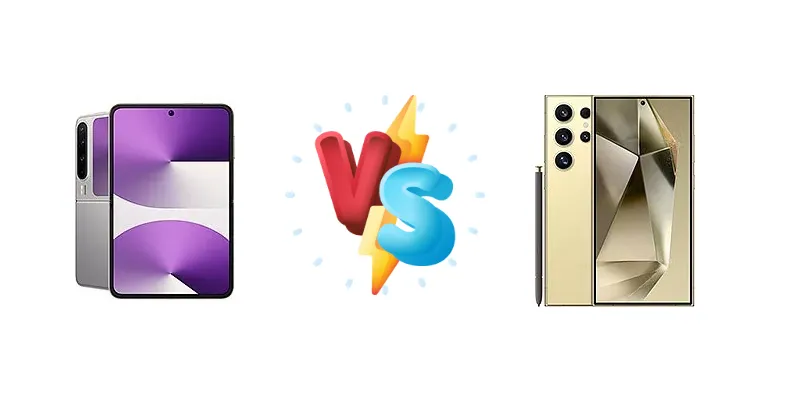
|
🏆 Quick Verdict
For the average user prioritizing sustained performance and a mature software ecosystem, the Samsung Galaxy S24 Ultra emerges as the winner. Its Snapdragon 8 Gen 3 chipset, coupled with superior battery life and a brighter display, provides a more consistently polished experience. However, the Pura X’s faster charging and unique design may appeal to Huawei loyalists.
| PHONES | ||
|---|---|---|
| Phone Names | Huawei Pura X | Samsung Galaxy S24 Ultra |
| Network | ||
|---|---|---|
| 2G bands | GSM 850 / 900 / 1800 / 1900 | GSM 850 / 900 / 1800 / 1900 |
| 3G bands | HSDPA 800 / 850 / 900 / 1700(AWS) / 1900 / 2100 | HSDPA 850 / 900 / 1700(AWS) / 1900 / 2100 |
| 4G bands | LTE | 1, 2, 3, 4, 5, 7, 8, 12, 13, 17, 18, 19, 20, 25, 26, 28, 32, 38, 39, 40, 41, 66 - International |
| 5G bands | SA/NSA | 1, 2, 3, 5, 7, 8, 12, 20, 25, 26, 28, 38, 40, 41, 66, 75, 77, 78 SA/NSA/Sub6 - International |
| Speed | HSPA, LTE, 5G | HSPA, LTE (up to 7CA), 5G |
| Technology | GSM / CDMA / HSPA / EVDO / LTE / 5G | GSM / CDMA / HSPA / EVDO / LTE / 5G |
| Launch | ||
|---|---|---|
| Announced | 2025, March 20 | 2024, January 17 |
| Status | Available. Released 2025, March 20 | Available. Released 2024, January 24 |
| Body | ||
|---|---|---|
| Build | Glass front, glass back or eco leather back, aluminum frame | Glass front (Corning Gorilla Armor), glass back (Corning Gorilla Armor), titanium frame (grade 2) |
| Dimensions | Unfolded: 143.2 x 91.7 x 7.2 mmFolded: 91.7 x 74.3 x 15.1 mm | 162.3 x 79 x 8.6 mm (6.39 x 3.11 x 0.34 in) |
| SIM | Nano-SIM + Nano-SIM | · Nano-SIM + Nano-SIM + eSIM + eSIM (max 2 at a time) - INT· Nano-SIM + eSIM + eSIM (max 2 at a time) - USA· Nano-SIM + Nano-SIM - CN |
| Weight | 193.7 g or 195.9 g (6.84 oz) | 232 g or 233 g (8.18 oz) |
| Display | ||
|---|---|---|
| Protection | - | Corning Gorilla Armor |
| Resolution | 1320 x 2120 pixels, 16:10 ratio (~396 ppi density) | 1440 x 3120 pixels, 19.5:9 ratio (~505 ppi density) |
| Size | 6.3 inches, 114.9 cm2 (~87.5% screen-to-body ratio) | 6.8 inches, 113.5 cm2 (~88.5% screen-to-body ratio) |
| Type | Foldable LTPO2 OLED, 1B colors, HDR Vivid, 120Hz, 2500 nits (peak) | Dynamic LTPO AMOLED 2X, 120Hz, HDR10+, 2600 nits (peak) |
| Platform | ||
|---|---|---|
| CPU | Octa-core (1x2.5 GHz Taishan Big & 3x2.15 GHz Taishan Mid & 4x1.53GHz Cortex-A510) | 8-core (1x3.39GHz Cortex-X4 & 3x3.1GHz Cortex-A720 & 2x2.9GHz Cortex-A720 & 2x2.2GHz Cortex-A520) |
| Chipset | Kirin 9020 (7 nm) | Qualcomm SM8650-AC Snapdragon 8 Gen 3 (4 nm) |
| GPU | Maleoon 920 | Adreno 750 (1 GHz) |
| OS | HarmonyOS 5.0 | Android 14, up to 7 major Android upgrades, One UI 8.0 |
| Memory | ||
|---|---|---|
| Card slot | No | No |
| Internal | 256GB 12GB RAM, 512GB 12GB RAM, 512GB 16GB RAM, 1TB 16GB RAM | 256GB 12GB RAM, 512GB 12GB RAM, 1TB 12GB RAM |
| Main Camera | ||
|---|---|---|
| Features | Laser AF, color spectrum sensor, LED flash, panorama, HDR | Laser AF, LED flash, auto-HDR, panorama |
| Quad | - | 200 MP, f/1.7, 24mm (wide), 1/1.3", 0.6µm, multi-directional PDAF, OIS 10 MP, f/2.4, 67mm (telephoto), 1/3.52", 1.12µm, PDAF, OIS, 3x optical zoom 50 MP, f/3.4, 111mm (periscope telephoto), 1/2.52", 0.7µm, PDAF, OIS, 5x optical zoom 12 MP, f/2.2, 13mm, 120˚ (ultrawide), 1/2.55", 1.4µm, dual pixel PDAF, Super Steady video |
| Triple | 50 MP, f/1.6, 23mm (wide), PDAF, OIS 8 MP, f/2.4, 80mm (telephoto), PDAF, OIS, 3.5x optical zoom 40 MP, f/2.2, 13mm (ultrawide), AF 1.5 MP multi-spectral channel red maple primary color camera | - |
| Video | 4K, 1080p, gyro-EIS, HDR Vivid | 8K@24/30fps, 4K@30/60/120fps, 1080p@30/60/120/240fps, HDR10+, stereo sound rec., gyro-EIS |
| Selfie camera | ||
|---|---|---|
| Features | - | HDR, HDR10+ |
| Single | 10.7 MP, f/2.2, (wide) | 12 MP, f/2.2, 26mm (wide), 1/3.2", 1.12µm, dual pixel PDAF |
| Video | 1080p, HDR Vivid | 4K@30/60fps, 1080p@30fps |
| Sound | ||
|---|---|---|
| 35mm jack | No | No |
| Loudspeaker | Yes, with stereo speakers | Yes, with stereo speakers |
| Comms | ||
|---|---|---|
| Bluetooth | 5.2, A2DP, LE, L2HC | 5.3, A2DP, LE |
| Infrared port | Yes | - |
| NFC | Yes | Yes |
| Positioning | GPS (L1+L5), BDS (B1I+B1c+B2a+B2b), GALILEO (E1+E5a+E5b), QZSS (L1+L5), GLONASS, NavIC | GPS, GLONASS, BDS, GALILEO, QZSS |
| Radio | No | No |
| USB | USB Type-C 3.1, OTG, DisplayPort 1.2 | USB Type-C 3.2, DisplayPort 1.2, OTG |
| WLAN | Wi-Fi 802.11 a/b/g/n/ac/6/7, dual-band, Wi-Fi Direct | Wi-Fi 802.11 a/b/g/n/ac/6e/7, tri-band, Wi-Fi Direct |
| Features | ||
|---|---|---|
| Sensors | Fingerprint (side-mounted), accelerometer, gyro, proximity, compass | Fingerprint (under display, ultrasonic), accelerometer, gyro, proximity, compass, barometer |
| Battery | ||
|---|---|---|
| Charging | 66W wired 40W wireless 7.5W reverse wireless 5W reverse wired | 45W wired, PD3.0, 65% in 30 min 15W wireless (Qi) 4.5W reverse wireless |
| Type | 4720 mAh | Li-Ion 5000 mAh |
| Misc | ||
|---|---|---|
| Colors | Red, Green, Gray, White, Black | Titanium Black, Titanium Gray, Titanium Violet, Titanium Yellow, Titanium Blue, Titanium Green, Titanium Orange |
| Models | VDE-AL00 | SM-S928B, SM-S928B/DS, SM-S928U, SM-S928U1, SM-S928W, SM-S928N, SM-S9280, SM-S928E, SM-S928E/DS |
| Price | About 960 EUR | $ 514.94 / C$ 929.99 / £ 630.00 / € 658.53 / ₹ 84,999 |
| SAR | - | 1.26 W/kg (head) 0.62 W/kg (body) |
| SAR EU | - | 1.06 W/kg (head) 1.30 W/kg (body) |
Huawei Pura X
- Significantly faster 66W wired charging
- Potentially more unique design language
- Strong reverse wireless charging capabilities
- Kirin 9020 chipset may throttle under sustained load
- Software ecosystem may be less mature than Samsung's
Samsung Galaxy S24 Ultra
- Superior performance with Snapdragon 8 Gen 3
- Exceptional battery life (13:49h active use)
- Brighter and more efficient display
- Slower 45W wired charging
- Higher price point
Display Comparison
The Samsung Galaxy S24 Ultra boasts a significantly brighter display, reaching a measured 1447 nits, crucial for outdoor visibility. While the Pura X’s display specs are not provided, Samsung’s panel likely utilizes LTPO technology for adaptive refresh rates, enhancing power efficiency. The S24 Ultra’s higher peak brightness translates to a more vibrant and readable experience in direct sunlight, a key advantage for users frequently outdoors. The S24 Ultra's display is also likely to have a higher PWM dimming frequency, potentially reducing eye strain for sensitive users.
Camera Comparison
While both phones are expected to deliver excellent image quality, the S24 Ultra likely holds an advantage due to Samsung’s established camera expertise and image processing algorithms. The Pura X’s camera specs are not detailed, but the S24 Ultra’s larger sensor size and advanced OIS system will likely result in better low-light performance and sharper images. The S24 Ultra’s video capabilities are also likely to be more refined, offering features like 8K recording and advanced stabilization. We'll ignore any 2MP macro lenses on either device as they offer minimal practical benefit.
Performance
The core difference lies in the chipsets: Huawei’s Kirin 9020 (7nm) versus Qualcomm’s Snapdragon 8 Gen 3 (4nm). The Snapdragon 8 Gen 3’s 4nm process offers superior transistor density and thermal efficiency compared to the Kirin 9020’s 7nm node. This translates to less throttling under sustained load, benefiting gamers and power users. The Snapdragon 8 Gen 3’s CPU configuration – a Cortex-X4 prime core alongside Cortex-A720 performance cores – provides a performance edge over the Kirin 9020’s Taishan architecture, which, while capable, lacks the widespread optimization of ARM’s reference designs. The S24 Ultra’s LPDDR5x RAM further contributes to faster data access and overall system responsiveness.
Battery Life
The Samsung Galaxy S24 Ultra demonstrates a clear advantage in battery endurance, achieving 13:49 hours of active use. While the Pura X’s battery capacity is unknown, its 66W wired charging significantly outpaces the S24 Ultra’s 45W charging, allowing for a quicker top-up. The Pura X also offers 40W wireless and 7.5W reverse wireless charging, exceeding the S24 Ultra’s 15W wireless and 4.5W reverse wireless capabilities. However, the S24 Ultra’s superior battery life mitigates the slower charging speed for many users.
Buying Guide
Buy the Huawei Pura X if you prioritize incredibly fast charging speeds (66W wired) and a distinctive design aesthetic, and are comfortable with the Huawei ecosystem. Buy the Samsung Galaxy S24 Ultra if you demand the most consistently powerful performance, a class-leading camera system, and the longevity of Samsung’s software support, even if it means slightly slower charging.