
Huawei Pura 80 Ultra vs OnePlus 12R: A Deep Dive into Flagship Performance
| Phones Images | |||||
|---|---|---|---|---|---|
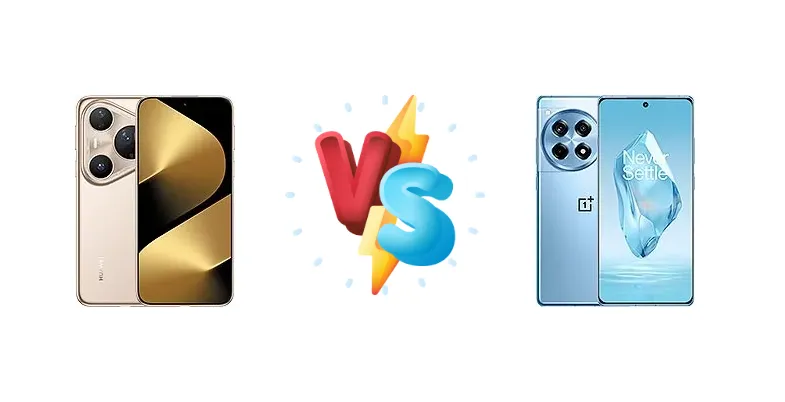
|
🏆 Quick Verdict
For most users, the OnePlus 12R emerges as the stronger choice. Its Snapdragon 8 Gen 2 chipset delivers demonstrably better performance and efficiency, coupled with a brighter display and faster charging, all at a potentially lower price point. While the Pura 80 Ultra boasts impressive charging speeds, it can't overcome the performance gap.
| PHONES | ||
|---|---|---|
| Phone Names | Huawei Pura 80 Ultra | OnePlus 12R |
| Network | ||
|---|---|---|
| 2G bands | GSM 850 / 900 / 1800 / 1900 | GSM 850 / 900 / 1800 / 1900 |
| 3G bands | HSDPA 800 / 850 / 900 / 1700(AWS) / 1900 / 2100 | HSDPA 850 / 900 / 1700(AWS) / 1900 / 2100 |
| 4G bands | 1, 2, 3, 4, 5, 6, 7, 8, 9, 12, 13, 17, 18, 19, 20, 25, 26, 28, 32, 34, 38, 39, 40, 41, 42, 66 - International | 1, 2, 3, 4, 5, 7, 8, 12, 17, 18, 19, 20, 26, 28, 32, 38, 39, 40, 41, 66 |
| 5G bands | SA/NSA - China only | 1, 2, 3, 5, 7, 8, 12, 20, 28, 38, 40, 41, 66, 77, 78 SA/NSA |
| Speed | HSPA, LTE, 5G (China only) | HSPA, LTE, 5G |
| Technology | GSM / CDMA / HSPA / CDMA2000 / LTE / 5G | GSM / CDMA / HSPA / LTE / 5G |
| Launch | ||
|---|---|---|
| Announced | 2025, June 11 | 2024, January 23 |
| Status | Available. Released 2025, June 11 | Available. Released 2024, February 06 |
| Body | ||
|---|---|---|
| Build | Glass front, aluminum frame, glass back | Glass front (Gorilla Glass Victus 2), aluminum frame, glass back |
| Dimensions | 163 x 76.1 x 8.3 mm (6.42 x 3.00 x 0.33 in) | 163.3 x 75.3 x 8.8 mm (6.43 x 2.96 x 0.35 in) |
| SIM | · Nano-SIM + Nano-SIM + eSIM (max 2 at a time)· Nano-SIM + eSIM | · Nano-SIM + Nano-SIM + eSIM (max 2 at a time)· Nano-SIM + Nano-SIM |
| Weight | 233.5 g (8.25 oz) | 207 g (7.30 oz) |
| Display | ||
|---|---|---|
| Protection | Kunlun Glass 2 (Basalt-tempered) / 2nd-Gen Crystal Armor Kunlun Glass, Mohs level 4 | Corning Gorilla Glass Victus 2 |
| Resolution | 1276 x 2848 pixels, 20:9 ratio (~459 ppi density) | 1264 x 2780 pixels (~450 ppi density) |
| Size | 6.8 inches, 111.3 cm2 (~89.7% screen-to-body ratio) | 6.78 inches, 111.7 cm2 (~90.9% screen-to-body ratio) |
| Type | LTPO OLED, 1B colors, HDR Vivid, 120Hz, 1440Hz PWM, 3000 nits (peak) | LTPO4 AMOLED, 1B colors, 120Hz, HDR10+, Dolby Vision, 1600 nits (HBM), 4500 nits (peak) |
| Platform | ||
|---|---|---|
| CPU | Octa-core (1x2.5GHz & 3x2.15 GHz & 4x1.6GHz) | Octa-core (1x3.2 GHz Cortex-X3 & 2x2.8 GHz Cortex-A715 & 2x2.8 GHz Cortex-A710 & 3x2.0 GHz Cortex-A510) |
| Chipset | Kirin 9020 (7 nm) | Qualcomm SM8550-AB Snapdragon 8 Gen 2 (4 nm) |
| GPU | Maleoon 920 | Adreno 740 |
| OS | EMUI 15 (International), HarmonyOS 5.1 (China) | Android 14, up to 3 major Android upgrades, OxygenOS 15 |
| Memory | ||
|---|---|---|
| Card slot | No | No |
| Internal | 512GB 16GB RAM, 1TB 16GB RAM | 128GB 8GB RAM, 256GB 8GB RAM, 256GB 12GB RAM, 256GB 16GB RAM |
| Main Camera | ||
|---|---|---|
| Features | Laser AF, color spectrum sensor, LED flash, panorama, HDR | Laser AF, color spectrum sensor, LED flash, HDR, panorama |
| Quad | 50 MP, f/1.6-4.0, 23mm (wide), 1.0"-type, dual pixel PDAF, OIS 50 MP, f/2.4, 83mm (periscope telephoto), 1/1.28", PDAF, sensor-shift OIS, 3.7x optical zoom 12.5 MP, f/3.6, 212mm (periscope telephoto), PDAF, sensor-shift OIS, 9.4x optical zoom 40 MP, f/2.2, 13mm (ultrawide), AF * Both telephoto cameras utilize the same camera sensor w/o continuous optical zoom | - |
| Triple | - | 50 MP, f/1.8, 24mm (wide), 1/1.56", 1.0µm, multi-directional PDAF, OIS 8 MP, f/2.2, 16mm, 112˚ (ultrawide), 1/4.0", 1.12µm 2 MP (macro) |
| Video | 4K, 1080p, 1080p@960fps (interpolated), HDR Vivid, gyro-EIS, OIS | 4K@30/60fps, 1080p@30/60/120/240fps, gyro-EIS, OIS |
| Selfie camera | ||
|---|---|---|
| Features | HDR, panorama | HDR, panorama |
| Single | 13 MP, f/2.0, (ultrawide), AF | 16 MP, f/2.4, 26mm (wide), 1/3", 1.0µm |
| Video | 4K, 1080p, 1080p@240fps, HDR Vivid, gyro-EIS | 1080p@30fps, gyro-EIS |
| Sound | ||
|---|---|---|
| 35mm jack | No | No |
| Loudspeaker | Yes, with stereo speakers | Yes, with stereo speakers |
| Comms | ||
|---|---|---|
| Bluetooth | 5.2, A2DP, LE, L2HC | 5.3, A2DP, LE, aptX HD |
| Infrared port | Yes | Yes |
| NFC | Yes | Yes |
| Positioning | GPS (L1+L5), GLONASS (L1), BDS (B1I+B1c+B2a+B2b), GALILEO (E1+E5a+E5b), QZSS (L1+L5), NavIC | GPS, GALILEO, GLONASS, BDS, QZSS |
| Radio | No | No |
| USB | USB Type-C 3.1, OTG, DisplayPort 1.2 | USB Type-C 2.0 |
| WLAN | Wi-Fi 802.11 a/b/g/n/ac/6/7, dual-band, Wi-Fi Direct | Wi-Fi 802.11 a/b/g/n/ac/6/7, dual-band |
| Features | ||
|---|---|---|
| Sensors | Fingerprint (side-mounted), accelerometer, gyro, proximity, compass, barometer | Fingerprint (under display, optical), accelerometer, gyro, proximity, compass |
| Battery | ||
|---|---|---|
| Charging | 100W wired 80W wireless 20W reverse wireless 18W reverse wired | 100W wired, 100% in 26 min |
| Type | Market-dependent versions:· Li-Po 5170 mAh - International· Li-Po 5700 mAh - China | Li-Ion 5500 mAh |
| Misc | ||
|---|---|---|
| Colors | Prestige Gold, Golden Black | Iron Gray, Cool Blue, Electric Violet, Sunset Dune |
| Models | LMR-AL10, LMU-LX9 | CPH2609, CPH2585, CPH2611 |
| Price | About 1880 EUR | € 410.84 / $ 399.95 / £ 649.00 |
| SAR | - | 1.19 W/kg (head) 0.82 W/kg (body) |
| EU LABEL | ||
|---|---|---|
| Battery | 41:00h endurance, 1000 cycles | - |
| Energy | Class C | - |
| Free fall | Class D (45 falls) | - |
| Repairability | Class C | - |
Huawei Pura 80 Ultra
- Faster Wireless Charging (80W)
- Reverse Wired and Wireless Charging
- Potentially Superior Computational Photography
- Less Powerful Chipset (Kirin 9020)
- Shorter Battery Life (Active Use)
- Less Bright Display
OnePlus 12R
- More Powerful Chipset (Snapdragon 8 Gen 2)
- Longer Battery Life (Active Use)
- Brighter Display (1181 nits)
- Faster Charging (0-100% in 26 min)
- No Wireless Charging
- Less Versatile Charging Options
Display Comparison
The OnePlus 12R boasts a brighter display, reaching 1181 nits compared to the Pura 80 Ultra’s 1029 nits. This translates to better outdoor visibility in direct sunlight. While both displays are excellent, the higher peak brightness of the 12R provides a tangible advantage. Neither specification details refresh rate or panel type, but given the flagship positioning, both are likely to be high-refresh-rate OLED panels. The difference in brightness is the key differentiator here.
Camera Comparison
Without detailed camera specifications, a direct comparison is limited. However, the Pura 80 Ultra’s brand history suggests a focus on computational photography, potentially leveraging Huawei’s image processing expertise. The OnePlus 12R, while capable, typically prioritizes a more natural image profile. The absence of sensor size details makes it difficult to assess low-light performance, but the Snapdragon’s ISP (Image Signal Processor) is generally regarded as highly capable. We can assume both phones will offer versatile camera systems, but the Pura 80 Ultra may excel in software-driven image enhancements.
Performance
The core difference lies in the chipsets. The OnePlus 12R’s Snapdragon 8 Gen 2 (4nm) is built on a more efficient node than the Huawei Pura 80 Ultra’s Kirin 9020 (7nm). This 4nm process allows the Snapdragon to deliver more performance per watt, reducing thermal throttling during sustained workloads. The Snapdragon 8 Gen 2’s CPU configuration – 1x3.2 GHz Cortex-X3, 2x2.8 GHz Cortex-A715, 2x2.8 GHz Cortex-A710, and 3x2.0 GHz Cortex-A510 – is also architecturally superior to the Kirin 9020’s octa-core setup, promising faster application loading and smoother multitasking. Gamers and power users will overwhelmingly benefit from the Snapdragon.
Battery Life
The OnePlus 12R delivers a significantly longer active use score of 14:32h compared to the Pura 80 Ultra’s 11:51h. While the Pura 80 Ultra boasts impressive charging capabilities – 100W wired, 80W wireless, and 20W reverse wireless – the 12R’s 100W wired charging (0-100% in 26 minutes) is competitive. The Pura 80 Ultra’s wireless and reverse wireless charging are unique advantages, but the 12R’s superior battery endurance is more impactful for daily use. The Pura 80 Ultra claims 1000 battery cycles, suggesting a focus on long-term battery health.
Buying Guide
Buy the Huawei Pura 80 Ultra if you prioritize wireless charging convenience and are deeply embedded in the Huawei ecosystem, valuing its unique software features and aesthetic. Buy the OnePlus 12R if you demand raw performance for gaming and demanding tasks, coupled with a brighter, more visible display and a more established Android experience.