
Huawei Pura 70 Ultra vs OnePlus 12R: A Head-to-Head Flagship Showdown
| Phones Images | |||||
|---|---|---|---|---|---|
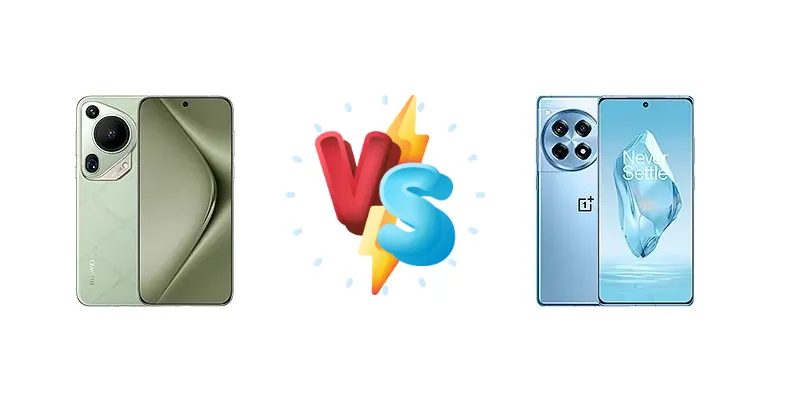
|
🏆 Quick Verdict
For the average user prioritizing all-day battery life and proven performance, the OnePlus 12R emerges as the stronger choice. Its Snapdragon 8 Gen 2 chipset and 14:32h active use score provide a more consistent experience, while the Pura 70 Ultra’s appeal lies with users deeply invested in the Huawei ecosystem and camera-centric features.
| PHONES | ||
|---|---|---|
| Phone Names | Huawei Pura 70 Ultra | OnePlus 12R |
| Network | ||
|---|---|---|
| 2G bands | GSM 850 / 900 / 1800 / 1900 | GSM 850 / 900 / 1800 / 1900 |
| 3G bands | HSDPA 800 / 850 / 900 / 1700(AWS) / 1900 / 2100 | HSDPA 850 / 900 / 1700(AWS) / 1900 / 2100 |
| 4G bands | 1, 2, 3, 4, 5, 6, 7, 8, 9, 12, 17, 18, 19, 20, 26, 28, 34, 38, 39, 40, 41, 42 | 1, 2, 3, 4, 5, 7, 8, 12, 17, 18, 19, 20, 26, 28, 32, 38, 39, 40, 41, 66 |
| 5G bands | SA/NSA - China only | 1, 2, 3, 5, 7, 8, 12, 20, 28, 38, 40, 41, 66, 77, 78 SA/NSA |
| Speed | HSPA, LTE, 5G | HSPA, LTE, 5G |
| Technology | GSM / CDMA / HSPA / CDMA2000 / LTE / 5G | GSM / CDMA / HSPA / LTE / 5G |
| Launch | ||
|---|---|---|
| Announced | 2024, April 18 | 2024, January 23 |
| Status | Available. Released 2024, April 29 | Available. Released 2024, February 06 |
| Body | ||
|---|---|---|
| Build | Glass front, aluminum frame, silicone polymer back (eco leather) | Glass front (Gorilla Glass Victus 2), aluminum frame, glass back |
| Dimensions | 162.6 x 75.1 x 8.4 mm (6.40 x 2.96 x 0.33 in) | 163.3 x 75.3 x 8.8 mm (6.43 x 2.96 x 0.35 in) |
| SIM | Nano-SIM + Nano-SIM | · Nano-SIM + Nano-SIM + eSIM (max 2 at a time)· Nano-SIM + Nano-SIM |
| Weight | 226 g (7.97 oz) | 207 g (7.30 oz) |
| Display | ||
|---|---|---|
| Protection | Kunlun Glass (Basalt-tempered) | Corning Gorilla Glass Victus 2 |
| Resolution | 1260 x 2844 pixels (~460 ppi density) | 1264 x 2780 pixels (~450 ppi density) |
| Size | 6.8 inches, 109.0 cm2 (~89.3% screen-to-body ratio) | 6.78 inches, 111.7 cm2 (~90.9% screen-to-body ratio) |
| Type | LTPO OLED, 1B colors, HDR, 120Hz, 1440Hz PWM, 2500 nits (peak) | LTPO4 AMOLED, 1B colors, 120Hz, HDR10+, Dolby Vision, 1600 nits (HBM), 4500 nits (peak) |
| Platform | ||
|---|---|---|
| CPU | Octa-core (1x2.3 GHz Taishan Big & 3x2.18 GHz Taishan Mid & 4x1.55 GHz Cortex-A510) | Octa-core (1x3.2 GHz Cortex-X3 & 2x2.8 GHz Cortex-A715 & 2x2.8 GHz Cortex-A710 & 3x2.0 GHz Cortex-A510) |
| Chipset | Kirin 9010 (7 nm) | Qualcomm SM8550-AB Snapdragon 8 Gen 2 (4 nm) |
| GPU | - | Adreno 740 |
| OS | EMUI 14.2 (International), HarmonyOS 4.2 (China) | Android 14, up to 3 major Android upgrades, OxygenOS 15 |
| Memory | ||
|---|---|---|
| Card slot | No | No |
| Internal | 512GB 12GB RAM, 512GB 16GB RAM, 1TB 16GB RAM | 128GB 8GB RAM, 256GB 8GB RAM, 256GB 12GB RAM, 256GB 16GB RAM |
| Main Camera | ||
|---|---|---|
| Features | Laser AF, color spectrum sensor, LED flash, panorama, HDR | Laser AF, color spectrum sensor, LED flash, HDR, panorama |
| Triple | 50 MP, f/1.6-4.0, 23mm (wide), 1.0"-type, dual pixel PDAF, sensor-shift OIS, retractable lens 50 MP, f/2.1, 90mm (telephoto), PDAF (5cm - ∞), OIS, 3.5x optical zoom 40 MP, f/2.2, 13mm (ultrawide), AF | 50 MP, f/1.8, 24mm (wide), 1/1.56", 1.0µm, multi-directional PDAF, OIS 8 MP, f/2.2, 16mm, 112˚ (ultrawide), 1/4.0", 1.12µm 2 MP (macro) |
| Video | 4K, 1080p, HDR, gyro-EIS, OIS | 4K@30/60fps, 1080p@30/60/120/240fps, gyro-EIS, OIS |
| Selfie camera | ||
|---|---|---|
| Features | HDR, panorama | HDR, panorama |
| Single | 13 MP, f/2.4, (ultrawide), AF | 16 MP, f/2.4, 26mm (wide), 1/3", 1.0µm |
| Video | Yes, HDR | 1080p@30fps, gyro-EIS |
| Sound | ||
|---|---|---|
| 35mm jack | No | No |
| Loudspeaker | Yes, with stereo speakers | Yes, with stereo speakers |
| Comms | ||
|---|---|---|
| Bluetooth | 5.2, A2DP, LE, L2HC | 5.3, A2DP, LE, aptX HD |
| Infrared port | Yes | Yes |
| NFC | Yes | Yes |
| Positioning | GPS (L1+L5), GLONASS (L1), BDS (B1I+B1c+B2a+B2b), GALILEO (E1+E5a+E5b), QZSS (L1+L5), NavIC | GPS, GALILEO, GLONASS, BDS, QZSS |
| Radio | No | No |
| USB | USB Type-C 3.1, OTG, DisplayPort 1.2 | USB Type-C 2.0 |
| WLAN | Wi-Fi 802.11 a/b/g/n/ac/6, dual-band, Wi-Fi Direct | Wi-Fi 802.11 a/b/g/n/ac/6/7, dual-band |
| Features | ||
|---|---|---|
| Sensors | Fingerprint (under display, optical), accelerometer, proximity, gyro, compass | Fingerprint (under display, optical), accelerometer, gyro, proximity, compass |
| Battery | ||
|---|---|---|
| Charging | 100W wired 80W wireless 20W reverse wireless 18W reverse wired | 100W wired, 100% in 26 min |
| Type | Li-Po 5200 mAh | Li-Ion 5500 mAh |
| Misc | ||
|---|---|---|
| Colors | Black, White, Brown, Green | Iron Gray, Cool Blue, Electric Violet, Sunset Dune |
| Models | HBP-LX9, HBP-AL00 | CPH2609, CPH2585, CPH2611 |
| Price | € 1,239.99 | € 410.84 / $ 399.95 / £ 649.00 |
| SAR | - | 1.19 W/kg (head) 0.82 W/kg (body) |
Huawei Pura 70 Ultra
- Faster Wireless Charging (80W)
- Potentially Superior Camera System
- Innovative Huawei Features
- Shorter Battery Life
- Kirin Chipset Ecosystem Concerns
- Less Established Software Support
OnePlus 12R
- Longer Battery Life
- Proven Snapdragon 8 Gen 2 Performance
- Faster Wired Charging (26 min to 100%)
- No Wireless Charging
- Less Camera Innovation
- More Generic Design
Display Comparison
Both devices feature excellent displays, with the Huawei Pura 70 Ultra reaching a measured peak brightness of 1231 nits and the OnePlus 12R at 1181 nits. While the difference is noticeable, both are perfectly usable in direct sunlight. The Pura 70 Ultra’s display technology isn’t specified, but the 12R’s 120Hz panel offers smooth scrolling and animations. The slight brightness advantage of the Pura 70 Ultra may be more impactful for HDR content consumption, but the OnePlus 12R’s display is still highly competitive.
Camera Comparison
Without detailed camera specs, a direct comparison is difficult. However, Huawei historically excels in computational photography. The Pura 70 Ultra likely leverages advanced algorithms and sensor technology to deliver impressive image quality, particularly in low-light conditions. The OnePlus 12R, while capable, likely relies more on hardware and less on extensive software processing. The Pura 70 Ultra’s camera system is likely the key differentiator, appealing to users who prioritize photographic capabilities above all else. Ignoring the likely inclusion of a 2MP macro lens on both devices, the main sensor and image processing pipeline will be the deciding factors.
Performance
The core difference lies in the chipsets. The OnePlus 12R’s Snapdragon 8 Gen 2 (4nm) is a proven performer, boasting a Cortex-X3 prime core clocked at 3.2 GHz. This contrasts with the Huawei Pura 70 Ultra’s Kirin 9010 (7nm), which utilizes a tri-cluster architecture with Taishan cores. While Huawei claims performance parity, the Snapdragon 8 Gen 2’s more efficient 4nm process generally translates to better sustained performance and thermal management, especially during extended gaming sessions. The 12R’s LPDDR5x RAM further contributes to its responsiveness. The Kirin 9010’s architecture is less understood in the wider Android ecosystem, potentially leading to software optimization challenges.
Battery Life
The OnePlus 12R takes a clear lead in battery endurance, achieving an impressive 14:32h active use score compared to the Pura 70 Ultra’s 12:29h. While the Pura 70 Ultra offers faster wireless charging (80W vs none on the 12R) and reverse wireless charging (20W vs 18W), the 12R’s superior battery life and 26-minute 100W wired charging provide a more practical solution for most users. The Pura 70 Ultra’s charging versatility is a bonus, but doesn’t compensate for the shorter overall runtime.
Buying Guide
Buy the Huawei Pura 70 Ultra if you prioritize a unique camera system, are comfortable with the Huawei ecosystem (and potential app limitations), and value innovative features like 80W wireless charging. Buy the OnePlus 12R if you demand consistently high performance for gaming and demanding tasks, need exceptional battery life, and prefer a more open Android experience with guaranteed software updates.