
Huawei Pura 70 Pro vs OnePlus 12R: A Detailed Comparison of Flagship Features
| Phones Images | |||||
|---|---|---|---|---|---|
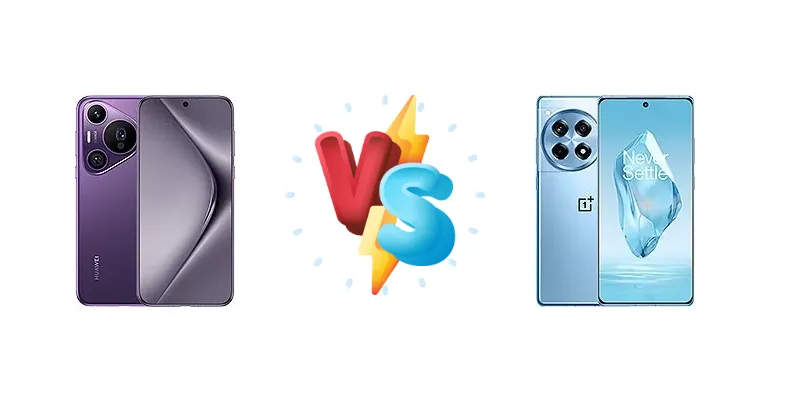
|
🏆 Quick Verdict
For the average user prioritizing raw performance and sustained gaming, the OnePlus 12R emerges as the stronger choice. Its Snapdragon 8 Gen 2, built on a 4nm process, offers superior thermal efficiency and consistently higher frame rates. However, the Pura 70 Pro’s 100W wired *and* 80W wireless charging are compelling advantages.
| PHONES | ||
|---|---|---|
| Phone Names | Huawei Pura 70 Pro | OnePlus 12R |
| Network | ||
|---|---|---|
| 2G bands | GSM 850 / 900 / 1800 / 1900 | GSM 850 / 900 / 1800 / 1900 |
| 3G bands | HSDPA 800 / 850 / 900 / 1700(AWS) / 1900 / 2100 | HSDPA 850 / 900 / 1700(AWS) / 1900 / 2100 |
| 4G bands | 1, 2, 3, 4, 5, 6, 7, 8, 9, 12, 13, 17, 18, 19, 20, 26, 28, 34, 38, 39, 40, 41, 42, 66 | 1, 2, 3, 4, 5, 7, 8, 12, 17, 18, 19, 20, 26, 28, 32, 38, 39, 40, 41, 66 |
| 5G bands | SA/NSA - China only | 1, 2, 3, 5, 7, 8, 12, 20, 28, 38, 40, 41, 66, 77, 78 SA/NSA |
| Speed | HSPA, LTE, 5G | HSPA, LTE, 5G |
| Technology | GSM / CDMA / HSPA / CDMA2000 / LTE / 5G | GSM / CDMA / HSPA / LTE / 5G |
| Launch | ||
|---|---|---|
| Announced | 2024, April 18 | 2024, January 23 |
| Status | Available. Released 2024, April 29 | Available. Released 2024, February 06 |
| Body | ||
|---|---|---|
| Build | Glass front, aluminum frame, glass back | Glass front (Gorilla Glass Victus 2), aluminum frame, glass back |
| Dimensions | 162.6 x 75.1 x 8.4 mm (6.40 x 2.96 x 0.33 in) | 163.3 x 75.3 x 8.8 mm (6.43 x 2.96 x 0.35 in) |
| SIM | · Nano-SIM + eSIM· Nano-SIM + Nano-SIM | · Nano-SIM + Nano-SIM + eSIM (max 2 at a time)· Nano-SIM + Nano-SIM |
| Weight | 220 g (7.76 oz) | 207 g (7.30 oz) |
| Display | ||
|---|---|---|
| Protection | Kunlun Glass 2 | Corning Gorilla Glass Victus 2 |
| Resolution | 1260 x 2844 pixels (~460 ppi density) | 1264 x 2780 pixels (~450 ppi density) |
| Size | 6.8 inches, 109.0 cm2 (~89.3% screen-to-body ratio) | 6.78 inches, 111.7 cm2 (~90.9% screen-to-body ratio) |
| Type | LTPO OLED, 1B colors, HDR, 120Hz, 1440Hz PWM, 2500 nits (peak) | LTPO4 AMOLED, 1B colors, 120Hz, HDR10+, Dolby Vision, 1600 nits (HBM), 4500 nits (peak) |
| Platform | ||
|---|---|---|
| CPU | Octa-core (1x2.3 GHz Taishan Big & 3x2.18 GHz Taishan Mid & 4x1.55 GHz Cortex-A510) | Octa-core (1x3.2 GHz Cortex-X3 & 2x2.8 GHz Cortex-A715 & 2x2.8 GHz Cortex-A710 & 3x2.0 GHz Cortex-A510) |
| Chipset | Kirin 9010 (7 nm) | Qualcomm SM8550-AB Snapdragon 8 Gen 2 (4 nm) |
| GPU | - | Adreno 740 |
| OS | EMUI 14.2 (International), HarmonyOS 4.2 (China) | Android 14, up to 3 major Android upgrades, OxygenOS 15 |
| Memory | ||
|---|---|---|
| Card slot | No | No |
| Internal | 256GB 12GB RAM, 512GB 12GB RAM, 512GB 16GB RAM, 1TB 12GB RAM | 128GB 8GB RAM, 256GB 8GB RAM, 256GB 12GB RAM, 256GB 16GB RAM |
| Main Camera | ||
|---|---|---|
| Features | Laser AF, color spectrum sensor, LED flash, panorama, HDR | Laser AF, color spectrum sensor, LED flash, HDR, panorama |
| Triple | 50 MP, f/1.4-4.0, 25mm (wide), 1/1.3", PDAF, OIS 48 MP, f/2.1, 93mm (telephoto), PDAF (5cm - ∞), OIS, 3.5x optical zoom 12.5 MP, f/2.2, 13mm (ultrawide) | 50 MP, f/1.8, 24mm (wide), 1/1.56", 1.0µm, multi-directional PDAF, OIS 8 MP, f/2.2, 16mm, 112˚ (ultrawide), 1/4.0", 1.12µm 2 MP (macro) |
| Video | 4K, 1080p, HDR, gyro-EIS, OIS | 4K@30/60fps, 1080p@30/60/120/240fps, gyro-EIS, OIS |
| Selfie camera | ||
|---|---|---|
| Features | HDR, panorama | HDR, panorama |
| Single | 13 MP, f/2.4, (ultrawide), AF | 16 MP, f/2.4, 26mm (wide), 1/3", 1.0µm |
| Video | Yes, HDR | 1080p@30fps, gyro-EIS |
| Sound | ||
|---|---|---|
| 35mm jack | No | No |
| Loudspeaker | Yes, with stereo speakers | Yes, with stereo speakers |
| Comms | ||
|---|---|---|
| Bluetooth | 5.2, A2DP, LE, L2HC | 5.3, A2DP, LE, aptX HD |
| Infrared port | Yes | Yes |
| NFC | Yes | Yes |
| Positioning | GPS (L1+L5), GLONASS (L1), BDS (B1I+B1c+B2a+B2b), GALILEO (E1+E5a+E5b), QZSS (L1+L5), NavIC | GPS, GALILEO, GLONASS, BDS, QZSS |
| Radio | No | No |
| USB | USB Type-C 3.1, OTG, DisplayPort 1.2 | USB Type-C 2.0 |
| WLAN | Wi-Fi 802.11 a/b/g/n/ac/6, dual-band, Wi-Fi Direct | Wi-Fi 802.11 a/b/g/n/ac/6/7, dual-band |
| Features | ||
|---|---|---|
| Sensors | Fingerprint (under display, optical), accelerometer, proximity, gyro, compass | Fingerprint (under display, optical), accelerometer, gyro, proximity, compass |
| Battery | ||
|---|---|---|
| Charging | 100W wired 80W wireless 20W reverse wireless 18W reverse wired | 100W wired, 100% in 26 min |
| Type | Li-Po 5050 mAh | Li-Ion 5500 mAh |
| Misc | ||
|---|---|---|
| Colors | Black, White, Purple | Iron Gray, Cool Blue, Electric Violet, Sunset Dune |
| Models | HBN-LX9, HBN-AL00 | CPH2609, CPH2585, CPH2611 |
| Price | € 555.03 | € 410.84 / $ 399.95 / £ 649.00 |
| SAR | - | 1.19 W/kg (head) 0.82 W/kg (body) |
Huawei Pura 70 Pro
- 80W Wireless Charging – Significantly faster than the OnePlus 12R.
- Potential for superior camera image processing (based on Huawei’s history).
- 20W Reverse Wired Charging – Versatile for accessory charging.
- Less efficient 7nm Kirin 9010 chipset.
- Limited information on display specifications.
- Potential software restrictions due to geopolitical factors.
OnePlus 12R
- Snapdragon 8 Gen 2 (4nm) – Superior performance and efficiency.
- Excellent battery life (14:32h active use).
- 1181 nits peak brightness – Great outdoor visibility.
- Lacks wireless charging.
- No advanced camera features (compared to potential Pura 70 Pro capabilities).
- Standard Android experience may not appeal to all users.
Display Comparison
The OnePlus 12R boasts a display capable of reaching 1181 nits of peak brightness, ensuring excellent visibility even in direct sunlight. While the Pura 70 Pro’s display specs are currently unavailable, Huawei typically employs OLED panels with strong color accuracy. The 12R’s brightness advantage is a tangible benefit for outdoor use. The absence of LTPO technology in the 12R, however, means it may not be as power-efficient as some competing displays when using dynamic refresh rates.
Camera Comparison
Without detailed camera specifications for the Pura 70 Pro, it’s difficult to make a direct comparison. However, Huawei has a strong reputation for computational photography. The OnePlus 12R’s camera system, while solid, likely won’t match Huawei’s image processing prowess. The Pura 70 Pro’s potential for advanced features like variable aperture or larger sensor sizes could give it an edge in low-light photography. We'll need to see detailed image samples to assess the true capabilities of the Pura 70 Pro’s camera.
Performance
The core difference lies in the chipsets. The OnePlus 12R’s Snapdragon 8 Gen 2 (4nm) utilizes a Cortex-X3 prime core clocked at 3.2 GHz, offering a significant performance leap over the Huawei Pura 70 Pro’s Kirin 9010 (7nm). The 4nm fabrication process of the Snapdragon translates to better thermal management, reducing the likelihood of performance throttling during extended gaming sessions. The Kirin 9010’s Taishan architecture, while capable, is less efficient. The 12R’s LPDDR5x RAM further enhances its performance capabilities.
Battery Life
The OnePlus 12R shines in battery endurance, achieving an impressive 14 hours and 32 minutes of active use. While the Pura 70 Pro’s battery capacity is unknown, its charging capabilities are noteworthy. Both support 100W wired charging, achieving a full charge in approximately 26 minutes for the 12R. However, the Pura 70 Pro adds 80W wireless charging and 20W reverse wireless charging, offering unparalleled convenience. The 18W reverse wired charging on the Pura 70 Pro is also a useful feature for topping up accessories.
Buying Guide
Buy the Huawei Pura 70 Pro if you prioritize innovative camera features, exceptionally fast wireless charging (80W), and are comfortable with the Huawei ecosystem. Buy the OnePlus 12R if you demand consistent, high-end gaming performance, long battery life (14:32h active use), and a more open Android experience. The 12R is the better option for power users and mobile gamers.