
Huawei P60 vs P50 Pro: A Clash of Flagship Titans
| Phones Images | |||||
|---|---|---|---|---|---|
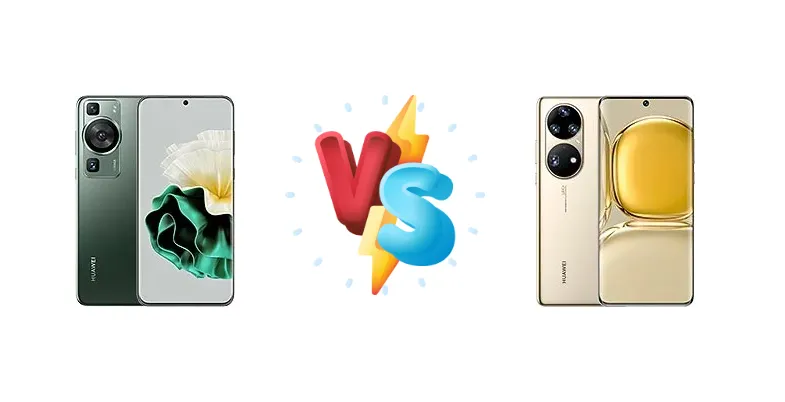
|
🏆 Quick Verdict
The Huawei P60 boasts a more powerful Snapdragon 8+ Gen 1 chipset, offering a noticeable performance boost. While the P50 Pro excels with its exceptional battery life and potentially slightly better image processing in certain scenarios, the P60's raw power and improved efficiency make it the overall winner for most users.
| PHONES | ||
|---|---|---|
| Phone Names | Huawei P60 | Huawei P50 Pro |
| Network | ||
|---|---|---|
| 2G bands | GSM 850 / 900 / 1800 / 1900 | GSM 850 / 900 / 1800 / 1900 |
| 3G bands | HSDPA 800 / 850 / 900 / 1700(AWS) / 1900 / 2100 | HSDPA 800 / 850 / 900 / 1700(AWS) / 1900 / 2100 |
| 4G bands | 1, 2, 3, 4, 5, 7, 8, 12, 17, 18, 19, 20, 26, 28, 34, 38, 39, 40, 41 | 1, 2, 3, 4, 5, 6, 7, 8, 9, 12, 17, 18, 19, 20, 26, 28, 34, 38, 39, 40, 41 - China |
| Speed | HSPA, LTE | HSPA, LTE |
| Technology | GSM / CDMA / HSPA / CDMA2000 / LTE | GSM / CDMA / HSPA / CDMA2000 / LTE |
| CDMA2000 1x | 1, 2, 3, 4, 5, 7, 8, 12, 17, 18, 19, 20, 26, 28, 32, 34, 38, 39, 40, 41, 66 - International | |
| Launch | ||
|---|---|---|
| Announced | 2023, March 23 | 2021, July 29 |
| Status | Available. Released 2023, March 31 | Available. Released 2021, August 12 |
| Body | ||
|---|---|---|
| Build | - | Glass front, glass back, aluminum frame |
| Dimensions | 161 x 74.5 x 8.3 mm (6.34 x 2.93 x 0.33 in) | 158.8 x 72.8 x 8.5 mm (6.25 x 2.87 x 0.33 in) |
| SIM | Nano-SIM + Nano-SIM | · Nano-SIM· Nano-SIM + Nano-SIM |
| Weight | 197 g (6.95 oz) | 195 g (6.88 oz) |
| IP68 dust/water resistant (up to 1.5m for 30 min) | IP68 dust/water resistant (up to 1.5m for 30 min) | |
| Display | ||
|---|---|---|
| Resolution | 1220 x 2700 pixels (~444 ppi density) | 1228 x 2700 pixels (~450 ppi density) |
| Size | 6.67 inches, 107.7 cm2 (~89.8% screen-to-body ratio) | 6.6 inches, 105.4 cm2 (~91.2% screen-to-body ratio) |
| Type | LTPO OLED, 1B colors, 120Hz | OLED, 1B colors, 120Hz |
| Platform | ||
|---|---|---|
| CPU | Octa-core (1x3.0 GHz Cortex-X2 & 3x2.5 GHz Cortex-A710 & 4x1.8 GHz Cortex-A510) | Octa-core (1x3.13 GHz Cortex-A77 & 3x2.54 GHz Cortex-A77 & 4x2.05 GHz Cortex-A55)Octa-core (1x2.84 GHz Cortex-X1 & 3x2.42 GHz Cortex-A78 & 4x1.80 GHz Cortex-A55) |
| Chipset | Qualcomm SM8475 Snapdragon 8+ Gen 1 4G (4 nm) | Kirin 9000 (5 nm)Qualcomm SM8350 Snapdragon 888 4G (5 nm) |
| GPU | Adreno 730 | Mali-G78 MP24Adreno 660 |
| OS | HarmonyOS 3.1 (China), EMUI 13.1 (Europe), no Google Play Services | HarmonyOS 2.0 (China), EMUI 14.2 (Europe), no Google Play Services |
| Memory | ||
|---|---|---|
| Card slot | Nano Memory (uses shared SIM slot) | Nano Memory (uses shared SIM slot) |
| Internal | 128GB 8GB RAM, 256GB 8GB RAM, 512GB 8GB RAM | 128GB 8GB RAM, 256GB 8GB RAM, 512GB 8GB RAM, 512GB 12GB RAM |
| UFS | - | |
| Main Camera | ||
|---|---|---|
| Features | Laser AF, color spectrum sensor, LED flash, HDR, panorama | Laser AF, color spectrum sensor, Leica optics, dual-LED flash, panorama, HDR |
| Quad | - | 50 MP, f/1.8, 23mm (wide), PDAF, OIS 64 MP, f/3.5, 90mm (periscope telephoto), PDAF, OIS, 3.5x optical zoom, 7x lossless zoom 13 MP, f/2.2, 13mm (ultrawide), AF 40 MP, f/1.6, 23mm (B/W), AF |
| Single | - | 13 MP, f/2.4, (wide), AF |
| Triple | 48 MP, f/1.4-f/4.0, 25mm (wide), PDAF, OIS 12 MP, f/3.4, 125mm (periscope telephoto), PDAF, OIS, 5x optical zoom 13 MP, f/2.2, 13mm (ultrawide) | - |
| Video | 4K@30/60fps, 1080p@30/60fps, 1080p@960fps; gyro-EIS, HDR Vivid | 4K@30/60fps, 1080p@30/60fps, 1080p@960fps; gyro-EIS |
| Selfie camera | ||
|---|---|---|
| Features | Panorama, HDR | Panorama, HDR |
| Single | 13 MP, f/2.4, (ultrawide) | 13 MP, f/2.4, (wide), AF |
| Video | 4K@30fps, 1080p@30fps, HDR Vivid | 4K@30fps, 1080p@30/60/240fps |
| Sound | ||
|---|---|---|
| 3.5mm jack | No | No |
| 35mm jack | No | No |
| Loudspeaker | Yes, with stereo speakers | Yes, with stereo speakers |
| Comms | ||
|---|---|---|
| Bluetooth | 5.2, A2DP, LE | 5.2, A2DP, LE |
| Infrared port | Yes | Yes |
| NFC | Yes | Yes |
| Positioning | GPS (L1+L5), GLONASS (B1I+B1c+B2a), BDS (B1I+B1c+B2a), GALILEO (E1+E5a), QZSS (L1+L5), NavIC | GPS (L1+L5), GLONASS (L1), BDS (B1I+B1c+B2a+B2b), GALILEO (E1+E5a+E5b), QZSS (L1+L5), NavIC |
| Radio | No | No |
| USB | USB Type-C 3.1, OTG | USB Type-C 3.1, OTG |
| WLAN | Wi-Fi 802.11 a/b/g/n/ac/6, dual-band, Wi-Fi Direct | Wi-Fi 802.11 a/b/g/n/ac/6, dual-band, Wi-Fi Direct |
| Features | ||
|---|---|---|
| Sensors | Fingerprint (under display, optical), accelerometer, gyro, proximity, compass | Fingerprint (under display, optical), accelerometer, gyro, proximity, compass, barometer |
| BDS Satellite Message | - | |
| Battery | ||
|---|---|---|
| Charging | 66W wired 50W wireless | 66W wired 50W wireless Reverse wireless charging |
| Type | Li-Po 4815 mAh | Li-Po 4360 mAh |
| Misc | ||
|---|---|---|
| Colors | Black, Green, Violet, Rococo Pearl | Golden Black, Cocoa Gold, Pearl White, Charm Pink |
| Models | LNA-AL00, LNA-LX9 | JAD-AL50, JAD-LX9, JAD-AL00 |
| Price | About 600 EUR | $ 196.62 / £ 329.00 / € 473.13 |
| Tests | ||
|---|---|---|
| Battery life | - | Endurance rating 76h |
| Camera | - | Photo / Video |
| Display | - | Contrast ratio: Infinite (nominal) |
| Loudspeaker | - | -27.3 LUFS (Good) |
| Performance | - | AnTuTu: 793876 (v8), 786215 (v9) GeekBench: 3145 (v5.1) GFXBench: 44fps (ES 3.1 onscreen) |
Huawei P60
- More powerful chipset (Snapdragon 8+ Gen 1)
- Improved performance and efficiency
- Potentially better camera processing
- Likely slightly improved display
- Potentially shorter battery life than P50 Pro
- Higher price
Huawei P50 Pro
- Exceptional battery life
- Proven and excellent camera system
- Reverse wireless charging
- Potentially more affordable
- Older chipset (Kirin 9000/Snapdragon 888)
- Slightly less powerful performance
- May lack some of the latest features
Display Comparison
Both phones feature excellent OLED displays, but the P60 likely has slightly improved color accuracy and potentially a higher peak brightness, though the P50 Pro's infinite contrast ratio is impressive. The P60 may also have a slightly higher refresh rate for smoother scrolling.
Camera Comparison
Both phones have exceptional camera systems. The P60 is expected to have improvements in image processing and low-light performance due to the newer chipset and potentially updated sensors. The P50 Pro's camera is already highly regarded, so the differences may be subtle but noticeable in specific conditions. Both offer excellent zoom capabilities.
Performance
The Snapdragon 8+ Gen 1 in the P60 is a significant upgrade over the Kirin 9000/Snapdragon 888 in the P50 Pro. Expect faster app loading, smoother multitasking, and better gaming performance on the P60. The P60's 4nm process also contributes to improved power efficiency.
Battery Life
The P50 Pro historically demonstrated exceptional battery endurance (76h endurance rating). While the P60's battery capacity is likely similar, the Snapdragon 8+ Gen 1's improved efficiency should still provide solid all-day battery life, though potentially not quite as long as the P50 Pro.
Buying Guide
The Huawei P60 is ideal for users prioritizing performance, gaming, and the latest technology. The P50 Pro is a great choice for those who value exceptional battery life, a proven camera system, and a slightly more affordable price point (depending on current deals).