
Huawei P60 vs Huawei Mate 50: A Clash of Flagships
| Phones Images | |||||
|---|---|---|---|---|---|
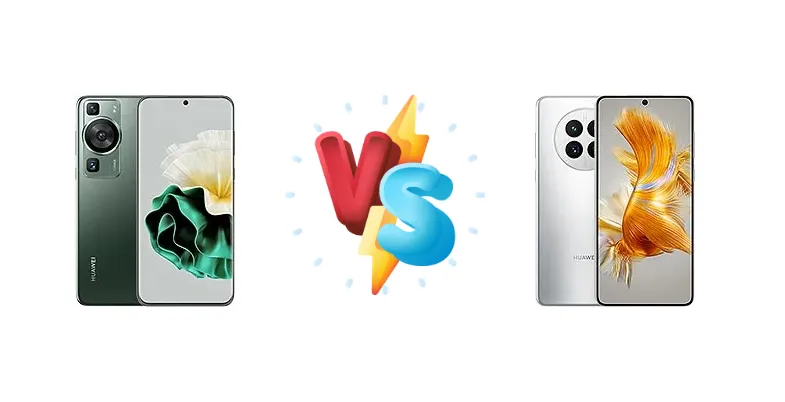
|
🏆 Quick Verdict
The Mate 50 edges out the P60 thanks to its slightly faster processor, reverse wireless charging, and often more robust software support. However, the P60 offers excellent value and a superb camera system, making it a strong contender for those prioritizing photography.
| PHONES | ||
|---|---|---|
| Phone Names | Huawei P60 | Huawei Mate 50 |
| Network | ||
|---|---|---|
| 2G bands | GSM 850 / 900 / 1800 / 1900 | GSM 850 / 900 / 1800 / 1900 |
| 3G bands | HSDPA 800 / 850 / 900 / 1700(AWS) / 1900 / 2100 | HSDPA 800 / 850 / 900 / 1700(AWS) / 1900 / 2100 |
| 4G bands | 1, 2, 3, 4, 5, 7, 8, 12, 17, 18, 19, 20, 26, 28, 34, 38, 39, 40, 41 | 1, 2, 3, 4, 5, 7, 8, 12, 13, 17, 18, 19, 20, 26, 28, 32, 34, 38, 39, 40, 41, 66 - International |
| Speed | HSPA, LTE | HSPA, LTE |
| Technology | GSM / CDMA / HSPA / CDMA2000 / LTE | GSM / CDMA / HSPA / CDMA2000 / LTE |
| CDMA2000 1x | 1, 2, 3, 4, 5, 7, 8, 12, 17, 18, 19, 20, 26, 28, 34, 38, 39, 40, 41 - China | |
| Launch | ||
|---|---|---|
| Announced | 2023, March 23 | 2022, September 06 |
| Status | Available. Released 2023, March 31 | Available. Released 2022, September 28 |
| Body | ||
|---|---|---|
| Dimensions | 161 x 74.5 x 8.3 mm (6.34 x 2.93 x 0.33 in) | 161.5 x 76.1 x 8 mm (6.36 x 3.00 x 0.31 in) |
| SIM | Nano-SIM + Nano-SIM | · Nano-SIM· Nano-SIM + Nano-SIM |
| Weight | 197 g (6.95 oz) | 202 g / 206 g (7.13 oz) |
| IP68 dust/water resistant (up to 1.5m for 30 min) | IP68 dust/water resistant (up to 2m for 30 min) | |
| Display | ||
|---|---|---|
| Protection | - | Huawei Kunlun Glass |
| Resolution | 1220 x 2700 pixels (~444 ppi density) | 1224 x 2700 pixels (~442 ppi density) |
| Size | 6.67 inches, 107.7 cm2 (~89.8% screen-to-body ratio) | 6.7 inches, 108.9 cm2 (~88.6% screen-to-body ratio) |
| Type | LTPO OLED, 1B colors, 120Hz | OLED, 1B colors, 90Hz |
| Platform | ||
|---|---|---|
| CPU | Octa-core (1x3.0 GHz Cortex-X2 & 3x2.5 GHz Cortex-A710 & 4x1.8 GHz Cortex-A510) | Octa-core (1x3.19 GHz Cortex-X2 & 3x2.75 GHz Cortex-A710 & 4x2.0 GHz Cortex-A510) |
| Chipset | Qualcomm SM8475 Snapdragon 8+ Gen 1 4G (4 nm) | Qualcomm SM8475 Snapdragon 8+ Gen 1 4G (4 nm) |
| GPU | Adreno 730 | Adreno 730 |
| OS | HarmonyOS 3.1 (China), EMUI 13.1 (Europe), no Google Play Services | EMUI 13 (International), HarmonyOS 3.0 (China) |
| Memory | ||
|---|---|---|
| Card slot | Nano Memory (uses shared SIM slot) | Nano Memory (uses shared SIM slot) |
| Internal | 128GB 8GB RAM, 256GB 8GB RAM, 512GB 8GB RAM | 128GB 8GB RAM, 256GB 8GB RAM, 512GB 8GB RAM |
| UFS | UFS 3.1 | |
| Main Camera | ||
|---|---|---|
| Features | Laser AF, color spectrum sensor, LED flash, HDR, panorama | Laser AF, color spectrum sensor, LED flash, panorama, HDR |
| Single | - | 13 MP, f/2.4, 18mm (ultrawide) |
| Triple | 48 MP, f/1.4-f/4.0, 25mm (wide), PDAF, OIS 12 MP, f/3.4, 125mm (periscope telephoto), PDAF, OIS, 5x optical zoom 13 MP, f/2.2, 13mm (ultrawide) | 50 MP, f/1.4-f/4.0, 24mm (wide), PDAF 12 MP, f/3.4, 125mm (periscope telephoto), PDAF, OIS, 5x optical zoom 13 MP, f/2.2, 13mm, 120˚ (ultrawide), PDAF |
| Video | 4K@30/60fps, 1080p@30/60fps, 1080p@960fps; gyro-EIS, HDR Vivid | 4K@30/60fps, 1080p@30/60/120/240fps, 1080p@960fps, gyro-EIS |
| Selfie camera | ||
|---|---|---|
| Features | Panorama, HDR | HDR, panorama |
| Single | 13 MP, f/2.4, (ultrawide) | 13 MP, f/2.4, 18mm (ultrawide) |
| Video | 4K@30fps, 1080p@30fps, HDR Vivid | 4K@30/60fps, 1080p@30/60/240fps |
| Sound | ||
|---|---|---|
| 3.5mm jack | No | No |
| 35mm jack | No | No |
| Loudspeaker | Yes, with stereo speakers | Yes, with stereo speakers |
| - | 32-bit/384kHz audio | |
| Comms | ||
|---|---|---|
| Bluetooth | 5.2, A2DP, LE | 5.2, A2DP, LE |
| Infrared port | Yes | Yes |
| NFC | Yes | Yes |
| Positioning | GPS (L1+L5), GLONASS (B1I+B1c+B2a), BDS (B1I+B1c+B2a), GALILEO (E1+E5a), QZSS (L1+L5), NavIC | GPS (L1+L5), GLONASS (L1), BDS (B1I+B1c+B2a), GALILEO (E1+E5a), QZSS (L1+L5), NavIC (L5) |
| Radio | No | No |
| USB | USB Type-C 3.1, OTG | USB Type-C 3.1, OTG, Display Port 1.2 |
| WLAN | Wi-Fi 802.11 a/b/g/n/ac/6, dual-band, Wi-Fi Direct | Wi-Fi 802.11 a/b/g/n/ac/6, dual-band, Wi-Fi Direct |
| Features | ||
|---|---|---|
| Sensors | Fingerprint (under display, optical), accelerometer, gyro, proximity, compass | Fingerprint (under display, optical), accelerometer, gyro, proximity, barometer, compass |
| BDS Satellite Message | BDS Satellite Message (sending only) | |
| Battery | ||
|---|---|---|
| Charging | 66W wired 50W wireless | 66W wired 50W wireless 5W reverse wireless |
| Type | Li-Po 4815 mAh | Li-Po 4460 mAh |
| Misc | ||
|---|---|---|
| Colors | Black, Green, Violet, Rococo Pearl | Black, Silver, Purple, Orange |
| Models | LNA-AL00, LNA-LX9 | CET-AL00, CET-LX9 |
| Price | About 600 EUR | About 720 EUR |
Huawei P60
- Exceptional camera system, especially telephoto
- Excellent value for money
- Vibrant OLED display
- Stylish design
- No Google Mobile Services (GMS)
- 4G connectivity only
- Reverse wireless charging absent
Huawei Mate 50
- Slightly faster processor
- Premium design and build quality
- Reverse wireless charging
- Potentially better software support
- Higher price point
- No Google Mobile Services (GMS)
- 4G connectivity only
Display Comparison
Both phones feature stunning OLED displays with vibrant colors and excellent brightness. The Mate 50 might have a slightly more refined curve, but the P60's flat display is preferred by some for usability. Resolution is comparable, offering sharp visuals for all content.
Camera Comparison
The P60 is renowned for its exceptional camera system, particularly its telephoto lens. The Mate 50 also has a great camera, but the P60's telephoto capabilities are a standout feature. Both offer excellent image quality in various lighting conditions, but the P60 excels in zoom capabilities.
Performance
While both utilize the Snapdragon 8+ Gen 1, the Mate 50 boasts slightly higher clock speeds on its CPU cores. This translates to marginally better performance in demanding tasks and gaming, though the difference is unlikely to be noticeable for most users. Both offer smooth and responsive performance.
Battery Life
Both phones offer similar battery life, easily lasting a full day with moderate usage. Charging speeds are comparable with 66W wired and 50W wireless charging. The Mate 50's addition of 5W reverse wireless charging provides added convenience for topping up accessories.
Buying Guide
The Huawei P60 is ideal for photography enthusiasts and users seeking a balance of performance and price. The Huawei Mate 50 is better suited for users who want the absolute best performance, a slightly more premium design, and features like reverse wireless charging.