
Huawei P60 Pro vs P60 Art: A Clash of Flagship Titans
| Phones Images | |||||
|---|---|---|---|---|---|
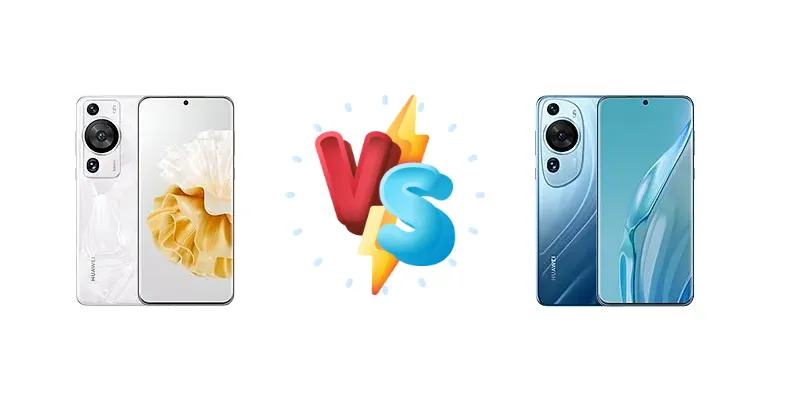
|
🏆 Quick Verdict
The P60 Pro offers superior battery life and a brighter display, making it the more versatile choice. The P60 Art focuses on a unique design and potentially enhanced build quality, appealing to those prioritizing aesthetics. Ultimately, the Pro is the more well-rounded flagship.
| PHONES | ||
|---|---|---|
| Phone Names | Huawei P60 Pro | Huawei P60 Art |
| Network | ||
|---|---|---|
| 2G bands | GSM 850 / 900 / 1800 / 1900 | GSM 850 / 900 / 1800 / 1900 |
| 3G bands | HSDPA 800 / 850 / 900 / 1700(AWS) / 1900 / 2100 | HSDPA 800 / 850 / 900 / 1700(AWS) / 1900 / 2100 |
| 4G bands | 1, 2, 3, 4, 5, 7, 8, 12, 13, 17, 18, 19, 20, 26, 28, 32, 34, 38, 39, 40, 41, 66 - International | 1, 2, 3, 4, 5, 7, 8, 12, 13, 17, 18, 19, 20, 26, 28, 32, 34, 38, 39, 40, 41, 66 - International |
| Speed | HSPA, LTE | HSPA, LTE |
| Technology | GSM / CDMA / HSPA / CDMA2000 / LTE | GSM / CDMA / HSPA / CDMA2000 / LTE |
| 1, 2, 3, 4, 5, 7, 8, 12, 17, 18, 19, 20, 26, 28, 34, 38, 39, 40, 41 - China | 1, 2, 3, 4, 5, 7, 8, 12, 17, 18, 19, 20, 26, 28, 34, 38, 39, 40, 41 - China | |
| Launch | ||
|---|---|---|
| Announced | 2023, March 23 | 2023, March 23 |
| Status | Available. Released 2023, March 31 | Available. Released 2023, April 08 |
| Body | ||
|---|---|---|
| Dimensions | 161 x 74.5 x 8.3 mm (6.34 x 2.93 x 0.33 in) | 161 x 74.5 x 8.3 mm (6.34 x 2.93 x 0.33 in) |
| SIM | · Nano-SIM· Nano-SIM + Nano-SIM | Nano-SIM + Nano-SIM |
| Weight | 200 g (7.05 oz) | 206 g (7.27 oz) |
| IP68 dust/water resistant (up to 1.5m for 30 min) | IP68 dust/water resistant (up to 1.5m for 30 min) | |
| Display | ||
|---|---|---|
| Protection | Kunlun Glass | Kunlun Glass |
| Resolution | 1220 x 2700 pixels (~444 ppi density) | 1220 x 2700 pixels (~444 ppi density) |
| Size | 6.67 inches, 107.7 cm2 (~89.8% screen-to-body ratio) | 6.67 inches, 107.7 cm2 (~89.8% screen-to-body ratio) |
| Type | LTPO OLED, 1B colors, 120Hz | LTPO OLED, 1B colors, 120Hz |
| Platform | ||
|---|---|---|
| CPU | Octa-core (1x3.19 GHz Cortex-X2 & 3x2.75 GHz Cortex-A710 & 4x2.0 GHz Cortex-A510) | Octa-core (1x3.19 GHz Cortex-X2 & 3x2.75 GHz Cortex-A710 & 4x2.0 GHz Cortex-A510) |
| Chipset | Qualcomm SM8475 Snapdragon 8+ Gen 1 4G (4 nm) | Qualcomm SM8475 Snapdragon 8+ Gen 1 4G (4 nm) |
| GPU | Adreno 730 | Adreno 730 |
| OS | HarmonyOS 3.1 (China), EMUI 13.1 (Europe), no Google Play Services | HarmonyOS 3.1 (China), EMUI 13.1 (International) |
| Memory | ||
|---|---|---|
| Card slot | Nano Memory (uses shared SIM slot) | Nano Memory (uses shared SIM slot) |
| Internal | 256GB 8GB RAM, 256GB 12GB RAM, 512GB 12GB RAM | 512GB 12GB RAM, 1TB 12GB RAM |
| UFS | UFS | |
| Main Camera | ||
|---|---|---|
| Features | Laser AF, color spectrum sensor, LED flash, HDR, panorama | Laser AF, color spectrum sensor, LED flash, HDR, panorama |
| Triple | 48 MP, f/1.4-f/4.0, 25mm (wide), PDAF, OIS 48 MP, f/2.1, 90mm (telephoto), PDAF, sensor-shift OIS, 3.5x optical zoom 13 MP, f/2.2, 13mm (ultrawide), AF | 48 MP, f/1.4-f/4.0, 25mm (wide), PDAF, OIS 48 MP, f/2.1, 90mm (telephoto), PDAF, OIS, 3.5x optical zoom 40 MP, f/2.2, 13mm (ultrawide) |
| Video | 4K@30/60fps, 1080p@30/60fps, 1080p@960fps; gyro-EIS, HDR Vivid | 4K@30/60fps, 1080p@30/60fps, 1080p@960fps; gyro-EIS, HDR Vivid |
| Selfie camera | ||
|---|---|---|
| Features | Panorama, HDR | Panorama, HDR |
| Single | 13 MP, f/2.4, (ultrawide) | 13 MP, f/2.4, (ultrawide) |
| Video | 4K@30/60fps, 1080p@30fps, HDR Vivid | 4K@30fps, 1080p@30fps, HDR Vivid |
| Sound | ||
|---|---|---|
| 3.5mm jack | No | No |
| 35mm jack | No | No |
| Loudspeaker | Yes, with stereo speakers | Yes, with stereo speakers |
| Comms | ||
|---|---|---|
| Bluetooth | 5.2, A2DP, LE | 5.2, A2DP, LE |
| Infrared port | Yes | Yes |
| NFC | Yes | Yes |
| Positioning | GPS (L1+L5), GLONASS (B1I+B1c+B2a), BDS (B1I+B1c+B2a), GALILEO (E1+E5a), QZSS (L1+L5), NavIC | GPS (L1+L5), GLONASS (B1I+B1c+B2a), BDS (B1I+B1c+B2a), GALILEO (E1+E5a), QZSS (L1+L5), NavIC |
| Radio | No | No |
| USB | USB Type-C 3.1, OTG | USB Type-C 3.1, OTG |
| WLAN | Wi-Fi 802.11 a/b/g/n/ac/6, dual-band, Wi-Fi Direct | Wi-Fi 802.11 a/b/g/n/ac/6, dual-band, Wi-Fi Direct |
| Features | ||
|---|---|---|
| Sensors | Fingerprint (under display, optical), accelerometer, gyro, proximity, compass | Fingerprint (under display, optical), accelerometer, gyro, proximity, compass |
| BDS Satellite Message | BDS Satellite Message | |
| Battery | ||
|---|---|---|
| Charging | 88W wired 50W wireless Reverse wireless | 88W wired 50W wireless |
| Type | Li-Po 4815 mAh | Si/C Li-Ion 5100 mAh |
| Misc | ||
|---|---|---|
| Colors | Black, Green, Violet, Rococo Pearl | Azure Blue, Seashore Gold |
| Models | MNA-AL00, MNA-LX9 | MNA-AL00 |
| Price | € 738.50 | About 1200 EUR |
| Tests | ||
|---|---|---|
| Battery life | Endurance rating 96h | - |
| Camera | Photo / Video | - |
| Display | Contrast ratio: Infinite (nominal) | - |
| Loudspeaker | -27.3 LUFS (Good) | - |
| Performance | AnTuTu: 1030473 (v9) GeekBench: 4422 (v6) GFXBench: 65fps (ES 3.1 onscreen) | - |
Huawei P60 Pro
- Exceptional battery life
- Brighter display
- Comprehensive camera system
- Powerful Snapdragon 8+ Gen 1
- 4G connectivity only
- Design may be less distinctive than Art
Huawei P60 Art
- Unique and premium design
- Powerful Snapdragon 8+ Gen 1
- Fast charging
- Potentially shorter battery life
- Less bright display
- 4G connectivity only
Display Comparison
Both phones feature OLED displays, but the P60 Pro boasts a measured peak brightness of 1135 nits, significantly brighter than the P60 Art. While both offer excellent contrast (infinite nominal), the Pro's higher brightness provides better visibility in direct sunlight. The P60 Art may have a slightly different color calibration or protective coating, but specific details are not readily available.
Camera Comparison
While both phones have excellent camera systems, the P60 Pro is generally considered to have a more comprehensive setup. The P60 Art may have slight variations in lens coatings or image processing algorithms, potentially affecting color science or low-light performance. Both offer impressive zoom capabilities and computational photography features.
Performance
Both devices share the same Qualcomm Snapdragon 8+ Gen 1 4G chipset and CPU configuration, ensuring comparable performance in everyday tasks and demanding games. Differences in software optimization or thermal management could lead to minor variations in sustained performance, but overall, expect similar speeds.
Battery Life
The P60 Pro holds a significant advantage in battery life, boasting an endurance rating of 96 hours. The P60 Art's battery capacity is likely similar, but potentially impacted by the design and materials used, resulting in shorter usage times. The charging speeds (88W wired, 50W wireless) are identical on both.
Buying Guide
The Huawei P60 Pro is ideal for users who prioritize long battery life, a vibrant display, and a slightly more feature-rich experience. The Huawei P60 Art is best suited for those who value a distinctive design and are willing to potentially compromise on battery life for a more premium feel.