
Huawei P60 Art vs. P30 Pro New Edition: A Clash of Generations
| Phones Images | |||||
|---|---|---|---|---|---|
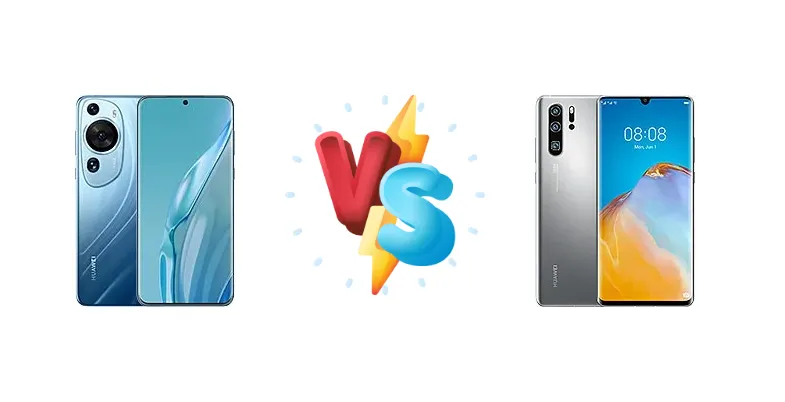
|
🏆 Quick Verdict
The Huawei P60 Art decisively wins on performance and charging speed thanks to its Snapdragon 8+ Gen 1 chipset and faster charging. However, the P30 Pro New Edition remains a compelling option for budget-conscious users seeking a proven camera system and a familiar design, especially considering its lower price point.
| PHONES | ||
|---|---|---|
| Phone Names | Huawei P60 Art | Huawei P30 Pro New Edition |
| Network | ||
|---|---|---|
| 2G bands | GSM 850 / 900 / 1800 / 1900 | GSM 850 / 900 / 1800 / 1900 |
| 3G bands | HSDPA 800 / 850 / 900 / 1700(AWS) / 1900 / 2100 | HSDPA 800 / 850 / 900 / 1700(AWS) / 1900 / 2100 |
| 4G bands | 1, 2, 3, 4, 5, 7, 8, 12, 13, 17, 18, 19, 20, 26, 28, 32, 34, 38, 39, 40, 41, 66 - International | LTE |
| Speed | HSPA, LTE | HSPA 42.2/5.76 Mbps, LTE Cat21 1400/200 Mbps |
| Technology | GSM / CDMA / HSPA / CDMA2000 / LTE | GSM / HSPA / LTE |
| 1, 2, 3, 4, 5, 7, 8, 12, 17, 18, 19, 20, 26, 28, 34, 38, 39, 40, 41 - China | - | |
| Launch | ||
|---|---|---|
| Announced | 2023, March 23 | 2020, May 12. Released 2020, June 01 |
| Status | Available. Released 2023, April 08 | Discontinued |
| Body | ||
|---|---|---|
| Build | - | Glass front (Aluminosilicate glass), glass back (Aluminosilicate glass), aluminum frame |
| Dimensions | 161 x 74.5 x 8.3 mm (6.34 x 2.93 x 0.33 in) | 158 x 73.4 x 8.4 mm (6.22 x 2.89 x 0.33 in) |
| SIM | Nano-SIM + Nano-SIM | · Nano-SIM· Nano-SIM + Nano-SIM |
| Weight | 206 g (7.27 oz) | 192 g (6.77 oz) |
| IP68 dust/water resistant (up to 1.5m for 30 min) | IP68 dust/water resistant (up to 2m for 30 mins) | |
| Display | ||
|---|---|---|
| Protection | Kunlun Glass | - |
| Resolution | 1220 x 2700 pixels (~444 ppi density) | 1080 x 2340 pixels, 19.5:9 ratio (~398 ppi density) |
| Size | 6.67 inches, 107.7 cm2 (~89.8% screen-to-body ratio) | 6.47 inches, 102.8 cm2 (~88.6% screen-to-body ratio) |
| Type | LTPO OLED, 1B colors, 120Hz | OLED, HDR10 |
| Platform | ||
|---|---|---|
| CPU | Octa-core (1x3.19 GHz Cortex-X2 & 3x2.75 GHz Cortex-A710 & 4x2.0 GHz Cortex-A510) | Octa-core (2x2.6 GHz Cortex-A76 & 2x1.92 GHz Cortex-A76 & 4x1.8 GHz Cortex-A55) |
| Chipset | Qualcomm SM8475 Snapdragon 8+ Gen 1 4G (4 nm) | Kirin 980 (7 nm) |
| GPU | Adreno 730 | Mali-G76 MP10 |
| OS | HarmonyOS 3.1 (China), EMUI 13.1 (International) | Android 10, EMUI 10.1, Google Play Services |
| Memory | ||
|---|---|---|
| Card slot | Nano Memory (uses shared SIM slot) | Nano Memory (uses shared SIM slot) |
| Internal | 512GB 12GB RAM, 1TB 12GB RAM | 128GB 6GB RAM, 256GB 8GB RAM |
| UFS | UFS 3.0 | |
| Main Camera | ||
|---|---|---|
| Features | Laser AF, color spectrum sensor, LED flash, HDR, panorama | Leica optics, color spectrum sensor, dual-LED dual-tone flash, panorama, HDR |
| Triple | 48 MP, f/1.4-f/4.0, 25mm (wide), PDAF, OIS 48 MP, f/2.1, 90mm (telephoto), PDAF, OIS, 3.5x optical zoom 40 MP, f/2.2, 13mm (ultrawide) | 40 MP, f/1.6, 27mm (wide), 1/1.7", PDAF, OIS 8 MP, f/3.4, 125mm (periscope telephoto), 1/4.0", PDAF, OIS, 5x optical zoom, 10x hybrid zoom 20 MP, f/2.2, 16mm (ultrawide), 1/2.7", PDAF TOF 3D, (depth) |
| Video | 4K@30/60fps, 1080p@30/60fps, 1080p@960fps; gyro-EIS, HDR Vivid | 4K@30fps, 1080p@60fps, 1080p@30fps (gyro-EIS), 720p@960fps |
| Selfie camera | ||
|---|---|---|
| Features | Panorama, HDR | HDR |
| Single | 13 MP, f/2.4, (ultrawide) | 32 MP, f/2.0, 26mm (wide), 1/2.8", 0.8µm |
| Video | 4K@30fps, 1080p@30fps, HDR Vivid | 1080p@30fps |
| Sound | ||
|---|---|---|
| 3.5mm jack | No | No |
| 35mm jack | No | No |
| Loudspeaker | Yes, with stereo speakers | Yes |
| - | 32-bit/384kHz audio | |
| Comms | ||
|---|---|---|
| Bluetooth | 5.2, A2DP, LE | 5.0, A2DP, aptX HD, LE |
| Infrared port | Yes | Yes |
| NFC | Yes | Yes |
| Positioning | GPS (L1+L5), GLONASS (B1I+B1c+B2a), BDS (B1I+B1c+B2a), GALILEO (E1+E5a), QZSS (L1+L5), NavIC | GPS (L1+L5), GLONASS (L1), BDS (B1), GALILEO (E1+E5a), QZSS (L1+L5) |
| Radio | No | No |
| USB | USB Type-C 3.1, OTG | USB Type-C 3.1 |
| WLAN | Wi-Fi 802.11 a/b/g/n/ac/6, dual-band, Wi-Fi Direct | Wi-Fi 802.11 a/b/g/n/ac, dual-band, Wi-Fi Direct |
| Features | ||
|---|---|---|
| Sensors | Fingerprint (under display, optical), accelerometer, gyro, proximity, compass | Fingerprint (under display, optical), accelerometer, gyro, proximity, compass |
| BDS Satellite Message | - | |
| Battery | ||
|---|---|---|
| Charging | 88W wired 50W wireless | 40W wired, 70% in 30 min 15W wireless Reverse wireless |
| Type | Si/C Li-Ion 5100 mAh | Li-Po 4200 mAh |
| Misc | ||
|---|---|---|
| Colors | Azure Blue, Seashore Gold | Aurora, Black, Silver Frost |
| Models | MNA-AL00 | - |
| Price | About 1200 EUR | About 820 EUR |
Huawei P60 Art
- Significantly faster performance
- Blazing-fast charging (88W wired, 50W wireless)
- Likely improved camera system
- Modern design and features
- Better display quality
- Higher price point
- 4G connectivity only
Huawei P30 Pro New Edition
- Proven camera system with excellent zoom
- More affordable
- Reverse wireless charging
- Compact design
- Slower performance
- Slower charging (40W wired, 15W wireless)
- Older chipset
- Less modern features
Display Comparison
The P60 Art likely boasts a superior display with a higher resolution, potentially OLED technology, and a smoother refresh rate (likely 120Hz) compared to the P30 Pro's OLED display. Expect better color accuracy and brightness on the P60 Art. The P30 Pro's display is still excellent, but the P60 Art pushes the boundaries further.
Camera Comparison
Both phones have excellent camera systems. The P30 Pro is renowned for its zoom capabilities and color science. The P60 Art likely features improved sensor technology, computational photography, and potentially a larger main sensor, resulting in better low-light performance and overall image quality. Both offer impressive photography experiences, but the P60 Art likely has a slight edge.
Performance
The Snapdragon 8+ Gen 1 in the P60 Art offers a significant performance leap over the Kirin 980 in the P30 Pro. Expect noticeably faster app loading, smoother multitasking, and better gaming performance on the P60 Art. The P30 Pro remains capable for everyday tasks, but struggles with demanding applications.
Battery Life
The P60 Art's 88W wired charging is a game-changer, allowing for incredibly fast charging times. While the P30 Pro's 40W charging is respectable, it's significantly slower. Both phones offer wireless charging, but the P60 Art's 50W wireless charging is faster than the P30 Pro's 15W. Battery capacity is likely similar, but the P60 Art's efficiency and faster charging give it an advantage.
Buying Guide
The Huawei P60 Art is ideal for power users, photography enthusiasts demanding top-tier performance, and those prioritizing fast charging. The Huawei P30 Pro New Edition is a great choice for users on a tighter budget who value a reliable camera, a compact design, and a proven track record.