
Huawei P60 Art vs Mate 50 Pro: A Clash of Flagships
| Phones Images | |||||
|---|---|---|---|---|---|
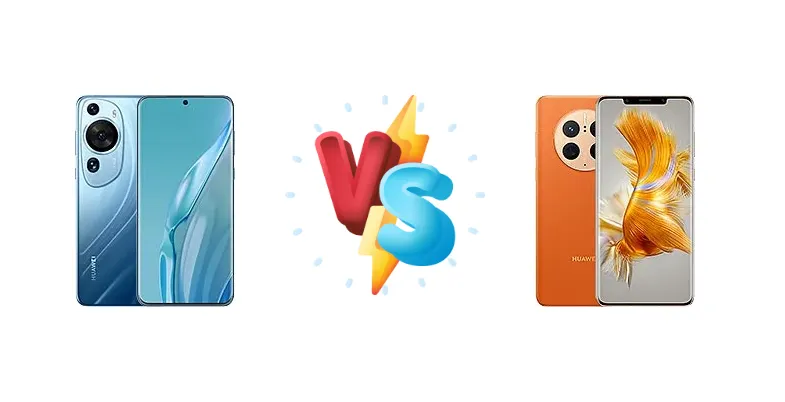
|
🏆 Quick Verdict
The Mate 50 Pro edges out the P60 Art thanks to its superior battery life, reverse wireless charging, and slightly more refined camera system. While the P60 Art offers faster wired charging, the Mate 50 Pro's overall package provides a more compelling user experience.
| PHONES | ||
|---|---|---|
| Phone Names | Huawei P60 Art | Huawei Mate 50 Pro |
| Network | ||
|---|---|---|
| 2G bands | GSM 850 / 900 / 1800 / 1900 | GSM 850 / 900 / 1800 / 1900 |
| 3G bands | HSDPA 800 / 850 / 900 / 1700(AWS) / 1900 / 2100 | HSDPA 800 / 850 / 900 / 1700(AWS) / 1900 / 2100 |
| 4G bands | 1, 2, 3, 4, 5, 7, 8, 12, 13, 17, 18, 19, 20, 26, 28, 32, 34, 38, 39, 40, 41, 66 - International | 1, 2, 3, 4, 5, 7, 8, 12, 13, 17, 18, 19, 20, 26, 28, 32, 34, 38, 39, 40, 41, 66 - International |
| Speed | HSPA, LTE | HSPA, LTE |
| Technology | GSM / CDMA / HSPA / CDMA2000 / LTE | GSM / CDMA / HSPA / CDMA2000 / LTE |
| 1, 2, 3, 4, 5, 7, 8, 12, 17, 18, 19, 20, 26, 28, 34, 38, 39, 40, 41 - China | 1, 2, 3, 4, 5, 7, 8, 12, 17, 18, 19, 20, 26, 28, 34, 38, 39, 40, 41 - China | |
| Launch | ||
|---|---|---|
| Announced | 2023, March 23 | 2022, September 06 |
| Status | Available. Released 2023, April 08 | Available. Released 2022, September 28 |
| Body | ||
|---|---|---|
| Dimensions | 161 x 74.5 x 8.3 mm (6.34 x 2.93 x 0.33 in) | 162.1 x 75.5 x 8.5 mm (6.38 x 2.97 x 0.33 in) |
| SIM | Nano-SIM + Nano-SIM | · Nano-SIM· Nano-SIM + Nano-SIM |
| Weight | 206 g (7.27 oz) | 205 g / 209 g (7.23 oz) |
| IP68 dust/water resistant (up to 1.5m for 30 min) | IP68 dust/water resistant (up to 6m for 30 min) | |
| Display | ||
|---|---|---|
| Protection | Kunlun Glass | Huawei Kunlun Glass |
| Resolution | 1220 x 2700 pixels (~444 ppi density) | 1212 x 2616 pixels, 19.5:9 ratio (~428 ppi density) |
| Size | 6.67 inches, 107.7 cm2 (~89.8% screen-to-body ratio) | 6.74 inches, 111.8 cm2 (~91.3% screen-to-body ratio) |
| Type | LTPO OLED, 1B colors, 120Hz | OLED, 1B colors, 120Hz |
| Platform | ||
|---|---|---|
| CPU | Octa-core (1x3.19 GHz Cortex-X2 & 3x2.75 GHz Cortex-A710 & 4x2.0 GHz Cortex-A510) | Octa-core (1x3.19 GHz Cortex-X2 & 3x2.75 GHz Cortex-A710 & 4x2.0 GHz Cortex-A510) |
| Chipset | Qualcomm SM8475 Snapdragon 8+ Gen 1 4G (4 nm) | Qualcomm SM8475 Snapdragon 8+ Gen 1 4G (4 nm) |
| GPU | Adreno 730 | Adreno 730 |
| OS | HarmonyOS 3.1 (China), EMUI 13.1 (International) | EMUI 13 (International), HarmonyOS 3.0 (China) |
| Memory | ||
|---|---|---|
| Card slot | Nano Memory (uses shared SIM slot) | Nano Memory (uses shared SIM slot) |
| Internal | 512GB 12GB RAM, 1TB 12GB RAM | 256GB 8GB RAM, 512GB 8GB RAM |
| UFS | UFS 3.1 | |
| Main Camera | ||
|---|---|---|
| Features | Laser AF, color spectrum sensor, LED flash, HDR, panorama | Laser AF, color spectrum sensor, LED flash, panorama, HDR |
| Single | - | 13 MP, f/2.4, 18mm (ultrawide) TOF 3D, (depth/biometrics sensor) |
| Triple | 48 MP, f/1.4-f/4.0, 25mm (wide), PDAF, OIS 48 MP, f/2.1, 90mm (telephoto), PDAF, OIS, 3.5x optical zoom 40 MP, f/2.2, 13mm (ultrawide) | 50 MP, f/1.4-f/4.0, 24mm (wide), PDAF, OIS 64 MP, f/3.5, 90mm (periscope telephoto), PDAF, OIS, 3.5x optical zoom 13 MP, f/2.2, 13mm, 120˚ (ultrawide), PDAF |
| Video | 4K@30/60fps, 1080p@30/60fps, 1080p@960fps; gyro-EIS, HDR Vivid | 4K@30/60fps, 1080p@30/60/120/240/480fps, 720p@960fps, 720p@3840fps, HDR, gyro-EIS |
| Selfie camera | ||
|---|---|---|
| Features | Panorama, HDR | HDR, panorama |
| Single | 13 MP, f/2.4, (ultrawide) | 13 MP, f/2.4, 18mm (ultrawide) TOF 3D, (depth/biometrics sensor) |
| Video | 4K@30fps, 1080p@30fps, HDR Vivid | 4K@30/60fps, 1080p@30/60/240fps |
| Sound | ||
|---|---|---|
| 3.5mm jack | No | No |
| 35mm jack | No | No |
| Loudspeaker | Yes, with stereo speakers | Yes, with stereo speakers |
| - | 32-bit/384kHz audio | |
| Comms | ||
|---|---|---|
| Bluetooth | 5.2, A2DP, LE | 5.2, A2DP, LE |
| Infrared port | Yes | Yes |
| NFC | Yes | Yes |
| Positioning | GPS (L1+L5), GLONASS (B1I+B1c+B2a), BDS (B1I+B1c+B2a), GALILEO (E1+E5a), QZSS (L1+L5), NavIC | GPS (L1+L5), GLONASS (L1), BDS (B1I+B1c+B2a), GALILEO (E1+E5a), QZSS (L1+L5), NavIC (L5) |
| Radio | No | No |
| USB | USB Type-C 3.1, OTG | USB Type-C 3.1, OTG, Display Port 1.2 |
| WLAN | Wi-Fi 802.11 a/b/g/n/ac/6, dual-band, Wi-Fi Direct | Wi-Fi 802.11 a/b/g/n/ac/6, dual-band, Wi-Fi Direct |
| Features | ||
|---|---|---|
| Sensors | Fingerprint (under display, optical), accelerometer, gyro, proximity, compass | Face ID, fingerprint (under display, optical), accelerometer, gyro, proximity, barometer, compass |
| BDS Satellite Message | BDS Satellite Message (sending only) | |
| Battery | ||
|---|---|---|
| Charging | 88W wired 50W wireless | 66W wired 50W wireless 5W reverse wireless |
| Type | Si/C Li-Ion 5100 mAh | Li-Po 4700 mAh |
| Misc | ||
|---|---|---|
| Colors | Azure Blue, Seashore Gold | Black, Silver, Purple, Orange |
| Models | MNA-AL00 | DCO-AL00, DCO-LX9 |
| Price | About 1200 EUR | About 900 EUR |
| Tests | ||
|---|---|---|
| Battery life | - | Endurance rating 104h |
| Camera | - | Photo / Video |
| Display | - | Contrast ratio: Infinite (nominal) |
| Loudspeaker | - | -24.8 LUFS (Very good) |
| Performance | - | AnTuTu: 979921 (v9) GeekBench: 3839 (v5.1) GFXBench: 68fps (ES 3.1 onscreen) |
Huawei P60 Art
- Faster 88W wired charging
- Potentially unique and artistic design
- Excellent performance thanks to Snapdragon 8+ Gen 1
- Likely shorter battery life than Mate 50 Pro
- No reverse wireless charging
- Camera may not be as refined as Mate 50 Pro
Huawei Mate 50 Pro
- Exceptional battery life (10:36h active use, 104h endurance)
- Reverse wireless charging
- Brighter display (946 nits)
- Generally superior camera system
- Slower 66W wired charging
- Design may be less distinctive
- Potentially higher price
Display Comparison
Both phones feature excellent OLED displays, but the Mate 50 Pro boasts a measured peak brightness of 946 nits, significantly higher than the P60 Art. The Mate 50 Pro's 'infinite' contrast ratio (nominal) suggests deeper blacks and richer colors, though real-world differences may be subtle. The P60 Art likely has a more unique design, potentially with a focus on artistic aesthetics, while the Mate 50 Pro prioritizes a more standard flagship look.
Camera Comparison
While both offer excellent camera capabilities, the Mate 50 Pro generally receives higher praise for its overall camera system. It likely features a more advanced main sensor and image processing algorithms. The P60 Art may emphasize specific artistic filters or shooting modes. Both are expected to deliver excellent photo and video quality in various lighting conditions.
Performance
Both devices share the same Snapdragon 8+ Gen 1 chipset and CPU configuration, ensuring comparable performance in everyday tasks and demanding games. Expect smooth multitasking and responsive app loading on both phones. Real-world performance differences will likely be minimal.
Battery Life
The Mate 50 Pro clearly wins in the battery department. It boasts an impressive active use score of 10:36 hours and an endurance rating of 104 hours. The P60 Art's battery life is likely good, but not on par with the Mate 50 Pro. The Mate 50 Pro also includes 5W reverse wireless charging, a useful feature for topping up accessories.
Buying Guide
The Huawei P60 Art is ideal for users prioritizing fast charging and a potentially more artistic design aesthetic. The Mate 50 Pro is better suited for those who demand exceptional battery life, a versatile camera, and the added convenience of reverse wireless charging.