
Huawei P50E vs Huawei P30: A Clash of Generations
| Phones Images | |||||
|---|---|---|---|---|---|
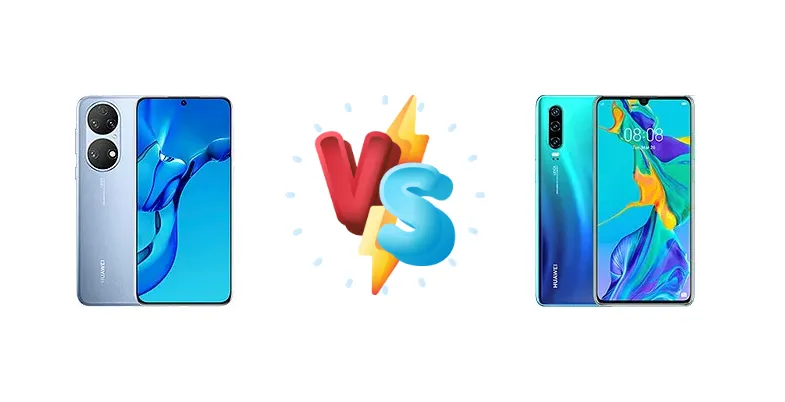
|
🏆 Quick Verdict
The Huawei P50E offers a significant performance boost thanks to its Snapdragon 778G and faster charging. However, the P30 boasts exceptional battery life and a potentially superior camera experience, especially in certain lighting conditions. The P50E is the better choice for most users, but the P30 remains a strong contender.
| PHONES | ||
|---|---|---|
| Phone Names | Huawei P50E | Huawei P30 |
| Network | ||
|---|---|---|
| 2G bands | GSM 850 / 900 / 1800 / 1900 | GSM 850 / 900 / 1800 / 1900 |
| 3G bands | HSDPA 800 / 850 / 900 / 1700(AWS) / 1900 / 2100 | HSDPA 800 / 850 / 900 / 1700(AWS) / 1900 / 2100 |
| 4G bands | 1, 2, 3, 4, 5, 7, 8, 12, 17, 18, 19, 20, 26, 28, 34, 38, 39, 40, 41 | 1, 2, 3, 4, 5, 6, 7, 8, 9, 12, 17, 18, 19, 20, 26, 28, 32, 34, 38, 39, 40 |
| Speed | HSPA, LTE | HSPA 42.2/5.76 Mbps, LTE Cat21 1400/200 Mbps |
| Technology | GSM / CDMA / HSPA / CDMA2000 / LTE | GSM / HSPA / LTE |
| CDMA2000 1x | - | |
| Launch | ||
|---|---|---|
| Announced | 2022, March 17 | 2019, March 26. Released 2019, March 26 |
| Status | Available. Released 2022, March 24 | Discontinued |
| Body | ||
|---|---|---|
| Build | - | Glass front (Aluminosilicate glass), glass back (Aluminosilicate glass), aluminum frame |
| Dimensions | 156.5 x 73.8 x 7.9 mm (6.16 x 2.91 x 0.31 in) | 149.1 x 71.4 x 7.6 mm (5.87 x 2.81 x 0.30 in) |
| SIM | Nano-SIM + Nano-SIM | · Nano-SIM· Nano-SIM + Nano-SIM |
| Weight | 181 g (6.38 oz) | 165 g (5.82 oz) |
| IP68 dust/water resistant (up to 1.5m for 30 min) | IP53, dust and splash resistant | |
| Display | ||
|---|---|---|
| Resolution | 1224 x 2700 pixels (~456 ppi density) | 1080 x 2340 pixels, 19.5:9 ratio (~422 ppi density) |
| Size | 6.5 inches, 102.5 cm2 (~88.8% screen-to-body ratio) | 6.1 inches, 91.3 cm2 (~85.8% screen-to-body ratio) |
| Type | OLED, 1B colors, 90Hz | OLED, HDR10 |
| Platform | ||
|---|---|---|
| CPU | Octa-core (4x2.4 GHz Kryo 670 & 4x1.8 GHz Kryo 670) | Octa-core (2x2.6 GHz Cortex-A76 & 2x1.92 GHz Cortex-A76 & 4x1.8 GHz Cortex-A55) |
| Chipset | Qualcomm SM7325 Snapdragon 778G 4G (6 nm) | Kirin 980 (7 nm) |
| GPU | Adreno 642L | Mali-G76 MP10 |
| OS | HarmonyOS 2.0 | Android 9.0 (Pie), upgradable to Android 10, EMUI 10 |
| Memory | ||
|---|---|---|
| Card slot | Nano Memory (uses shared SIM slot) | Nano Memory (uses shared SIM slot) |
| Internal | 128GB 8GB RAM, 256GB 8GB RAM | 64GB 8GB RAM, 128GB 6GB RAM, 128GB 8GB RAM, 256GB 8GB RAM |
| - | UFS 2.1 | |
| Main Camera | ||
|---|---|---|
| Features | Laser AF, color spectrum sensor, Leica optics, dual-LED flash, panorama, HDR | Laser AF, color spectrum sensor, Leica optics, dual-LED dual-tone flash, panorama, HDR |
| Single | 13 MP, f/2.4, 100˚ (ultrawide) | - |
| Triple | 50 MP, f/1.8, 23mm (wide), PDAF, OIS 12 MP, f/3.4, 125mm (periscope telephoto), PDAF, OIS, 5x optical zoom 13 MP, f/2.2, 16mm (ultrawide) | 40 MP, f/1.8, 27mm (wide), 1/1.7", PDAF 8 MP, f/2.4, 80mm (telephoto), 1/4.0", PDAF, OIS, 3x optical zoom 16 MP, f/2.2, 17mm (ultrawide), PDAF |
| Video | 4K@30/60fps, 1080p@30/60fps; gyro-EIS | 4K@30fps, 1080p@60fps, 1080p@30fps (gyro-EIS), 720p@960fps |
| Selfie camera | ||
|---|---|---|
| Features | Panorama, HDR | HDR |
| Single | 13 MP, f/2.4, 100˚ (ultrawide) | 32 MP, f/2.0, 26mm (wide), 1/2.8", 0.8µm |
| Video | 4K@30fps, 1080p@30/60fps | 1080p@30fps |
| Sound | ||
|---|---|---|
| 3.5mm jack | No | Yes |
| 35mm jack | No | Yes |
| Loudspeaker | Yes, with stereo speakers | Yes |
| - | 32-bit/384kHz audio | |
| Comms | ||
|---|---|---|
| Bluetooth | 5.2, A2DP, LE | 5.0, A2DP, aptX HD, LE |
| NFC | Yes | Yes |
| Positioning | GPS (L1+L5), GLONASS (L1), BDS (B1I+B1c+B2a), GALILEO (E1+E5a), QZSS (L1+L5), NavIC (L5) | GPS (L1+L5), GLONASS (L1), BDS (B1), GALILEO (E1+E5a), QZSS (L1+L5) |
| Radio | No | No |
| USB | USB Type-C 3.1, OTG | USB Type-C 3.1 |
| WLAN | Wi-Fi 802.11 a/b/g/n/ac/6, dual-band, Wi-Fi Direct | Wi-Fi 802.11 a/b/g/n/ac, dual-band, Wi-Fi Direct |
| Features | ||
|---|---|---|
| Sensors | Fingerprint (under display, optical), accelerometer, gyro, proximity, compass | Fingerprint (under display, optical), accelerometer, gyro, proximity, compass |
| Battery | ||
|---|---|---|
| Charging | 66W wired | 22.5W wired |
| Type | Li-Po 4100 mAh | Li-Po 3650 mAh, non-removable |
| Misc | ||
|---|---|---|
| Colors | Galaxy Blue, Cocoa Tea Gold, Snow White, Obsidian Black | Aurora, Amber Sunrise, Breathing Crystal, Black, Pearl White |
| Models | ABR-AL60 | ELE-L29, ELE-L09, ELE-AL00, ELE-TL00, ELE-L04 |
| Price | About 580 EUR | About 280 EUR |
| Tests | ||
|---|---|---|
| Audio quality | - | Noise -96.2dB / Crosstalk -97.5dB |
| Battery life | - | Endurance rating 83h |
| Camera | - | Photo / Video |
| Display | - | Contrast ratio: Infinite (nominal) |
| Loudspeaker | - | Voice 83dB / Noise 75dB / Ring 83dB |
| Performance | - | AnTuTu: 314595 (v7) GeekBench: 10114 (v4.4) GFXBench: 28fps (ES 3.1 onscreen) |
Huawei P50E
- Faster Performance (Snapdragon 778G)
- 66W Fast Charging
- Likely Brighter Display
- More Modern Chipset
- Potentially Weaker Battery Life than P30
- Camera performance needs further evaluation
Huawei P30
- Exceptional Battery Life (83h Endurance)
- Excellent Contrast Ratio Display
- Proven Camera System
- Generally more affordable
- Slower Charging (22.5W)
- Older Chipset (Kirin 980)
- Lower Performance
Display Comparison
The P30's display, while not boasting the latest technology, delivers impressive contrast with its 'infinite' ratio. The P50E likely has a brighter display (estimated 800+ nits) and potentially more vibrant colors, but lacks specific brightness data. Overall, the P30's contrast is a strong point, while the P50E likely wins on brightness and color accuracy.
Camera Comparison
Both phones have capable camera systems. The P30 was renowned for its impressive low-light performance and zoom capabilities. The P50E likely offers improved image processing and potentially better video recording, but the P30's established reputation in photography makes it a strong contender. Real-world testing is needed to definitively declare a winner.
Performance
Here, the P50E takes a clear lead. The Snapdragon 778G 4G is significantly more powerful than the Kirin 980. Expect smoother multitasking, faster app loading times, and better gaming performance on the P50E. The P30's Kirin 980 was excellent in its time, but it's showing its age.
Battery Life
The P30's endurance rating of 83h is remarkable and a major selling point. The P50E, while having a smaller battery capacity, benefits from 66W fast charging, significantly reducing charging times. However, the P30's longevity remains unmatched.
Buying Guide
The Huawei P50E is ideal for users prioritizing performance, faster charging, and a more modern chipset. The Huawei P30 is a great option for those seeking exceptional battery life and a proven camera system, especially if budget is a major concern and they don't need the latest processing power.