
Huawei P50 Pro vs Mate 50 Pro: The Ultimate Showdown
| Phones Images | |||||
|---|---|---|---|---|---|
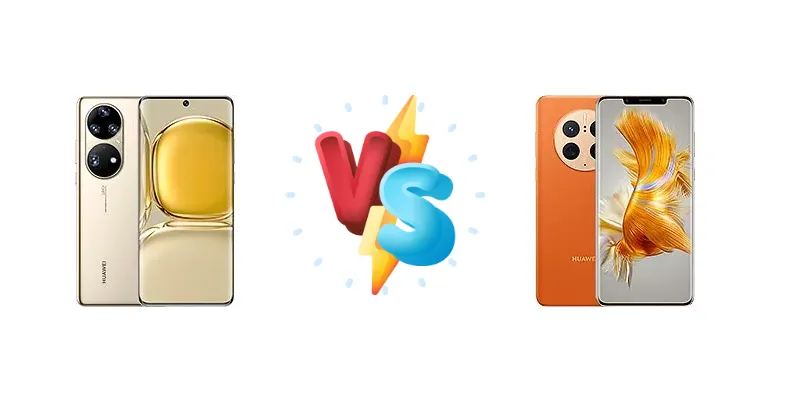
|
🏆 Quick Verdict
The Mate 50 Pro edges out the P50 Pro thanks to its more powerful Snapdragon 8+ Gen 1 chipset, brighter display, and slightly improved battery life. While the P50 Pro remains a strong contender, the Mate 50 Pro represents a noticeable upgrade, especially for demanding users.
| PHONES | ||
|---|---|---|
| Phone Names | Huawei P50 Pro | Huawei Mate 50 Pro |
| Network | ||
|---|---|---|
| 2G bands | GSM 850 / 900 / 1800 / 1900 | GSM 850 / 900 / 1800 / 1900 |
| 3G bands | HSDPA 800 / 850 / 900 / 1700(AWS) / 1900 / 2100 | HSDPA 800 / 850 / 900 / 1700(AWS) / 1900 / 2100 |
| 4G bands | 1, 2, 3, 4, 5, 6, 7, 8, 9, 12, 17, 18, 19, 20, 26, 28, 34, 38, 39, 40, 41 - China | 1, 2, 3, 4, 5, 7, 8, 12, 13, 17, 18, 19, 20, 26, 28, 32, 34, 38, 39, 40, 41, 66 - International |
| Speed | HSPA, LTE | HSPA, LTE |
| Technology | GSM / CDMA / HSPA / CDMA2000 / LTE | GSM / CDMA / HSPA / CDMA2000 / LTE |
| 1, 2, 3, 4, 5, 7, 8, 12, 17, 18, 19, 20, 26, 28, 32, 34, 38, 39, 40, 41, 66 - International | 1, 2, 3, 4, 5, 7, 8, 12, 17, 18, 19, 20, 26, 28, 34, 38, 39, 40, 41 - China | |
| Launch | ||
|---|---|---|
| Announced | 2021, July 29 | 2022, September 06 |
| Status | Available. Released 2021, August 12 | Available. Released 2022, September 28 |
| Body | ||
|---|---|---|
| Build | Glass front, glass back, aluminum frame | - |
| Dimensions | 158.8 x 72.8 x 8.5 mm (6.25 x 2.87 x 0.33 in) | 162.1 x 75.5 x 8.5 mm (6.38 x 2.97 x 0.33 in) |
| SIM | · Nano-SIM· Nano-SIM + Nano-SIM | · Nano-SIM· Nano-SIM + Nano-SIM |
| Weight | 195 g (6.88 oz) | 205 g / 209 g (7.23 oz) |
| IP68 dust/water resistant (up to 1.5m for 30 min) | IP68 dust/water resistant (up to 6m for 30 min) | |
| Display | ||
|---|---|---|
| Protection | - | Huawei Kunlun Glass |
| Resolution | 1228 x 2700 pixels (~450 ppi density) | 1212 x 2616 pixels, 19.5:9 ratio (~428 ppi density) |
| Size | 6.6 inches, 105.4 cm2 (~91.2% screen-to-body ratio) | 6.74 inches, 111.8 cm2 (~91.3% screen-to-body ratio) |
| Type | OLED, 1B colors, 120Hz | OLED, 1B colors, 120Hz |
| Platform | ||
|---|---|---|
| CPU | Octa-core (1x3.13 GHz Cortex-A77 & 3x2.54 GHz Cortex-A77 & 4x2.05 GHz Cortex-A55)Octa-core (1x2.84 GHz Cortex-X1 & 3x2.42 GHz Cortex-A78 & 4x1.80 GHz Cortex-A55) | Octa-core (1x3.19 GHz Cortex-X2 & 3x2.75 GHz Cortex-A710 & 4x2.0 GHz Cortex-A510) |
| Chipset | Kirin 9000 (5 nm)Qualcomm SM8350 Snapdragon 888 4G (5 nm) | Qualcomm SM8475 Snapdragon 8+ Gen 1 4G (4 nm) |
| GPU | Mali-G78 MP24Adreno 660 | Adreno 730 |
| OS | HarmonyOS 2.0 (China), EMUI 14.2 (Europe), no Google Play Services | EMUI 13 (International), HarmonyOS 3.0 (China) |
| Memory | ||
|---|---|---|
| Card slot | Nano Memory (uses shared SIM slot) | Nano Memory (uses shared SIM slot) |
| Internal | 128GB 8GB RAM, 256GB 8GB RAM, 512GB 8GB RAM, 512GB 12GB RAM | 256GB 8GB RAM, 512GB 8GB RAM |
| - | UFS 3.1 | |
| Main Camera | ||
|---|---|---|
| Features | Laser AF, color spectrum sensor, Leica optics, dual-LED flash, panorama, HDR | Laser AF, color spectrum sensor, LED flash, panorama, HDR |
| Quad | 50 MP, f/1.8, 23mm (wide), PDAF, OIS 64 MP, f/3.5, 90mm (periscope telephoto), PDAF, OIS, 3.5x optical zoom, 7x lossless zoom 13 MP, f/2.2, 13mm (ultrawide), AF 40 MP, f/1.6, 23mm (B/W), AF | - |
| Single | 13 MP, f/2.4, (wide), AF | 13 MP, f/2.4, 18mm (ultrawide) TOF 3D, (depth/biometrics sensor) |
| Triple | - | 50 MP, f/1.4-f/4.0, 24mm (wide), PDAF, OIS 64 MP, f/3.5, 90mm (periscope telephoto), PDAF, OIS, 3.5x optical zoom 13 MP, f/2.2, 13mm, 120˚ (ultrawide), PDAF |
| Video | 4K@30/60fps, 1080p@30/60fps, 1080p@960fps; gyro-EIS | 4K@30/60fps, 1080p@30/60/120/240/480fps, 720p@960fps, 720p@3840fps, HDR, gyro-EIS |
| Selfie camera | ||
|---|---|---|
| Features | Panorama, HDR | HDR, panorama |
| Single | 13 MP, f/2.4, (wide), AF | 13 MP, f/2.4, 18mm (ultrawide) TOF 3D, (depth/biometrics sensor) |
| Video | 4K@30fps, 1080p@30/60/240fps | 4K@30/60fps, 1080p@30/60/240fps |
| Sound | ||
|---|---|---|
| 3.5mm jack | No | No |
| 35mm jack | No | No |
| Loudspeaker | Yes, with stereo speakers | Yes, with stereo speakers |
| - | 32-bit/384kHz audio | |
| Comms | ||
|---|---|---|
| Bluetooth | 5.2, A2DP, LE | 5.2, A2DP, LE |
| Infrared port | Yes | Yes |
| NFC | Yes | Yes |
| Positioning | GPS (L1+L5), GLONASS (L1), BDS (B1I+B1c+B2a+B2b), GALILEO (E1+E5a+E5b), QZSS (L1+L5), NavIC | GPS (L1+L5), GLONASS (L1), BDS (B1I+B1c+B2a), GALILEO (E1+E5a), QZSS (L1+L5), NavIC (L5) |
| Radio | No | No |
| USB | USB Type-C 3.1, OTG | USB Type-C 3.1, OTG, Display Port 1.2 |
| WLAN | Wi-Fi 802.11 a/b/g/n/ac/6, dual-band, Wi-Fi Direct | Wi-Fi 802.11 a/b/g/n/ac/6, dual-band, Wi-Fi Direct |
| Features | ||
|---|---|---|
| Sensors | Fingerprint (under display, optical), accelerometer, gyro, proximity, compass, barometer | Face ID, fingerprint (under display, optical), accelerometer, gyro, proximity, barometer, compass |
| - | BDS Satellite Message (sending only) | |
| Battery | ||
|---|---|---|
| Charging | 66W wired 50W wireless Reverse wireless charging | 66W wired 50W wireless 5W reverse wireless |
| Type | Li-Po 4360 mAh | Li-Po 4700 mAh |
| Misc | ||
|---|---|---|
| Colors | Golden Black, Cocoa Gold, Pearl White, Charm Pink | Black, Silver, Purple, Orange |
| Models | JAD-AL50, JAD-LX9, JAD-AL00 | DCO-AL00, DCO-LX9 |
| Price | $ 196.62 / £ 329.00 / € 473.13 | About 900 EUR |
| Tests | ||
|---|---|---|
| Battery life | Endurance rating 76h | Endurance rating 104h |
| Camera | Photo / Video | Photo / Video |
| Display | Contrast ratio: Infinite (nominal) | Contrast ratio: Infinite (nominal) |
| Loudspeaker | -27.3 LUFS (Good) | -24.8 LUFS (Very good) |
| Performance | AnTuTu: 793876 (v8), 786215 (v9) GeekBench: 3145 (v5.1) GFXBench: 44fps (ES 3.1 onscreen) | AnTuTu: 979921 (v9) GeekBench: 3839 (v5.1) GFXBench: 68fps (ES 3.1 onscreen) |
Huawei P50 Pro
- Excellent camera system
- Solid performance
- Premium design
- Good value (potentially)
- Older chipset
- Lower brightness display
- Slightly shorter battery life
Huawei Mate 50 Pro
- Powerful Snapdragon 8+ Gen 1
- Brighter display
- Improved battery life
- XMAGE imaging system
- Higher price
- Reverse wireless charging is slower (5W vs potentially higher)
Display Comparison
The Mate 50 Pro boasts a significantly brighter display at 946 nits compared to the P50 Pro's 754 nits. Both offer excellent contrast ratios (infinite nominal), but the Mate 50 Pro's increased brightness provides better visibility in direct sunlight. Color accuracy is generally excellent on both, with vibrant and accurate color reproduction.
Camera Comparison
Both phones feature exceptional camera systems, but the Mate 50 Pro introduces XMAGE, Huawei's new imaging system, which enhances color science and overall image quality. While both offer excellent photo and video capabilities, the Mate 50 Pro generally produces more natural-looking images with improved dynamic range. Low-light performance is also slightly better on the Mate 50 Pro.
Performance
The Mate 50 Pro's Snapdragon 8+ Gen 1 4G delivers a noticeable performance boost over the P50 Pro's Kirin 9000 or Snapdragon 888 4G. Expect smoother multitasking, faster app loading times, and improved gaming performance on the Mate 50 Pro. Both phones handle everyday tasks with ease.
Battery Life
The Mate 50 Pro demonstrates slightly better battery endurance, with an active use score of 10:36h and an endurance rating of 104h, compared to the P50 Pro's 76h endurance rating. Both support 66W wired and 50W wireless charging, ensuring relatively quick top-ups.
Buying Guide
The Huawei P50 Pro is a great choice for users seeking a premium camera experience and solid performance at a potentially lower price point. The Mate 50 Pro is ideal for those who prioritize top-tier performance, a brighter display, and the latest features, willing to invest a bit more.