
Huawei P40 Pro vs. Sony Xperia 1 III: A Detailed Comparison of Flagship Power
| Phones Images | |||||
|---|---|---|---|---|---|
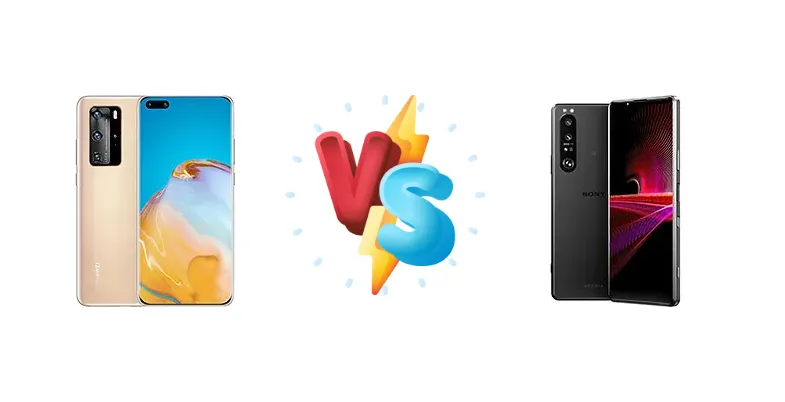
|
🏆 Quick Verdict
For the average user prioritizing camera versatility and fast charging, the Huawei P40 Pro remains a strong contender, offering a compelling feature set at a potentially lower price. However, the Sony Xperia 1 III’s Snapdragon 888 chipset and brighter display provide a smoother, more future-proof experience for power users and content creators.
| PHONES | ||
|---|---|---|
| Phone Names | Huawei P40 Pro | Sony Xperia 1 III |
| Network | ||
|---|---|---|
| 2G bands | GSM 850 / 900 / 1800 / 1900 | GSM 850 / 900 / 1800 / 1900 |
| 3G bands | HSDPA 800 / 850 / 900 / 1700(AWS) / 1900 / 2100 | HSDPA 800 / 850 / 900 / 1700(AWS) / 1900 / 2100 |
| 4G bands | 1, 2, 3, 4, 5, 6, 7, 8, 9, 12, 17, 18, 19, 20, 26, 28, 32, 34, 38, 39, 40, 41 - ELS-NX9 | 1, 2, 3, 4, 5, 7, 8, 12, 13, 17, 19, 20, 25, 26, 28, 29, 32, 34, 38, 39, 40, 41, 46, 66 - Europe |
| 5G bands | 1, 3, 28, 38, 41, 77, 78, 79 SA/NSA - ELS-NX9 | 1, 3, 5, 7, 8, 20, 28, 38, 40, 41, 77, 78 SA/NSA/Sub6 - Europe |
| Speed | HSPA, LTE, 5G | HSPA, LTE, 5G |
| Technology | GSM / HSPA / LTE / 5G | GSM / HSPA / LTE / 5G |
| - | SA/NSA/Sub6/mmWave - USA (specific) | |
| Launch | ||
|---|---|---|
| Announced | 2020, March 26 | 2021, April 14 |
| Status | Available. Released 2020, April 07 | Available. Released 2021, August 25 |
| Body | ||
|---|---|---|
| Build | Glass front, glass back, aluminum frame | Glass front (Gorilla Glass Victus), glass back (Gorilla Glass 6), aluminum frame |
| Dimensions | 158.2 x 72.6 x 9 mm (6.23 x 2.86 x 0.35 in) | 165 x 71 x 8.2 mm (6.50 x 2.80 x 0.32 in) |
| SIM | · Nano-SIM + eSIM· Nano-SIM + Nano-SIM | Nano-SIM + Nano-SIM |
| Weight | 209 g (7.37 oz) | 186 g / 187.1 g (mmWave) (6.56 oz) |
| - | IP65/IP68 dust/water resistant (up to 1.5m for 30 min) | |
| Display | ||
|---|---|---|
| Protection | - | Corning Gorilla Glass Victus |
| Resolution | 1200 x 2640 pixels (~441 ppi density) | 1644 x 3840 pixels, 21:9 ratio (~643 ppi density) |
| Size | 6.58 inches, 105.2 cm2 (~91.6% screen-to-body ratio) | 6.5 inches, 98.6 cm2 (~84.2% screen-to-body ratio) |
| Type | OLED, 90Hz, HDR10 | OLED, 1B colors, 120Hz, HDR BT.2020 |
| - | Runs at 1096 x 2560 pixels except for select use cases | |
| Platform | ||
|---|---|---|
| CPU | Octa-core (2x2.86 GHz Cortex-A76 & 2x2.36 GHz Cortex-A76 & 4x1.95 GHz Cortex-A55) | Octa-core (1x2.84 GHz Cortex-X1 & 3x2.42 GHz Cortex-A78 & 4x1.80 GHz Cortex-A55) |
| Chipset | Kirin 990 5G (7 nm+) | Qualcomm SM8350 Snapdragon 888 5G (5 nm) |
| GPU | Mali-G76 MP16 | Adreno 660 |
| OS | Android 10, EMUI 12, no Google Play Services | Android 11, upgradable to Android 13 |
| Memory | ||
|---|---|---|
| Card slot | Nano Memory (uses shared SIM slot) | microSDXC (uses shared SIM slot) |
| Internal | 128GB 8GB RAM, 256GB 8GB RAM, 512GB 8GB RAM | 256GB 12GB RAM, 512GB 12GB RAM |
| - | UFS 3.X | |
| Main Camera | ||
|---|---|---|
| Features | Leica optics, color spectrum sensor, LED flash, panorama, HDR | Zeiss optics, Zeiss T* lens coating, color spectrum sensor, LED flash, panorama, HDR, eye tracking |
| Single | - | 8 MP, f/2.0, 24mm (wide), 1/4", 1.12µm |
| Triple | 50 MP, f/1.9, 23mm (wide), 1/1.28", 1.22µm, dual pixel PDAF, OIS 12 MP, f/3.4, 125mm (periscope telephoto), PDAF, OIS, 5x optical zoom 40 MP, f/1.8, 18mm (ultrawide), 1/1.54", PDAF TOF 3D, (depth) | 12 MP, f/1.7, 24mm (wide), 1/1.7", 1.8µm, dual pixel PDAF, OIS 12 MP, f/2.3, 70mm (telephoto), f/2.8, 105mm (telephoto), 1/2.9", dual pixel PDAF, 3x/4.4x optical zoom, OIS 12 MP, f/2.2, 124˚, 16mm (ultrawide), 1/2.6", dual pixel PDAF 0.3 MP, TOF 3D, (depth) |
| Video | 4K@30/60fps, 1080p@30/60fps, 720@7680fps, 1080p@960fps, HDR; gyro-EIS | 4K@24/25/30/60/120fps HDR, 1080p@30/60/120fps; 5-axis gyro-EIS, OIS |
| Selfie camera | ||
|---|---|---|
| Features | HDR | HDR |
| Single | 32 MP, f/2.2, 26mm (wide), 1/2.8", 0.8µm, AF IR TOF 3D, (depth/biometrics sensor) | 8 MP, f/2.0, 24mm (wide), 1/4.0", 1.12µm |
| Video | 4K@30/60fps, 1080p@30/60fps | 1080p@30fps, 5-axis gyro-EIS |
| Sound | ||
|---|---|---|
| 3.5mm jack | No | Yes |
| 35mm jack | No | Yes |
| Loudspeaker | Yes | Yes, with stereo speakers |
| - | 24-bit/192kHz audio Dynamic vibration system | |
| Comms | ||
|---|---|---|
| Bluetooth | 5.1, A2DP, LE | 5.2, A2DP, LE, aptX HD, aptX Adaptive |
| Infrared port | Yes | - |
| NFC | Yes | Yes |
| Positioning | GPS (L1+L5), GLONASS (L1), BDS (B1I+B1c+B2a), GALILEO (E1+E5a), QZSS (L1+L5), NavIC | GPS, GLONASS, BDS, GALILEO, QZSS |
| Radio | No | No |
| USB | USB Type-C 3.1, OTG | USB Type-C 3.1, OTG, video output |
| WLAN | Wi-Fi 802.11 a/b/g/n/ac/6, dual-band, Wi-Fi Direct | Wi-Fi 802.11 a/b/g/n/ac/6, dual-band, Wi-Fi Direct, DLNA |
| Features | ||
|---|---|---|
| Sensors | Infrared Face ID, fingerprint (under display, optical), accelerometer, gyro, proximity, compass | Fingerprint (side-mounted), accelerometer, gyro, proximity, barometer, compass |
| - | Native Sony Alpha camera support | |
| Battery | ||
|---|---|---|
| Charging | 40W wired 27W wireless 27W reverse wireless | 30W wired, PD, 50% in 30 min Wireless Reverse wireless |
| Type | Li-Po 4200 mAh | Li-Po 4500 mAh |
| Misc | ||
|---|---|---|
| Colors | Silver Frost, Blush Gold, Deep Sea Blue, Ice White, Black | Frosted Black, Frosted Gray, Frosted Purple |
| Models | ELS-NX9, ELS-N04, ELS-AN00, ELS-TN00 | XQBC62/V, XQBC52V.UKCX, SO-51B, SOG03, A101SO, XQ-BC62, XQ-BC72, XQ-BC52, XQ-BC01, XQ-BC11, XQ-BC21, XQ-BC72 |
| Price | € 360.00 / £ 335.00 | € 505.26 / $ 903.43 |
| Pricing | ||
|---|---|---|
| 256GB 8GB RAM | $ 714.88 | - |
| RENEWED | $ 680.00 | - |
| Tests | ||
|---|---|---|
| Battery life | Endurance rating 94h | Endurance rating 82h |
| Camera | Photo / Video | Photo / Video |
| Display | Contrast ratio: Infinite (nominal) | Contrast ratio: Infinite (nominal) |
| Loudspeaker | -27.5 LUFS (Good) | -26.5 LUFS (Good) |
| Performance | AnTuTu: 496356 (v8) GeekBench: 12848 (v4.4), 3197 (v5.1) GFXBench: 31fps (ES 3.1 onscreen) | AnTuTu: 607423 (v8) GeekBench: 3515 (v5.1) GFXBench: 54fps (ES 3.1 onscreen) |
Huawei P40 Pro
- Faster Charging (Wired & Wireless)
- Superior Zoom Capabilities
- Potentially Lower Price
- Lack of Google Mobile Services
- Older Chipset
Sony Xperia 1 III
- More Powerful Snapdragon 888 Chipset
- Brighter, More Color-Accurate Display
- Cleaner Android Experience
- Slower Wireless Charging
- Less Versatile Zoom
Display Comparison
The Sony Xperia 1 III boasts a significant advantage in display brightness, reaching a measured 620 nits, compared to the Huawei P40 Pro’s ‘Infinite’ (nominal) contrast ratio which doesn’t specify peak brightness. While both claim infinite contrast, the Xperia 1 III’s higher nits translate to better visibility in direct sunlight. Both displays share an unspecified 'infinite' contrast ratio, suggesting OLED technology, but the Xperia 1 III’s panel is likely tuned for greater color accuracy, catering to Sony’s professional imaging focus. The P40 Pro’s curved display offers a more immersive experience, but the Xperia 1 III’s flat panel minimizes distortion for critical viewing.
Camera Comparison
Both phones excel in camera capabilities, but approach it differently. The P40 Pro’s camera system is renowned for its versatility, particularly its 50MP primary sensor and 12MP periscope zoom lens. The Xperia 1 III, however, emphasizes professional control with features like real-time tracking and dedicated photography modes. While both capture excellent photos and videos, the Xperia 1 III’s image processing leans towards a more natural look, while the P40 Pro tends to boost saturation and contrast. The P40 Pro’s zoom capabilities are superior, offering greater reach than the Xperia 1 III. Both offer photo and video capabilities, but the Xperia 1 III’s focus on manual controls will appeal to enthusiasts.
Performance
The core difference lies in the chipsets: Huawei’s Kirin 990 5G (7nm+) versus Sony’s Qualcomm Snapdragon 888 5G (5nm). The Snapdragon 888, built on a smaller 5nm process, offers superior power efficiency and thermal management, leading to sustained performance during demanding tasks. The Xperia 1 III’s CPU configuration – a Cortex-X1 prime core alongside Cortex-A78 performance cores – provides a noticeable performance uplift over the P40 Pro’s dual Cortex-A76 and quad Cortex-A55 setup. While the P40 Pro’s 8GB of RAM is sufficient, the Snapdragon 888’s architecture is optimized for multitasking and resource-intensive applications.
Battery Life
The Huawei P40 Pro holds a slight edge in endurance with a 94-hour rating, compared to the Xperia 1 III’s 82-hour rating. However, this doesn’t tell the whole story. The P40 Pro supports significantly faster charging – 40W wired, 27W wireless, and even 27W reverse wireless – allowing for quicker top-ups. The Xperia 1 III offers 30W wired charging with PD support (50% in 30 minutes) and wireless/reverse wireless charging, but lacks the P40 Pro’s wireless charging speed. The Snapdragon 888’s efficiency partially offsets the smaller battery capacity in the Xperia 1 III, but the P40 Pro’s charging speeds are a clear advantage.
Buying Guide
Buy the Huawei P40 Pro if you need a versatile camera system with excellent zoom capabilities and prioritize fast wired and wireless charging. It’s ideal for users who can navigate the Google services limitations. Buy the Sony Xperia 1 III if you prefer a cleaner Android experience, demand top-tier performance for gaming and content creation, and value a brighter, more color-accurate display for professional work.