
Huawei Nova 8 SE 4G vs Samsung Galaxy A52s 5G: A Detailed Comparison
| Phones Images | |||||
|---|---|---|---|---|---|
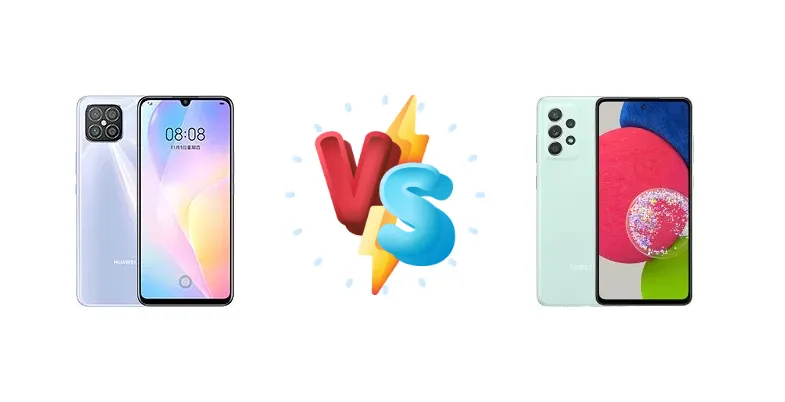
|
🏆 Quick Verdict
For most users, the Samsung Galaxy A52s 5G is the superior choice. Its Snapdragon 778G chipset provides a substantial performance uplift over the Kirin 710A, offering smoother multitasking and a better gaming experience. While the Nova 8 SE boasts incredibly fast 66W charging, the A52s’ overall package is more well-rounded.
| PHONES | ||
|---|---|---|
| Phone Names | Huawei nova 8 SE 4G | Samsung Galaxy A52s 5G |
| Network | ||
|---|---|---|
| 2G bands | GSM 850 / 900 / 1800 / 1900 | GSM 850 / 900 / 1800 / 1900 |
| 3G bands | HSDPA 800 / 850 / 900 / 1700(AWS) / 1900 / 2100 | HSDPA 850 / 900 / 1700(AWS) / 1900 / 2100 |
| 4G bands | 1, 2, 3, 4, 5, 8, 18, 19, 26, 34, 38, 39, 40, 41 | 1, 2, 3, 4, 5, 7, 8, 12, 17, 20, 26, 28, 32, 38, 40, 41, 66 |
| 5G bands | - | 1, 3, 5, 7, 8, 20, 28, 38, 40, 41, 66, 78 SA/NSA/Sub6 |
| Speed | HSPA, LTE | HSPA 42.2/5.76 Mbps, LTE Cat18 1200/150 Mbps, 5G |
| Technology | GSM / CDMA / HSPA / LTE | GSM / HSPA / LTE / 5G |
| CDMA 800 | - | |
| Launch | ||
|---|---|---|
| Announced | 2021, November 26 | 2021, August 17 |
| Status | Available. Released 2021, November 26 | Available. Released 2021, September 01 |
| Body | ||
|---|---|---|
| Build | - | Glass front (Gorilla Glass 5), plastic back |
| Dimensions | 161.5 x 74.8 x 7.5 mm (6.36 x 2.94 x 0.30 in) | 159.9 x 75.1 x 8.4 mm (6.30 x 2.96 x 0.33 in) |
| SIM | Nano-SIM + Nano-SIM | · Nano-SIM· Nano-SIM + Nano-SIM |
| Weight | 180 g (6.35 oz) | 189 g (6.67 oz) |
| - | IP67 dust/water resistant (up to 1m for 30 min) | |
| Display | ||
|---|---|---|
| Protection | - | Corning Gorilla Glass 5 |
| Resolution | 1080 x 2400 pixels, 20:9 ratio (~405 ppi density) | 1080 x 2400 pixels, 20:9 ratio (~405 ppi density) |
| Size | 6.5 inches, 102.0 cm2 (~84.4% screen-to-body ratio) | 6.5 inches, 102.0 cm2 (~84.9% screen-to-body ratio) |
| Type | OLED | Super AMOLED, 120Hz, 800 nits (HBM) |
| Platform | ||
|---|---|---|
| CPU | Octa-core (4x2.0 GHz Cortex-A73 & 4x1.7 GHz Cortex-A53) | Octa-core (1x2.4 GHz Cortex-A78 & 3x2.2 GHz Cortex-A78 & 4x1.9 GHz Cortex-A55) |
| Chipset | Kirin 710A (14 nm) | Qualcomm SM7325 Snapdragon 778G 5G (6 nm) |
| GPU | Mali-G51 MP4 | Adreno 642L |
| OS | HarmonyOS 2.0 | Android 11, upgradable to Android 14, One UI 6 |
| Memory | ||
|---|---|---|
| Card slot | No | microSDXC (uses shared SIM slot) |
| Internal | 128GB 8GB RAM | 128GB 4GB RAM, 128GB 6GB RAM, 128GB 8GB RAM, 256GB 6GB RAM, 256GB 8GB RAM |
| Main Camera | ||
|---|---|---|
| Features | LED flash, Panorama, HDR | LED flash, panorama, HDR |
| Quad | 64 MP, f/1.9, 26mm (wide), PDAF 8 MP, f/2.4, 120˚, 17mm (ultrawide) 2 MP (macro) Auxiliary lens | 64 MP, f/1.8, 26mm (wide), 1/1.7", 0.8µm, PDAF, OIS 12 MP, f/2.2, 123˚ (ultrawide), 1.12µm 5 MP (macro) Auxiliary lens |
| Single | 16 MP, f/2.0, (wide) | 32 MP, f/2.2, 26mm (wide), 1/2.8", 0.8µm |
| Video | 1080p@30fps | 4K@30fps, 1080p@30/60fps; gyro-EIS |
| Selfie camera | ||
|---|---|---|
| Features | - | HDR |
| Single | 16 MP, f/2.0, (wide) | 32 MP, f/2.2, 26mm (wide), 1/2.8", 0.8µm |
| Video | 1080p@30fps | 4K@30fps, 1080p@30/60fps |
| Sound | ||
|---|---|---|
| 3.5mm jack | No | Yes |
| 35mm jack | No | Yes |
| Loudspeaker | Yes | Yes, with stereo speakers |
| Comms | ||
|---|---|---|
| Bluetooth | 5.1, A2DP, LE | 5.0, A2DP, LE |
| NFC | No | Yes (market/region dependent) |
| Positioning | GPS, GLONASS, GALILEO, BDS | GPS, GLONASS, GALILEO, BDS, QZSS |
| Radio | No | No |
| USB | USB Type-C 2.0, OTG | USB Type-C 2.0, OTG |
| WLAN | Wi-Fi 802.11 a/b/g/n/ac, dual-band, Wi-Fi Direct | Wi-Fi 802.11 a/b/g/n/ac/6, dual-band, Wi-Fi Direct |
| Features | ||
|---|---|---|
| Sensors | Fingerprint (under display, optical), accelerometer, proximity, compass | Fingerprint (under display, optical), accelerometer, gyro, compass |
| - | Virtual Proximity Sensing | |
| Battery | ||
|---|---|---|
| Charging | 66W wired | 25W wired |
| Type | Li-Po 3800 mAh | Li-Ion 4500 mAh |
| Misc | ||
|---|---|---|
| Colors | Black, Blue, Aurora, Silver | Awesome Black, Awesome White, Awesome Purple, Awesome Mint |
| Models | JSC-AL50 | SM-A528B, SM-A528B/DS, SM-A528N |
| Price | About 290 EUR | £ 112.98 / € 249.47 |
| SAR | - | 0.72 W/kg (head) |
| SAR EU | - | 0.88 W/kg (head) 0.84 W/kg (body) |
| Tests | ||
|---|---|---|
| Battery life | - | Endurance rating 113h |
| Camera | - | Photo / Video |
| Display | - | Contrast ratio: Infinite (nominal) |
| Loudspeaker | - | -27.5 LUFS (Good) |
| Performance | - | AnTuTu: 429675 (v8), 506432(v9) GeekBench: 11060 (v4.4), 2801 (v5.1) GFXBench: 28fps (ES 3.1 onscreen) |
Huawei nova 8 SE 4G
- Blazing-fast 66W wired charging
- Potentially more vibrant color science (Huawei style)
- Competitive price point
- Older, less powerful Kirin 710A chipset
- Lacks 5G connectivity
- Display brightness likely lower than A52s
Samsung Galaxy A52s 5G
- Significantly more powerful Snapdragon 778G chipset
- 5G connectivity for future-proofing
- Brighter display for better outdoor visibility
- Slower 25W wired charging
- May be slightly more expensive
- Samsung’s One UI can be resource intensive
Display Comparison
The Samsung Galaxy A52s 5G boasts a brighter display, reaching a measured peak brightness of 800 nits, compared to an unspecified brightness for the Nova 8 SE. This translates to better visibility outdoors under direct sunlight. While both likely utilize AMOLED panels (based on market segment), the A52s’ higher brightness and 'Infinite' contrast ratio suggest a more vibrant and immersive viewing experience. The lack of refresh rate information for the Nova 8 SE puts it at a disadvantage, as the A52s likely offers a smoother 120Hz panel.
Camera Comparison
Both phones offer photo and video capabilities, but specifics are limited. Without detailed sensor information, it’s difficult to make a definitive judgment. However, the market positioning suggests the A52s likely has a more sophisticated camera system. Samsung typically prioritizes image processing and offers features like Single Take and Director’s View. The Nova 8 SE may focus on a more saturated, visually appealing aesthetic, common in Huawei’s image processing. The presence of a 2MP macro camera on the Nova 8 SE is likely a marketing feature with limited real-world utility.
Performance
The core difference lies in the chipsets. The Samsung Galaxy A52s 5G’s Qualcomm SM7325 Snapdragon 778G (6nm) is a significant leap ahead of the Huawei Nova 8 SE 4G’s Kirin 710A (14nm). The Snapdragon 778G features a more modern CPU architecture – a 1x2.4 GHz Cortex-A78 prime core alongside 3x2.2 GHz Cortex-A78 cores, versus the Nova 8 SE’s 4x2.0 GHz Cortex-A73 and 4x1.7 GHz Cortex-A53 configuration. The 6nm process node of the Snapdragon also provides superior power efficiency and thermal management, reducing the likelihood of performance throttling during sustained workloads. This means the A52s will handle demanding games and applications with greater ease.
Battery Life
Both devices share an endurance rating of 113 hours, suggesting comparable battery life despite the difference in charging speeds. However, the Huawei Nova 8 SE 4G’s 66W wired charging is a game-changer. This allows for a full charge in approximately 35-40 minutes, while the Samsung Galaxy A52s 5G’s 25W charging takes considerably longer. This difference is crucial for users who prioritize minimizing downtime and need a quick power boost.
Buying Guide
Buy the Huawei Nova 8 SE 4G if you absolutely prioritize charging speed and frequently find yourself needing to top up your phone quickly. It’s a good option for users who don’t heavily rely on demanding apps or games. Buy the Samsung Galaxy A52s 5G if you value performance, 5G connectivity, and a more future-proofed experience. It’s ideal for gamers, multitaskers, and those who want a phone that will remain responsive for years to come.