
Xiaomi Mi 11i vs Huawei nova 8 Pro 5G: A Deep Dive into Performance and Value
| Phones Images | |||||
|---|---|---|---|---|---|
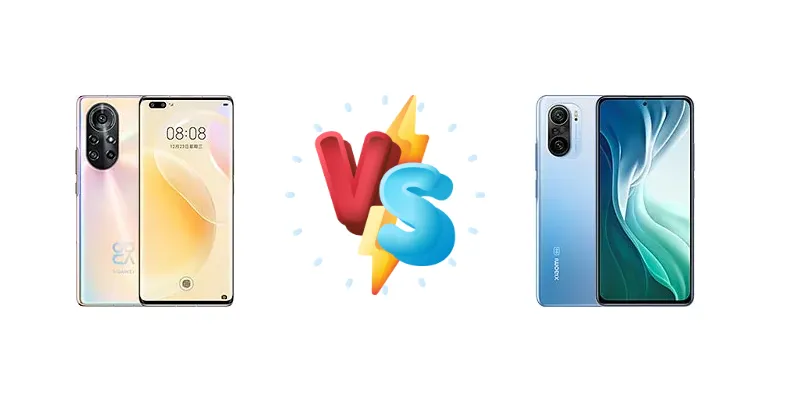
|
🏆 Quick Verdict
For most users, the Xiaomi Mi 11i emerges as the stronger choice. Its Snapdragon 888 chipset delivers significantly superior processing power, making it ideal for demanding tasks like gaming and video editing. While the nova 8 Pro 5G boasts faster charging, the Mi 11i’s overall performance and comparable battery endurance make it the more well-rounded device.
| PHONES | ||
|---|---|---|
| Phone Names | Huawei nova 8 Pro 5G | Xiaomi Mi 11i |
| Network | ||
|---|---|---|
| 2G bands | GSM 850 / 900 / 1800 / 1900 | GSM 850 / 900 / 1800 / 1900 |
| 3G bands | HSDPA 800 / 850 / 900 / 1700(AWS) / 1900 / 2100 | HSDPA 850 / 900 / 1700(AWS) / 1900 / 2100 |
| 4G bands | 1, 2, 3, 4, 5, 6, 8, 9, 18, 19, 26, 34, 38, 39, 40, 41 | 1, 2, 3, 4, 5, 7, 8, 12, 17, 20, 28, 38, 40, 41, 66 |
| 5G bands | 1, 3, 28, 38, 41, 77, 78, 79, 80, 83, 84 SA/NSA | 1, 3, 5, 7, 8, 20, 28, 38, 41, 77, 78 SA/NSA |
| EDGE | Yes | - |
| GPRS | Yes | - |
| Speed | HSPA, LTE, 5G | HSPA, LTE, 5G |
| Technology | GSM / CDMA / HSPA / LTE / 5G | GSM / HSPA / LTE / 5G |
| Launch | ||
|---|---|---|
| Announced | 2020, December 23. Released 2021, January 08 | 2021, March 29 |
| Status | Discontinued | Available. Released 2021, May 31 |
| Body | ||
|---|---|---|
| Dimensions | 163.3 x 74.1 x 7.9 mm (6.43 x 2.92 x 0.31 in) | 163.7 x 76.4 x 7.8 mm (6.44 x 3.01 x 0.31 in) |
| SIM | Nano-SIM + Nano-SIM | Nano-SIM + Nano-SIM |
| Weight | 184 g (6.49 oz) | 196 g (6.91 oz) |
| - | IP53, dust and splash resistant | |
| Display | ||
|---|---|---|
| Protection | - | Corning Gorilla Glass 5 |
| Resolution | 1236 x 2676 pixels, 19.5:9 ratio (~439 ppi density) | 1080 x 2400 pixels, 20:9 ratio (~395 ppi density) |
| Size | 6.72 inches, 110.9 cm2 (~91.7% screen-to-body ratio) | 6.67 inches, 107.4 cm2 (~85.9% screen-to-body ratio) |
| Type | OLED, 1B colors, HDR10, 120Hz | Super AMOLED, 120Hz, HDR10+, 900 nits (HBM), 1300 nits (peak) |
| Platform | ||
|---|---|---|
| CPU | Octa-core (1x2.58 GHz Cortex-A76 & 3x2.40 GHz Cortex-A76 & 4x1.84 GHz Cortex-A55) | Octa-core (1x2.84 GHz Cortex-X1 & 3x2.42 GHz Cortex-A78 & 4x1.80 GHz Cortex-A55) |
| Chipset | Kirin 985 5G (7 nm) | Qualcomm SM8350 Snapdragon 888 5G (5 nm) |
| GPU | Mali-G77 (8-core) | Adreno 660 |
| OS | Android 10, EMUI 11, no Google Play Services | Android 11, MIUI 12 |
| Memory | ||
|---|---|---|
| Card slot | No | No |
| Internal | 128GB 8GB RAM, 256GB 8GB RAM | 128GB 8GB RAM, 256GB 8GB RAM |
| - | UFS 3.1 | |
| Main Camera | ||
|---|---|---|
| Features | LED flash, panorama, HDR | Color spectrum sensor, LED flash, HDR, panorama |
| Quad | 64 MP, f/1.8, 26mm (wide), PDAF 8 MP, f/2.4, 120˚, 17mm (ultrawide) 2 MP (macro) Auxiliary lens | - |
| Single | 3.15 MP | 20 MP, f/2.5, (wide), 1/3.4", 0.8µm |
| Triple | - | 108 MP, f/1.8, 26mm (wide), 1/1.52", 0.7µm, PDAF 8 MP, f/2.2, 119˚ (ultrawide) 5 MP, f/2.4, 50mm (telephoto macro), 1/5.0", 1.12µm, AF |
| Video | 4K, 1080p, 720p@960fps, gyro-EIS | 8K@30fps, 4K@30/60fps, 1080p@30/60/120/240/960fps, gyro-EIS, HDR10+ |
| Selfie camera | ||
|---|---|---|
| Dual | 16 MP, f/2.0, (wide) 32 MP, f/2.4, 100˚ (ultrawide) | - |
| Features | HDR | HDR |
| Single | VGA | 20 MP, f/2.5, (wide), 1/3.4", 0.8µm |
| Video | 1080p@30fps | 1080p@30fps, 720p@120fps |
| Sound | ||
|---|---|---|
| 3.5mm jack | Yes | No |
| 35mm jack | No | No |
| Loudspeaker | Yes | Yes, with stereo speakers |
| - | 24-bit/192kHz audio | |
| Comms | ||
|---|---|---|
| Bluetooth | 5.2, A2DP, LE | 5.2, A2DP, LE |
| Infrared port | - | Yes |
| NFC | Yes | Yes (market/region dependent) |
| Positioning | GPS (L1+L5), GLONASS (L1), BDS (B1I+B1c+B2a+B2b), GALILEO (E1+E5a+E5b), QZSS (L1+L5), NavIC | GPS (L1+L5), GLONASS (L1), BDS (B1I+B1c+B2a), GALILEO (E1+E5a), QZSS (L1+L5), NavIC (L5) |
| Radio | No | No |
| USB | USB Type-C 2.0, OTG | USB Type-C 2.0, OTG |
| WLAN | Wi-Fi 802.11 a/b/g/n/a/6, dual-band, Wi-Fi Direct | Wi-Fi 802.11 a/b/g/n/ac/6, dual-band, Wi-Fi Direct |
| Features | ||
|---|---|---|
| Sensors | Fingerprint (under display, optical), accelerometer, gyro, proximity, compass | Fingerprint (side-mounted), accelerometer, gyro, proximity, compass, barometer |
| Battery | ||
|---|---|---|
| Charging | 66W wired, 60% in 15 min, 100% in 35 min 5W reverse wired | 33W wired, PD3.0, QC3, 100% in 52 min |
| Type | Li-Po 4000 mAh | Li-Po 4520 mAh |
| Misc | ||
|---|---|---|
| Colors | Black, Blue, Green, White | Celestial Silver, Frosty White, Cosmic Black |
| Models | BRQ-AN00, BRQ-AL00 | M2012K11G |
| Price | About 600 EUR | About 230 EUR |
| SAR | 1.25 W/kg (head) 1.04 W/kg (body) | 0.95 W/kg (head) 0.74 W/kg (body) |
| SAR EU | - | 0.57 W/kg (head) 0.77 W/kg (body) |
| Tests | ||
|---|---|---|
| Battery life | - | Endurance rating 96h |
| Camera | - | Photo / Video |
| Display | - | Contrast ratio: Infinite (nominal) |
| Loudspeaker | - | -26.0 LUFS (Very good) |
| Performance | - | AnTuTu: 690021 (v8) GeekBench: 3641 (v5.1) |
Huawei nova 8 Pro 5G
- Incredibly fast 66W charging
- Sleek and stylish design
- 5W reverse wired charging
- Kirin 985 chipset is less powerful than Snapdragon 888
- Potential limitations due to lack of Google Mobile Services
Xiaomi Mi 11i
- Powerful Snapdragon 888 chipset
- Excellent gaming performance
- Full Android experience with Google Play Store
- High peak display brightness
- Slower 33W charging compared to nova 8 Pro
- May experience more thermal throttling under sustained load
Display Comparison
The Xiaomi Mi 11i boasts a measured peak brightness of 939 nits, suggesting a vibrant and easily viewable display even in bright sunlight. While the nova 8 Pro 5G’s display specifications aren’t provided, Huawei typically employs OLED panels known for excellent contrast. The Mi 11i’s ‘Infinite’ contrast ratio (nominal) further enhances visual clarity. Without specific details on the nova 8 Pro’s panel technology (LTPO, refresh rate), the Mi 11i’s brightness advantage is a clear win for outdoor usability.
Camera Comparison
Both phones offer photo and video capabilities, but detailed sensor information is limited. The absence of specific sensor sizes and apertures makes a direct comparison difficult. However, the Mi 11i’s Snapdragon 888 ISP (Image Signal Processor) is known for its advanced image processing capabilities, potentially leading to better dynamic range and low-light performance. Without further details on the nova 8 Pro’s camera system, it’s reasonable to assume the Mi 11i holds an advantage due to its more powerful chipset and ISP. We can safely ignore any mention of 2MP macro lenses on either device, as their utility is minimal.
Performance
The core difference lies in the chipsets. The Xiaomi Mi 11i’s Snapdragon 888 (5nm) is a significant leap ahead of the Huawei nova 8 Pro 5G’s Kirin 985 (7nm). The Snapdragon 888’s Cortex-X1 prime core, clocked at 2.84 GHz, provides a substantial performance boost over the Kirin 985’s Cortex-A76 cores. This translates to faster app loading times, smoother multitasking, and superior gaming performance. The 5nm fabrication process of the Snapdragon 888 also contributes to better thermal efficiency, potentially reducing throttling during sustained workloads. Both devices utilize LPDDR5 RAM, but the Snapdragon 888’s superior GPU will be the deciding factor for graphically intensive applications.
Battery Life
Both devices achieve an endurance rating of 96 hours, indicating comparable battery life despite differing battery capacities (not specified). However, the charging speeds are drastically different. The Huawei nova 8 Pro 5G’s 66W wired charging is remarkably fast, reaching 60% in 15 minutes and 100% in 35 minutes. The Xiaomi Mi 11i’s 33W charging, while supporting PD3.0 and QC3, takes 52 minutes to reach a full charge. This means the nova 8 Pro 5G is significantly more convenient for users who frequently need to top up their battery quickly. The inclusion of 5W reverse wired charging on the nova 8 Pro is a niche feature, useful for charging accessories.
Buying Guide
Buy the Huawei nova 8 Pro 5G if you prioritize incredibly fast charging and a sleek design, and aren't heavily reliant on Google Mobile Services. It's a good fit for social media enthusiasts and users who value aesthetics. Buy the Xiaomi Mi 11i if you demand raw performance for gaming, content creation, or multitasking, and require a fully-featured Android experience with access to the Google Play Store. It’s the better option for power users and those seeking long-term software support.