
Huawei nova 14 Pro vs Samsung Galaxy S24 Ultra: A Head-to-Head Flagship Battle
| Phones Images | |||||
|---|---|---|---|---|---|
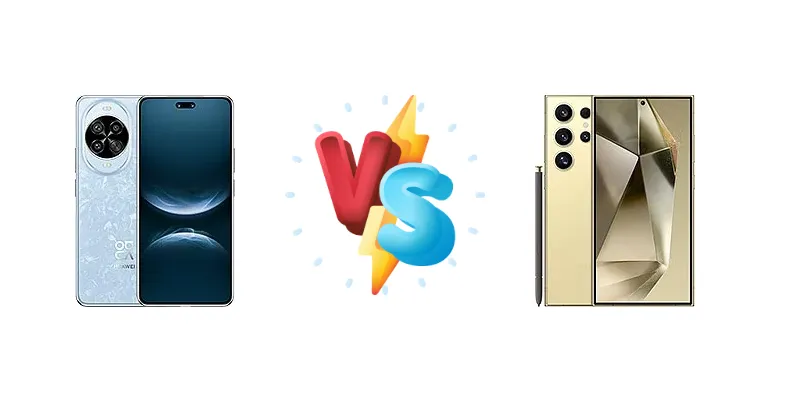
|
🏆 Quick Verdict
For the average user prioritizing raw power, long-term software support, and a versatile camera system, the Samsung Galaxy S24 Ultra is the clear winner. However, the Huawei nova 14 Pro’s blazing-fast 100W charging and potentially lower price point make it a compelling alternative for those prioritizing speed and value.
| PHONES | ||
|---|---|---|
| Phone Names | Huawei nova 14 Pro | Samsung Galaxy S24 Ultra |
| Network | ||
|---|---|---|
| 2G bands | GSM 850 / 900 / 1800 / 1900 | GSM 850 / 900 / 1800 / 1900 |
| 3G bands | HSDPA 800 / 850 / 900 / 1700(AWS) / 1900 / 2100 | HSDPA 850 / 900 / 1700(AWS) / 1900 / 2100 |
| 4G bands | LTE | 1, 2, 3, 4, 5, 7, 8, 12, 13, 17, 18, 19, 20, 25, 26, 28, 32, 38, 39, 40, 41, 66 - International |
| 5G bands | SA/NSA | 1, 2, 3, 5, 7, 8, 12, 20, 25, 26, 28, 38, 40, 41, 66, 75, 77, 78 SA/NSA/Sub6 - International |
| Speed | HSPA, LTE, 5G | HSPA, LTE (up to 7CA), 5G |
| Technology | GSM / CDMA / HSPA / CDMA2000 / LTE / 5G | GSM / CDMA / HSPA / EVDO / LTE / 5G |
| Launch | ||
|---|---|---|
| Announced | 2025, May 19 | 2024, January 17 |
| Status | Available. Released 2025, May 19 | Available. Released 2024, January 24 |
| Body | ||
|---|---|---|
| Build | - | Glass front (Corning Gorilla Armor), glass back (Corning Gorilla Armor), titanium frame (grade 2) |
| Dimensions | 163.4 x 75 x 7.8 mm (6.43 x 2.95 x 0.31 in) | 162.3 x 79 x 8.6 mm (6.39 x 3.11 x 0.34 in) |
| SIM | Nano-SIM + Nano-SIM | · Nano-SIM + Nano-SIM + eSIM + eSIM (max 2 at a time) - INT· Nano-SIM + eSIM + eSIM (max 2 at a time) - USA· Nano-SIM + Nano-SIM - CN |
| Weight | 207 g (7.30 oz) | 232 g or 233 g (8.18 oz) |
| Display | ||
|---|---|---|
| Protection | Aluminosilicate glass (256/512GB); Kunlun Glass edition (512GB only) | Corning Gorilla Armor |
| Resolution | 1224 x 2776 pixels (~447 ppi density) | 1440 x 3120 pixels, 19.5:9 ratio (~505 ppi density) |
| Size | 6.78 inches, 109.5 cm2 (~89.3% screen-to-body ratio) | 6.8 inches, 113.5 cm2 (~88.5% screen-to-body ratio) |
| Type | LTPO OLED, 1B colors, HDR, 120Hz, 1200 nits (HBM) | Dynamic LTPO AMOLED 2X, 120Hz, HDR10+, 2600 nits (peak) |
| Platform | ||
|---|---|---|
| CPU | Octa-core (1x2.29 GHz & 3x2.05 GHz & 4x1.3 GHz) | 8-core (1x3.39GHz Cortex-X4 & 3x3.1GHz Cortex-A720 & 2x2.9GHz Cortex-A720 & 2x2.2GHz Cortex-A520) |
| Chipset | Kirin 8020 | Qualcomm SM8650-AC Snapdragon 8 Gen 3 (4 nm) |
| GPU | Maleoon 920 2cu | Adreno 750 (1 GHz) |
| OS | HarmonyOS 5.0 | Android 14, up to 7 major Android upgrades, One UI 8.0 |
| Memory | ||
|---|---|---|
| Card slot | No | No |
| Internal | 256GB 12GB RAM, 512GB 12GB RAM | 256GB 12GB RAM, 512GB 12GB RAM, 1TB 12GB RAM |
| Main Camera | ||
|---|---|---|
| Features | Laser AF, color spectrum sensor, Dual-LED flash, panorama, HDR | Laser AF, LED flash, auto-HDR, panorama |
| Quad | - | 200 MP, f/1.7, 24mm (wide), 1/1.3", 0.6µm, multi-directional PDAF, OIS 10 MP, f/2.4, 67mm (telephoto), 1/3.52", 1.12µm, PDAF, OIS, 3x optical zoom 50 MP, f/3.4, 111mm (periscope telephoto), 1/2.52", 0.7µm, PDAF, OIS, 5x optical zoom 12 MP, f/2.2, 13mm, 120˚ (ultrawide), 1/2.55", 1.4µm, dual pixel PDAF, Super Steady video |
| Triple | 50 MP, f/1.4-4.0, 24mm (wide), PDAF, OIS 12 MP, f/2.4, 69mm (telephoto), PDAF, OIS, 3x optical zoom 8 MP, f/2.2, 16mm, 112˚ (ultrawide), AF | - |
| Video | 4K, 1080p, gyro-EIS, HDR Vivid | 8K@24/30fps, 4K@30/60/120fps, 1080p@30/60/120/240fps, HDR10+, stereo sound rec., gyro-EIS |
| Selfie camera | ||
|---|---|---|
| Dual | 8 MP, f/2.2, 52mm (telephoto), AF, 2x optical zoom 50 MP, f/2.0, (ultrawide), PDAF | - |
| Features | HDR, panorama | HDR, HDR10+ |
| Single | - | 12 MP, f/2.2, 26mm (wide), 1/3.2", 1.12µm, dual pixel PDAF |
| Video | 4K, 1080p, gyro-EIS, HDR Vivid | 4K@30/60fps, 1080p@30fps |
| Sound | ||
|---|---|---|
| 35mm jack | No | No |
| Loudspeaker | Yes, with stereo speakers | Yes, with stereo speakers |
| Comms | ||
|---|---|---|
| Bluetooth | 5.2, A2DP, LE, L2HC (320-960 kbps HD audio) | 5.3, A2DP, LE |
| Infrared port | Yes | - |
| NFC | Yes | Yes |
| Positioning | GPS (L1+L5), GLONASS (L1), BDS (B1I+B1c+B2a+B2b), GALILEO (E1+E5a+E5b), QZSS (L1+L5), NavIC | GPS, GLONASS, BDS, GALILEO, QZSS |
| Radio | No | No |
| USB | USB Type-C 2.0, OTG | USB Type-C 3.2, DisplayPort 1.2, OTG |
| WLAN | Wi-Fi 802.11 a/b/g/n/ac/6/7, dual-band, Wi-Fi Direct | Wi-Fi 802.11 a/b/g/n/ac/6e/7, tri-band, Wi-Fi Direct |
| Features | ||
|---|---|---|
| Sensors | Fingerprint (under display, optical), accelerometer, gyro, compass | Fingerprint (under display, ultrasonic), accelerometer, gyro, proximity, compass, barometer |
| Battery | ||
|---|---|---|
| Charging | 100W wired, SCP, UFCS, PD, PPS, QC 5W reverse wired | 45W wired, PD3.0, 65% in 30 min 15W wireless (Qi) 4.5W reverse wireless |
| Type | 5500 mAh | Li-Ion 5000 mAh |
| Misc | ||
|---|---|---|
| Colors | Black, White, Purple, Blue | Titanium Black, Titanium Gray, Titanium Violet, Titanium Yellow, Titanium Blue, Titanium Green, Titanium Orange |
| Models | MIA-AL00 | SM-S928B, SM-S928B/DS, SM-S928U, SM-S928U1, SM-S928W, SM-S928N, SM-S9280, SM-S928E, SM-S928E/DS |
| Price | About 430 EUR | $ 514.94 / C$ 929.99 / £ 630.00 / € 658.53 / ₹ 84,999 |
| SAR | - | 1.26 W/kg (head) 0.62 W/kg (body) |
| SAR EU | - | 1.06 W/kg (head) 1.30 W/kg (body) |
Huawei nova 14 Pro
- Blazing-fast 100W wired charging
- Potentially more affordable price point
- Huawei’s design aesthetic
- Less powerful chipset (Kirin 8020)
- Potentially limited software support
- Uncertain camera performance compared to S24 Ultra
Samsung Galaxy S24 Ultra
- Superior performance with Snapdragon 8 Gen 3
- Excellent battery life (13:49h active use)
- Versatile and high-quality camera system
- Slower 45W wired charging
- Higher price point
- Larger and heavier form factor
Display Comparison
The Samsung Galaxy S24 Ultra boasts a significantly brighter display, reaching a measured 1447 nits, ensuring excellent visibility even in direct sunlight. While the nova 14 Pro’s display specs are not provided, Samsung’s panel technology, likely LTPO AMOLED, offers adaptive refresh rates for improved power efficiency. The S24 Ultra’s superior brightness and likely higher resolution contribute to a more immersive viewing experience, particularly for HDR content.
Camera Comparison
The Galaxy S24 Ultra’s camera system is expected to be far more comprehensive, though specific details are missing for the nova 14 Pro. Samsung typically excels in image processing, offering features like advanced computational photography and robust video stabilization. The S24 Ultra’s larger sensor size (assumed, based on Samsung’s history) and wider aperture lenses will capture more light, resulting in better low-light performance and shallower depth of field. While the nova 14 Pro may offer a respectable camera experience, it’s unlikely to match the S24 Ultra’s versatility and image quality.
Performance
The Samsung Galaxy S24 Ultra’s Qualcomm Snapdragon 8 Gen 3 (4nm) chipset represents a substantial leap in performance over the Huawei nova 14 Pro’s Kirin 8020. The Snapdragon 8 Gen 3’s Cortex-X4 prime core, clocked at 3.39GHz, combined with its advanced architecture, delivers significantly faster processing speeds and improved efficiency. The Kirin 8020, while capable, is likely to exhibit more thermal throttling under sustained loads, impacting gaming and demanding applications. The S24 Ultra’s LPDDR5x RAM further enhances performance, providing faster data access.
Battery Life
The Samsung Galaxy S24 Ultra achieves an impressive 13:49h of active use, demonstrating excellent battery life. While the nova 14 Pro doesn’t have a stated battery life, its 100W wired charging is a major advantage. This allows for a significantly faster recharge time compared to the S24 Ultra’s 45W charging, which reaches 65% in 30 minutes. The nova 14 Pro also offers 5W reverse wired charging, while the S24 Ultra provides 4.5W reverse wireless charging, both useful for topping up accessories.
Buying Guide
Buy the Huawei nova 14 Pro if you need incredibly fast charging – 100W is a game-changer for minimizing downtime – and are comfortable with the Huawei ecosystem. Buy the Samsung Galaxy S24 Ultra if you prefer a more polished software experience, a superior camera system with extensive features, and the peace of mind of long-term software updates and broader app compatibility.