
Google Pixel 8a vs. Huawei nova 13i: A Detailed Comparison
| Phones Images | |||||
|---|---|---|---|---|---|
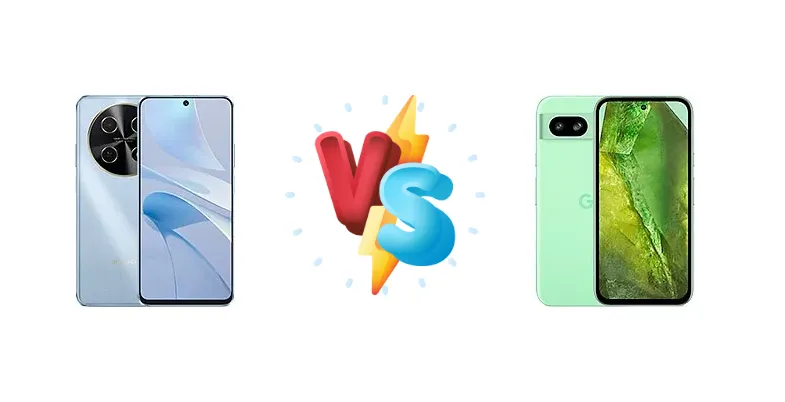
|
🏆 Quick Verdict
For most users, the Google Pixel 8a is the superior choice. Its Google Tensor G3 chipset provides significantly faster performance and unlocks advanced AI features, while its exceptional camera system delivers consistently impressive results. However, the Huawei nova 13i offers a compelling value proposition for those prioritizing affordability and fast charging.
| PHONES | ||
|---|---|---|
| Phone Names | Huawei nova 13i | Google Pixel 8a |
| Network | ||
|---|---|---|
| 2G bands | GSM 850 / 900 / 1800 / 1900 | GSM 850 / 900 / 1800 / 1900 |
| 3G bands | HSDPA 850 / 900 / 1700(AWS) / 1900 / 2100 | HSDPA 800 / 850 / 900 / 1700(AWS) / 1900 / 2100 |
| 4G bands | 1, 2, 3, 4, 5, 7, 8, 18, 19, 20, 26, 28, 34, 38, 39, 40, 41 | 1, 2, 3, 4, 5, 7, 8, 12, 17, 18, 19, 20, 26, 28, 32, 38, 40, 41, 42, 66 - G6GPR (International) |
| 5G bands | - | 1, 2, 3, 5, 7, 8, 12, 20, 26, 28, 38, 40, 41, 66, 75, 76, 77, 78 SA/NSA/Sub6 - G6GPR (International) |
| Speed | HSPA, LTE | HSPA, LTE, 5G |
| Technology | GSM / HSPA / LTE | GSM / HSPA / LTE / 5G |
| Launch | ||
|---|---|---|
| Announced | 2024, December 14 | 2024, May 07 |
| Status | Available. Released 2025, January | Available. Released 2024, May 14 |
| Body | ||
|---|---|---|
| Build | - | Glass front (Gorilla Glass 3), aluminum frame, plastic back |
| Dimensions | 163.3 x 74.7 x 8.4 mm (6.43 x 2.94 x 0.33 in) | 152.1 x 72.7 x 8.9 mm (5.99 x 2.86 x 0.35 in) |
| SIM | · Nano-SIM· Nano-SIM + Nano-SIM | Nano-SIM + eSIM |
| Weight | 199 g (7.02 oz) | 188 g (6.63 oz) |
| Display | ||
|---|---|---|
| Protection | - | Corning Gorilla Glass 3, Mohs level 5 |
| Resolution | 1080 x 2388 pixels (~391 ppi density) | 1080 x 2400 pixels, 20:9 ratio (~430 ppi density) |
| Size | 6.7 inches, 108.7 cm2 (~89.1% screen-to-body ratio) | 6.1 inches, 90.3 cm2 (~81.6% screen-to-body ratio) |
| Type | IPS LCD, 90Hz | OLED, HDR, 120Hz, 2000 nits (peak) |
| Platform | ||
|---|---|---|
| CPU | Octa-core (4x2.4 GHz Cortex-A73 & 4x1.9 GHz Cortex-A53) | Nona-core (1x3.0 GHz Cortex-X3 & 4x2.45 GHz Cortex-A715 & 4x2.15 GHz Cortex-A510) |
| Chipset | Qualcomm Snapdragon 680 4G (6 nm) | Google Tensor G3 (4 nm) |
| GPU | Adreno 610 | Immortalis-G715s MC10 |
| OS | EMUI 14.2, no Google Play Services | Android 14, upgradable to Android 16, up to 7 major Android upgrades |
| Memory | ||
|---|---|---|
| Card slot | No | No |
| Internal | 128GB 8GB RAM, 256GB 8GB RAM | 128GB 8GB RAM, 256GB 8GB RAM |
| Main Camera | ||
|---|---|---|
| Dual | 108 MP, f/1.9, 26mm (wide), PDAF Auxiliary lens | 64 MP (16 MP eff.), f/1.9, 26mm (wide), 1/1.73", 0.8µm, dual pixel PDAF, OIS 13 MP, f/2.2, 120˚ (ultrawide), 1.12µm |
| Features | LED flash, HDR, panorama | Dual-LED flash, Pixel Shift, Ultra HDR, panorama, Best Take |
| Video | 1080p@30fps | 4K@30/60fps, 1080p@30/60/120/240fps, OIS |
| Selfie camera | ||
|---|---|---|
| Features | - | HDR, panorama |
| Single | 8 MP, f/2.0, (wide) | 13 MP, f/2.2, 20mm (ultrawide), 1.12µm |
| Video | 1080p@30fps | 4K@30fps, 1080p@30/60fps |
| Sound | ||
|---|---|---|
| 35mm jack | No | No |
| Loudspeaker | Yes | Yes, with stereo speakers |
| Comms | ||
|---|---|---|
| Bluetooth | 5.0, A2DP, LE | 5.3, A2DP, LE |
| NFC | Yes | Yes |
| Positioning | GPS, GLONASS, GALILEO, BDS, QZSS | GPS, GLONASS, GALILEO, BDS, QZSS, NavIC |
| Radio | No | No |
| USB | USB Type-C 2.0 | USB Type-C 3.2 |
| WLAN | Wi-Fi 802.11 a/b/g/n/ac, dual-band | Wi-Fi 802.11 a/b/g/n/ac/6e, dual/tri-band (market/region dependent) |
| Features | ||
|---|---|---|
| Sensors | Fingerprint (side-mounted), accelerometer, compass | Fingerprint (under display, optical), accelerometer, gyro, proximity, compass, barometer |
| Battery | ||
|---|---|---|
| Charging | 40W wired, 3-62% in 30 min | 18W wired, PD3.0 7.5W wireless Bypass charging |
| Type | Li-Po 5000 mAh | Li-Po 4492 mAh |
| Misc | ||
|---|---|---|
| Colors | White, Blue | Obsidian, Porcelain, Bay, Aloe |
| Models | CTR-L91 | GKV4X, G6GPR, G8HHN, G576D |
| Price | About 200 EUR | $ 229.98 / C$ 417.99 / £ 279.00 / € 299.99 / ₹ 33,300 |
| EU LABEL | ||
|---|---|---|
| Battery | - | 40:06h endurance, 1000 cycles |
| Energy | - | Class B |
| Free fall | - | Class A (270 falls) |
| Repairability | - | Class B |
Huawei nova 13i
- Superior performance with Google Tensor G3
- Exceptional camera quality and AI features
- Long-lasting battery life and 1000 cycle lifespan
- Slower 18W charging
- Higher price point
Google Pixel 8a
- Fast 40W wired charging
- More affordable price
- Potentially longer standby time due to less demanding chipset
- Significantly weaker performance
- Less advanced camera system
- Reliance on Huawei AppGallery
Display Comparison
The Google Pixel 8a boasts a significantly brighter display, reaching a measured peak of 1508 nits, making it far more usable in direct sunlight compared to the nova 13i (brightness data unavailable). While the nova 13i’s panel specifications are not provided, the Pixel 8a’s OLED panel offers superior contrast and color accuracy. The Pixel 8a’s display is likely to have a higher refresh rate as well, contributing to smoother scrolling and animations, a feature not confirmed for the nova 13i.
Camera Comparison
The Pixel 8a’s camera system is a clear standout. While specific sensor details are missing for the nova 13i, the Pixel 8a leverages Google’s renowned computational photography algorithms, delivering exceptional image quality in various lighting conditions. The Pixel 8a’s image processing excels in dynamic range and detail preservation. The nova 13i likely relies more heavily on hardware, and without OIS information, low-light performance will likely suffer in comparison. Ignoring the typical 2MP macro lens found on many budget phones, the Pixel 8a’s focus on software optimization provides a more consistent and user-friendly camera experience.
Performance
The performance gap between these devices is substantial. The Google Pixel 8a’s Google Tensor G3, built on a 4nm process, is a nona-core processor featuring a Cortex-X3 prime core, offering a significant leap in CPU and GPU performance over the Huawei nova 13i’s Qualcomm Snapdragon 680 (6nm). The Snapdragon 680, while efficient, is geared towards basic tasks, while the Tensor G3 handles demanding applications and AI processing with ease. The Tensor G3’s architecture, with its A715 and A510 cores, provides a more modern and efficient foundation for multitasking and gaming.
Battery Life
The Google Pixel 8a demonstrates impressive battery endurance, achieving 40:06h of endurance and an active use score of 11:25h, indicating excellent real-world performance. While the nova 13i’s battery capacity is not specified, its 40W wired charging is significantly faster than the Pixel 8a’s 18W charging, potentially allowing for a 30-minute charge from 3-62%. However, the Pixel 8a’s superior efficiency and battery optimization, coupled with its 1000 cycle battery lifespan, suggest it will maintain its capacity for longer.
Buying Guide
Buy the Huawei nova 13i if you need a reliable smartphone for everyday tasks, prioritize fast 40W charging, and operate within the Huawei AppGallery ecosystem. Buy the Google Pixel 8a if you value a superior camera experience, smoother performance for demanding apps, and access to Google’s suite of AI-powered features and the broader Google Play Store.