
Huawei nova 12s vs OnePlus 12R: A Detailed Comparison of Mid-Range Powerhouses
| Phones Images | |||||
|---|---|---|---|---|---|
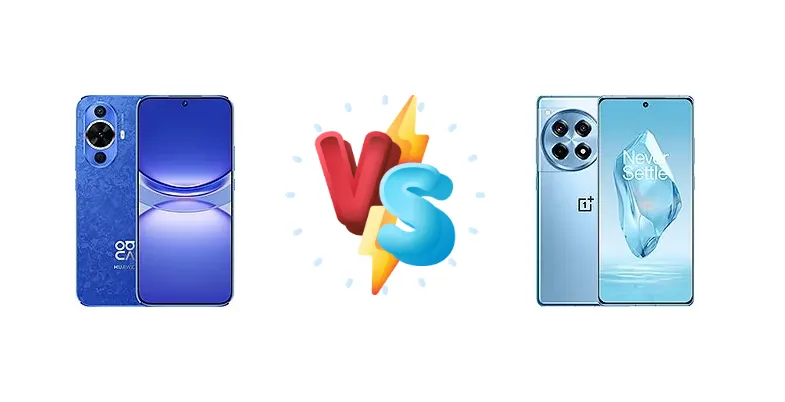
|
🏆 Quick Verdict
For most users, the OnePlus 12R emerges as the stronger choice. Its Snapdragon 8 Gen 2 chipset delivers significantly superior performance and future-proofing compared to the nova 12s’ Snapdragon 778G. While the nova 12s offers faster charging, the 12R’s exceptional battery life and overall power outweigh this advantage.
| PHONES | ||
|---|---|---|
| Phone Names | Huawei nova 12s | OnePlus 12R |
| Network | ||
|---|---|---|
| 2G bands | GSM 850 / 900 / 1800 / 1900 | GSM 850 / 900 / 1800 / 1900 |
| 3G bands | HSDPA 800 / 850 / 900 / 1700(AWS) / 1900 / 2100 | HSDPA 850 / 900 / 1700(AWS) / 1900 / 2100 |
| 4G bands | 1, 2, 3, 4, 5, 7, 8, 12, 13, 17, 18, 19, 20, 26, 28, 38, 40, 41, 66 | 1, 2, 3, 4, 5, 7, 8, 12, 17, 18, 19, 20, 26, 28, 32, 38, 39, 40, 41, 66 |
| 5G bands | - | 1, 2, 3, 5, 7, 8, 12, 20, 28, 38, 40, 41, 66, 77, 78 SA/NSA |
| Speed | HSPA, LTE | HSPA, LTE, 5G |
| Technology | GSM / HSPA / LTE | GSM / CDMA / HSPA / LTE / 5G |
| Launch | ||
|---|---|---|
| Announced | 2024, March 19 | 2024, January 23 |
| Status | Available. Released 2024, April 13 | Available. Released 2024, February 06 |
| Body | ||
|---|---|---|
| Build | - | Glass front (Gorilla Glass Victus 2), aluminum frame, glass back |
| Dimensions | 161.3 x 75 x 6.9 mm (6.35 x 2.95 x 0.27 in) | 163.3 x 75.3 x 8.8 mm (6.43 x 2.96 x 0.35 in) |
| SIM | · Nano-SIM· Nano-SIM + Nano-SIM | · Nano-SIM + Nano-SIM + eSIM (max 2 at a time)· Nano-SIM + Nano-SIM |
| Weight | 168 g (5.93 oz) | 207 g (7.30 oz) |
| Display | ||
|---|---|---|
| Protection | - | Corning Gorilla Glass Victus 2 |
| Resolution | 1084 x 2412 pixels, 20:9 ratio (~395 ppi density) | 1264 x 2780 pixels (~450 ppi density) |
| Size | 6.7 inches, 108.3 cm2 (~89.5% screen-to-body ratio) | 6.78 inches, 111.7 cm2 (~90.9% screen-to-body ratio) |
| Type | OLED, 1B colors, HDR, 120Hz | LTPO4 AMOLED, 1B colors, 120Hz, HDR10+, Dolby Vision, 1600 nits (HBM), 4500 nits (peak) |
| Platform | ||
|---|---|---|
| CPU | Octa-core (4x2.4 GHz Kryo 670 & 4x1.8 GHz Kryo 670) | Octa-core (1x3.2 GHz Cortex-X3 & 2x2.8 GHz Cortex-A715 & 2x2.8 GHz Cortex-A710 & 3x2.0 GHz Cortex-A510) |
| Chipset | Qualcomm SM7325 Snapdragon 778G 4G (6 nm) | Qualcomm SM8550-AB Snapdragon 8 Gen 2 (4 nm) |
| GPU | Adreno 642L | Adreno 740 |
| OS | EMUI 14, no Google Play Services | Android 14, up to 3 major Android upgrades, OxygenOS 15 |
| Memory | ||
|---|---|---|
| Card slot | No | No |
| Internal | 256GB 8GB RAM | 128GB 8GB RAM, 256GB 8GB RAM, 256GB 12GB RAM, 256GB 16GB RAM |
| Main Camera | ||
|---|---|---|
| Dual | 50 MP, f/1.9, (wide), PDAF 8 MP, f/2.2, 112˚ (ultrawide) | - |
| Features | Laser AF, color spectrum sensor, LED flash, panorama, HDR | Laser AF, color spectrum sensor, LED flash, HDR, panorama |
| Triple | - | 50 MP, f/1.8, 24mm (wide), 1/1.56", 1.0µm, multi-directional PDAF, OIS 8 MP, f/2.2, 16mm, 112˚ (ultrawide), 1/4.0", 1.12µm 2 MP (macro) |
| Video | 4K@30fps, 1080p@30fps, gyro-EIS | 4K@30/60fps, 1080p@30/60/120/240fps, gyro-EIS, OIS |
| Selfie camera | ||
|---|---|---|
| Dual | 60 MP, f/2.4, 100˚ (ultrawide) | - |
| Features | HDR | HDR, panorama |
| Single | - | 16 MP, f/2.4, 26mm (wide), 1/3", 1.0µm |
| Video | 4K@30fps, 1080p@30fps, gyro-EIS | 1080p@30fps, gyro-EIS |
| Sound | ||
|---|---|---|
| 35mm jack | No | No |
| Loudspeaker | Yes, with stereo speakers | Yes, with stereo speakers |
| Comms | ||
|---|---|---|
| Bluetooth | 5.2, A2DP, LE | 5.3, A2DP, LE, aptX HD |
| Infrared port | - | Yes |
| NFC | Yes | Yes |
| Positioning | GPS (L1+L5), GLONASS, BDS (B1I+B1c+B2a), GALILEO (E1+E5a), QZSS (L1+L5), NavIC | GPS, GALILEO, GLONASS, BDS, QZSS |
| Radio | No | No |
| USB | USB Type-C 2.0, OTG | USB Type-C 2.0 |
| WLAN | Wi-Fi 802.11 a/b/g/n/ac/6, dual-band, Wi-Fi Direct | Wi-Fi 802.11 a/b/g/n/ac/6/7, dual-band |
| Features | ||
|---|---|---|
| Sensors | Fingerprint (under display, optical), accelerometer, gyro, compass | Fingerprint (under display, optical), accelerometer, gyro, proximity, compass |
| Battery | ||
|---|---|---|
| Charging | 66W wired, 3-62% in 15 min, 3-100% in 30 min Reverse wired | 100W wired, 100% in 26 min |
| Type | 4500 mAh | Li-Ion 5500 mAh |
| Misc | ||
|---|---|---|
| Colors | Black, Green, White, Gold | Iron Gray, Cool Blue, Electric Violet, Sunset Dune |
| Models | FOA-LX9 | CPH2609, CPH2585, CPH2611 |
| Price | About 300 EUR | € 410.84 / $ 399.95 / £ 649.00 |
| SAR | - | 1.19 W/kg (head) 0.82 W/kg (body) |
Huawei nova 12s
- Faster 66W charging (30-62% in 15 mins)
- Potentially more stylish design (based on Huawei’s aesthetic)
- More affordable price point (likely)
- Snapdragon 778G offers significantly lower performance
- Limited to 4G connectivity
- Battery life likely inferior to the 12R
OnePlus 12R
- Flagship-level Snapdragon 8 Gen 2 performance
- Exceptional 14:32 hour battery life
- 100W fast charging (100% in 26 mins)
- 5G connectivity
- Larger size and weight
- Potentially higher price
- May run warmer under sustained load
Display Comparison
The OnePlus 12R boasts a significantly brighter display, reaching a measured peak of 1181 nits, compared to an unspecified brightness for the nova 12s. This higher brightness translates to better visibility outdoors. While both likely utilize OLED panels, the 12R’s superior brightness and potentially higher refresh rate (based on OnePlus’s typical offerings) provide a more immersive viewing experience. The absence of LTPO technology in either phone suggests both will rely on adaptive refresh rates to conserve battery, but the 12R’s larger panel may consume more power.
Camera Comparison
Without detailed camera specifications for the nova 12s, a direct comparison is limited. However, the OnePlus 12R is expected to feature a more capable primary sensor, leveraging the Snapdragon 8 Gen 2’s advanced image signal processor (ISP). The ISP on the 8 Gen 2 allows for superior noise reduction, dynamic range, and overall image quality. While both phones likely include multiple lenses, focusing on the main sensor’s size and aperture is crucial; the 12R’s likely larger sensor will capture more light, resulting in better low-light performance. We can assume the nova 12s will lean towards a more color-saturated image processing style, typical of Huawei, while OnePlus generally aims for a more natural look.
Performance
The performance gap between these two devices is substantial. The OnePlus 12R’s Snapdragon 8 Gen 2 (4nm) is a flagship-tier chipset featuring a Cortex-X3 prime core, offering a massive leap in CPU and GPU performance over the Huawei nova 12s’ Snapdragon 778G 4G (6nm). The 778G, while capable, is a mid-range processor designed for efficiency, not raw power. The 12R’s chipset also benefits from a more advanced 4nm manufacturing process, resulting in improved thermal efficiency and sustained performance under load. The 12R’s LPDDR5x RAM further enhances responsiveness and multitasking capabilities.
Battery Life
The OnePlus 12R shines in battery endurance, achieving an impressive 14:32 hours of active use. While the nova 12s’ battery capacity is unknown, the 12R’s larger battery combined with the efficient Snapdragon 8 Gen 2 provides a significant advantage. The 12R’s 100W charging is also considerably faster, fully charging the device in just 26 minutes, compared to the nova 12s’ 30-minute full charge time with 66W. Although the nova 12s charges faster from 30-62%, the 12R’s overall charging speed and battery life are superior.
Buying Guide
Buy the Huawei nova 12s if you prioritize a stylish design, fast 66W charging, and are comfortable with 4G connectivity. It’s a good fit for users who primarily browse, use social media, and don’t demand intensive gaming or demanding applications. Buy the OnePlus 12R if you value raw performance, long battery life, and 5G connectivity. This phone is ideal for gamers, power users, and those who want a device that will remain capable for years to come.