
Huawei nova 12s vs Honor X9b: A Deep Dive into Mid-Range Snapdragon Showdown
| Phones Images | |||||
|---|---|---|---|---|---|
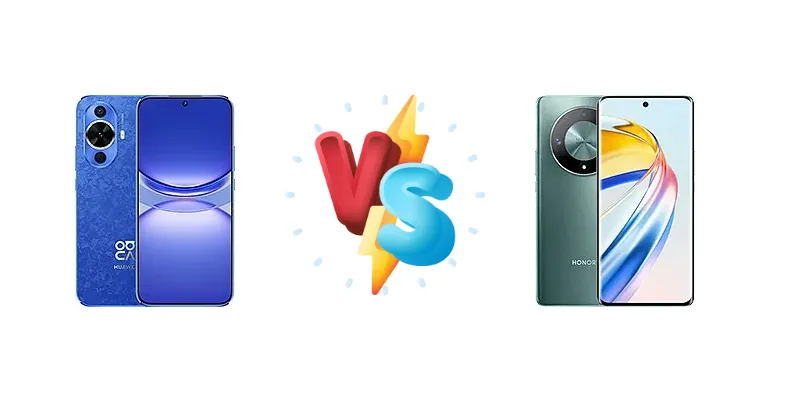
|
🏆 Quick Verdict
For the average user prioritizing consistent performance and rapid charging, the Huawei nova 12s emerges as the stronger choice. Its Snapdragon 778G, despite being an older generation, delivers a more proven track record in demanding tasks, and the 66W charging significantly reduces downtime. However, the Honor X9b’s efficiency is a compelling factor for battery life.
| PHONES | ||
|---|---|---|
| Phone Names | Huawei nova 12s | Honor X9b |
| Network | ||
|---|---|---|
| 2G bands | GSM 850 / 900 / 1800 / 1900 | GSM 850 / 900 / 1800 / 1900 |
| 3G bands | HSDPA 800 / 850 / 900 / 1700(AWS) / 1900 / 2100 | HSDPA 850 / 900 / 1900 / 2100 |
| 4G bands | 1, 2, 3, 4, 5, 7, 8, 12, 13, 17, 18, 19, 20, 26, 28, 38, 40, 41, 66 | 1, 2, 3, 4, 5, 7, 8, 20, 28, 32, 38, 40, 41 |
| 5G bands | - | 1, 3, 7, 8, 20, 28, 38, 40, 41, 77, 78 SA/NSA |
| Speed | HSPA, LTE | HSPA, LTE, 5G |
| Technology | GSM / HSPA / LTE | GSM / HSPA / LTE / 5G |
| Launch | ||
|---|---|---|
| Announced | 2024, March 19 | 2023, October 18 |
| Status | Available. Released 2024, April 13 | Available. Released 2023, October |
| Body | ||
|---|---|---|
| Dimensions | 161.3 x 75 x 6.9 mm (6.35 x 2.95 x 0.27 in) | 163.6 x 75.5 x 8 mm (6.44 x 2.97 x 0.31 in) |
| SIM | · Nano-SIM· Nano-SIM + Nano-SIM | Nano-SIM + Nano-SIM |
| Weight | 168 g (5.93 oz) | 185 g (6.53 oz) |
| Display | ||
|---|---|---|
| Resolution | 1084 x 2412 pixels, 20:9 ratio (~395 ppi density) | 1220 x 2652 pixels, 19.5:9 ratio (~431 ppi density) |
| Size | 6.7 inches, 108.3 cm2 (~89.5% screen-to-body ratio) | 6.78 inches, 112.6 cm2 (~91.2% screen-to-body ratio) |
| Type | OLED, 1B colors, HDR, 120Hz | AMOLED, 1B colors, 120Hz, 1200 nits (peak) |
| Platform | ||
|---|---|---|
| CPU | Octa-core (4x2.4 GHz Kryo 670 & 4x1.8 GHz Kryo 670) | Octa-core (4x2.2 GHz Cortex-A78 & 4x1.8 GHz Cortex-A55) |
| Chipset | Qualcomm SM7325 Snapdragon 778G 4G (6 nm) | Qualcomm SM6450 Snapdragon 6 Gen 1 (4 nm) |
| GPU | Adreno 642L | Adreno 710 |
| OS | EMUI 14, no Google Play Services | Android 13, Magic OS 7.2 |
| Memory | ||
|---|---|---|
| Card slot | No | No |
| Internal | 256GB 8GB RAM | 256GB 8GB RAM, 256GB 12GB RAM, 512GB 8GB RAM, 512GB 12GB RAM |
| Main Camera | ||
|---|---|---|
| Dual | 50 MP, f/1.9, (wide), PDAF 8 MP, f/2.2, 112˚ (ultrawide) | - |
| Features | Laser AF, color spectrum sensor, LED flash, panorama, HDR | LED flash, panorama, HDR |
| Triple | - | 108 MP, f/1.8, (wide), 1/1.67", PDAF 5 MP, f/2.2, (ultrawide) 2 MP (macro) |
| Video | 4K@30fps, 1080p@30fps, gyro-EIS | 4K@30fps, 1080p@30fps |
| Selfie camera | ||
|---|---|---|
| Dual | 60 MP, f/2.4, 100˚ (ultrawide) | - |
| Features | HDR | - |
| Single | - | 16 MP, f/2.5, (wide) |
| Video | 4K@30fps, 1080p@30fps, gyro-EIS | 1080p@30fps |
| Sound | ||
|---|---|---|
| 35mm jack | No | No |
| Loudspeaker | Yes, with stereo speakers | Yes |
| Comms | ||
|---|---|---|
| Bluetooth | 5.2, A2DP, LE | 5.1, A2DP, LE |
| Infrared port | - | Yes |
| NFC | Yes | Yes (market/region dependent) |
| Positioning | GPS (L1+L5), GLONASS, BDS (B1I+B1c+B2a), GALILEO (E1+E5a), QZSS (L1+L5), NavIC | GPS, GLONASS, GALILEO, BDS |
| Radio | No | No |
| USB | USB Type-C 2.0, OTG | USB Type-C 2.0, OTG |
| WLAN | Wi-Fi 802.11 a/b/g/n/ac/6, dual-band, Wi-Fi Direct | Wi-Fi 802.11 a/b/g/n/ac, dual-band, Wi-Fi Direct |
| Features | ||
|---|---|---|
| Sensors | Fingerprint (under display, optical), accelerometer, gyro, compass | Fingerprint (under display, optical), accelerometer, gyro, proximity, compass |
| Battery | ||
|---|---|---|
| Charging | 66W wired, 3-62% in 15 min, 3-100% in 30 min Reverse wired | 35W wired Reverse wired |
| Type | 4500 mAh | Li-Po 5800 mAh |
| Misc | ||
|---|---|---|
| Colors | Black, Green, White, Gold | Sunrise Orange, Midnight Black, Emerald Green |
| Models | FOA-LX9 | ALI-NX1 |
| Price | About 300 EUR | About 970 EUR |
Huawei nova 12s
- Faster 66W charging for quick top-ups
- Proven Snapdragon 778G performance
- Potentially better image processing
- Older 6nm chipset may be less power efficient
- 4G connectivity only
Honor X9b
- More efficient 4nm Snapdragon 6 Gen 1
- Potentially longer battery life
- Reverse wired charging
- Slower 35W charging
- Snapdragon 6 Gen 1 may struggle with demanding tasks
Display Comparison
Neither device’s display specifications are provided, so a direct comparison is limited. However, given the price points, we can expect both to feature OLED panels. The nova 12s, benefiting from Huawei’s display expertise, likely prioritizes color accuracy and brightness. The X9b, being a newer release, *may* incorporate a higher refresh rate for smoother scrolling, but this is speculative. Bezels are likely comparable, focusing on maximizing screen real estate within their respective form factors.
Camera Comparison
Without detailed camera specs, a definitive comparison is challenging. However, the focus should be on the main sensor. The Snapdragon 778G’s ISP is well-regarded for its image processing capabilities, potentially giving the nova 12s an edge in dynamic range and low-light performance. The X9b’s newer ISP *could* offer improvements in computational photography, but this is dependent on software optimization. We can assume both phones will include standard features like portrait mode and night mode, but the quality will hinge on sensor size and lens aperture – details not provided.
Performance
The core difference lies in the chipsets: the Huawei nova 12s utilizes the Qualcomm SM7325 Snapdragon 778G 4G (6nm), while the Honor X9b features the SM6450 Snapdragon 6 Gen 1 (4nm). The 4nm process of the Snapdragon 6 Gen 1 theoretically offers better power efficiency, translating to longer battery life under similar workloads. However, the Snapdragon 778G boasts a higher peak CPU clock speed (2.4 GHz vs 2.2 GHz) and a more mature architecture, potentially leading to superior performance in CPU-intensive tasks and gaming. The 778G’s Kryo 670 cores are known for their balanced performance, while the X9b’s Cortex-A78 cores prioritize efficiency. The 778G’s GPU is also generally more powerful, offering a better gaming experience.
Battery Life
The Honor X9b’s 35W charging is significantly slower than the Huawei nova 12s’s 66W charging. The nova 12s can reportedly charge from 3-62% in 15 minutes and fully charge in 30 minutes, a substantial time saving. While the X9b’s 4nm chipset contributes to better power efficiency, the difference in charging speed is a major advantage for the nova 12s, especially for users who frequently need to top up their battery quickly. The actual battery capacity of both devices is unknown, but the faster charging of the nova 12s mitigates the impact of a potentially smaller battery.
Buying Guide
Buy the Huawei nova 12s if you need a phone that can reliably handle multitasking, moderate gaming, and benefits from extremely fast charging. This is ideal for users who frequently switch between apps or rely on their phone throughout the day. Buy the Honor X9b if you prioritize long battery life and efficient performance for everyday tasks like browsing, social media, and light content consumption. It’s a better fit for users who don’t push their phones to the limit.