
Google Pixel 8a vs. Huawei nova 12i: A Detailed Comparison
| Phones Images | |||||
|---|---|---|---|---|---|
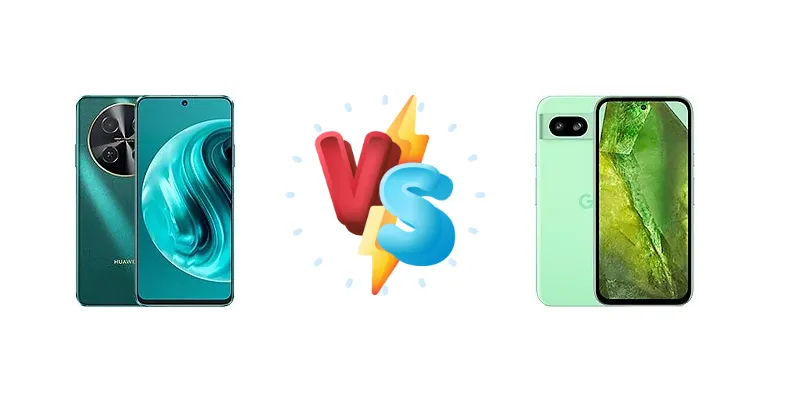
|
🏆 Quick Verdict
For most users, the Google Pixel 8a is the superior choice. Its Tensor G3 chipset offers significantly better performance and future-proofing, while its exceptional camera capabilities and long-term software support outweigh the nova 12i’s lower price. However, the nova 12i remains a viable option for budget-conscious users prioritizing basic functionality.
| PHONES | ||
|---|---|---|
| Phone Names | Huawei nova 12i | Google Pixel 8a |
| Network | ||
|---|---|---|
| 2G bands | GSM 850 / 900 / 1800 / 1900 | GSM 850 / 900 / 1800 / 1900 |
| 3G bands | HSDPA 850 / 900 / 1700(AWS) / 1900 / 2100 | HSDPA 800 / 850 / 900 / 1700(AWS) / 1900 / 2100 |
| 4G bands | 1, 2, 3, 4, 5, 7, 8, 18, 19, 20, 26, 28, 34, 38, 39, 40, 41 | 1, 2, 3, 4, 5, 7, 8, 12, 17, 18, 19, 20, 26, 28, 32, 38, 40, 41, 42, 66 - G6GPR (International) |
| 5G bands | - | 1, 2, 3, 5, 7, 8, 12, 20, 26, 28, 38, 40, 41, 66, 75, 76, 77, 78 SA/NSA/Sub6 - G6GPR (International) |
| Speed | HSPA, LTE | HSPA, LTE, 5G |
| Technology | GSM / HSPA / LTE | GSM / HSPA / LTE / 5G |
| Launch | ||
|---|---|---|
| Announced | 2024, March 19 | 2024, May 07 |
| Status | Available. Released 2024, April 16 | Available. Released 2024, May 14 |
| Body | ||
|---|---|---|
| Build | - | Glass front (Gorilla Glass 3), aluminum frame, plastic back |
| Dimensions | 163.3 x 74.7 x 8.4 mm (6.43 x 2.94 x 0.33 in) | 152.1 x 72.7 x 8.9 mm (5.99 x 2.86 x 0.35 in) |
| SIM | · Nano-SIM· Nano-SIM + Nano-SIM | Nano-SIM + eSIM |
| Weight | 199 g (7.02 oz) | 188 g (6.63 oz) |
| Display | ||
|---|---|---|
| Protection | - | Corning Gorilla Glass 3, Mohs level 5 |
| Resolution | 1080 x 2388 pixels (~391 ppi density) | 1080 x 2400 pixels, 20:9 ratio (~430 ppi density) |
| Size | 6.7 inches, 108.7 cm2 (~89.1% screen-to-body ratio) | 6.1 inches, 90.3 cm2 (~81.6% screen-to-body ratio) |
| Type | IPS LCD, 90Hz | OLED, HDR, 120Hz, 2000 nits (peak) |
| Platform | ||
|---|---|---|
| CPU | Octa-core (4x2.4 GHz Cortex-A73 & 4x1.9 GHz Cortex-A53) | Nona-core (1x3.0 GHz Cortex-X3 & 4x2.45 GHz Cortex-A715 & 4x2.15 GHz Cortex-A510) |
| Chipset | Qualcomm Snapdragon 680 4G (6 nm) | Google Tensor G3 (4 nm) |
| GPU | Adreno 610 | Immortalis-G715s MC10 |
| OS | EMUI 14, no Google Play Services | Android 14, upgradable to Android 16, up to 7 major Android upgrades |
| Memory | ||
|---|---|---|
| Card slot | No | No |
| Internal | 128GB 8GB RAM, 256GB 8GB RAM | 128GB 8GB RAM, 256GB 8GB RAM |
| Main Camera | ||
|---|---|---|
| Dual | 108 MP, f/1.9, 26mm (wide), PDAF Auxiliary lens | 64 MP (16 MP eff.), f/1.9, 26mm (wide), 1/1.73", 0.8µm, dual pixel PDAF, OIS 13 MP, f/2.2, 120˚ (ultrawide), 1.12µm |
| Features | LED flash, HDR, panorama | Dual-LED flash, Pixel Shift, Ultra HDR, panorama, Best Take |
| Video | 1080p@30fps | 4K@30/60fps, 1080p@30/60/120/240fps, OIS |
| Selfie camera | ||
|---|---|---|
| Features | - | HDR, panorama |
| Single | 8 MP, f/2.0, (wide) | 13 MP, f/2.2, 20mm (ultrawide), 1.12µm |
| Video | 1080p@30fps | 4K@30fps, 1080p@30/60fps |
| Sound | ||
|---|---|---|
| 35mm jack | No | No |
| Loudspeaker | Yes | Yes, with stereo speakers |
| Comms | ||
|---|---|---|
| Bluetooth | 5.0, A2DP, LE | 5.3, A2DP, LE |
| NFC | Yes | Yes |
| Positioning | GPS, GLONASS, GALILEO, BDS, QZSS | GPS, GLONASS, GALILEO, BDS, QZSS, NavIC |
| Radio | No | No |
| USB | USB Type-C 2.0 | USB Type-C 3.2 |
| WLAN | Wi-Fi 802.11 a/b/g/n/ac, dual-band | Wi-Fi 802.11 a/b/g/n/ac/6e, dual/tri-band (market/region dependent) |
| Features | ||
|---|---|---|
| Sensors | Fingerprint (side-mounted), accelerometer, compass | Fingerprint (under display, optical), accelerometer, gyro, proximity, compass, barometer |
| Battery | ||
|---|---|---|
| Charging | 40W wired, 3-62% in 30 min | 18W wired, PD3.0 7.5W wireless Bypass charging |
| Type | Li-Po 5000 mAh | Li-Po 4492 mAh |
| Misc | ||
|---|---|---|
| Colors | Green, Black, White | Obsidian, Porcelain, Bay, Aloe |
| Models | CTR-AL20, CTR-L81 | GKV4X, G6GPR, G8HHN, G576D |
| Price | About 110 EUR | $ 229.98 / C$ 417.99 / £ 279.00 / € 299.99 / ₹ 33,300 |
| EU LABEL | ||
|---|---|---|
| Battery | - | 40:06h endurance, 1000 cycles |
| Energy | - | Class B |
| Free fall | - | Class A (270 falls) |
| Repairability | - | Class B |
Huawei nova 12i
- Superior performance with Google Tensor G3
- Exceptional camera capabilities and AI features
- Long-term software support and updates
- Slower wired charging (18W)
- Higher price point
Google Pixel 8a
- More affordable price
- Faster 40W wired charging
- Functional for basic smartphone tasks
- Significantly weaker performance
- Inferior camera quality
- Limited software support
Display Comparison
The Google Pixel 8a boasts a significantly brighter display, reaching a measured peak of 1508 nits, compared to an unspecified brightness for the nova 12i. This higher brightness translates to better visibility outdoors under direct sunlight. While the nova 12i’s display specifications are not provided, the Pixel 8a’s panel likely benefits from OLED technology, offering superior contrast and color accuracy. The Pixel 8a’s display is also likely to have a higher refresh rate, contributing to smoother scrolling and animations, though this is not explicitly stated in the provided data.
Camera Comparison
While detailed camera specs for the nova 12i are absent, the Pixel 8a’s strength lies in Google’s computational photography prowess. The Tensor G3’s image signal processor (ISP) enables features like Magic Eraser, Photo Unblur, and Best Take, enhancing image quality beyond what the hardware alone can achieve. The Pixel 8a’s camera system is optimized for low-light performance and dynamic range. The absence of information regarding the nova 12i’s sensor size and aperture suggests it likely won’t match the Pixel 8a’s image quality, particularly in challenging conditions. The Pixel 8a’s focus on software processing provides a clear advantage.
Performance
The performance gap between these two devices is substantial. The Google Pixel 8a’s Google Tensor G3, built on a 4nm process, is a nona-core processor featuring a Cortex-X3 prime core, designed for peak performance. This contrasts sharply with the Huawei nova 12i’s Qualcomm Snapdragon 680 (6nm), an octa-core chip with older Cortex-A73 cores. The Tensor G3’s architecture allows for more efficient multitasking and demanding tasks like video editing and gaming. The 4nm fabrication process also contributes to better thermal efficiency, reducing the likelihood of performance throttling under sustained load. The Pixel 8a’s AI capabilities, powered by the Tensor G3, are also a significant advantage.
Battery Life
The Google Pixel 8a demonstrates impressive battery endurance, achieving 40:06 hours of total usage and 11:25 hours of active use. This suggests a highly optimized power management system. While the nova 12i’s battery capacity is not specified, its 40W wired charging is faster than the Pixel 8a’s 18W charging. However, the Pixel 8a offers 7.5W wireless charging and bypass charging, features absent on the nova 12i. The Pixel 8a’s battery is also rated for 1000 cycles, indicating long-term reliability. The faster charging of the nova 12i is a benefit, but the Pixel 8a’s overall endurance and longevity are stronger.
Buying Guide
Buy the Huawei nova 12i if you need a functional smartphone for everyday tasks like calling, texting, and light social media use, and prioritize affordability above all else. You’ll appreciate its fast 40W charging. Buy the Google Pixel 8a if you value a premium camera experience, smooth performance for demanding apps, and guaranteed software updates, even if it means spending a bit more. The Pixel 8a is ideal for photography enthusiasts and users who want a phone that will remain relevant for years to come.