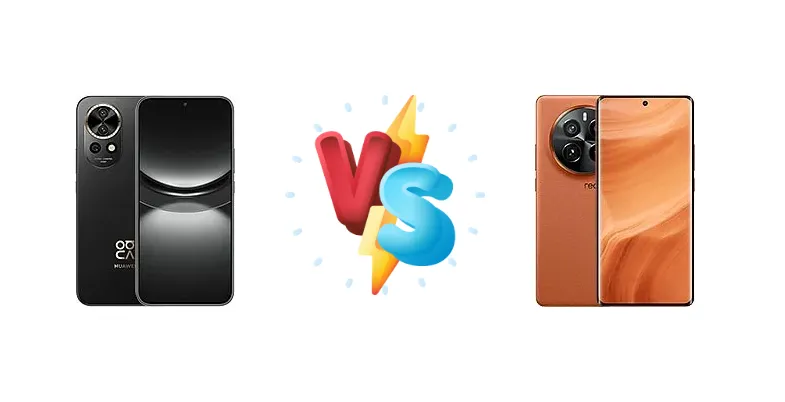
The Realme GT5 Pro and Huawei nova 12 represent distinct approaches to the modern smartphone. The GT5 Pro aims for near-flagship performance at a competitive price, leveraging Qualcomm’s latest silicon. Conversely, the nova 12, while potentially utilizing the Kirin 830, focuses on a balance of style, fast charging, and a streamlined user experience. This comparison dissects their key differences to help you choose the right device.
🏆 Quick Verdict
For users prioritizing raw power and sustained performance, the Realme GT5 Pro is the clear winner. Its Snapdragon 8 Gen 3 chipset delivers a significantly superior experience for gaming and demanding tasks. However, the Huawei nova 12 offers a compelling alternative for those valuing fast charging and a potentially more refined software experience.
| Network |
|---|
| 2G bands | GSM 850 / 900 / 1800 / 1900 | GSM 850 / 900 / 1800 / 1900 |
| 3G bands | HSDPA 800 / 850 / 900 / 1700(AWS) / 1900 / 2100 | HSDPA 850 / 900 / 2100 |
| 4G bands | LTE | 1, 3, 5, 7, 8, 28, 34, 38, 39, 40, 41 |
| 5G bands | SA/NSA | 1, 3, 5, 8, 28, 41, 77, 78 SA/NSA |
| Speed | HSPA, LTE, 5G | HSPA, LTE, 5G |
| Technology | GSM / CDMA / HSPA / CDMA2000 / LTE / 5G | GSM / CDMA / HSPA / CDMA2000 / LTE / 5G |
| Launch |
|---|
| Announced | 2023, December 26 | 2023, December 07 |
| Status | Available. Released 2024, January 05 | Available. Released 2023, December 14 |
| Body |
|---|
| Build | - | Glass front, glass back or silicone polymer back (eco leather), aluminum frame |
| Dimensions | 161.5 x 75.4 x 7 mm (6.36 x 2.97 x 0.28 in) | 161.7 x 75.1 x 9.2 mm (6.37 x 2.96 x 0.36 in) |
| SIM | · Nano-SIM· Nano-SIM + Nano-SIM | Nano-SIM + Nano-SIM |
| Weight | 191 g (6.74 oz) | 218 g / 224 g (7.69 oz) |
| Display |
|---|
| Resolution | 1084 x 2412 pixels, 20:9 ratio (~395 ppi density) | 1264 x 2780 pixels (~450 ppi density) |
| Size | 6.7 inches, 108.3 cm2 (~88.9% screen-to-body ratio) | 6.78 inches, 111.7 cm2 (~92.0% screen-to-body ratio) |
| Type | OLED, 1B colors, HDR, 120Hz | LTPO AMOLED, 1B colors, 144Hz, HDR10+, Dolby Vision, 4500 nits (peak) |
| Platform |
|---|
| CPU | Octa-core | Octa-core (1x3.3 GHz Cortex-X4 & 3x3.2 GHz Cortex-A720 & 2x3.0 GHz Cortex-A720 & 2x2.3 GHz Cortex-A520) |
| Chipset | Kirin 830 (7 nm)* the chipset is not officially confirmed | Qualcomm SM8650-AB Snapdragon 8 Gen 3 (4 nm) |
| GPU | - | Adreno 750 |
| OS | HarmonyOS 4.0 | Android 14, upgradable to Android 15, Realme UI 6.0 |
| Memory |
|---|
| Card slot | No | No |
| Internal | 256GB 8GB RAM, 512GB 8GB RAM | 256GB 12GB RAM, 256GB 16GB RAM, 512GB 16GB RAM, 1TB 16GB RAM |
| Main Camera |
|---|
| Dual | 50 MP, f/1.9, (wide), PDAF
8 MP, f/2.2, 112˚ (ultrawide), AF | - |
| Features | Laser AF, color spectrum sensor, LED flash, panorama, HDR | Color spectrum sensor, Dual-LED dual-tone flash, HDR, panorama |
| Triple | - | 50 MP, f/1.7, 23mm (wide), 1/1.43", 1.12µm, dual pixel PDAF, OIS
50 MP, f/2.6, 65mm (periscope telephoto), 1/1.56", 1.0µm, multi-directional PDAF, OIS, 2.7x optical zoom
8 MP, f/2.2, 16mm, 112˚ (ultrawide), 1/4.0", 1.12µm |
| Video | 4K, 1080p | 8K@24fps, 4K@30/60fps, 1080p@30/60fps, gyro-EIS, Dolby Vision |
| Selfie camera |
|---|
| Features | HDR, panorama | HDR, panorama |
| Single | 60 MP, f/2.4, 17mm, 100˚ (ultrawide) | 32 MP, f/2.5, 22mm (wide), 1/2.74" |
| Video | 4K@30fps, 1080p@30fps | 4K@30fps, 1080p@30fps, gyro-EIS |
| Sound |
|---|
| 35mm jack | No | No |
| Loudspeaker | Yes | Yes, with stereo speakers (Dolby Atmos certified) |
| Comms |
|---|
| Bluetooth | 5.2, A2DP, LE, L2HC (320-960 kbps HD audio) | 5.4, A2DP, LE, aptX HD |
| Infrared port | - | Yes |
| NFC | Yes | Yes, 360˚ |
| Positioning | GPS, GALILEO, GLONASS, BDS, QZSS | GPS (L1+L5), GLONASS, BDS (B1I+B1c+B2a), GALILEO (E1+E5a), QZSS (L1+L5), NavIC |
| Radio | No | No |
| USB | USB Type-C 2.0, OTG | USB Type-C 3.2 |
| WLAN | Wi-Fi 802.11 a/b/g/n/ac/6, dual-band, Wi-Fi Direct | Wi-Fi 802.11 a/b/g/n/ac/6/7, tri-band, Wi-Fi Direct |
| Features |
|---|
| Sensors | Fingerprint (under display, optical), accelerometer, gyro, compass | Fingerprint (under display, optical), accelerometer, gyro, proximity, compass |
| Battery |
|---|
| Charging | 100W wired
5W reverse wired | 100W wired, 50% in 12 min
50W wireless |
| Type | 4600 mAh | Li-Ion 5400 mAh |
| Misc |
|---|
| Colors | Black, Blue, White | Black, Silver, Orange |
| Models | BLK-AL00 | RMX3888 |
| Price | About 380 EUR | About 430 EUR |
Huawei nova 12
- 100W Wired Charging for rapid power-ups
- Sleek and Stylish Design
- Potentially refined Huawei software experience
- Potentially weaker chipset performance (Kirin 830)
- Limited information on display quality
Realme GT5 Pro
- Flagship Snapdragon 8 Gen 3 performance
- Excellent Battery Life (14:16h active use)
- 100W Wired & 50W Wireless Charging
- May run warmer under sustained load
- Realme UI may not appeal to all users
Display Comparison
The Realme GT5 Pro boasts a significantly brighter display, reaching a measured peak of 1660 nits, ensuring excellent visibility even in direct sunlight. While the nova 12’s display specifications are not detailed, it’s unlikely to match this level of brightness. The GT5 Pro’s panel likely incorporates LTPO technology for adaptive refresh rates, contributing to improved battery efficiency. Bezels and color accuracy are unknown for the nova 12, but the GT5 Pro is expected to deliver a modern, immersive viewing experience.
Camera Comparison
The Realme GT5 Pro’s camera system is expected to be a key strength, though specific details are missing. The focus should be on the main sensor and its capabilities (OIS, aperture). The Huawei nova 12’s camera specifications are also limited, but the emphasis is likely on computational photography and portrait modes. Without detailed sensor information, it’s difficult to make a direct comparison, but the GT5 Pro’s flagship positioning suggests a more versatile and capable camera system, particularly for video recording.
Performance
The core difference lies in the chipsets. The Realme GT5 Pro’s Snapdragon 8 Gen 3 (4nm) is a generational leap ahead of the Kirin 830 (7nm) potentially found in the nova 12. The Snapdragon 8 Gen 3’s Cortex-X4 prime core, clocked at 3.3 GHz, provides substantial performance gains in CPU-intensive tasks. The GT5 Pro’s Adreno 750 GPU will also deliver a far superior gaming experience. The 4nm process node of the Snapdragon 8 Gen 3 translates to better thermal efficiency, minimizing throttling during prolonged gaming sessions. The GT5 Pro’s LPDDR5x RAM further enhances performance.
Battery Life
The Realme GT5 Pro demonstrates impressive battery life, achieving 14 hours and 16 minutes of active use. Both devices support 100W wired charging, but the GT5 Pro also adds 50W wireless charging, offering greater flexibility. The GT5 Pro’s 100W charging can reach 50% charge in just 12 minutes. While the nova 12’s battery capacity is unknown, the GT5 Pro’s combination of battery life, fast wired, and wireless charging provides a significant advantage.
Buying Guide
Buy the Huawei nova 12 if you need a stylish phone with exceptionally fast 100W wired charging and prioritize a sleek design. It’s ideal for everyday users who value aesthetics and convenience. Buy the Realme GT5 Pro if you prefer uncompromising performance for gaming, content creation, or heavy multitasking, and demand a longer-lasting battery with 100W wired and 50W wireless charging capabilities.
Frequently Asked Questions
❓ Is the Kirin 830 in the Huawei nova 12 powerful enough for demanding games like Genshin Impact?
While the Kirin 830 is a capable chipset, it’s unlikely to deliver the same level of performance as the Snapdragon 8 Gen 3 in the Realme GT5 Pro. Genshin Impact may require reduced graphics settings to maintain a stable frame rate on the nova 12, whereas the GT5 Pro should handle it with ease at higher settings.
❓ How does the Realme GT5 Pro’s thermal management perform during extended gaming sessions?
The Snapdragon 8 Gen 3’s 4nm process node contributes to improved thermal efficiency. However, the GT5 Pro may still experience some heat buildup during prolonged gaming. Realme likely incorporates cooling solutions (vapor chamber, graphite sheets) to mitigate throttling and maintain consistent performance.
❓ Does the Huawei nova 12 support Google Mobile Services (GMS)?
Huawei devices have faced restrictions regarding GMS. The nova 12 likely runs on Huawei’s HarmonyOS and utilizes the AppGallery as its primary app store. Users may need to sideload apps or rely on alternative app stores to access certain services.
❓ What type of storage does the Realme GT5 Pro use, and is it expandable?
The Realme GT5 Pro is expected to utilize UFS 4.0 storage for faster read/write speeds. However, storage expansion via microSD card is unlikely, a common trend among flagship and near-flagship smartphones.