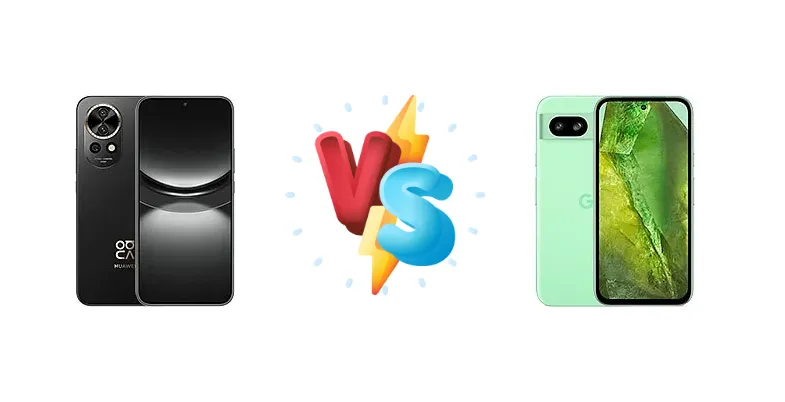
The mid-range smartphone market is fiercely competitive, and the Huawei nova 12 and Google Pixel 8a represent compelling options. The nova 12 aims to impress with its incredibly fast 100W charging, while the Pixel 8a focuses on a refined software experience powered by Google’s Tensor G3 and exceptional battery endurance. This comparison dissects their strengths and weaknesses to determine which device best suits your needs.
🏆 Quick Verdict
For the average user prioritizing long-term reliability and a seamless software experience, the Google Pixel 8a is the stronger choice. Its Tensor G3 chipset, coupled with impressive battery endurance and Google’s software support, outweighs the nova 12’s faster charging, especially considering the Kirin 830’s unconfirmed specifications.
| Network |
|---|
| 2G bands | GSM 850 / 900 / 1800 / 1900 | GSM 850 / 900 / 1800 / 1900 |
| 3G bands | HSDPA 800 / 850 / 900 / 1700(AWS) / 1900 / 2100 | HSDPA 800 / 850 / 900 / 1700(AWS) / 1900 / 2100 |
| 4G bands | LTE | 1, 2, 3, 4, 5, 7, 8, 12, 17, 18, 19, 20, 26, 28, 32, 38, 40, 41, 42, 66 - G6GPR (International) |
| 5G bands | SA/NSA | 1, 2, 3, 5, 7, 8, 12, 20, 26, 28, 38, 40, 41, 66, 75, 76, 77, 78 SA/NSA/Sub6 - G6GPR (International) |
| Speed | HSPA, LTE, 5G | HSPA, LTE, 5G |
| Technology | GSM / CDMA / HSPA / CDMA2000 / LTE / 5G | GSM / HSPA / LTE / 5G |
| Launch |
|---|
| Announced | 2023, December 26 | 2024, May 07 |
| Status | Available. Released 2024, January 05 | Available. Released 2024, May 14 |
| Body |
|---|
| Build | - | Glass front (Gorilla Glass 3), aluminum frame, plastic back |
| Dimensions | 161.5 x 75.4 x 7 mm (6.36 x 2.97 x 0.28 in) | 152.1 x 72.7 x 8.9 mm (5.99 x 2.86 x 0.35 in) |
| SIM | · Nano-SIM· Nano-SIM + Nano-SIM | Nano-SIM + eSIM |
| Weight | 191 g (6.74 oz) | 188 g (6.63 oz) |
| Display |
|---|
| Protection | - | Corning Gorilla Glass 3, Mohs level 5 |
| Resolution | 1084 x 2412 pixels, 20:9 ratio (~395 ppi density) | 1080 x 2400 pixels, 20:9 ratio (~430 ppi density) |
| Size | 6.7 inches, 108.3 cm2 (~88.9% screen-to-body ratio) | 6.1 inches, 90.3 cm2 (~81.6% screen-to-body ratio) |
| Type | OLED, 1B colors, HDR, 120Hz | OLED, HDR, 120Hz, 2000 nits (peak) |
| Platform |
|---|
| CPU | Octa-core | Nona-core (1x3.0 GHz Cortex-X3 & 4x2.45 GHz Cortex-A715 & 4x2.15 GHz Cortex-A510) |
| Chipset | Kirin 830 (7 nm)* the chipset is not officially confirmed | Google Tensor G3 (4 nm) |
| GPU | - | Immortalis-G715s MC10 |
| OS | HarmonyOS 4.0 | Android 14, upgradable to Android 16, up to 7 major Android upgrades |
| Memory |
|---|
| Card slot | No | No |
| Internal | 256GB 8GB RAM, 512GB 8GB RAM | 128GB 8GB RAM, 256GB 8GB RAM |
| Main Camera |
|---|
| Dual | 50 MP, f/1.9, (wide), PDAF
8 MP, f/2.2, 112˚ (ultrawide), AF | 64 MP (16 MP eff.), f/1.9, 26mm (wide), 1/1.73", 0.8µm, dual pixel PDAF, OIS
13 MP, f/2.2, 120˚ (ultrawide), 1.12µm |
| Features | Laser AF, color spectrum sensor, LED flash, panorama, HDR | Dual-LED flash, Pixel Shift, Ultra HDR, panorama, Best Take |
| Video | 4K, 1080p | 4K@30/60fps, 1080p@30/60/120/240fps, OIS |
| Selfie camera |
|---|
| Features | HDR, panorama | HDR, panorama |
| Single | 60 MP, f/2.4, 17mm, 100˚ (ultrawide) | 13 MP, f/2.2, 20mm (ultrawide), 1.12µm |
| Video | 4K@30fps, 1080p@30fps | 4K@30fps, 1080p@30/60fps |
| Sound |
|---|
| 35mm jack | No | No |
| Loudspeaker | Yes | Yes, with stereo speakers |
| Comms |
|---|
| Bluetooth | 5.2, A2DP, LE, L2HC (320-960 kbps HD audio) | 5.3, A2DP, LE |
| NFC | Yes | Yes |
| Positioning | GPS, GALILEO, GLONASS, BDS, QZSS | GPS, GLONASS, GALILEO, BDS, QZSS, NavIC |
| Radio | No | No |
| USB | USB Type-C 2.0, OTG | USB Type-C 3.2 |
| WLAN | Wi-Fi 802.11 a/b/g/n/ac/6, dual-band, Wi-Fi Direct | Wi-Fi 802.11 a/b/g/n/ac/6e, dual/tri-band (market/region dependent) |
| Features |
|---|
| Sensors | Fingerprint (under display, optical), accelerometer, gyro, compass | Fingerprint (under display, optical), accelerometer, gyro, proximity, compass, barometer |
| Battery |
|---|
| Charging | 100W wired
5W reverse wired | 18W wired, PD3.0
7.5W wireless
Bypass charging |
| Type | 4600 mAh | Li-Po 4492 mAh |
| Misc |
|---|
| Colors | Black, Blue, White | Obsidian, Porcelain, Bay, Aloe |
| Models | BLK-AL00 | GKV4X, G6GPR, G8HHN, G576D |
| Price | About 380 EUR | $ 229.98 / C$ 417.99 / £ 279.00 / € 299.99 / ₹ 33,300 |
| EU LABEL |
|---|
| Battery | - | 40:06h endurance, 1000 cycles |
| Energy | - | Class B |
| Free fall | - | Class A (270 falls) |
| Repairability | - | Class B |
Huawei nova 12
- Blazing-fast 100W wired charging
- Potentially competitive price point
- Huawei’s design aesthetic
- Kirin 830 chipset’s performance is unconfirmed
- Potential lack of Google Mobile Services (GMS)
- Limited long-term software support
Google Pixel 8a
- Excellent battery life and endurance
- Google Tensor G3 for smooth performance and AI features
- Guaranteed software updates and GMS support
- Slower 18W wired charging
- Less impressive charging speed compared to nova 12
- May not appeal to users heavily invested in the Huawei ecosystem
Display Comparison
The Pixel 8a boasts a significantly brighter display, reaching a measured 1508 nits, ensuring excellent visibility even in direct sunlight. While the nova 12’s display specifications are currently unavailable, the Pixel 8a’s brightness advantage is substantial. The Pixel 8a’s panel likely benefits from OLED technology, offering superior contrast and color accuracy compared to what is typically found in this price bracket. The Pixel 8a’s display is a clear advantage for outdoor use and media consumption.
Camera Comparison
Without detailed camera specifications for the nova 12, it’s difficult to make a definitive comparison. However, the Pixel 8a benefits from Google’s renowned computational photography expertise. While sensor size and aperture details are missing for the nova 12, the Pixel 8a’s image processing algorithms consistently deliver excellent dynamic range and accurate colors. The Pixel 8a’s focus on software optimization likely provides a more consistent and reliable camera experience, even without top-tier hardware specifications. We anticipate the Pixel 8a to excel in low-light conditions due to Google’s Night Sight feature.
Performance
The core difference lies in the chipsets: the Google Pixel 8a utilizes the Google Tensor G3 (4nm), a nona-core processor designed for AI and machine learning tasks, while the Huawei nova 12 features the Kirin 830 (7nm – unconfirmed). The Tensor G3’s 4nm process offers superior power efficiency and thermal management compared to the potentially 7nm Kirin 830, suggesting less throttling during sustained workloads. The Tensor G3’s CPU configuration – 1x3.0 GHz Cortex-X3, 4x2.45 GHz Cortex-A715, and 4x2.15 GHz Cortex-A510 – provides a balanced approach to performance, excelling in both single-core and multi-core tasks. The Kirin 830’s octa-core configuration lacks the specific details to make a direct comparison, but the larger node size suggests a potential disadvantage in efficiency.
Battery Life
The Google Pixel 8a demonstrates a clear advantage in battery endurance, boasting 40:06h of endurance and 11:25h of active use. This is significantly better than what is typically seen in this price range, and the 1000 cycle rating suggests long-term battery health. The nova 12 counters with 100W wired charging, allowing for incredibly fast top-ups, but its battery capacity is unknown. While 100W charging is impressive, the Pixel 8a’s superior endurance minimizes the need for frequent charging. The Pixel 8a also offers 7.5W wireless charging and bypass charging, adding to its convenience.
Buying Guide
Buy the Huawei nova 12 if you absolutely prioritize the fastest possible charging speeds and are comfortable with Huawei’s ecosystem. This phone is ideal for users who frequently find themselves needing a quick power boost. Buy the Google Pixel 8a if you value a smooth, consistently performing experience, exceptional battery life, and guaranteed software updates, making it perfect for users who rely heavily on their phone throughout the day and want a device that will stay current.
Frequently Asked Questions
❓ Does the Huawei nova 12’s 100W charging significantly degrade the battery over time?
While 100W charging is incredibly fast, it *can* generate more heat, potentially accelerating battery degradation over the long term. Huawei likely incorporates battery health management features, but the Pixel 8a’s slower charging and larger battery capacity may offer better longevity.
❓ How does the Google Tensor G3 handle demanding games like Genshin Impact or Call of Duty Mobile?
The Tensor G3 is capable of running demanding games, but it prioritizes efficiency and AI tasks over raw graphical power. Expect playable frame rates at medium to high settings, but it may not match the performance of flagship chipsets. The Pixel 8a’s thermal management will be crucial during extended gaming sessions.
❓ Is the lack of Google Mobile Services (GMS) on the Huawei nova 12 a major issue for most users?
Yes, the absence of GMS is a significant drawback for many users. It means no direct access to the Google Play Store, requiring alternative app stores and workarounds. While Huawei’s AppGallery is growing, it lacks the breadth and convenience of the Google ecosystem.
❓ What is 'bypass charging' on the Pixel 8a and how does it benefit me?
Bypass charging allows the Pixel 8a to directly power the device from the charger, reducing stress on the battery. This is particularly useful when using the phone while charging for extended periods, as it minimizes heat buildup and potentially extends battery lifespan.