
Huawei nova 11i vs nova 10: A Detailed Comparison
| Phones Images | |||||
|---|---|---|---|---|---|
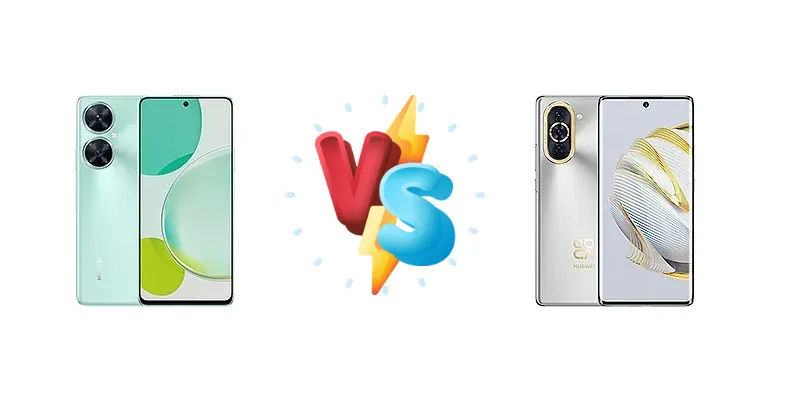
|
🏆 Quick Verdict
The Huawei nova 10 emerges as the clear winner thanks to its significantly faster Snapdragon 778G chipset, faster charging (66W vs 40W), and reverse charging capabilities. While the nova 11i offers a more efficient 6nm Snapdragon 680, the nova 10's overall performance and charging speed provide a superior user experience.
| PHONES | ||
|---|---|---|
| Phone Names | Huawei nova 11i | Huawei nova 10 |
| Network | ||
|---|---|---|
| 2G bands | GSM 850 / 900 / 1800 / 1900 | GSM 850 / 900 / 1800 / 1900 |
| 3G bands | HSDPA 850 / 900 / 1700(AWS) / 1900 / 2100 | HSDPA 800 / 850 / 900 / 1700(AWS) / 1900 / 2100 |
| 4G bands | 1, 2, 3, 4, 5, 7, 8, 13, 20, 28, 66, 26, 38, 40, 41 | 1, 2, 3, 4, 5, 7, 8, 12, 17, 18, 19, 20, 26, 28, 34, 38, 39, 40, 41, 66 - Europe |
| Speed | HSPA, LTE | HSPA, LTE |
| Technology | GSM / HSPA / LTE | GSM / CDMA / HSPA / LTE |
| - | 1, 2, 3, 4, 5, 8, 18, 19, 26, 34, 38, 39, 40, 41 - China | |
| Launch | ||
|---|---|---|
| Announced | 2023, May 01 | 2022, July 04 |
| Status | Available. Released 2023, May 11 | Available. Released 2022, July 10 |
| Body | ||
|---|---|---|
| Dimensions | 164.6 x 75.6 x 8.6 mm (6.48 x 2.98 x 0.34 in) | 162.2 x 73.9 x 6.9 mm (6.39 x 2.91 x 0.27 in) |
| SIM | · Nano-SIM· Nano-SIM + Nano-SIM | · Nano-SIM· Nano-SIM + Nano-SIM |
| Weight | 193 g (6.81 oz) | 168 g (5.93 oz) |
| Splash and dust resistant | - | |
| Display | ||
|---|---|---|
| Resolution | 1080 x 2388 pixels (~385 ppi density) | 1080 x 2400 pixels, 20:9 ratio (~395 ppi density) |
| Size | 6.8 inches, 112.0 cm2 (~90.0% screen-to-body ratio) | 6.67 inches, 107.4 cm2 (~89.6% screen-to-body ratio) |
| Type | IPS LCD, 90Hz | OLED, 1B colors, 120Hz, HDR10 |
| Platform | ||
|---|---|---|
| CPU | Octa-core (4x2.4 GHz Cortex-A73 & 4x1.9 GHz Cortex-A53) | Octa-core (4x2.4 GHz Kryo 670 & 4x1.8 GHz Kryo 670) |
| Chipset | Qualcomm Snapdragon 680 4G (6 nm) | Qualcomm SM7325 Snapdragon 778G 4G (6 nm) |
| GPU | Adreno 610 | Adreno 642L |
| OS | EMUI 13 | HarmonyOS 2.0 (China), EMUI 12 (Europe), no Google Play Services |
| Memory | ||
|---|---|---|
| Card slot | Unspecified | No |
| Internal | 128GB 8GB RAM, 256GB 8GB RAM | 128GB 6GB RAM, 128GB 8GB RAM, 256GB 8GB RAM |
| Main Camera | ||
|---|---|---|
| Dual | 48 MP, f/1.8, (wide), PDAF Auxiliary lens | - |
| Features | LED flash, HDR, panorama | LED flash, panorama, HDR |
| Single | - | 60 MP, f/2.4, 100˚ (ultrawide) |
| Triple | - | 50 MP, f/1.9, 27mm (wide), PDAF 8 MP, f/2.2, 112˚ (ultrawide) Auxiliary lens |
| Video | 1080p@30fps | 4K, 1080p, 720p@960fps, gyro-EIS |
| Selfie camera | ||
|---|---|---|
| Features | - | HDR |
| Single | 16 MP, f/2.2, (wide) | 60 MP, f/2.4, 100˚ (ultrawide) |
| Video | 1080p@30fps | 4K@30fps, 1080p@30fps, gyro-EIS |
| Sound | ||
|---|---|---|
| 3.5mm jack | No | No |
| 35mm jack | No | No |
| Loudspeaker | Yes | Yes, with stereo speakers |
| Comms | ||
|---|---|---|
| Bluetooth | 5.0, A2DP, LE | 5.2, A2DP, LE |
| NFC | No | Yes |
| Positioning | GPS, GLONASS, GALILEO, BDS, QZSS | GPS (L1+L5), GLONASS (L1), BDS (B1I+B1c+B2a), GALILEO (E1+E5a), QZSS (L1+L5), NavIC (L5) |
| Radio | No | No |
| USB | USB Type-C 2.0 | USB Type-C 2.0, OTG |
| WLAN | Wi-Fi 802.11 a/b/g/n/ac, dual-band | Wi-Fi 802.11 a/b/g/n/a/6, dual-band, Wi-Fi Direct |
| Features | ||
|---|---|---|
| Sensors | Fingerprint (side-mounted), accelerometer, compass | Fingerprint (under display, optical), accelerometer, gyro, compass |
| - | Virtual proximity sensing | |
| Battery | ||
|---|---|---|
| Charging | 40W wired, 60% in 30 min | 66W wired 5W reverse wired |
| Type | Li-Po 5000 mAh | Li-Po 4000 mAh |
| Misc | ||
|---|---|---|
| Colors | Starry Black, Mint Green | Black, Silver, Green, Violet |
| Models | MAO-LX9, MAO-LX9N | NCO-AL00, NCO-LX1, NCO-LX3 |
| Price | About 140 EUR | About 500 EUR |
Huawei nova 11i
- Efficient Snapdragon 680 chipset
- Sleek and stylish design
- Good value for money
- Decent battery life
- Less powerful than nova 10
- Slower charging speed
- No reverse charging
Huawei nova 10
- Faster Snapdragon 778G chipset
- Significantly faster 66W charging
- Reverse wireless charging
- Potentially better camera processing
- Higher price point
- Potentially slightly shorter battery life under heavy use
Display Comparison
Both phones feature OLED displays, likely with similar resolutions (FHD+) and refresh rates (90Hz or 120Hz - assumed based on the series). The nova 10 might have slightly better color accuracy and brightness due to its higher-tier chipset, but the difference will be subtle. Expect vibrant colors and smooth scrolling on both.
Camera Comparison
Both phones are expected to have capable camera systems, likely featuring a 50MP main sensor. The nova 10's more powerful processor should allow for better image processing, resulting in slightly improved image quality, especially in low-light conditions. Both will likely offer good selfie cameras, a key feature of the nova series.
Performance
This is where the nova 10 truly shines. The Snapdragon 778G 4G is a considerably more powerful chipset than the Snapdragon 680 4G. Expect noticeably faster app loading times, smoother multitasking, and better gaming performance on the nova 10. The nova 11i will handle everyday tasks adequately, but may struggle with demanding games or heavy applications.
Battery Life
The nova 11i's Snapdragon 680 chipset is known for its efficiency, potentially leading to slightly better battery life under light usage. However, the nova 10's 66W charging significantly outweighs this advantage. It can charge much faster, minimizing downtime.
Buying Guide
The Huawei nova 11i is a great option for budget-conscious users who prioritize battery life and a sleek design. It's ideal for everyday tasks and social media. The Huawei nova 10 is better suited for users who demand faster performance, quicker charging, and appreciate features like reverse wireless charging. It's a good choice for gamers and those who frequently multitask.