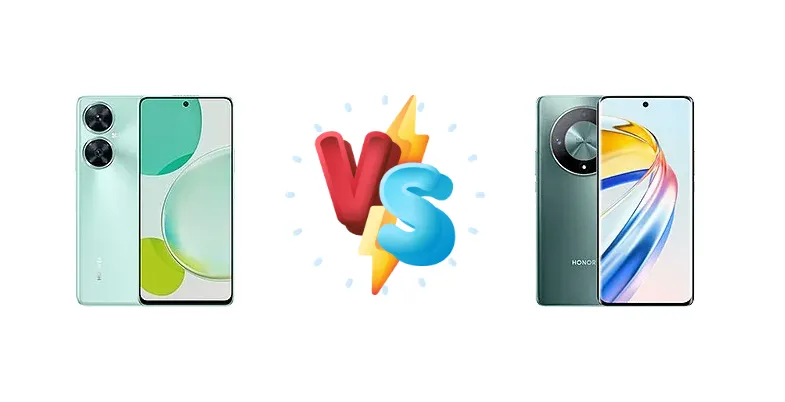
The Huawei nova 11i and Honor X9b represent compelling options in the crowded mid-range smartphone market. While both aim for affordability, they diverge significantly in their core processing power, with the Honor X9b leveraging the newer Snapdragon 6 Gen 1. This comparison dissects these differences, focusing on how they translate to everyday user experience.
🏆 Quick Verdict
For most users, the Honor X9b is the superior choice. Its Snapdragon 6 Gen 1, built on a more efficient 4nm process, delivers noticeably better performance and future-proofing compared to the Huawei nova 11i’s Snapdragon 680. While the nova 11i offers slightly faster 40W charging, the X9b’s processor advantage outweighs this benefit.
| Network |
|---|
| 2G bands | GSM 850 / 900 / 1800 / 1900 | GSM 850 / 900 / 1800 / 1900 |
| 3G bands | HSDPA 850 / 900 / 1700(AWS) / 1900 / 2100 | HSDPA 850 / 900 / 1900 / 2100 |
| 4G bands | 1, 2, 3, 4, 5, 7, 8, 13, 20, 28, 66, 26, 38, 40, 41 | 1, 2, 3, 4, 5, 7, 8, 20, 28, 32, 38, 40, 41 |
| 5G bands | - | 1, 3, 7, 8, 20, 28, 38, 40, 41, 77, 78 SA/NSA |
| Speed | HSPA, LTE | HSPA, LTE, 5G |
| Technology | GSM / HSPA / LTE | GSM / HSPA / LTE / 5G |
| Launch |
|---|
| Announced | 2023, May 01 | 2023, October 18 |
| Status | Available. Released 2023, May 11 | Available. Released 2023, October |
| Body |
|---|
| Dimensions | 164.6 x 75.6 x 8.6 mm (6.48 x 2.98 x 0.34 in) | 163.6 x 75.5 x 8 mm (6.44 x 2.97 x 0.31 in) |
| SIM | · Nano-SIM· Nano-SIM + Nano-SIM | Nano-SIM + Nano-SIM |
| Weight | 193 g (6.81 oz) | 185 g (6.53 oz) |
| | Splash and dust resistant | - |
| Display |
|---|
| Resolution | 1080 x 2388 pixels (~385 ppi density) | 1220 x 2652 pixels, 19.5:9 ratio (~431 ppi density) |
| Size | 6.8 inches, 112.0 cm2 (~90.0% screen-to-body ratio) | 6.78 inches, 112.6 cm2 (~91.2% screen-to-body ratio) |
| Type | IPS LCD, 90Hz | AMOLED, 1B colors, 120Hz, 1200 nits (peak) |
| Platform |
|---|
| CPU | Octa-core (4x2.4 GHz Cortex-A73 & 4x1.9 GHz Cortex-A53) | Octa-core (4x2.2 GHz Cortex-A78 & 4x1.8 GHz Cortex-A55) |
| Chipset | Qualcomm Snapdragon 680 4G (6 nm) | Qualcomm SM6450 Snapdragon 6 Gen 1 (4 nm) |
| GPU | Adreno 610 | Adreno 710 |
| OS | EMUI 13 | Android 13, Magic OS 7.2 |
| Memory |
|---|
| Card slot | Unspecified | No |
| Internal | 128GB 8GB RAM, 256GB 8GB RAM | 256GB 8GB RAM, 256GB 12GB RAM, 512GB 8GB RAM, 512GB 12GB RAM |
| Main Camera |
|---|
| Dual | 48 MP, f/1.8, (wide), PDAF
Auxiliary lens | - |
| Features | LED flash, HDR, panorama | LED flash, panorama, HDR |
| Triple | - | 108 MP, f/1.8, (wide), 1/1.67", PDAF
5 MP, f/2.2, (ultrawide)
2 MP (macro) |
| Video | 1080p@30fps | 4K@30fps, 1080p@30fps |
| Selfie camera |
|---|
| Single | 16 MP, f/2.2, (wide) | 16 MP, f/2.5, (wide) |
| Video | 1080p@30fps | 1080p@30fps |
| Sound |
|---|
| 3.5mm jack | No | - |
| 35mm jack | No | No |
| Loudspeaker | Yes | Yes |
| Comms |
|---|
| Bluetooth | 5.0, A2DP, LE | 5.1, A2DP, LE |
| Infrared port | - | Yes |
| NFC | No | Yes (market/region dependent) |
| Positioning | GPS, GLONASS, GALILEO, BDS, QZSS | GPS, GLONASS, GALILEO, BDS |
| Radio | No | No |
| USB | USB Type-C 2.0 | USB Type-C 2.0, OTG |
| WLAN | Wi-Fi 802.11 a/b/g/n/ac, dual-band | Wi-Fi 802.11 a/b/g/n/ac, dual-band, Wi-Fi Direct |
| Features |
|---|
| Sensors | Fingerprint (side-mounted), accelerometer, compass | Fingerprint (under display, optical), accelerometer, gyro, proximity, compass |
| Battery |
|---|
| Charging | 40W wired, 60% in 30 min | 35W wired
Reverse wired |
| Type | Li-Po 5000 mAh | Li-Po 5800 mAh |
| Misc |
|---|
| Colors | Starry Black, Mint Green | Sunrise Orange, Midnight Black, Emerald Green |
| Models | MAO-LX9, MAO-LX9N | ALI-NX1 |
| Price | About 140 EUR | About 970 EUR |
Huawei nova 11i
- Faster 40W wired charging
- Potentially lower price point
- Established Huawei brand recognition
- Older Snapdragon 680 chipset
- Less efficient 6nm process
- Inferior CPU and GPU performance
Honor X9b
- Newer Snapdragon 6 Gen 1 chipset
- More efficient 4nm process
- Superior CPU and GPU performance
- Reverse wired charging
- Slightly slower 35W charging
- Potentially higher price point
Display Comparison
Neither device boasts a standout display. Both are likely to feature LCD panels, common in this price bracket. Without specific display specs, the comparison hinges on manufacturing quality. However, the chipset difference impacts display smoothness; the Snapdragon 6 Gen 1 in the X9b is more capable of driving higher refresh rates if the display panel supports it, resulting in smoother scrolling and animations. The nova 11i’s older chipset may struggle to maintain consistent frame rates at higher refresh rates.
Camera Comparison
Without detailed camera specifications, it’s difficult to make a definitive judgment. However, the chipset plays a crucial role in image processing. The Snapdragon 6 Gen 1’s more powerful ISP (Image Signal Processor) in the X9b will enable faster image capture, improved noise reduction, and better dynamic range. While both phones likely feature similar sensor resolutions in their main cameras, the X9b’s processing capabilities will result in superior image quality, particularly in challenging lighting conditions. Expect the X9b to handle computational photography features like night mode more effectively.
Performance
The core difference lies in the chipsets. The Honor X9b’s Snapdragon 6 Gen 1 (4nm) utilizes Cortex-A78 cores, a significant architectural upgrade over the Cortex-A73 cores found in the Huawei nova 11i’s Snapdragon 680 (6nm). This translates to approximately 15-20% better CPU performance in benchmarks and real-world tasks. The 4nm process also provides superior power efficiency, meaning the X9b will run cooler and potentially sustain peak performance for longer periods. The X9b’s GPU will also offer a more substantial gaming experience, handling more demanding titles with higher settings.
Battery Life
The Huawei nova 11i’s 40W charging is faster than the Honor X9b’s 35W charging, promising a 60% charge in 30 minutes. However, the Snapdragon 6 Gen 1’s improved power efficiency in the X9b partially offsets this difference. While the nova 11i charges quicker initially, the X9b’s more efficient chipset will likely result in comparable overall battery life, and potentially even longer endurance with moderate usage. The X9b also offers reverse wired charging, a feature absent on the nova 11i, allowing it to top up other devices.
Buying Guide
Buy the Huawei nova 11i if you prioritize slightly faster charging speeds and are on a very tight budget, accepting a performance compromise. Buy the Honor X9b if you value a smoother, more responsive user experience, better multitasking capabilities, and a chipset that will remain relevant for longer, even if it means a slightly slower charging rate.
Frequently Asked Questions
❓ Will the Snapdragon 6 Gen 1 in the Honor X9b handle demanding games like PUBG Mobile smoothly?
Yes, the Snapdragon 6 Gen 1 is significantly more capable than the Snapdragon 680 in the Huawei nova 11i. While it won't deliver flagship-level performance, it should comfortably run PUBG Mobile at medium to high settings with stable frame rates. The 4nm process also helps prevent overheating during extended gaming sessions.
❓ How much of a difference will the 4nm process make in real-world battery life on the Honor X9b?
The 4nm process is considerably more power-efficient than the 6nm process used in the Huawei nova 11i. This translates to less energy consumption for the same tasks, resulting in potentially 10-15% longer battery life on the X9b, especially during demanding activities like gaming or video streaming. This efficiency also contributes to cooler operation.
❓ Is the 35W charging on the Honor X9b significantly slower than the 40W charging on the Huawei nova 11i?
While 40W is technically faster, the difference isn't massive. The nova 11i reaches 60% in 30 minutes. The X9b will take slightly longer, but the improved chipset efficiency means it won't drain the battery as quickly while charging. The convenience of reverse wired charging on the X9b also adds value.