
Huawei nova 11 Pro vs Samsung Galaxy S23+: A Detailed Comparison
| Phones Images | |||||
|---|---|---|---|---|---|
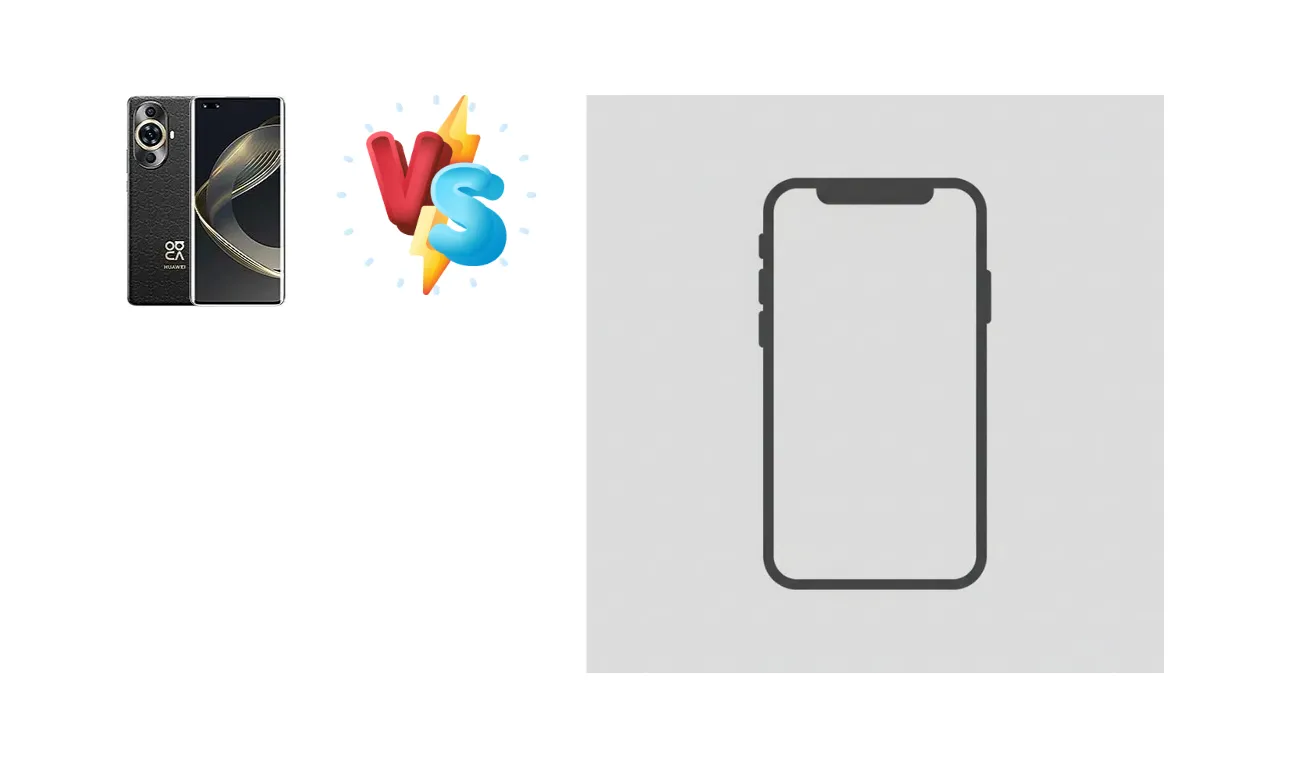
|
🏆 Quick Verdict
For the average user prioritizing raw performance and long-term software support, the Samsung Galaxy S23+ is the superior choice. Its Snapdragon 8 Gen 2 chipset delivers significantly faster processing and graphics, coupled with a longer battery life. However, the Huawei nova 11 Pro offers a compelling value proposition with its 100W charging and attractive design.
| PHONES | ||
|---|---|---|
| Phone Names | Huawei nova 11 Pro | Samsung Galaxy S23+ |
| Network | ||
|---|---|---|
| 2G bands | GSM 850 / 900 / 1800 / 1900 | GSM 850 / 900 / 1800 / 1900 - SIM 1 & SIM 2 (Dual SIM model only) |
| 3G bands | HSDPA 800 / 850 / 900 / 1700(AWS) / 1900 / 2100 | HSDPA 850 / 900 / 1700(AWS) / 1900 / 2100 |
| 4G bands | 1, 2, 3, 4, 5, 7, 8, 12, 13, 17, 18, 19, 20, 26, 28, 38, 40, 41, 66 - International | 1, 2, 3, 4, 5, 7, 8, 12, 13, 17, 18, 19, 20, 25, 26, 28, 32, 38, 39, 40, 41, 66 - International |
| 5G bands | - | 1, 2, 3, 5, 7, 8, 12, 20, 25, 28, 38, 40, 41, 66, 75, 77, 78 SA/NSA/Sub6 - International |
| Speed | HSPA, LTE | HSPA, LTE-A (up to 7CA), 5G |
| Technology | GSM / CDMA / HSPA / CDMA2000 / LTE | GSM / CDMA / HSPA / EVDO / LTE / 5G |
| CDMA2000 1x | 1, 7, 28, 41, 66, 71, 78, 258, 260, 261 SA/NSA/Sub6/mmWave - USA | |
| Launch | ||
|---|---|---|
| Announced | 2023, April 17 | 2023, February 01 |
| Status | Available. Released 2023, April 27 | Available. Released 2023, February 17 |
| Body | ||
|---|---|---|
| Build | Glass front, glass back or eco leather back | Glass front (Gorilla Glass Victus 2), glass back (Gorilla Glass Victus 2), aluminum frame |
| Dimensions | 164.3 x 74.4 x 7.9 mm (6.47 x 2.93 x 0.31 in) | 157.8 x 76.2 x 7.6 mm (6.21 x 3.00 x 0.30 in) |
| SIM | · Nano-SIM· Nano-SIM + Nano-SIM | Nano-SIM and eSIM or Dual SIM (2 Nano-SIMs and eSIM, dual stand-by) |
| Weight | 188 g or 193 g (6.63 oz) | 196 g (6.91 oz) |
| - | IP68 dust/water resistant (up to 1.5m for 30 min) Armor aluminum frame with tougher drop and scratch resistance (advertised) | |
| Display | ||
|---|---|---|
| Protection | Kunlun Glass | Corning Gorilla Glass Victus 2 |
| Resolution | 1200 x 2652 pixels (~429 ppi density) | 1080 x 2340 pixels, 19.5:9 ratio (~393 ppi density) |
| Size | 6.78 inches, 111.4 cm2 (~91.1% screen-to-body ratio) | 6.6 inches, 105.3 cm2 (~87.6% screen-to-body ratio) |
| Type | OLED, 1B colors, HDR10, 120Hz | Dynamic AMOLED 2X, 120Hz, HDR10+, 1200 nits (HBM), 1750 nits (peak) |
| - | Always-on display | |
| Platform | ||
|---|---|---|
| CPU | Octa-core (4x2.4 GHz Kryo 670 & 4x1.8 GHz Kryo 670) | Octa-core (1x3.36 GHz Cortex-X3 & 2x2.8 GHz Cortex-A715 & 2x2.8 GHz Cortex-A710 & 3x2.0 GHz Cortex-A510) |
| Chipset | Qualcomm SM7325 Snapdragon 778G 4G (6 nm) | Qualcomm SM8550-AC Snapdragon 8 Gen 2 (4 nm) |
| GPU | Adreno 642L | Adreno 740 |
| OS | HarmonyOS 3.0 | Android 13, One UI 5.1 |
| Memory | ||
|---|---|---|
| Card slot | No | No |
| Internal | 256GB 8GB RAM, 512GB 8GB RAM | 256GB 8GB RAM, 512GB 8GB RAM |
| - | UFS 4.0 | |
| Main Camera | ||
|---|---|---|
| Dual | 50 MP, f/1.9, (wide), PDAF 8 MP, f/2.2, 112˚ (ultrawide), AF | - |
| Features | Laser AF, color spectrum sensor, LED flash, panorama, HDR | LED flash, auto-HDR, panorama |
| Triple | - | 50 MP, f/1.8, 24mm (wide), 1/1.56", 1.0µm, Dual Pixel PDAF, OIS 10 MP, f/2.4, 70mm (telephoto), 1/3.94", 1.0µm, PDAF, OIS, 3x optical zoom 12 MP, f/2.2, 13mm, 120˚ (ultrawide), 1/2.55" 1.4µm, Super Steady video |
| Video | 4K, 1080p, 720p@960fps, gyro-EIS | 8K@24/30fps, 4K@30/60fps, 1080p@30/60/240fps, 1080p@960fps, HDR10+, stereo sound rec., gyro-EIS |
| Selfie camera | ||
|---|---|---|
| Dual | 8 MP, f/2.2, 52mm (telephoto), AF, 2x optical zoom 60 MP, f/2.4, 17mm, 100˚ (ultrawide), AF | - |
| Features | HDR | Dual video call, Auto-HDR, HDR10+ |
| Single | - | 12 MP, f/2.2, 26mm (wide), Dual Pixel PDAF |
| Video | 4K@30fps, 1080p@30fps, gyro-EIS | 4K@30/60fps, 1080p@30fps |
| Sound | ||
|---|---|---|
| 3.5mm jack | No | No |
| 35mm jack | No | - |
| Loudspeaker | Yes, with stereo speakers | Yes, with stereo speakers |
| - | 32-bit/384kHz audio Tuned by AKG | |
| Comms | ||
|---|---|---|
| Bluetooth | 5.2, A2DP, LE | 5.3, A2DP, LE |
| NFC | Yes | Yes |
| Positioning | GPS (L1+L5), GLONASS (L1), BDS (B1I+B1c+B2a), GALILEO (E1+E5a), QZSS (L1+L5), NavIC | GPS, GLONASS, BDS, GALILEO |
| Radio | No | No |
| USB | USB Type-C 2.0, OTG | USB Type-C 3.2, OTG |
| WLAN | Wi-Fi 802.11 a/b/g/n/a/6, dual-band, Wi-Fi Direct | Wi-Fi 802.11 a/b/g/n/ac/6e, tri-band, Wi-Fi Direct |
| Features | ||
|---|---|---|
| Sensors | Fingerprint (under display, optical), accelerometer, gyro, compass | Fingerprint (under display, ultrasonic), accelerometer, gyro, proximity, compass, barometer |
| Virtual proximity sensing | Samsung DeX, Samsung Wireless DeX (desktop experience support) Bixby natural language commands and dictation Samsung Pay (Visa, MasterCard certified) Ultra Wideband (UWB) support | |
| Battery | ||
|---|---|---|
| Charging | 100W wired, 50% in 15 min Reverse wired | 45W wired, PD3.0, 65% in 30 min (advertised) 15W wireless (Qi/PMA) 4.5W reverse wireless |
| Type | Li-Po 4500 mAh | Li-Ion 4700 mAh, non-removable |
| Misc | ||
|---|---|---|
| Colors | Black, Green, White, Gold | Phantom Black, Cream, Green, Lavender, Graphite, Lime |
| Models | GOA-AL80, GOA-LX9 | SM-S916B, SM-S916B/DS, SM-S916U, SM-S916U1, SM-S916W, SM-S916N, SM-S9160, SM-S916E, SM-S916E/DS |
| Price | About 500 EUR | $ 780.00 / C$ 1,399.99 / £ 919.08 / € 1,185.89 / ₹ 94,999 |
| SAR | - | 0.95 W/kg (head) 1.04 W/kg (body) |
| SAR EU | - | 0.77 W/kg (head) 1.45 W/kg (body) |
| Tests | ||
|---|---|---|
| Battery life | - | Endurance rating 111h |
| Camera | - | Photo / Video |
| Display | - | Contrast ratio: Infinite (nominal) |
| Loudspeaker | - | -26.5 LUFS (Good) |
| Performance | - | AnTuTu: 1234077 (v9) GeekBench: 5073 (v5.1) GFXBench: 110fps (ES 3.1 onscreen) |
Huawei nova 11 Pro
- Incredibly fast 100W wired charging
- Stylish and eye-catching design
- Competitive price point
- Snapdragon 778G 4G chipset is less powerful
- Limited 4G connectivity
- Software ecosystem and update support are less robust
Samsung Galaxy S23+
- Flagship Snapdragon 8 Gen 2 performance
- Excellent camera system with advanced features
- Longer battery life and wireless charging support
- Higher price tag
- 45W charging is slower than the nova 11 Pro
- Larger size and weight
Display Comparison
The Samsung Galaxy S23+ benefits from Samsung’s display expertise, boasting an 'Infinite' contrast ratio, implying excellent black levels and vibrant colors. While the Huawei nova 11 Pro’s 702 nits of measured peak brightness is respectable, it falls short of the S23+'s likely higher output (Samsung doesn't publish measured nits). Both phones are capable of displaying vivid content, but the S23+ likely offers a more immersive viewing experience, especially in bright sunlight. The absence of refresh rate information for the nova 11 Pro is a key omission, while the S23+ is expected to have an adaptive 120Hz panel for smoother scrolling.
Camera Comparison
Both devices offer photo and video capabilities, but the specifics are crucial. Without detailed sensor information for the nova 11 Pro, it’s difficult to make a direct comparison. However, Samsung’s flagship typically features larger sensors and more sophisticated image processing algorithms. The S23+'s image processing prioritizes natural colors and detail, while Huawei’s tends towards more saturated and stylized images. The absence of telephoto lens details for the nova 11 Pro suggests a reliance on digital zoom, which will result in lower-quality zoomed images compared to the S23+'s likely optical zoom capabilities. We'd expect the S23+ to excel in low-light photography due to its superior sensor and processing.
Performance
The performance gap is substantial. The Samsung Galaxy S23+’s Snapdragon 8 Gen 2 (4nm) is a generational leap ahead of the Huawei nova 11 Pro’s Snapdragon 778G 4G (6nm). The 8 Gen 2’s Cortex-X3 prime core, coupled with its more efficient 4nm process, translates to significantly faster app loading times, smoother multitasking, and superior gaming performance. The 778G is a capable chip, but it will struggle with the most demanding mobile games at maximum settings. The S23+'s LPDDR5x RAM further enhances performance, while the nova 11 Pro's RAM specification is unknown. The 4G limitation on the nova 11 Pro is a significant drawback for users in areas with robust 5G infrastructure.
Battery Life
The Samsung Galaxy S23+ boasts an endurance rating of 111 hours, significantly exceeding the Huawei nova 11 Pro’s 89-hour rating. This suggests the S23+ offers considerably longer battery life under typical usage. While the nova 11 Pro’s 100W wired charging is incredibly fast – promising 50% charge in just 15 minutes – the S23+'s 45W charging, while slower, is still respectable and benefits from the wider compatibility of the PD3.0 standard. The inclusion of 15W wireless charging and 4.5W reverse wireless charging on the S23+ adds convenience, features absent on the nova 11 Pro.
Buying Guide
Buy the Huawei nova 11 Pro if you prioritize incredibly fast charging, a sleek aesthetic, and are comfortable with the Huawei ecosystem and potential software limitations. This phone is ideal for users who frequently top up their battery and value style. Buy the Samsung Galaxy S23+ if you demand top-tier performance for gaming and demanding applications, require a consistently excellent camera experience, and value long-term software updates and broader app compatibility.