
Huawei Mate Xs vs. Microsoft Surface Duo 2: Which Foldable Reigns Supreme?
| Phones Images | |||||
|---|---|---|---|---|---|
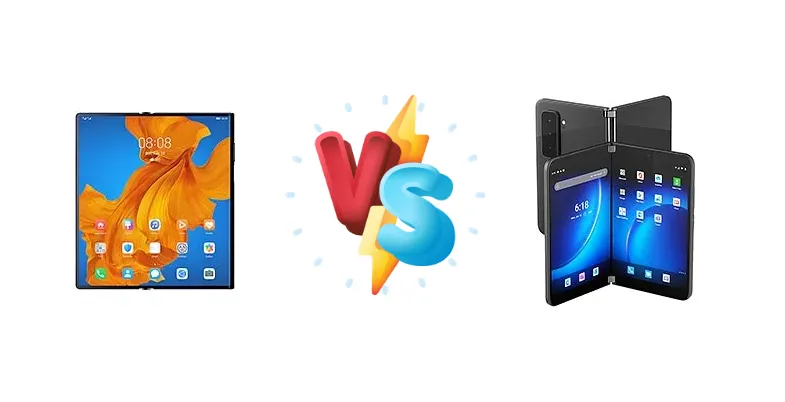
|
🏆 Quick Verdict
For the average user prioritizing battery life and a more traditional smartphone experience, the Huawei Mate Xs emerges as the winner. Its 69-hour endurance rating significantly surpasses the Surface Duo 2's, and the single folding display offers a more unified interface. However, the Surface Duo 2 excels in multitasking.
| PHONES | ||
|---|---|---|
| Phone Names | Huawei Mate Xs | Microsoft Surface Duo 2 |
| Network | ||
|---|---|---|
| 2G bands | GSM 850 / 900 / 1800 / 1900 | GSM 850 / 900 / 1800 / 1900 |
| 3G bands | HSDPA 800 / 850 / 900 / 1700(AWS) / 1900 / 2100 | HSDPA 850 / 900 / 1900 / 2100 |
| 4G bands | 1, 2, 3, 4, 5, 6, 7, 8, 9, 12, 17, 18, 19, 20, 26, 28, 32, 34, 38, 39, 40, 41 | 1, 2, 3, 4, 5, 7, 8, 12, 13, 14, 19, 20, 25, 26, 28, 29, 30, 38, 39, 40, 41, 42, 46, 48, 66, 71 |
| 5G bands | 1, 3, 28, 38, 41, 77, 78, 79 SA/NSA | 1, 2, 3, 5, 7, 20, 25, 28, 38, 41, 66, 71, 77, 78, 79 SA/NSA/Sub6 - International |
| Speed | HSPA 42.2/5.76 Mbps, LTE Cat21 1400/200 Mbps, 5G (2+ Gbps DL) | HSPA 42.2/5.76 Mbps, LTE (5CA) Cat20 2000/150 Mbps, 5G 6 Gbps DL |
| Technology | GSM / HSPA / LTE / 5G | GSM / HSPA / LTE / 5G |
| - | 1, 2, 3, 5, 7, 20, 25, 28, 38, 41, 66, 71, 77, 78, 79, 257, 260, 261 SA/NSA/Sub6/mmWave - USA | |
| Launch | ||
|---|---|---|
| Announced | 2020, February 24. Released 2020, March 05 | 2021, September 22. Released 2021, October 21 |
| Status | Discontinued | Discontinued |
| Body | ||
|---|---|---|
| Build | Plastic front, aluminum back, aluminum frame | Glass front (Gorilla Glass Victus), glass back (Gorilla Glass) |
| Dimensions | Unfolded: 161.3 x 146.2 x 5.4 mmFolded: 161.3 x 78.5 x 11 mm | Unfolded: 184.5 x 145.2 x 5.5 mm Folded: 145.2 x 92.1 x 11 mm |
| SIM | Nano-SIM + Nano-SIM | Nano-SIM + eSIM |
| Weight | 300 g (10.58 oz) | 284 g (10.02 oz) |
| - | Stylus support | |
| Display | ||
|---|---|---|
| Protection | Corning Gorilla Glass | Corning Gorilla Glass Victus |
| Resolution | 2200 x 2480 pixels (~414 ppi density) | 1892 x 2688 pixels (~401 ppi density) |
| Size | 8.0 inches, 205.0 cm2 (~86.9% screen-to-body ratio) | 8.3 inches, 204.0 cm2 (~152.6% screen-to-body ratio) |
| Type | Foldable OLED | AMOLED, 90Hz, HDR, 800 nits (peak) |
| Folded cover display: AMOLED, 6.6 inches, 1148 x 2480 pixels, 19.5:9 ratio | Folded position display: 5.8 inches, AMOLED, 1344 x 1892 pixels (4:3) | |
| Platform | ||
|---|---|---|
| CPU | Octa-core (2x2.86 GHz Cortex-A76 & 2x2.36 GHz Cortex-A76 & 4x1.95 GHz Cortex-A55) | Octa-core (1x2.84 GHz Cortex-X1 & 3x2.42 GHz Cortex-A78 & 4x1.80 GHz Cortex-A55) |
| Chipset | Kirin 990 5G (7 nm+) | Qualcomm SM8350 Snapdragon 888 5G (5 nm) |
| GPU | Mali-G76 MP16 | Adreno 660 |
| OS | Android 10, EMUI 10, no Google Play Services | Android 11 |
| Memory | ||
|---|---|---|
| Card slot | Nano Memory (uses shared SIM slot) | No |
| Internal | 512GB 8GB RAM | 128GB 8GB RAM, 256GB 8GB RAM, 512GB 8GB RAM |
| UFS 2.1 | UFS | |
| Main Camera | ||
|---|---|---|
| Features | Leica optics, dual-LED dual-tone flash, panorama, HDR | Dual-LED dual-tone flash, HDR, panorama |
| Single | 5 MP, AF 5 MP, AF | 12 MP, f/2.0, 24mm (wide), 1.0µm |
| Triple | 40 MP, f/1.8, 27mm (wide), 1/1.7", PDAF 8 MP, f/2.4, 81mm (telephoto), PDAF, OIS, 3x optical zoom 16 MP, f/2.2, 17mm (ultrawide), AF TOF 3D, (depth) | 12 MP, f/1.7, 27mm (wide), 1.4µm, dual pixel PDAF, OIS 12 MP, f/2.4, 51mm (telephoto), 1.0µm, PDAF, OIS, 2x optical zoom 16 MP, f/2.2, 13mm (ultrawide), 1.0µm TOF 3D, (depth) |
| Video | 4K@30fps, 1080p@30fps | 4K@30/60fps, 1080p@30/60/120/240fps, gyro-EIS, HDR |
| Selfie camera | ||
|---|---|---|
| Features | HDR | - |
| Single | Yes | 12 MP, f/2.0, 24mm (wide), 1.0µm |
| Video | 1080p@30fps | 1080p@30fps |
| No - uses main camera | - | |
| Sound | ||
|---|---|---|
| 3.5mm jack | No | No |
| 35mm jack | No | No |
| Loudspeaker | Yes | Yes, with stereo speakers |
| Comms | ||
|---|---|---|
| Bluetooth | 5.0, A2DP, LE | 5.1, A2DP, LE, aptX Adaptive |
| Infrared port | Yes | - |
| NFC | Yes | Yes |
| Positioning | GPS (L1+L5), GLONASS (L1), BDS (B1), GALILEO (E1+E5a), QZSS (L1+L5) | GPS, GLONASS, GALILEO, QZSS, BDS |
| Radio | No | No |
| USB | USB Type-C 3.1 | USB Type-C 3.2, DisplayPort |
| WLAN | Wi-Fi 802.11 a/b/g/n/ac, dual-band, Wi-Fi Direct | Wi-Fi 802.11 a/b/g/n/ac/6, dual-band, Wi-Fi Direct |
| Features | ||
|---|---|---|
| Browser | HTML, Adobe Flash | - |
| Sensors | Fingerprint (side-mounted), accelerometer, gyro, proximity, compass, barometer | Fingerprint (side-mounted), dual accelerometer, dual gyro, dual proximity, dual compass |
| Battery | ||
|---|---|---|
| Charging | 55W wired, 85% in 30 min | 23W wired |
| Stand-by | Up to 312 h | - |
| Talk time | Up to 6 h | - |
| Type | Li-Po 4500 mAh | Li-Po 4449 mAh |
| Misc | ||
|---|---|---|
| Colors | Interstellar Blue | Glacier, Obsidian |
| Models | TAH-N29m | - |
| Price | About 1950 EUR | About 1480 EUR |
| SAR | 0.29 W/kg (head) 0.54 W/kg (body) | - |
| Tests | ||
|---|---|---|
| Battery life | Endurance rating 69h | - |
| Camera | Photo / Video | - |
| Display | Contrast ratio: Infinite (nominal) | - |
| Loudspeaker | -27.0 LUFS (Good) | - |
| Performance | AnTuTu: 459274 (v8), 461406 (unfolded) GeekBench: 12213 (v4.4), 2980 (v5.1) GFXBench: 16fps (ES 3.1 onscreen unfolded) | - |
Huawei Mate Xs
- Exceptional battery life (69h endurance)
- Faster 55W wired charging
- Single, seamless folding display
- Older chipset (Kirin 990)
- Display brightness could be better
Microsoft Surface Duo 2
- Powerful Snapdragon 888 processor
- Dual-screen multitasking capabilities
- Compact form factor when folded
- Significantly shorter battery life
- Slower 23W wired charging
Display Comparison
The Huawei Mate Xs boasts a single folding display, while the Surface Duo 2 features two separate 5.8-inch panels. The Mate Xs achieves a measured peak brightness of 413 nits, which is respectable but may struggle in direct sunlight. The Surface Duo 2's display technology isn't specified, but the dual-screen setup offers unique multitasking capabilities. The Mate Xs' infinite contrast ratio (nominal) suggests a strong OLED panel, but the lack of a high refresh rate is a drawback compared to some modern flagships. The Duo 2's hinge mechanism is a key differentiator, allowing for versatile usage modes.
Camera Comparison
Both devices list 'Photo / Video' capabilities, but lack specific details. Given Huawei's camera expertise, the Mate Xs likely features a more refined camera system, but without sensor size or aperture information, it's difficult to make a definitive judgment. The Surface Duo 2's camera performance is generally considered adequate but not class-leading. The absence of detailed camera specs on both devices suggests they aren't primary selling points. We can assume the Mate Xs will have more advanced image processing algorithms.
Performance
The Surface Duo 2 leverages the Qualcomm Snapdragon 888 5G (5nm), a significant step up in process node technology compared to the Huawei Mate Xs' Kirin 990 5G (7nm+). The 5nm process generally translates to improved power efficiency and thermal performance, potentially reducing throttling during sustained workloads. The Snapdragon 888's Cortex-X1 prime core (2.84 GHz) offers a performance advantage over the Mate Xs' Cortex-A76 cores (2.86 GHz). While both utilize a similar Cortex-A55 cluster for efficiency, the Snapdragon 888's Adreno 660 GPU provides superior graphics performance. The Kirin 990's performance is still capable, but the Surface Duo 2 is demonstrably faster.
Battery Life
The Huawei Mate Xs shines with an impressive endurance rating of 69 hours, a testament to its optimized power management and potentially larger battery capacity (unspecified). The Surface Duo 2, with its 23W wired charging, lags behind the Mate Xs' 55W charging, achieving only 85% charge in 30 minutes. The faster charging on the Mate Xs is a significant convenience factor. While the Surface Duo 2's battery capacity is unknown, the shorter endurance rating suggests it requires more frequent charging, despite the Snapdragon 888's efficiency gains.
Buying Guide
Buy the Huawei Mate Xs if you need exceptional battery life, a more conventional smartphone experience with a large, folding display, and prioritize media consumption. Buy the Microsoft Surface Duo 2 if you value multitasking across two screens, prefer a more compact form factor when folded, and heavily rely on Microsoft's ecosystem and productivity apps.