
Huawei Mate Xs vs. Google Pixel Fold: Which Foldable Reigns Supreme?
| Phones Images | |||||
|---|---|---|---|---|---|
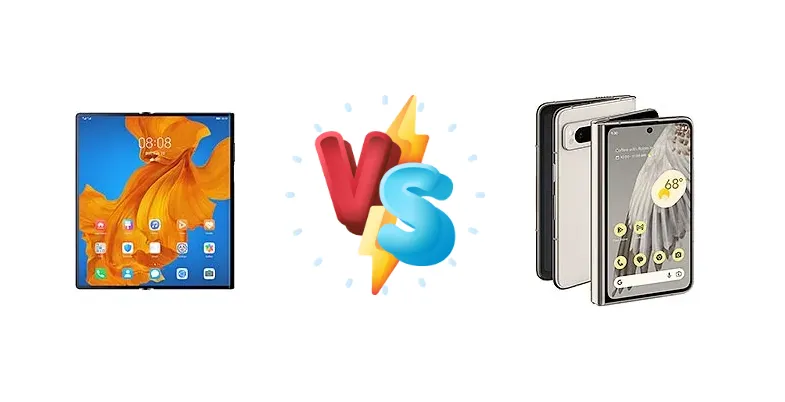
|
🏆 Quick Verdict
For the average user prioritizing software support and a polished experience, the Google Pixel Fold is the better choice. While the Huawei Mate Xs boasts impressive endurance, its older chipset and lack of Google services present significant drawbacks. The Pixel Fold’s Tensor G2 offers a more modern and refined experience.
| PHONES | ||
|---|---|---|
| Phone Names | Huawei Mate Xs | Google Pixel Fold |
| Network | ||
|---|---|---|
| 2G bands | GSM 850 / 900 / 1800 / 1900 | GSM 850 / 900 / 1800 / 1900 |
| 3G bands | HSDPA 800 / 850 / 900 / 1700(AWS) / 1900 / 2100 | HSDPA 800 / 850 / 900 / 1700(AWS) / 1900 / 2100 |
| 4G bands | 1, 2, 3, 4, 5, 6, 7, 8, 9, 12, 17, 18, 19, 20, 26, 28, 32, 34, 38, 39, 40, 41 | 1, 2, 3, 4, 5, 7, 8, 12, 13, 14, 17, 18, 19, 20, 21, 25, 26, 28, 29, 30, 32, 38, 39, 40, 41, 42, 46, 48, 66, 71 |
| 5G bands | 1, 3, 28, 38, 41, 77, 78, 79 SA/NSA | 1, 2, 3, 5, 7, 8, 12, 14, 20, 25, 28, 30, 38, 40, 41, 48, 66, 71, 75, 76, 77, 78, 79, 257, 258, 260, 261 SA/NSA/Sub6/mmWave |
| Speed | HSPA 42.2/5.76 Mbps, LTE Cat21 1400/200 Mbps, 5G (2+ Gbps DL) | HSPA, LTE, 5G |
| Technology | GSM / HSPA / LTE / 5G | GSM / CDMA / HSPA / EVDO / LTE / 5G |
| - | CDMA2000 1xEV-DO | |
| Launch | ||
|---|---|---|
| Announced | 2020, February 24. Released 2020, March 05 | 2023, May 10 |
| Status | Discontinued | Available. Released 2023, June 27 |
| Body | ||
|---|---|---|
| Build | Plastic front, aluminum back, aluminum frame | Glass front (Gorilla Glass Victus) (folded), plastic front (unfolded), glass back (Gorilla Glass Victus), aluminum frame |
| Dimensions | Unfolded: 161.3 x 146.2 x 5.4 mmFolded: 161.3 x 78.5 x 11 mm | Unfolded: 139.7 x 158.7 x 5.8 mmFolded: 139.7 x 79.5 x 12.1 mm |
| SIM | Nano-SIM + Nano-SIM | Nano-SIM + eSIM |
| Weight | 300 g (10.58 oz) | 283 g (9.98 oz) |
| - | IPX8 water resistant | |
| Display | ||
|---|---|---|
| Protection | Corning Gorilla Glass | - |
| Resolution | 2200 x 2480 pixels (~414 ppi density) | 1840 x 2208 pixels (~378 ppi density) |
| Size | 8.0 inches, 205.0 cm2 (~86.9% screen-to-body ratio) | 7.6 inches, 183.3 cm2 (~82.7% screen-to-body ratio) |
| Type | Foldable OLED | Foldable OLED, 120Hz, HDR10+, 1000 nits (HBM), 1450 nits (peak) |
| Folded cover display: AMOLED, 6.6 inches, 1148 x 2480 pixels, 19.5:9 ratio | Cover display: OLED, 120Hz, HDR, Corning Gorilla Glass Victus 5.8 inches, 1080 x 2092 pixels, 17.4:9 ratio, 408 ppi 1200 nits (HBM), 1550 nits (peak) | |
| Platform | ||
|---|---|---|
| CPU | Octa-core (2x2.86 GHz Cortex-A76 & 2x2.36 GHz Cortex-A76 & 4x1.95 GHz Cortex-A55) | Octa-core (2x2.85 GHz Cortex-X1 & 2x2.35 GHz Cortex-A78 & 4x1.80 GHz Cortex-A55) |
| Chipset | Kirin 990 5G (7 nm+) | Google Tensor G2 (5 nm) |
| GPU | Mali-G76 MP16 | Mali-G710 MP7 |
| OS | Android 10, EMUI 10, no Google Play Services | Android 13, upgradable to Android 15, up to 5 major Android upgrades |
| Memory | ||
|---|---|---|
| Card slot | Nano Memory (uses shared SIM slot) | No |
| Internal | 512GB 8GB RAM | 256GB 12GB RAM, 512GB 12GB RAM |
| UFS 2.1 | UFS 3.1 | |
| Main Camera | ||
|---|---|---|
| Features | Leica optics, dual-LED dual-tone flash, panorama, HDR | Laser AF, Dual-LED flash, HDR, panorama |
| Single | 5 MP, AF 5 MP, AF | - |
| Triple | 40 MP, f/1.8, 27mm (wide), 1/1.7", PDAF 8 MP, f/2.4, 81mm (telephoto), PDAF, OIS, 3x optical zoom 16 MP, f/2.2, 17mm (ultrawide), AF TOF 3D, (depth) | 48 MP, f/1.7, 25mm (wide), 1/2.0", 0.8µm, dual pixel PDAF, OIS 10.8 MP, f/3.1, 112mm (telephoto), 1/3.1", 1.22µm, dual pixel PDAF, OIS, 5x optical zoom 10.8 MP, f/2.2, 121˚, (ultrawide), 1/3.0", 1.25µm |
| Video | 4K@30fps, 1080p@30fps | 4K@30/60fps, 1080p@30/60/120/240fps, 10-bit HDR |
| Selfie camera | ||
|---|---|---|
| Features | HDR | HDR, panorama |
| Single | Yes | 8 MP, f/2.0, 24mm (wide), 1/4.0", 1.12µm Cover camera: 9.5 MP, f/2.2, 24mm (wide), 1.22µm, dual pixel PDAF |
| Video | 1080p@30fps | 4K@30/60fps, 1080p@30/60fps |
| No - uses main camera | - | |
| Sound | ||
|---|---|---|
| 3.5mm jack | No | No |
| 35mm jack | No | No |
| Loudspeaker | Yes | Yes, with stereo speakers |
| Comms | ||
|---|---|---|
| Bluetooth | 5.0, A2DP, LE | 5.2, A2DP, LE, aptX HD |
| Infrared port | Yes | - |
| NFC | Yes | Yes |
| Positioning | GPS (L1+L5), GLONASS (L1), BDS (B1), GALILEO (E1+E5a), QZSS (L1+L5) | GPS, GLONASS, GALILEO, BDS |
| Radio | No | No |
| USB | USB Type-C 3.1 | USB Type-C 3.2, OTG |
| WLAN | Wi-Fi 802.11 a/b/g/n/ac, dual-band, Wi-Fi Direct | Wi-Fi 802.11 a/b/g/n/ac/6e, tri-band, Wi-Fi Direct |
| Features | ||
|---|---|---|
| Browser | HTML, Adobe Flash | - |
| Sensors | Fingerprint (side-mounted), accelerometer, gyro, proximity, compass, barometer | Fingerprint (side-mounted), accelerometer, gyro, proximity, compass, barometer |
| - | Ultra Wideband (UWB) support | |
| Battery | ||
|---|---|---|
| Charging | 55W wired, 85% in 30 min | Wired, PD3.0 Wireless |
| Stand-by | Up to 312 h | - |
| Talk time | Up to 6 h | - |
| Type | Li-Po 4500 mAh | Li-Po 4821 mAh |
| Misc | ||
|---|---|---|
| Colors | Interstellar Blue | Porcelain, Obsidian |
| Models | TAH-N29m | G9FPL |
| Price | About 1950 EUR | € 670.87 / $ 389.26 / £ 899.99 |
| SAR | 0.29 W/kg (head) 0.54 W/kg (body) | - |
| Tests | ||
|---|---|---|
| Battery life | Endurance rating 69h | - |
| Camera | Photo / Video | - |
| Display | Contrast ratio: Infinite (nominal) | - |
| Loudspeaker | -27.0 LUFS (Good) | - |
| Performance | AnTuTu: 459274 (v8), 461406 (unfolded) GeekBench: 12213 (v4.4), 2980 (v5.1) GFXBench: 16fps (ES 3.1 onscreen unfolded) | - |
Huawei Mate Xs
- Exceptional battery endurance (69h rating)
- Fast 55W wired charging
- Unique outward-folding display design
- Older Kirin 990 chipset
- Lack of Google Mobile Services
- Outward-folding display is more prone to damage
Google Pixel Fold
- Modern Google Tensor G2 chipset
- Seamless Android experience
- Strong camera performance (Google's computational photography)
- Battery life likely lower than Mate Xs
- Charging speed unspecified and likely slower
- Inward-folding design adds thickness
Display Comparison
The Huawei Mate Xs features a single, outward-folding display, achieving an 'infinite' contrast ratio due to its OLED technology. However, its measured peak brightness of 413 nits is significantly lower than what modern flagships offer, potentially impacting outdoor visibility. The Pixel Fold, while not specified for peak brightness in the provided data, likely benefits from advancements in panel technology. The Mate Xs’ outward fold is more prone to scratches, while the Pixel Fold’s inward fold offers inherent protection. The absence of LTPO specification for either device makes it difficult to assess variable refresh rate capabilities, but the Pixel Fold’s newer design likely incorporates more efficient display technology.
Camera Comparison
Both devices are listed with 'Photo / Video' capabilities, lacking specific details. However, given Huawei’s historical strength in mobile photography, the Mate Xs likely features a capable camera system. The Pixel Fold benefits from Google’s renowned computational photography expertise, leveraging the Tensor G2’s image signal processor (ISP) for superior image processing. Without sensor size or aperture information, it’s difficult to make a definitive judgment, but the Pixel Fold’s software algorithms are likely to deliver more consistent and visually appealing results, particularly in challenging lighting conditions. The absence of details regarding OIS suggests neither device prioritizes advanced stabilization.
Performance
The Huawei Mate Xs is powered by the Kirin 990 5G (7nm+), an octa-core processor that was competitive in its time. However, the Google Pixel Fold’s Tensor G2 (5nm) represents a significant leap in efficiency and performance. The 5nm process node of the Tensor G2 allows for higher transistor density and reduced power consumption compared to the Kirin 990’s 7nm+ node. While both CPUs feature similar core configurations (2x high-performance, 4x mid-range, 4x efficiency), the Cortex-X1 cores in the Pixel Fold’s Tensor G2 provide a substantial performance boost in demanding tasks. The lack of RAM specifications for both devices makes a direct comparison difficult, but the Tensor G2’s optimized software integration likely mitigates any potential RAM limitations.
Battery Life
The Huawei Mate Xs boasts an impressive endurance rating of 69 hours, indicating exceptional battery life. This is likely due to the efficient Kirin 990 chipset and potentially a larger battery capacity (not specified). The Pixel Fold’s battery life is not provided, but its Tensor G2 chipset, while powerful, is known to be less power-efficient than the Kirin 990. The Mate Xs supports 55W wired charging, achieving 85% charge in 30 minutes, a significantly faster charging speed than the Pixel Fold’s unspecified wired and wireless charging capabilities. This makes the Mate Xs a clear winner for users prioritizing rapid charging and extended battery life.
Buying Guide
Buy the Huawei Mate Xs if you prioritize exceptional battery life and are comfortable with a potentially limited software ecosystem, and can work around the lack of Google Mobile Services. It’s a good option for users who value longevity in battery performance above all else. Buy the Google Pixel Fold if you value a seamless Android experience, strong camera performance, and guaranteed software updates. It’s ideal for users deeply integrated into the Google ecosystem and who want a modern, feature-rich foldable.