
Huawei Mate Xs 2 vs. Mate Xs: The Ultimate Foldable Face-Off
| Phones Images | |||||
|---|---|---|---|---|---|
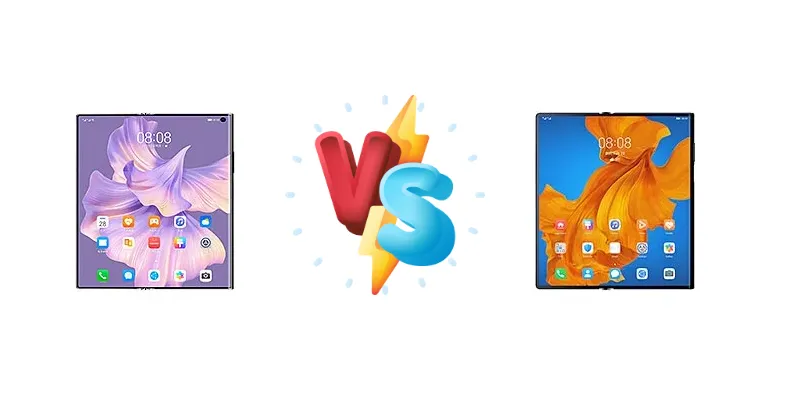
|
🏆 Quick Verdict
The Mate Xs 2 offers a brighter display, a more modern Snapdragon 888 chipset, and improved hinge design. However, the Mate Xs boasts superior battery life and faster charging. Ultimately, the Xs 2 is a refinement, while the Xs remains a compelling option, especially if battery endurance is paramount.
| PHONES | ||
|---|---|---|
| Phone Names | Huawei Mate Xs 2 | Huawei Mate Xs |
| Network | ||
|---|---|---|
| 2G bands | GSM 850 / 900 / 1800 / 1900 | GSM 850 / 900 / 1800 / 1900 |
| 3G bands | HSDPA 800 / 850 / 900 / 1700(AWS) / 1900 / 2100 | HSDPA 800 / 850 / 900 / 1700(AWS) / 1900 / 2100 |
| 4G bands | 1, 2, 3, 4, 5, 7, 8, 12, 17, 18, 19, 20, 26, 28, 34, 38, 39, 40, 41 | 1, 2, 3, 4, 5, 6, 7, 8, 9, 12, 17, 18, 19, 20, 26, 28, 32, 34, 38, 39, 40, 41 |
| 5G bands | - | 1, 3, 28, 38, 41, 77, 78, 79 SA/NSA |
| Speed | HSPA, LTE | HSPA 42.2/5.76 Mbps, LTE Cat21 1400/200 Mbps, 5G (2+ Gbps DL) |
| Technology | GSM / CDMA / HSPA / EVDO / LTE | GSM / HSPA / LTE / 5G |
| CDMA2000 1xEV-DO | - | |
| Launch | ||
|---|---|---|
| Announced | 2022, April 28 | 2020, February 24. Released 2020, March 05 |
| Status | Available. Released 2022, May 07 | Discontinued |
| Body | ||
|---|---|---|
| Build | - | Plastic front, aluminum back, aluminum frame |
| Dimensions | Unfolded: 156.5 x 139.3 x 5.4 mmFolded: 156.5 x 75.5 x 11.1 mm | Unfolded: 161.3 x 146.2 x 5.4 mmFolded: 161.3 x 78.5 x 11 mm |
| SIM | Nano-SIM + Nano-SIM | Nano-SIM + Nano-SIM |
| Weight | 255 g / 257 g (8.99 oz) | 300 g (10.58 oz) |
| Display | ||
|---|---|---|
| Protection | - | Corning Gorilla Glass |
| Resolution | 2200 x 2480 pixels (~424 ppi density) | 2200 x 2480 pixels (~414 ppi density) |
| Size | 7.8 inches, 195.8 cm2 (~89.8% screen-to-body ratio) | 8.0 inches, 205.0 cm2 (~86.9% screen-to-body ratio) |
| Type | Foldable OLED, 1B colors, 120Hz | Foldable OLED |
| Folded cover display: OLED, 6.5 inches, 1176 x 2480 pixels | Folded cover display: AMOLED, 6.6 inches, 1148 x 2480 pixels, 19.5:9 ratio | |
| Platform | ||
|---|---|---|
| CPU | Octa-core (1x2.84 GHz Cortex-X1 & 3x2.42 GHz Cortex-A78 & 4x1.80 GHz Cortex-A55) | Octa-core (2x2.86 GHz Cortex-A76 & 2x2.36 GHz Cortex-A76 & 4x1.95 GHz Cortex-A55) |
| Chipset | Qualcomm SM8350 Snapdragon 888 4G (5 nm) | Kirin 990 5G (7 nm+) |
| GPU | Adreno 660 | Mali-G76 MP16 |
| OS | EMUI 12, no Google Play Services (International); HarmonyOS 2.0 (China) | Android 10, EMUI 10, no Google Play Services |
| Memory | ||
|---|---|---|
| Card slot | Nano Memory (uses shared SIM slot) | Nano Memory (uses shared SIM slot) |
| Internal | 256GB 8GB RAM, 512GB 8GB RAM, 512GB 12GB RAM | 512GB 8GB RAM |
| UFS | UFS 2.1 | |
| Main Camera | ||
|---|---|---|
| Features | Laser AF, color spectrum sensor, Dual-LED dual-tone flash, panorama, HDR | Leica optics, dual-LED dual-tone flash, panorama, HDR |
| Single | 10.7 MP, f/2.2 | 5 MP, AF 5 MP, AF |
| Triple | 50 MP, f/1.8, (wide), PDAF 8 MP, f/2.4, 81mm (telephoto), PDAF, OIS, 3x optical zoom 13 MP, f/2.2, 120˚ (ultrawide) | 40 MP, f/1.8, 27mm (wide), 1/1.7", PDAF 8 MP, f/2.4, 81mm (telephoto), PDAF, OIS, 3x optical zoom 16 MP, f/2.2, 17mm (ultrawide), AF TOF 3D, (depth) |
| Video | 4K@30/60fps, 1080p@30/240fps | 4K@30fps, 1080p@30fps |
| Selfie camera | ||
|---|---|---|
| Features | HDR | HDR |
| Single | 10.7 MP, f/2.2 | Yes |
| Video | 4K@30fps, 1080p@30/240fps | 1080p@30fps |
| - | No - uses main camera | |
| Sound | ||
|---|---|---|
| 3.5mm jack | No | No |
| 35mm jack | No | No |
| Loudspeaker | Yes, with stereo speakers | Yes |
| Comms | ||
|---|---|---|
| Bluetooth | 5.2, A2DP, LE | 5.0, A2DP, LE |
| Infrared port | Yes | Yes |
| NFC | Yes | Yes |
| Positioning | GPS (L1+L5), GLONASS (L1), BDS (B1I+B1c+B2a), GALILEO (E1+E5a), QZSS (L1+L5), NavIC (L5) | GPS (L1+L5), GLONASS (L1), BDS (B1), GALILEO (E1+E5a), QZSS (L1+L5) |
| Radio | No | No |
| USB | USB Type-C 3.1, OTG | USB Type-C 3.1 |
| WLAN | Wi-Fi 802.11 a/b/g/n/ac/6, dual-band, Wi-Fi Direct | Wi-Fi 802.11 a/b/g/n/ac, dual-band, Wi-Fi Direct |
| Features | ||
|---|---|---|
| Browser | - | HTML, Adobe Flash |
| Sensors | Fingerprint (side-mounted), accelerometer, gyro, proximity, compass, barometer | Fingerprint (side-mounted), accelerometer, gyro, proximity, compass, barometer |
| Battery | ||
|---|---|---|
| Charging | 66W wired 5W reverse wired | 55W wired, 85% in 30 min |
| Stand-by | - | Up to 312 h |
| Talk time | - | Up to 6 h |
| Type | Market-dependent versions:· Li-Po 4600 mAh (w/ 8GB RAM)· Li-Po 4880 mAh (w/ 12GB RAM) | Li-Po 4500 mAh |
| Misc | ||
|---|---|---|
| Colors | Black, White, Purple | Interstellar Blue |
| Models | PAL-AL00, PAL-LX9 | TAH-N29m |
| Price | About 2000 EUR | About 1950 EUR |
| SAR | - | 0.29 W/kg (head) 0.54 W/kg (body) |
| Tests | ||
|---|---|---|
| Battery life | Endurance rating 49h | Endurance rating 69h |
| Camera | Photo / Video | Photo / Video |
| Display | Contrast ratio: Infinite (nominal) | Contrast ratio: Infinite (nominal) |
| Loudspeaker | -25.8 LUFS (Very good) | -27.0 LUFS (Good) |
| Performance | AnTuTu: 641608 (v9) GeekBench: 3131 (v5.1) GFXBench: 28fps (ES 3.1 onscreen) | AnTuTu: 459274 (v8), 461406 (unfolded) GeekBench: 12213 (v4.4), 2980 (v5.1) GFXBench: 16fps (ES 3.1 onscreen unfolded) |
Huawei Mate Xs 2
- Brighter Display
- More Powerful Chipset (Snapdragon 888)
- Refined Hinge Design
- Improved Image Processing
- Shorter Battery Life
- Slower Charging
Huawei Mate Xs
- Exceptional Battery Life
- Faster Charging
- Generally Lower Price
- Dimmer Display
- Older Chipset (Kirin 990 5G)
- More Noticeable Crease
Display Comparison
The Mate Xs 2 significantly improves upon the original's display, boasting a measured peak brightness of 725 nits compared to the Mate Xs' 413 nits. This makes the Xs 2 much more usable outdoors. Both offer infinite contrast ratios, but the brighter screen gives the Xs 2 a noticeable edge in visual clarity and vibrancy. The Xs 2 also features a more refined, less noticeable crease.
Camera Comparison
Both phones feature capable camera systems, but detailed camera comparisons require more in-depth testing. Generally, both offer versatile shooting options, including wide-angle and telephoto lenses. The Mate Xs 2's newer image processing algorithms may offer slightly improved image quality, particularly in low-light conditions. Video recording capabilities are comparable.
Performance
The Mate Xs 2's Qualcomm Snapdragon 888 4G chipset provides a substantial performance boost over the Mate Xs' Kirin 990 5G. The Snapdragon 888 offers faster processing speeds and improved graphics capabilities, resulting in smoother multitasking and gaming. While the Kirin 990 5G is still capable, the Xs 2's chipset is undeniably more modern and powerful.
Battery Life
The Mate Xs takes a clear lead in battery life, achieving an endurance rating of 69 hours compared to the Mate Xs 2's 49 hours. This difference is significant and makes the Mate Xs a better choice for users who need all-day (and then some) battery performance. The Mate Xs also offers faster charging, reaching 85% in 30 minutes, while the Xs 2 charges at 66W.
Buying Guide
The Huawei Mate Xs 2 is ideal for users prioritizing a brighter screen, smoother performance, and a more refined design. It's a good choice for those who want the latest tech. The Huawei Mate Xs is better suited for users who value exceptional battery life and don't mind a slightly older chipset and dimmer display. It's a great value proposition.