
Huawei Mate Xs 2 vs Mate X2: The Ultimate Foldable Face-Off
| Phones Images | |||||
|---|---|---|---|---|---|
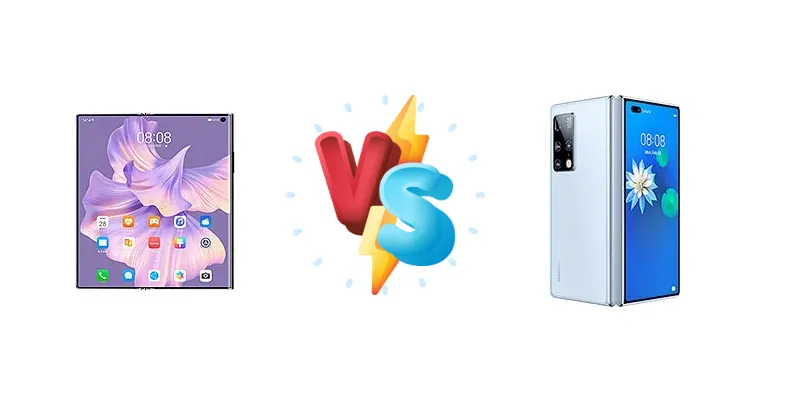
|
🏆 Quick Verdict
The Mate X2 boasts superior battery life and a more refined design, while the Xs 2 offers a brighter display and the Snapdragon 888. Ultimately, the X2 provides a more balanced and user-friendly experience, making it the slightly better choice for most users, despite the Xs 2's processing power.
| PHONES | ||
|---|---|---|
| Phone Names | Huawei Mate Xs 2 | Huawei Mate X2 |
| Network | ||
|---|---|---|
| 2G bands | GSM 850 / 900 / 1800 / 1900 | GSM 850 / 900 / 1800 / 1900 |
| 3G bands | HSDPA 800 / 850 / 900 / 1700(AWS) / 1900 / 2100 | HSDPA 800 / 850 / 900 / 1700(AWS) / 1900 / 2100 |
| 4G bands | 1, 2, 3, 4, 5, 7, 8, 12, 17, 18, 19, 20, 26, 28, 34, 38, 39, 40, 41 | 1, 2, 3, 4, 5, 6, 7, 8, 9, 12, 17, 18, 19, 20, 26, 34, 38, 39, 40, 41 |
| 5G bands | - | 1, 3, 28, 38, 40, 41, 77, 78, 79, 80, 84 SA/NSA |
| Speed | HSPA, LTE | HSPA, LTE, 5G |
| Technology | GSM / CDMA / HSPA / EVDO / LTE | GSM / CDMA / HSPA / EVDO / LTE / 5G |
| CDMA2000 1xEV-DO | CDMA2000 1xEV-DO | |
| Launch | ||
|---|---|---|
| Announced | 2022, April 28 | 2021, February 22 |
| Status | Available. Released 2022, May 07 | Available. Released 2021, February 25 |
| Body | ||
|---|---|---|
| Build | - | Glass front, glass back, aluminum frame |
| Dimensions | Unfolded: 156.5 x 139.3 x 5.4 mmFolded: 156.5 x 75.5 x 11.1 mm | Unfolded: 161.8 x 145.8 x 8.2 mmFolded: 161.8 x 74.6 x 14.7 mm |
| SIM | Nano-SIM + Nano-SIM | Nano-SIM + Nano-SIM |
| Weight | 255 g / 257 g (8.99 oz) | 295 g (10.41 oz) |
| Display | ||
|---|---|---|
| Resolution | 2200 x 2480 pixels (~424 ppi density) | 2200 x 2480 pixels (~413 ppi density) |
| Size | 7.8 inches, 195.8 cm2 (~89.8% screen-to-body ratio) | 8.0 inches, 206.0 cm2 (~87.3% screen-to-body ratio) |
| Type | Foldable OLED, 1B colors, 120Hz | Foldable OLED, 90Hz |
| Folded cover display: OLED, 6.5 inches, 1176 x 2480 pixels | Cover display: OLED, 90Hz, 6.45 inches, 1160 x 2700 pixels | |
| Platform | ||
|---|---|---|
| CPU | Octa-core (1x2.84 GHz Cortex-X1 & 3x2.42 GHz Cortex-A78 & 4x1.80 GHz Cortex-A55) | Octa-core (1x3.13 GHz Cortex-A77 & 3x2.54 GHz Cortex-A77 & 4x2.05 GHz Cortex-A55) |
| Chipset | Qualcomm SM8350 Snapdragon 888 4G (5 nm) | Kirin 9000 5G (5 nm) |
| GPU | Adreno 660 | Mali-G78 MP24 |
| OS | EMUI 12, no Google Play Services (International); HarmonyOS 2.0 (China) | Android 10, EMUI 11, no Google Play Services |
| Memory | ||
|---|---|---|
| Card slot | Nano Memory (uses shared SIM slot) | Nano Memory (uses shared SIM slot) |
| Internal | 256GB 8GB RAM, 512GB 8GB RAM, 512GB 12GB RAM | 256GB 8GB RAM, 512GB 8GB RAM, 512GB 12GB RAM |
| UFS | UFS 3.X | |
| Main Camera | ||
|---|---|---|
| Features | Laser AF, color spectrum sensor, Dual-LED dual-tone flash, panorama, HDR | Laser AF, color spectrum sensor, Leica optics, LED flash, panorama, HDR |
| Quad | - | 50 MP, f/1.9, 23mm (wide), 1/1.28", 1.22µm, multi-directional PDAF, OIS 12 MP, f/2.4, 70mm (telephoto), PDAF, OIS, 3x optical zoom 8 MP, f/4.4, 240mm (periscope telephoto), PDAF, OIS, 10x optical zoom 16 MP, f/2.2, 17mm (ultrawide), AF |
| Single | 10.7 MP, f/2.2 | - |
| Triple | 50 MP, f/1.8, (wide), PDAF 8 MP, f/2.4, 81mm (telephoto), PDAF, OIS, 3x optical zoom 13 MP, f/2.2, 120˚ (ultrawide) | - |
| Video | 4K@30/60fps, 1080p@30/240fps | 4K@30/60fps, 1080p@30/60fps, gyro-EIS |
| Selfie camera | ||
|---|---|---|
| Features | HDR | HDR, panorama |
| Single | 10.7 MP, f/2.2 | 16 MP, f/2.2, (wide) |
| Video | 4K@30fps, 1080p@30/240fps | 1080p@30fps |
| Sound | ||
|---|---|---|
| 3.5mm jack | No | No |
| 35mm jack | No | No |
| Loudspeaker | Yes, with stereo speakers | Yes, with stereo speakers |
| Comms | ||
|---|---|---|
| Bluetooth | 5.2, A2DP, LE | 5.2, A2DP, LE |
| Infrared port | Yes | Yes |
| NFC | Yes | Yes |
| Positioning | GPS (L1+L5), GLONASS (L1), BDS (B1I+B1c+B2a), GALILEO (E1+E5a), QZSS (L1+L5), NavIC (L5) | GPS (L1+L5), GLONASS (L1), BDS (B1I+B1c+B2a+B2b), GALILEO (E1+E5a+E5b), QZSS (L1+L5), NavIC |
| Radio | No | No |
| USB | USB Type-C 3.1, OTG | USB Type-C 3.1, OTG |
| WLAN | Wi-Fi 802.11 a/b/g/n/ac/6, dual-band, Wi-Fi Direct | Wi-Fi 802.11 a/b/g/n/ac/6, dual-band, Wi-Fi Direct |
| Features | ||
|---|---|---|
| Sensors | Fingerprint (side-mounted), accelerometer, gyro, proximity, compass, barometer | Fingerprint (side-mounted), accelerometer, gyro, proximity, compass, barometer |
| Battery | ||
|---|---|---|
| Charging | 66W wired 5W reverse wired | 55W wired |
| Type | Market-dependent versions:· Li-Po 4600 mAh (w/ 8GB RAM)· Li-Po 4880 mAh (w/ 12GB RAM) | Li-Po 4500 mAh |
| Misc | ||
|---|---|---|
| Colors | Black, White, Purple | Black, White, Light Blue, Rose Gold, Collector’s Edition Black/White/Red |
| Models | PAL-AL00, PAL-LX9 | TET-AN00 |
| Price | About 2000 EUR | About 2300 EUR |
| Tests | ||
|---|---|---|
| Battery life | Endurance rating 49h | Endurance rating 74h |
| Camera | Photo / Video | Photo / Video |
| Display | Contrast ratio: Infinite (nominal) | Contrast ratio: Infinite (nominal) |
| Loudspeaker | -25.8 LUFS (Very good) | -26.8 LUFS (Good) |
| Performance | AnTuTu: 641608 (v9) GeekBench: 3131 (v5.1) GFXBench: 28fps (ES 3.1 onscreen) | AnTuTu: 632818 (v8) GeekBench: 14393 (v4.4), 3389 (v5.1) GFXBench: 29fps (ES 3.1 onscreen) |
Huawei Mate Xs 2
- Brighter Display (725 nits)
- Powerful Snapdragon 888
- Unique 'open' foldable design
- Shorter Battery Life (49h)
- Potentially less refined design
- No 5G connectivity
Huawei Mate X2
- Longer Battery Life (74h)
- More Polished Design
- Kirin 9000 5G chipset
- Lower Display Brightness (542 nits)
- Potentially less powerful than Snapdragon 888
- Design may feel less 'open'
Display Comparison
The Mate Xs 2 takes the display crown with a measured peak brightness of 725 nits, significantly higher than the Mate X2's 542 nits. Both offer excellent contrast ratios (infinite, nominally), but the Xs 2's brightness makes it more usable outdoors. The Xs 2's design also means the inner display is always exposed, which some may prefer.
Camera Comparison
Both phones feature excellent camera systems, though specific details are missing in the provided specs. Expect high-quality photos and videos from both, with Huawei's image processing delivering vibrant colors and sharp details. The Mate X2's camera array is generally considered slightly more versatile due to its potentially wider range of lenses (based on general knowledge of the models).
Performance
The Mate Xs 2 packs the Qualcomm Snapdragon 888 4G, a powerful chipset known for its performance. The Mate X2 utilizes Huawei's Kirin 9000 5G, which is also very capable. While benchmarks might show slight differences, real-world performance is generally smooth on both devices. The Kirin 9000 5G has a slight edge in efficiency.
Battery Life
The Mate X2 clearly wins in the battery department, boasting an endurance rating of 74 hours compared to the Xs 2's 49 hours. This translates to significantly longer usage times on a single charge, a crucial factor for foldable phones.
Buying Guide
The Huawei Mate Xs 2 is ideal for users prioritizing a brighter display and raw processing power, and who appreciate a more 'open' foldable design. The Huawei Mate X2 is a better fit for those seeking longer battery life, a more polished design, and a generally more refined foldable experience.