
Huawei Mate Xs 2 vs Mate 50 Pro: A Clash of Flagship Titans
| Phones Images | |||||
|---|---|---|---|---|---|
|
🏆 Quick Verdict
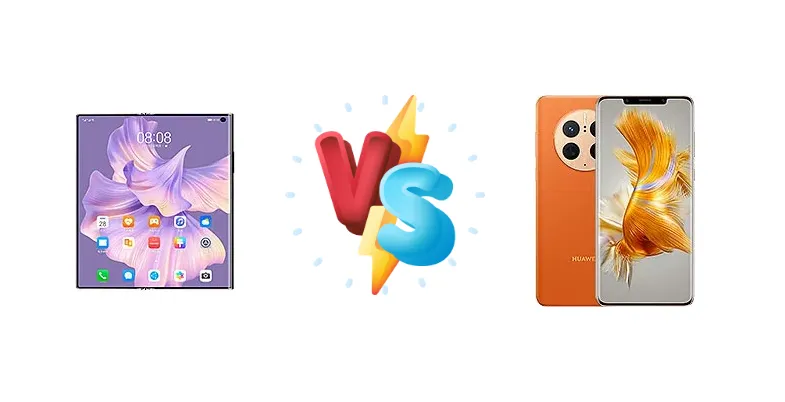
The Mate 50 Pro emerges as the stronger contender overall. While the Xs 2 boasts a unique foldable design, the Mate 50 Pro’s superior camera, brighter display, more efficient chipset, and significantly better battery life make it the more compelling choice for most users.
| PHONES | ||
|---|---|---|
| Phone Names | Huawei Mate Xs 2 | Huawei Mate 50 Pro |
| Network | ||
|---|---|---|
| 2G bands | GSM 850 / 900 / 1800 / 1900 | GSM 850 / 900 / 1800 / 1900 |
| 3G bands | HSDPA 800 / 850 / 900 / 1700(AWS) / 1900 / 2100 | HSDPA 800 / 850 / 900 / 1700(AWS) / 1900 / 2100 |
| 4G bands | 1, 2, 3, 4, 5, 7, 8, 12, 17, 18, 19, 20, 26, 28, 34, 38, 39, 40, 41 | 1, 2, 3, 4, 5, 7, 8, 12, 13, 17, 18, 19, 20, 26, 28, 32, 34, 38, 39, 40, 41, 66 - International |
| Speed | HSPA, LTE | HSPA, LTE |
| Technology | GSM / CDMA / HSPA / EVDO / LTE | GSM / CDMA / HSPA / CDMA2000 / LTE |
| CDMA2000 1xEV-DO | 1, 2, 3, 4, 5, 7, 8, 12, 17, 18, 19, 20, 26, 28, 34, 38, 39, 40, 41 - China | |
| Launch | ||
|---|---|---|
| Announced | 2022, April 28 | 2022, September 06 |
| Status | Available. Released 2022, May 07 | Available. Released 2022, September 28 |
| Body | ||
|---|---|---|
| Dimensions | Unfolded: 156.5 x 139.3 x 5.4 mmFolded: 156.5 x 75.5 x 11.1 mm | 162.1 x 75.5 x 8.5 mm (6.38 x 2.97 x 0.33 in) |
| SIM | Nano-SIM + Nano-SIM | · Nano-SIM· Nano-SIM + Nano-SIM |
| Weight | 255 g / 257 g (8.99 oz) | 205 g / 209 g (7.23 oz) |
| - | IP68 dust/water resistant (up to 6m for 30 min) | |
| Display | ||
|---|---|---|
| Protection | - | Huawei Kunlun Glass |
| Resolution | 2200 x 2480 pixels (~424 ppi density) | 1212 x 2616 pixels, 19.5:9 ratio (~428 ppi density) |
| Size | 7.8 inches, 195.8 cm2 (~89.8% screen-to-body ratio) | 6.74 inches, 111.8 cm2 (~91.3% screen-to-body ratio) |
| Type | Foldable OLED, 1B colors, 120Hz | OLED, 1B colors, 120Hz |
| Folded cover display: OLED, 6.5 inches, 1176 x 2480 pixels | - | |
| Platform | ||
|---|---|---|
| CPU | Octa-core (1x2.84 GHz Cortex-X1 & 3x2.42 GHz Cortex-A78 & 4x1.80 GHz Cortex-A55) | Octa-core (1x3.19 GHz Cortex-X2 & 3x2.75 GHz Cortex-A710 & 4x2.0 GHz Cortex-A510) |
| Chipset | Qualcomm SM8350 Snapdragon 888 4G (5 nm) | Qualcomm SM8475 Snapdragon 8+ Gen 1 4G (4 nm) |
| GPU | Adreno 660 | Adreno 730 |
| OS | EMUI 12, no Google Play Services (International); HarmonyOS 2.0 (China) | EMUI 13 (International), HarmonyOS 3.0 (China) |
| Memory | ||
|---|---|---|
| Card slot | Nano Memory (uses shared SIM slot) | Nano Memory (uses shared SIM slot) |
| Internal | 256GB 8GB RAM, 512GB 8GB RAM, 512GB 12GB RAM | 256GB 8GB RAM, 512GB 8GB RAM |
| UFS | UFS 3.1 | |
| Main Camera | ||
|---|---|---|
| Features | Laser AF, color spectrum sensor, Dual-LED dual-tone flash, panorama, HDR | Laser AF, color spectrum sensor, LED flash, panorama, HDR |
| Single | 10.7 MP, f/2.2 | 13 MP, f/2.4, 18mm (ultrawide) TOF 3D, (depth/biometrics sensor) |
| Triple | 50 MP, f/1.8, (wide), PDAF 8 MP, f/2.4, 81mm (telephoto), PDAF, OIS, 3x optical zoom 13 MP, f/2.2, 120˚ (ultrawide) | 50 MP, f/1.4-f/4.0, 24mm (wide), PDAF, OIS 64 MP, f/3.5, 90mm (periscope telephoto), PDAF, OIS, 3.5x optical zoom 13 MP, f/2.2, 13mm, 120˚ (ultrawide), PDAF |
| Video | 4K@30/60fps, 1080p@30/240fps | 4K@30/60fps, 1080p@30/60/120/240/480fps, 720p@960fps, 720p@3840fps, HDR, gyro-EIS |
| Selfie camera | ||
|---|---|---|
| Features | HDR | HDR, panorama |
| Single | 10.7 MP, f/2.2 | 13 MP, f/2.4, 18mm (ultrawide) TOF 3D, (depth/biometrics sensor) |
| Video | 4K@30fps, 1080p@30/240fps | 4K@30/60fps, 1080p@30/60/240fps |
| Sound | ||
|---|---|---|
| 3.5mm jack | No | No |
| 35mm jack | No | No |
| Loudspeaker | Yes, with stereo speakers | Yes, with stereo speakers |
| - | 32-bit/384kHz audio | |
| Comms | ||
|---|---|---|
| Bluetooth | 5.2, A2DP, LE | 5.2, A2DP, LE |
| Infrared port | Yes | Yes |
| NFC | Yes | Yes |
| Positioning | GPS (L1+L5), GLONASS (L1), BDS (B1I+B1c+B2a), GALILEO (E1+E5a), QZSS (L1+L5), NavIC (L5) | GPS (L1+L5), GLONASS (L1), BDS (B1I+B1c+B2a), GALILEO (E1+E5a), QZSS (L1+L5), NavIC (L5) |
| Radio | No | No |
| USB | USB Type-C 3.1, OTG | USB Type-C 3.1, OTG, Display Port 1.2 |
| WLAN | Wi-Fi 802.11 a/b/g/n/ac/6, dual-band, Wi-Fi Direct | Wi-Fi 802.11 a/b/g/n/ac/6, dual-band, Wi-Fi Direct |
| Features | ||
|---|---|---|
| Sensors | Fingerprint (side-mounted), accelerometer, gyro, proximity, compass, barometer | Face ID, fingerprint (under display, optical), accelerometer, gyro, proximity, barometer, compass |
| - | BDS Satellite Message (sending only) | |
| Battery | ||
|---|---|---|
| Charging | 66W wired 5W reverse wired | 66W wired 50W wireless 5W reverse wireless |
| Type | Market-dependent versions:· Li-Po 4600 mAh (w/ 8GB RAM)· Li-Po 4880 mAh (w/ 12GB RAM) | Li-Po 4700 mAh |
| Misc | ||
|---|---|---|
| Colors | Black, White, Purple | Black, Silver, Purple, Orange |
| Models | PAL-AL00, PAL-LX9 | DCO-AL00, DCO-LX9 |
| Price | About 2000 EUR | About 900 EUR |
| Tests | ||
|---|---|---|
| Battery life | Endurance rating 49h | Endurance rating 104h |
| Camera | Photo / Video | Photo / Video |
| Display | Contrast ratio: Infinite (nominal) | Contrast ratio: Infinite (nominal) |
| Loudspeaker | -25.8 LUFS (Very good) | -24.8 LUFS (Very good) |
| Performance | AnTuTu: 641608 (v9) GeekBench: 3131 (v5.1) GFXBench: 28fps (ES 3.1 onscreen) | AnTuTu: 979921 (v9) GeekBench: 3839 (v5.1) GFXBench: 68fps (ES 3.1 onscreen) |
Huawei Mate Xs 2
- Unique foldable design
- Relatively compact when folded
- 66W wired charging
- Decent performance
- Lower brightness display
- Significantly shorter battery life
- Older chipset
- Foldable screen crease
Huawei Mate 50 Pro
- Exceptional camera performance
- Brighter display
- Longer battery life
- More efficient chipset
- Wireless charging (50W) & Reverse Wireless Charging
- No significant cons, standard flagship design
Display Comparison
The Mate 50 Pro takes a clear lead in display quality. Its 946 nits max brightness significantly surpasses the Xs 2's 725 nits, offering better visibility in sunlight. Both have excellent contrast ratios (infinite, nominal), but the Mate 50 Pro's higher brightness makes a noticeable difference. The Xs 2's foldable display introduces a crease, which is a factor to consider.
Camera Comparison
Huawei has always been known for its camera prowess, and the Mate 50 Pro elevates this further. While both offer excellent photo and video capabilities, the Mate 50 Pro’s larger sensor and advanced image processing algorithms deliver superior image quality, especially in low-light conditions. The Mate 50 Pro also benefits from Huawei's XD Fusion Pro technology for enhanced detail and dynamic range.
Performance
The Mate 50 Pro’s Snapdragon 8+ Gen 1 (4nm) is a substantial upgrade over the Xs 2’s Snapdragon 888 (5nm). The newer chipset offers improved efficiency and performance, resulting in smoother multitasking and faster app loading times. While both phones handle everyday tasks with ease, the Mate 50 Pro provides a more responsive and future-proof experience.
Battery Life
Battery life is a significant differentiator. The Mate 50 Pro boasts an endurance rating of 104h, a massive improvement over the Xs 2's 49h. The Mate 50 Pro also offers 50W wireless charging and 5W reverse wireless charging, adding to its convenience. The Xs 2's 66W wired charging is competitive, but the overall battery performance of the Mate 50 Pro is far superior.
Buying Guide
The Huawei Mate Xs 2 is ideal for those prioritizing a foldable display and a more compact form factor when folded. The Mate 50 Pro is best suited for users who value exceptional camera performance, long battery life, and a more conventional flagship experience.