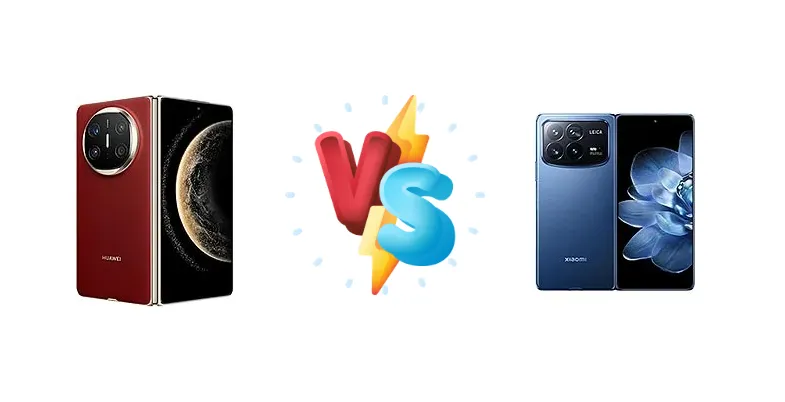
The foldable phone market is maturing, with Huawei and Xiaomi leading the charge. The Huawei Mate X6 represents a refinement of established foldable technology, prioritizing battery life and a proven ecosystem. Conversely, the Xiaomi Mix Fold 4 arrives with the latest Qualcomm silicon, aiming for peak performance. This comparison dissects these two titans to determine which foldable best suits your needs.
🏆 Quick Verdict
For the average user prioritizing all-day battery life and a mature software experience, the Huawei Mate X6 emerges as the winner. However, power users demanding the absolute fastest performance and latest chipset will find the Xiaomi Mix Fold 4 more appealing.
| Network |
|---|
| 2G bands | GSM 850 / 900 / 1800 / 1900 | GSM 850 / 900 / 1800 / 1900 |
| 3G bands | HSDPA 800 / 850 / 900 / 1700(AWS) / 1900 / 2100 | HSDPA 800 / 850 / 900 / 1700(AWS) / 1900 / 2100 |
| 4G bands | LTE | 1, 2, 3, 4, 5, 7, 8, 12, 17, 18, 19, 20, 26, 28, 34, 38, 39, 40, 41, 42, 48, 66 |
| 5G bands | SA/NSA | 1, 2, 3, 5, 7, 8, 12, 20, 26, 28, 38, 40, 41, 48, 66, 77, 78, 79 SA/NSA |
| Speed | HSPA, LTE, 5G | HSPA, LTE, 5G |
| Technology | GSM / CDMA / HSPA / EVDO / LTE / 5G | GSM / CDMA / HSPA / EVDO / LTE / 5G |
| Launch |
|---|
| Announced | 2024, November 26 | 2024, July 19 |
| Status | Available. Released 2024, November 26 | Available. Released 2024, July 19 |
| Body |
|---|
| Build | Glass front, nylon fiber or silicone polymer back (eco leather), aluminum frame | Glass front (folded), plastic front (unfolded), aluminum frame |
| Dimensions | Unfolded: 156.6 x 144.1 x 4.6 mmFolded: 156.6 x 73.8 x 9.9 mm | Unfolded: 159.4 x 143.3 x 4.6 mm Folded: 159.4 x 73.1 x 9.5 mm |
| SIM | Nano-SIM + Nano-SIM | Nano-SIM + Nano-SIM |
| Weight | 239 g (8.43 oz) | 226 g or 228 g (7.97 oz) |
| Display |
|---|
| Resolution | 2240 x 2440 pixels (~418 ppi density) | 2224 x 2488 pixels (~418 ppi density) |
| Size | 7.93 inches, 202.1 cm2 (~91.5% screen-to-body ratio) | 7.98 inches, 204.1 cm2 (~89.4% screen-to-body ratio) |
| Type | Foldable LTPO OLED, 1B colors, 120Hz, HDR Vivid, 1800 nits (peak) | Foldable LTPO AMOLED, 1B colors, 120Hz, HDR10+, Dolby Vision, 1700 nits (HBM), 3000 nits (peak) |
| Platform |
|---|
| CPU | Octa-core (1x2.5 GHz & 3x2.15 GHz & 4x1.53GHz) | Octa-core (1x3.3 GHz Cortex-X4 & 3x3.2 GHz Cortex-A720 & 2x3.0 GHz Cortex-A720 & 2x2.3 GHz Cortex-A520) |
| Chipset | Kirin 9020 (7 nm) | Qualcomm SM8650-AB Snapdragon 8 Gen 3 (4 nm) |
| GPU | Maleoon 920 | Adreno 750 |
| OS | EMUI 15 (International), HarmonyOS 4.3 (China) | Android 14, HyperOS |
| Memory |
|---|
| Card slot | No | No |
| Internal | 256GB 12GB RAM, 512GB 12GB RAM, 512GB 16GB RAM, 1TB 16GB RAM | 256GB 12GB RAM, 512GB 16GB RAM, 1TB 16GB RAM |
| Main Camera |
|---|
| Features | Laser AF, color spectrum sensor, LED flash, panorama, HDR | Laser AF, color spectrum sensor, LED flash, HDR, panorama, Leica lenses |
| Quad | - | 50 MP, f/1.7, 23mm (wide), 1/1.49", 1.0µm, PDAF, OIS
50 MP, f/2.0, 47mm (telephoto), PDAF (9cm - ∞), OIS, 2x optical zoom
10 MP, f/2.9, 115mm (periscope telephoto), PDAF (30cm - ∞), OIS, 5x optical zoom
12 MP, f/2.2, 15mm, 120˚ (ultrawide) |
| Triple | 50 MP, f/1.4-f/4.0, 24mm (wide), PDAF, OIS
48 MP, f/3.0, 90mm (periscope telephoto), PDAF, OIS, 4x optical zoom
40 MP, f/2.2, 13mm, 120˚ (ultrawide), PDAF | - |
| Video | 4K, 1080p, HDR, gyro-EIS, OIS, HDR Vivid | 8K@24fps, 4K@24/30/60fps, 1080p@30/60/120/240/960fps, 720p@1920fps, Dolby Vision HDR |
| Selfie camera |
|---|
| Features | HDR, panorama | Dolby Vision HDR |
| Single | 8 MP, f/2.2, (wide)
Cover camera:
8 MP, f/2.4, (wide) | 16 MP, (wide)
Cover camera:
16 MP, (wide) |
| Video | 4K, 1080p | 1080p@30/60fps |
| Sound |
|---|
| 35mm jack | No | No |
| Loudspeaker | Yes, with stereo speakers | Yes, with stereo speakers |
| Comms |
|---|
| Bluetooth | 5.2, A2DP, LE, L2HC | 5.4, A2DP, LE, aptX HD, aptX Adaptive, LHDC |
| Infrared port | Yes | Yes |
| NFC | Yes | Yes |
| Positioning | GPS (L1+L5), GLONASS (L1), BDS (B1I+B1c+B2a+B2b), GALILEO (E1+E5a+E5b), QZSS (L1+L5), NavIC | GPS (L1+L5), BDS (B1I+B1c+B2a), GALILEO (E1+E5a), QZSS (L1+L5), NavIC (L5), GLONASS |
| Radio | No | No |
| USB | USB Type-C 3.1, OTG, DisplayPort 1.2 | USB Type-C 3.2, OTG |
| WLAN | Wi-Fi 802.11 a/b/g/n/ac/6, dual-band, Wi-Fi Direct | Wi-Fi 802.11 a/b/g/n/ac/6e/7, dual-band (tri-band after future SW update), Wi-Fi Direct |
| Features |
|---|
| Sensors | Fingerprint (side-mounted), accelerometer, gyro, proximity, compass, barometer | Fingerprint (side-mounted), accelerometer, gyro, proximity, compass, barometer |
| Battery |
|---|
| Charging | 66W wired
50W wireless
7.5W reverse wireless
5W reverse wired | 67W wired, PD3.0, QC4, 31% in 10 min
50W wireless, 24% in 10 min |
| Type | Si/C Li-Ion 5110 or 5200 mAh | 5100 mAh |
| Misc |
|---|
| Colors | Black, White, Gray, Blue, Red | Black, White, Blue |
| Models | ICL-AL10, ICL-LX9 | - |
| Price | About 2000 EUR | About 1140 EUR |
Huawei Mate X6
- Exceptional battery life (8:56h active use)
- Mature foldable design and software
- High display brightness (1173 nits)
- Older Kirin 9020 chipset
- Potentially slower app loading times
Xiaomi Mix Fold 4
- Latest Snapdragon 8 Gen 3 chipset
- Faster charging speeds (67W wired, 50W wireless)
- Superior processing power for demanding tasks
- Battery life likely shorter than Mate X6
- Software experience may be less refined
Display Comparison
The Huawei Mate X6 boasts a measured peak brightness of 1173 nits, ensuring excellent visibility even in direct sunlight. While the Mix Fold 4’s display specs aren’t provided, Xiaomi typically employs high-quality panels. The Mate X6’s longevity in the market suggests a well-tuned display with accurate color calibration. The absence of LTPO information for either device makes it difficult to assess power efficiency gains from variable refresh rates, but the Mate X6’s focus on battery life implies optimization in this area. The foldable form factor inherently introduces a crease; user reports will be crucial in determining which device minimizes this visual distraction.
Camera Comparison
Without detailed camera specifications for either device, a direct comparison is limited. However, given Huawei’s historical strength in mobile photography, the Mate X6 likely prioritizes image processing and computational photography. The Mix Fold 4, leveraging Qualcomm’s ISP, will focus on speed and real-time processing. The absence of sensor size information is critical; larger sensors generally capture more light and detail. The focus should be on real-world image samples to assess dynamic range, color accuracy, and low-light performance. We can assume both devices will offer a versatile camera system, but the execution will likely differ based on each brand’s philosophy.
Performance
The Xiaomi Mix Fold 4’s Qualcomm Snapdragon 8 Gen 3 (4nm) represents a significant leap in performance and efficiency over the Huawei Mate X6’s Kirin 9020 (7nm). The Snapdragon 8 Gen 3’s Cortex-X4 prime core, clocked at 3.3 GHz, offers substantially higher single-core performance, crucial for responsive UI and app loading. The Kirin 9020’s octa-core configuration, while capable, is architecturally older and less efficient. This translates to the Mix Fold 4 handling graphically intensive games and demanding applications with greater ease and potentially less thermal throttling. The 4nm process node of the Snapdragon also contributes to improved power efficiency, though the Mate X6’s larger battery may offset some of this advantage.
Battery Life
The Huawei Mate X6 delivers an impressive 8:56h of active use, showcasing its battery optimization prowess. The Xiaomi Mix Fold 4’s battery capacity is unknown, but its Snapdragon 8 Gen 3 chipset, while powerful, is more demanding. The Mix Fold 4 compensates with faster charging: 67W wired (with 31% charge in 10 minutes) and 50W wireless (24% in 10 minutes) compared to the Mate X6’s 66W wired, 50W wireless, and slower reverse wireless/wired options. The Mate X6’s longer runtime suggests superior power management, while the Mix Fold 4 prioritizes quick top-ups. The choice depends on whether you prefer extended usage or rapid charging.
Buying Guide
Buy the Huawei Mate X6 if you need exceptional battery endurance for extended productivity or media consumption, and value a refined, established foldable experience. Buy the Xiaomi Mix Fold 4 if you prioritize raw processing power for demanding tasks like gaming or video editing, and want the latest Snapdragon technology.
Frequently Asked Questions
❓ Does the Kirin 9020 chipset in the Mate X6 struggle with demanding games like Genshin Impact?
While the Kirin 9020 is a capable chipset, it will likely exhibit more frame drops and potentially thermal throttling in graphically intensive games like Genshin Impact compared to the Snapdragon 8 Gen 3 in the Mix Fold 4. Lowering graphics settings is recommended for a smoother experience.
❓ How does the 67W charging on the Mix Fold 4 compare to the 66W charging on the Mate X6 in real-world usage?
The Mix Fold 4’s 67W charging, coupled with its reported 31% charge in 10 minutes, suggests a slightly faster charging curve than the Mate X6’s 66W. This means quicker top-ups when you’re short on time, though the Mate X6’s overall battery life may reduce the need for frequent charging.
❓ Is the lack of detailed camera specs a concern when choosing between these two foldables?
Yes, it is. Camera performance is a key differentiator for smartphones. Without knowing sensor sizes, apertures, and image processing algorithms, it's difficult to assess which device will deliver superior image quality. Relying on independent reviews and sample photos is crucial.