
Huawei Mate 70 vs Samsung Galaxy S24 Ultra: A Head-to-Head Comparison of Flagship Power
| Phones Images | |||||
|---|---|---|---|---|---|
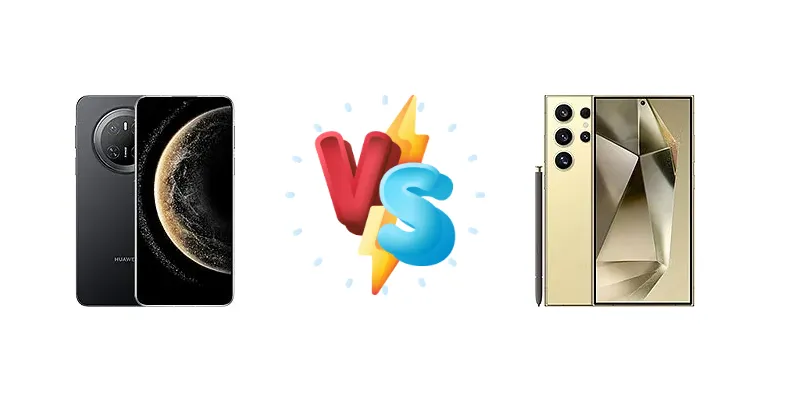
|
🏆 Quick Verdict
For the average user prioritizing consistent performance, a robust software experience, and exceptional display quality, the Samsung Galaxy S24 Ultra is the clear winner. While the Huawei Mate 70 offers impressive charging speeds and a unique design, the Snapdragon 8 Gen 3’s efficiency and the S24 Ultra’s superior battery life provide a more polished and reliable daily experience.
| PHONES | ||
|---|---|---|
| Phone Names | Huawei Mate 70 | Samsung Galaxy S24 Ultra |
| Network | ||
|---|---|---|
| 2G bands | GSM 850 / 900 / 1800 / 1900 | GSM 850 / 900 / 1800 / 1900 |
| 3G bands | HSDPA 800 / 850 / 900 / 1700(AWS) / 1900 / 2100 | HSDPA 850 / 900 / 1700(AWS) / 1900 / 2100 |
| 4G bands | LTE | 1, 2, 3, 4, 5, 7, 8, 12, 13, 17, 18, 19, 20, 25, 26, 28, 32, 38, 39, 40, 41, 66 - International |
| 5G bands | SA/NSA | 1, 2, 3, 5, 7, 8, 12, 20, 25, 26, 28, 38, 40, 41, 66, 75, 77, 78 SA/NSA/Sub6 - International |
| Speed | HSPA, LTE, 5G | HSPA, LTE (up to 7CA), 5G |
| Technology | GSM / CDMA / HSPA / CDMA2000 / LTE / 5G | GSM / CDMA / HSPA / EVDO / LTE / 5G |
| Launch | ||
|---|---|---|
| Announced | 2024, November 26 | 2024, January 17 |
| Status | Available. Released 2024, November 26 | Available. Released 2024, January 24 |
| Body | ||
|---|---|---|
| Build | Glass front, aluminum alloy frame | Glass front (Corning Gorilla Armor), glass back (Corning Gorilla Armor), titanium frame (grade 2) |
| Dimensions | 160.9 x 75.9 x 7.8 mm (6.33 x 2.99 x 0.31 in) | 162.3 x 79 x 8.6 mm (6.39 x 3.11 x 0.34 in) |
| SIM | Nano-SIM + Nano-SIM | · Nano-SIM + Nano-SIM + eSIM + eSIM (max 2 at a time) - INT· Nano-SIM + eSIM + eSIM (max 2 at a time) - USA· Nano-SIM + Nano-SIM - CN |
| Weight | 203 g (7.16 oz) | 232 g or 233 g (8.18 oz) |
| Display | ||
|---|---|---|
| Protection | Huawei Kunlun Glass 2 | Corning Gorilla Armor |
| Resolution | 1216 x 2688 pixels (~440 ppi density) | 1440 x 3120 pixels, 19.5:9 ratio (~505 ppi density) |
| Size | 6.7 inches, 108.8 cm2 (~89.1% screen-to-body ratio) | 6.8 inches, 113.5 cm2 (~88.5% screen-to-body ratio) |
| Type | LTPO OLED, 1B colors, 120Hz, 2500 nits (peak) | Dynamic LTPO AMOLED 2X, 120Hz, HDR10+, 2600 nits (peak) |
| Platform | ||
|---|---|---|
| CPU | Octa-core (1x2.5 GHz & 3x2.15 GHz & 4x1.6 GHz) | 8-core (1x3.39GHz Cortex-X4 & 3x3.1GHz Cortex-A720 & 2x2.9GHz Cortex-A720 & 2x2.2GHz Cortex-A520) |
| Chipset | Kirin 9020 (7 nm) | Qualcomm SM8650-AC Snapdragon 8 Gen 3 (4 nm) |
| GPU | Maleoon 920 | Adreno 750 (1 GHz) |
| OS | HarmonyOS 4.3 | Android 14, up to 7 major Android upgrades, One UI 8.0 |
| Memory | ||
|---|---|---|
| Card slot | No | No |
| Internal | 256GB 12GB RAM, 512GB 12GB RAM, 1TB 12GB RAM | 256GB 12GB RAM, 512GB 12GB RAM, 1TB 12GB RAM |
| Main Camera | ||
|---|---|---|
| Features | Laser AF, color spectrum sensor, LED flash, panorama, HDR | Laser AF, LED flash, auto-HDR, panorama |
| Quad | - | 200 MP, f/1.7, 24mm (wide), 1/1.3", 0.6µm, multi-directional PDAF, OIS 10 MP, f/2.4, 67mm (telephoto), 1/3.52", 1.12µm, PDAF, OIS, 3x optical zoom 50 MP, f/3.4, 111mm (periscope telephoto), 1/2.52", 0.7µm, PDAF, OIS, 5x optical zoom 12 MP, f/2.2, 13mm, 120˚ (ultrawide), 1/2.55", 1.4µm, dual pixel PDAF, Super Steady video |
| Triple | 50 MP, f/1.4-f/4.0, 24mm (wide), PDAF, OIS 12 MP, f/3.4, 125mm (periscope telephoto), PDAF, OIS, 5x optical zoom 40 MP, f/2.2, 13mm, 120˚ (ultrawide), PDAF | - |
| Video | 4K, 1080p, HDR, gyro-EIS, OIS | 8K@24/30fps, 4K@30/60/120fps, 1080p@30/60/120/240fps, HDR10+, stereo sound rec., gyro-EIS |
| Selfie camera | ||
|---|---|---|
| Features | HDR, panorama | HDR, HDR10+ |
| Single | 13 MP, f/2.4, 18mm (ultrawide) | 12 MP, f/2.2, 26mm (wide), 1/3.2", 1.12µm, dual pixel PDAF |
| Video | 4K, 1080p | 4K@30/60fps, 1080p@30fps |
| Sound | ||
|---|---|---|
| 35mm jack | No | No |
| Loudspeaker | Yes, with stereo speakers | Yes, with stereo speakers |
| Comms | ||
|---|---|---|
| Bluetooth | 5.2, A2DP, LE, L2HC | 5.3, A2DP, LE |
| Infrared port | Yes | - |
| NFC | Yes | Yes |
| Positioning | GPS (L1+L5), GLONASS (L1), BDS (B1I+B1c+B2a+B2b), GALILEO (E1+E5a+E5b), QZSS (L1+L5), NavIC | GPS, GLONASS, BDS, GALILEO, QZSS |
| Radio | No | No |
| USB | USB Type-C 3.1, OTG, DisplayPort 1.2 | USB Type-C 3.2, DisplayPort 1.2, OTG |
| WLAN | Wi-Fi 802.11 a/b/g/n/ac/6/7, dual-band, Wi-Fi Direct | Wi-Fi 802.11 a/b/g/n/ac/6e/7, tri-band, Wi-Fi Direct |
| Features | ||
|---|---|---|
| Sensors | Fingerprint (side-mounted), accelerometer, gyro, proximity, compass | Fingerprint (under display, ultrasonic), accelerometer, gyro, proximity, compass, barometer |
| Battery | ||
|---|---|---|
| Charging | 66W wired 50W wireless 7.5W reverse wireless 5W reverse wired | 45W wired, PD3.0, 65% in 30 min 15W wireless (Qi) 4.5W reverse wireless |
| Type | 5300 mAh | Li-Ion 5000 mAh |
| Misc | ||
|---|---|---|
| Colors | Black, Purple, White, Green | Titanium Black, Titanium Gray, Titanium Violet, Titanium Yellow, Titanium Blue, Titanium Green, Titanium Orange |
| Models | CLS-AL00 | SM-S928B, SM-S928B/DS, SM-S928U, SM-S928U1, SM-S928W, SM-S928N, SM-S9280, SM-S928E, SM-S928E/DS |
| Price | About 720 EUR | $ 514.94 / C$ 929.99 / £ 630.00 / € 658.53 / ₹ 84,999 |
| SAR | - | 1.26 W/kg (head) 0.62 W/kg (body) |
| SAR EU | - | 1.06 W/kg (head) 1.30 W/kg (body) |
Huawei Mate 70
- Extremely fast 66W wired charging
- 50W wireless charging is significantly faster than S24 Ultra
- Potentially unique software features and design
- Kirin 9020 chipset may not match Snapdragon 8 Gen 3 performance
- Software ecosystem may be less mature than Samsung's
Samsung Galaxy S24 Ultra
- Superior performance with Snapdragon 8 Gen 3 (4nm)
- Exceptional display brightness (1447 nits)
- Long-lasting battery life (13:49h active use)
- Slower wired charging speed (45W) compared to Mate 70
- Wireless charging speed (15W) is slower than Mate 70
Display Comparison
The Samsung Galaxy S24 Ultra boasts a significantly brighter display, reaching a measured 1447 nits, ensuring excellent visibility even in direct sunlight. While the Mate 70’s display specs are not provided, Huawei typically employs OLED panels, but likely lacks the S24 Ultra’s peak brightness. The S24 Ultra’s adaptive refresh rate, likely utilizing LTPO technology, contributes to power efficiency, while the S24 Ultra’s display is known for its color accuracy. The S24 Ultra’s display is a clear advantage for outdoor use and media consumption.
Camera Comparison
Without detailed camera specifications for the Mate 70, a direct comparison is challenging. However, the S24 Ultra is expected to feature a sophisticated camera system with advanced image processing capabilities. The S24 Ultra’s larger sensor size and wider apertures will likely result in superior low-light performance and dynamic range. The S24 Ultra’s video recording capabilities are also expected to be best-in-class, with support for high-resolution recording and advanced stabilization. The S24 Ultra’s camera system is geared towards both casual users and professional photographers.
Performance
The Snapdragon 8 Gen 3 (4nm) in the S24 Ultra offers a substantial architectural advantage over the Kirin 9020 (7nm). The 4nm process node translates to improved thermal efficiency and power management, allowing the S24 Ultra to sustain peak performance for longer periods. The Snapdragon’s Cortex-X4 prime core, clocked at 3.39GHz, is expected to outperform the Kirin 9020’s 2.5GHz core in single-core tasks. The S24 Ultra’s LPDDR5x RAM further enhances performance, providing faster data access. While the Kirin 9020 is a capable chip, the Snapdragon 8 Gen 3 provides a more future-proof and consistently powerful experience.
Battery Life
The Samsung Galaxy S24 Ultra’s battery life is a standout feature, achieving an impressive 13 hours and 49 minutes of active use. While the Mate 70 offers faster charging speeds – 66W wired and 50W wireless – the S24 Ultra’s superior battery efficiency and larger capacity (implied by the long active use time) provide a more reliable all-day experience. The Mate 70’s 66W wired charging can replenish the battery quickly, but the S24 Ultra’s 45W charging, combined with its longer battery life, offers a more balanced solution. The Mate 70 also offers reverse wireless and wired charging, but at lower wattages (7.5W and 5W respectively) than the S24 Ultra’s 15W wireless and 4.5W wired.
Buying Guide
Buy the Huawei Mate 70 if you prioritize extremely fast charging (66W wired, 50W wireless) and are comfortable with a potentially less-refined software experience. It’s a compelling option for users seeking a premium device outside the typical Google/Samsung ecosystem. Buy the Samsung Galaxy S24 Ultra if you demand the best possible performance, a class-leading display with 1447 nits of peak brightness, and a long-lasting battery that delivers nearly 14 hours of active use. It’s the ideal choice for power users, content creators, and those deeply integrated into the Samsung ecosystem.