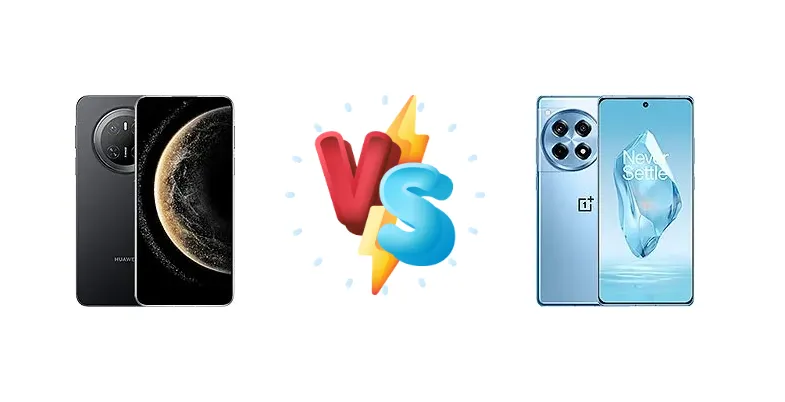
The Huawei Mate 70 and OnePlus 12R represent distinct approaches to the modern smartphone. The Mate 70, powered by Huawei’s Kirin 9020, aims to deliver a premium experience despite ongoing geopolitical constraints. The OnePlus 12R, leveraging the proven Qualcomm Snapdragon 8 Gen 2, focuses on delivering flagship performance at a more accessible price point. This comparison dissects their key differences to help you choose the right device.
🏆 Quick Verdict
For most users, the OnePlus 12R emerges as the stronger choice. Its Snapdragon 8 Gen 2 chipset offers demonstrably superior performance and thermal efficiency, coupled with incredibly fast 100W charging and a bright, vibrant display. While the Mate 70 offers a unique software experience, the 12R provides a more well-rounded package.
| Network |
|---|
| 2G bands | GSM 850 / 900 / 1800 / 1900 | GSM 850 / 900 / 1800 / 1900 |
| 3G bands | HSDPA 800 / 850 / 900 / 1700(AWS) / 1900 / 2100 | HSDPA 850 / 900 / 1700(AWS) / 1900 / 2100 |
| 4G bands | LTE | 1, 2, 3, 4, 5, 7, 8, 12, 17, 18, 19, 20, 26, 28, 32, 38, 39, 40, 41, 66 |
| 5G bands | SA/NSA | 1, 2, 3, 5, 7, 8, 12, 20, 28, 38, 40, 41, 66, 77, 78 SA/NSA |
| Speed | HSPA, LTE, 5G | HSPA, LTE, 5G |
| Technology | GSM / CDMA / HSPA / CDMA2000 / LTE / 5G | GSM / CDMA / HSPA / LTE / 5G |
| Launch |
|---|
| Announced | 2024, November 26 | 2024, January 23 |
| Status | Available. Released 2024, November 26 | Available. Released 2024, February 06 |
| Body |
|---|
| Build | Glass front, aluminum alloy frame | Glass front (Gorilla Glass Victus 2), aluminum frame, glass back |
| Dimensions | 160.9 x 75.9 x 7.8 mm (6.33 x 2.99 x 0.31 in) | 163.3 x 75.3 x 8.8 mm (6.43 x 2.96 x 0.35 in) |
| SIM | Nano-SIM + Nano-SIM | · Nano-SIM + Nano-SIM + eSIM (max 2 at a time)· Nano-SIM + Nano-SIM |
| Weight | 203 g (7.16 oz) | 207 g (7.30 oz) |
| Display |
|---|
| Protection | Huawei Kunlun Glass 2 | Corning Gorilla Glass Victus 2 |
| Resolution | 1216 x 2688 pixels (~440 ppi density) | 1264 x 2780 pixels (~450 ppi density) |
| Size | 6.7 inches, 108.8 cm2 (~89.1% screen-to-body ratio) | 6.78 inches, 111.7 cm2 (~90.9% screen-to-body ratio) |
| Type | LTPO OLED, 1B colors, 120Hz, 2500 nits (peak) | LTPO4 AMOLED, 1B colors, 120Hz, HDR10+, Dolby Vision, 1600 nits (HBM), 4500 nits (peak) |
| Platform |
|---|
| CPU | Octa-core (1x2.5 GHz & 3x2.15 GHz & 4x1.6 GHz) | Octa-core (1x3.2 GHz Cortex-X3 & 2x2.8 GHz Cortex-A715 & 2x2.8 GHz Cortex-A710 & 3x2.0 GHz Cortex-A510) |
| Chipset | Kirin 9020 (7 nm) | Qualcomm SM8550-AB Snapdragon 8 Gen 2 (4 nm) |
| GPU | Maleoon 920 | Adreno 740 |
| OS | HarmonyOS 4.3 | Android 14, up to 3 major Android upgrades, OxygenOS 15 |
| Memory |
|---|
| Card slot | No | No |
| Internal | 256GB 12GB RAM, 512GB 12GB RAM, 1TB 12GB RAM | 128GB 8GB RAM, 256GB 8GB RAM, 256GB 12GB RAM, 256GB 16GB RAM |
| Main Camera |
|---|
| Features | Laser AF, color spectrum sensor, LED flash, panorama, HDR | Laser AF, color spectrum sensor, LED flash, HDR, panorama |
| Triple | 50 MP, f/1.4-f/4.0, 24mm (wide), PDAF, OIS
12 MP, f/3.4, 125mm (periscope telephoto), PDAF, OIS, 5x optical zoom
40 MP, f/2.2, 13mm, 120˚ (ultrawide), PDAF | 50 MP, f/1.8, 24mm (wide), 1/1.56", 1.0µm, multi-directional PDAF, OIS
8 MP, f/2.2, 16mm, 112˚ (ultrawide), 1/4.0", 1.12µm
2 MP (macro) |
| Video | 4K, 1080p, HDR, gyro-EIS, OIS | 4K@30/60fps, 1080p@30/60/120/240fps, gyro-EIS, OIS |
| Selfie camera |
|---|
| Features | HDR, panorama | HDR, panorama |
| Single | 13 MP, f/2.4, 18mm (ultrawide) | 16 MP, f/2.4, 26mm (wide), 1/3", 1.0µm |
| Video | 4K, 1080p | 1080p@30fps, gyro-EIS |
| Sound |
|---|
| 35mm jack | No | No |
| Loudspeaker | Yes, with stereo speakers | Yes, with stereo speakers |
| Comms |
|---|
| Bluetooth | 5.2, A2DP, LE, L2HC | 5.3, A2DP, LE, aptX HD |
| Infrared port | Yes | Yes |
| NFC | Yes | Yes |
| Positioning | GPS (L1+L5), GLONASS (L1), BDS (B1I+B1c+B2a+B2b), GALILEO (E1+E5a+E5b), QZSS (L1+L5), NavIC | GPS, GALILEO, GLONASS, BDS, QZSS |
| Radio | No | No |
| USB | USB Type-C 3.1, OTG, DisplayPort 1.2 | USB Type-C 2.0 |
| WLAN | Wi-Fi 802.11 a/b/g/n/ac/6/7, dual-band, Wi-Fi Direct | Wi-Fi 802.11 a/b/g/n/ac/6/7, dual-band |
| Features |
|---|
| Sensors | Fingerprint (side-mounted), accelerometer, gyro, proximity, compass | Fingerprint (under display, optical), accelerometer, gyro, proximity, compass |
| Battery |
|---|
| Charging | 66W wired
50W wireless
7.5W reverse wireless
5W reverse wired | 100W wired, 100% in 26 min |
| Type | 5300 mAh | Li-Ion 5500 mAh |
| Misc |
|---|
| Colors | Black, Purple, White, Green | Iron Gray, Cool Blue, Electric Violet, Sunset Dune |
| Models | CLS-AL00 | CPH2609, CPH2585, CPH2611 |
| Price | About 720 EUR | € 410.84 / $ 399.95 / £ 649.00 |
| SAR | - | 1.19 W/kg (head) 0.82 W/kg (body) |
Huawei Mate 70
- Potential for unique software features and ecosystem.
- Fast wireless charging options (50W).
- Reverse wireless charging capability.
- Chipset built on a less efficient 7nm process.
- Potential app compatibility issues due to geopolitical factors.
- Limited information available on camera specifications.
OnePlus 12R
- Snapdragon 8 Gen 2 offers superior performance and efficiency.
- Incredibly fast 100W wired charging.
- Bright and vibrant display (1181 nits).
- May lack the unique software features of the Mate 70.
- Wireless charging is not as fast as the Mate 70's.
- Image processing may not match Huawei's flagship quality.
Display Comparison
The OnePlus 12R boasts a significantly brighter display, reaching a measured 1181 nits, compared to an unstated peak brightness for the Mate 70. This translates to better visibility under direct sunlight. While the Mate 70’s panel technology isn’t specified, the 12R’s brightness advantage is a clear win for outdoor users. Both are likely to utilize AMOLED panels, but the 12R’s higher peak brightness is a tangible benefit.
Camera Comparison
Without detailed camera specifications for the Mate 70, a direct comparison is difficult. However, given Huawei’s historical strength in mobile photography, it’s reasonable to expect a competitive camera system. The OnePlus 12R’s camera performance is solid, but it doesn’t typically compete with Huawei’s flagship-level image processing. The absence of detailed sensor information for the Mate 70 necessitates caution, but Huawei’s brand reputation suggests a strong contender in this area. We'll assume both phones have capable main sensors, but the image processing algorithms will likely differ significantly.
Performance
The core difference lies in the chipsets. The OnePlus 12R’s Snapdragon 8 Gen 2 (4nm) is built on a more advanced process node than the Huawei Mate 70’s Kirin 9020 (7nm). This 4nm process provides superior power efficiency and thermal management, meaning the 12R is less likely to throttle under sustained load. The Snapdragon 8 Gen 2’s CPU configuration – 1x3.2 GHz Cortex-X3, 2x2.8 GHz Cortex-A715, 2x2.8 GHz Cortex-A710, and 3x2.0 GHz Cortex-A510 – is also architecturally more modern and efficient than the Kirin 9020’s octa-core setup. Gamers and power users will overwhelmingly benefit from the 12R’s superior processing power.
Battery Life
The OnePlus 12R shines in charging speed, offering 100W wired charging capable of a full charge in just 26 minutes. The Mate 70 offers 66W wired charging, 50W wireless, and even reverse wireless charging (7.5W and 5W options), but it can’t match the 12R’s sheer speed. The 12R also boasts an impressive 14:32h active use score, indicating excellent battery life. While the Mate 70’s battery capacity isn’t specified, the 12R’s combination of capacity and fast charging provides a significant advantage for users who prioritize minimizing downtime.
Buying Guide
Buy the Huawei Mate 70 if you prioritize a unique software ecosystem and are comfortable with potential limitations in app availability due to the ongoing restrictions. Buy the OnePlus 12R if you demand raw performance for gaming and demanding tasks, coupled with exceptionally fast charging and a consistently reliable Android experience.
Frequently Asked Questions
❓ Does the Kirin 9020 in the Mate 70 suffer from significant thermal throttling during extended gaming sessions?
Given the 7nm process node and the Snapdragon 8 Gen 2’s superior thermal efficiency, the Kirin 9020 is more likely to experience throttling under sustained heavy load, potentially impacting frame rates and performance over longer gaming sessions. The 12R’s 4nm Snapdragon 8 Gen 2 is designed to maintain higher performance for longer periods.
❓ How does the lack of full Google Mobile Services (GMS) on the Huawei Mate 70 impact app availability and usability?
The Mate 70 relies on Huawei Mobile Services (HMS) and the AppGallery. While many popular apps are available, some may require sideloading or may not function optimally. This can be a significant inconvenience for users heavily reliant on Google apps like Gmail, Google Maps, and YouTube. The OnePlus 12R, with full GMS support, offers seamless access to the entire Google ecosystem.
❓ Is the 100W charging on the OnePlus 12R safe for long-term battery health?
OnePlus employs charging algorithms designed to protect battery health even with 100W SuperVOOC charging. The system dynamically adjusts charging speed as the battery fills, minimizing heat and degradation. While all fast charging technologies have a potential impact on long-term battery health, OnePlus’s implementation is generally considered safe and reliable.