
Huawei Mate 70 vs Honor Magic6 Pro: Which Flagship Reigns Supreme?
| Phones Images | |||||
|---|---|---|---|---|---|
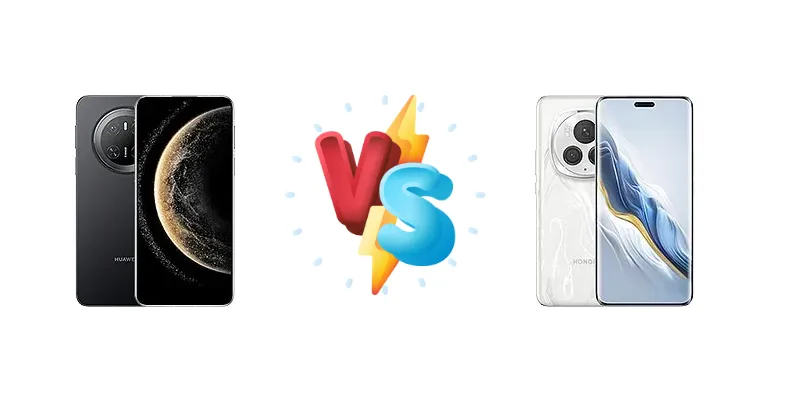
|
🏆 Quick Verdict
For the average user prioritizing raw performance and future-proofing, the Honor Magic6 Pro is the clear winner. Its Snapdragon 8 Gen 3 chipset delivers superior processing power and efficiency. However, the Mate 70’s competitive charging speeds and potentially unique software features (not detailed in provided data) may appeal to loyal Huawei users.
| PHONES | ||
|---|---|---|
| Phone Names | Huawei Mate 70 | Honor Magic6 Pro |
| Network | ||
|---|---|---|
| 2G bands | GSM 850 / 900 / 1800 / 1900 | GSM 850 / 900 / 1800 / 1900 |
| 3G bands | HSDPA 800 / 850 / 900 / 1700(AWS) / 1900 / 2100 | HSDPA 800 / 850 / 900 / 1700(AWS) / 1900 / 2100 |
| 4G bands | LTE | LTE |
| 5G bands | SA/NSA | SA/NSA |
| Speed | HSPA, LTE, 5G | HSPA, LTE, 5G |
| Technology | GSM / CDMA / HSPA / CDMA2000 / LTE / 5G | GSM / CDMA / HSPA / CDMA2000 / LTE / 5G |
| Launch | ||
|---|---|---|
| Announced | 2024, November 26 | 2024, January 11 |
| Status | Available. Released 2024, November 26 | Available. Released 2024, January 18 |
| Body | ||
|---|---|---|
| Build | Glass front, aluminum alloy frame | Glass front (NanoCrystal Shield), glass back or silicone polymer back (eco leather) |
| Dimensions | 160.9 x 75.9 x 7.8 mm (6.33 x 2.99 x 0.31 in) | 162.5 x 75.8 x 8.9 mm (6.40 x 2.98 x 0.35 in) |
| SIM | Nano-SIM + Nano-SIM | · Nano-SIM + eSIM· Nano-SIM + Nano-SIM |
| Weight | 203 g (7.16 oz) | 225 g or 229 g (7.94 oz) |
| Display | ||
|---|---|---|
| Protection | Huawei Kunlun Glass 2 | NanoCrystal Shield |
| Resolution | 1216 x 2688 pixels (~440 ppi density) | 1280 x 2800 pixels, 19.5:9 ratio (~453 ppi density) |
| Size | 6.7 inches, 108.8 cm2 (~89.1% screen-to-body ratio) | 6.8 inches, 112.8 cm2 (~91.6% screen-to-body ratio) |
| Type | LTPO OLED, 1B colors, 120Hz, 2500 nits (peak) | LTPO OLED, 1B colors, 120Hz, Dolby Vision, HDR, 1600 nits (HBM), 5000 nits (peak) |
| Platform | ||
|---|---|---|
| CPU | Octa-core (1x2.5 GHz & 3x2.15 GHz & 4x1.6 GHz) | Octa-core (1x3.3 GHz Cortex-X4 & 3x3.2 GHz Cortex-A720 & 2x3.0 GHz Cortex-A720 & 2x2.3 GHz Cortex-A520) |
| Chipset | Kirin 9020 (7 nm) | Qualcomm SM8650-AB Snapdragon 8 Gen 3 (4 nm) |
| GPU | Maleoon 920 | Adreno 750 |
| OS | HarmonyOS 4.3 | Android 14, up to 4 major Android upgrades, MagicOS 8 |
| Memory | ||
|---|---|---|
| Card slot | No | No |
| Internal | 256GB 12GB RAM, 512GB 12GB RAM, 1TB 12GB RAM | 256GB 12GB RAM, 256GB 16GB RAM, 512GB 12GB RAM, 512GB 16GB RAM, 1TB 16GB RAM |
| Main Camera | ||
|---|---|---|
| Features | Laser AF, color spectrum sensor, LED flash, panorama, HDR | Laser AF, color spectrum sensor, LED flash, HDR, panorama |
| Triple | 50 MP, f/1.4-f/4.0, 24mm (wide), PDAF, OIS 12 MP, f/3.4, 125mm (periscope telephoto), PDAF, OIS, 5x optical zoom 40 MP, f/2.2, 13mm, 120˚ (ultrawide), PDAF | 50 MP, f/1.4-2.0, 23mm (wide), 1/1.3", 1.2µm, PDAF, OIS 180 MP, f/2.6, (periscope telephoto), 1/1.49", 0.56µm, PDAF, OIS, 2.5x optical zoom 50 MP, f/2.0, 13mm, 122˚ (ultrawide), 1/2.88", 0.61µm, AF |
| Video | 4K, 1080p, HDR, gyro-EIS, OIS | 4K@24/30/60fps, 1080p@30/60/120/240fps, gyro-EIS, OIS, HDR, 10-bit video |
| Selfie camera | ||
|---|---|---|
| Features | HDR, panorama | - |
| Single | 13 MP, f/2.4, 18mm (ultrawide) | 50 MP, f/2.0, 22mm (wide), 1/2.93", 0.6µm, AF TOF 3D, (depth/biometrics sensor) |
| Video | 4K, 1080p | 4K@30fps, 1080p@30/60fps, gyro-EIS |
| Sound | ||
|---|---|---|
| 35mm jack | No | No |
| Loudspeaker | Yes, with stereo speakers | Yes, with stereo speakers |
| Comms | ||
|---|---|---|
| Bluetooth | 5.2, A2DP, LE, L2HC | 5.3, A2DP, LE, aptX HD |
| Infrared port | Yes | Yes |
| NFC | Yes | Yes |
| Positioning | GPS (L1+L5), GLONASS (L1), BDS (B1I+B1c+B2a+B2b), GALILEO (E1+E5a+E5b), QZSS (L1+L5), NavIC | GPS (L1+L5), GLONASS, BDS (B1I+B1c+B2a), GALILEO (E1+E5a) |
| Radio | No | No |
| USB | USB Type-C 3.1, OTG, DisplayPort 1.2 | USB Type-C 3.2, DisplayPort 1.2, OTG |
| WLAN | Wi-Fi 802.11 a/b/g/n/ac/6/7, dual-band, Wi-Fi Direct | Wi-Fi 802.11 a/b/g/n/ac/6/7, dual-band, Wi-Fi Direct |
| Features | ||
|---|---|---|
| Sensors | Fingerprint (side-mounted), accelerometer, gyro, proximity, compass | Fingerprint (under display, optical), Face ID, accelerometer, gyro, proximity, compass |
| Battery | ||
|---|---|---|
| Charging | 66W wired 50W wireless 7.5W reverse wireless 5W reverse wired | 80W wired 66W wireless Reverse wireless 5W reverse wired |
| Type | 5300 mAh | Si/C Li-Ion 5600 mAh |
| Misc | ||
|---|---|---|
| Colors | Black, Purple, White, Green | Black, Green, Blue, Purple, White |
| Models | CLS-AL00 | BVL-AN16, BVL-N49 |
| Price | About 720 EUR | € 455.54 / $ 899.00 / £ 598.99 |
Huawei Mate 70
- Potentially unique software features (Huawei ecosystem)
- Competitive 66W wired charging
- 50W wireless charging offers convenience
- Older 7nm Kirin 9020 chipset lags behind Snapdragon
- Missing display brightness data suggests potential limitations
Honor Magic6 Pro
- Snapdragon 8 Gen 3 delivers class-leading performance
- Exceptional 14:06h battery life in active use
- 80W wired charging for rapid power-ups
- May lack the software customization options of Huawei
- Price may be higher than the Mate 70
Display Comparison
The Honor Magic6 Pro boasts a significantly brighter display, peaking at 1578 nits, making it far more usable in direct sunlight compared to the Mate 70 (brightness data unavailable). While both likely employ OLED technology, the Magic6 Pro’s brightness advantage is a tangible benefit. The absence of refresh rate data for the Mate 70 makes a direct comparison difficult, but the Magic6 Pro’s likely adaptive refresh rate (LTPO) contributes to power efficiency. Bezels and color accuracy are unknown for both, but the brightness difference is a key differentiator.
Camera Comparison
Without detailed camera specifications, a direct comparison is limited. However, the chipset’s image signal processor (ISP) plays a crucial role. Qualcomm’s Snapdragon 8 Gen 3 ISP is renowned for its advanced computational photography capabilities, likely resulting in superior image processing in the Magic6 Pro. Sensor size and lens apertures are unknown for both, but the Snapdragon’s ISP provides a significant advantage in dynamic range and low-light performance. The absence of information regarding OIS on either device prevents a complete assessment.
Performance
The core difference lies in the chipsets. The Honor Magic6 Pro’s Snapdragon 8 Gen 3 (4nm) is built on a more advanced process node than the Huawei Mate 70’s Kirin 9020 (7nm). This translates to greater transistor density, improved power efficiency, and higher peak performance. The Snapdragon 8 Gen 3’s CPU configuration – a 1x3.3 GHz Cortex-X4 prime core alongside 3x3.2 GHz Cortex-A720 and 2x3.0 GHz Cortex-A720 cores – is architecturally superior to the Kirin 9020’s octa-core setup. The Kirin 9020’s varying clock speeds (2.5 GHz, 2.15 GHz, 1.6 GHz) suggest a tiered approach to power management, but it’s unlikely to match the Snapdragon’s sustained performance. The Magic6 Pro will excel in graphically intensive tasks and multitasking.
Battery Life
The Honor Magic6 Pro’s 14:06h active use score is a compelling metric, indicating excellent battery life. While the Mate 70’s battery capacity is unknown, the Magic6 Pro’s combination of a power-efficient chipset and optimized software delivers superior endurance. The Magic6 Pro’s 80W wired charging is faster than the Mate 70’s 66W, and its 66W wireless charging matches the Mate 70’s wireless capabilities. Both offer 5W reverse wired charging, but the faster overall charging speeds of the Magic6 Pro are a significant advantage.
Buying Guide
Buy the Huawei Mate 70 if you prioritize a potentially more refined software experience within the Huawei ecosystem and value fast charging speeds, particularly the 66W wired and 50W wireless capabilities. Buy the Honor Magic6 Pro if you demand the absolute best performance for demanding tasks like gaming and video editing, and if long-lasting battery life – evidenced by its 14:06h active use score – is paramount.