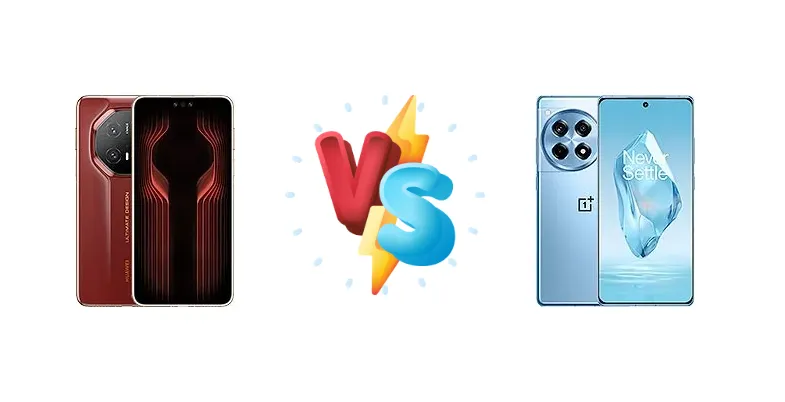
The Huawei Mate 70 RS Ultimate represents a pinnacle of luxury smartphone design and Huawei’s self-developed silicon, while the OnePlus 12R aims to deliver flagship-level performance at a more accessible price point. This comparison dissects the core differences between these two devices, focusing on chipset architecture, battery life, and charging capabilities to determine which phone best suits your needs.
🏆 Quick Verdict
For the average user prioritizing raw performance and value, the OnePlus 12R emerges as the stronger contender. Its Snapdragon 8 Gen 2 chipset, coupled with a competitive price, offers a compelling package. However, the Mate 70 RS Ultimate’s unique design and advanced charging features appeal to a niche market willing to pay a premium.
| Network |
|---|
| 2G bands | GSM 850 / 900 / 1800 / 1900 | GSM 850 / 900 / 1800 / 1900 |
| 3G bands | HSDPA 800 / 850 / 900 / 1700(AWS) / 1900 / 2100 | HSDPA 850 / 900 / 1700(AWS) / 1900 / 2100 |
| 4G bands | LTE | 1, 2, 3, 4, 5, 7, 8, 12, 17, 18, 19, 20, 26, 28, 32, 38, 39, 40, 41, 66 |
| 5G bands | SA/NSA | 1, 2, 3, 5, 7, 8, 12, 20, 28, 38, 40, 41, 66, 77, 78 SA/NSA |
| Speed | HSPA, LTE, 5G | HSPA, LTE, 5G |
| Technology | GSM / CDMA / HSPA / CDMA2000 / LTE / 5G | GSM / CDMA / HSPA / LTE / 5G |
| Launch |
|---|
| Announced | 2024, November 26 | 2024, January 23 |
| Status | Available. Released 2024, December 19 | Available. Released 2024, February 06 |
| Body |
|---|
| Build | Glass front, titanium alloy frame | Glass front (Gorilla Glass Victus 2), aluminum frame, glass back |
| Dimensions | 164.6 x 79.5 x 8.3 mm (6.48 x 3.13 x 0.33 in) | 163.3 x 75.3 x 8.8 mm (6.43 x 2.96 x 0.35 in) |
| SIM | Nano-SIM + Nano-SIM | · Nano-SIM + Nano-SIM + eSIM (max 2 at a time)· Nano-SIM + Nano-SIM |
| Weight | 251 g or 256 g (8.85 oz) | 207 g (7.30 oz) |
| Display |
|---|
| Protection | Huawei Kunlun Glass (basalt tempered) | Corning Gorilla Glass Victus 2 |
| Resolution | 1316 x 2832 pixels, 19.5:9 ratio (~453 ppi density) | 1264 x 2780 pixels (~450 ppi density) |
| Size | 6.9 inches, 117.4 cm2 (~89.7% screen-to-body ratio) | 6.78 inches, 111.7 cm2 (~90.9% screen-to-body ratio) |
| Type | Dual-layer LTPO OLED, 1B colors, 120Hz, 3500 nits (peak) | LTPO4 AMOLED, 1B colors, 120Hz, HDR10+, Dolby Vision, 1600 nits (HBM), 4500 nits (peak) |
| Platform |
|---|
| CPU | Octa-core (1x2.5 GHz & 3x2.15 GHz & 4x1.6 GHz) | Octa-core (1x3.2 GHz Cortex-X3 & 2x2.8 GHz Cortex-A715 & 2x2.8 GHz Cortex-A710 & 3x2.0 GHz Cortex-A510) |
| Chipset | Kirin 9020 (7 nm) | Qualcomm SM8550-AB Snapdragon 8 Gen 2 (4 nm) |
| GPU | Maleoon 920 | Adreno 740 |
| OS | HarmonyOS 4.3 | Android 14, up to 3 major Android upgrades, OxygenOS 15 |
| Memory |
|---|
| Card slot | No | No |
| Internal | 512GB 16GB RAM, 1TB 16GB RAM | 128GB 8GB RAM, 256GB 8GB RAM, 256GB 12GB RAM, 256GB 16GB RAM |
| Main Camera |
|---|
| Features | Laser AF, color spectrum sensor, LED flash, panorama, HDR | Laser AF, color spectrum sensor, LED flash, HDR, panorama |
| Triple | 50 MP, f/1.4-f/4.0, 24mm (wide), PDAF, OIS
48 MP, f/2.1, 93mm (periscope telephoto), PDAF, OIS, 3.5x optical zoom
40 MP, f/2.2, 13mm, 120˚ (ultrawide), PDAF | 50 MP, f/1.8, 24mm (wide), 1/1.56", 1.0µm, multi-directional PDAF, OIS
8 MP, f/2.2, 16mm, 112˚ (ultrawide), 1/4.0", 1.12µm
2 MP (macro) |
| Video | 4K, 1080p, HDR, gyro-EIS, OIS | 4K@30/60fps, 1080p@30/60/120/240fps, gyro-EIS, OIS |
| Selfie camera |
|---|
| Features | HDR, panorama | HDR, panorama |
| Single | 13 MP, f/2.4, 18mm (ultrawide)
TOF 3D, (depth/biometrics sensor) | 16 MP, f/2.4, 26mm (wide), 1/3", 1.0µm |
| Video | 4K, 1080p | 1080p@30fps, gyro-EIS |
| Sound |
|---|
| 35mm jack | No | No |
| Loudspeaker | Yes, with stereo speakers | Yes, with stereo speakers |
| Comms |
|---|
| Bluetooth | 5.2, A2DP, LE, L2HC | 5.3, A2DP, LE, aptX HD |
| Infrared port | Yes | Yes |
| NFC | Yes | Yes |
| Positioning | GPS (L1+L5), GLONASS (L1), BDS (B1I+B1c+B2a+B2b), GALILEO (E1+E5a+E5b), QZSS (L1+L5), NavIC | GPS, GALILEO, GLONASS, BDS, QZSS |
| Radio | No | No |
| USB | USB Type-C 3.1, OTG, DisplayPort 1.2 | USB Type-C 2.0 |
| WLAN | Wi-Fi 802.11 a/b/g/n/ac/6/7, dual-band, Wi-Fi Direct | Wi-Fi 802.11 a/b/g/n/ac/6/7, dual-band |
| Features |
|---|
| Sensors | Face ID, fingerprint (side-mounted), accelerometer, gyro, proximity, barometer, compass | Fingerprint (under display, optical), accelerometer, gyro, proximity, compass |
| Battery |
|---|
| Charging | 100W wired
80W wireless
20W reverse wireless
18W reverse wired | 100W wired, 100% in 26 min |
| Type | Si/C Li-Ion 5700 mAh | Li-Ion 5500 mAh |
| Misc |
|---|
| Colors | Black, White, Red | Iron Gray, Cool Blue, Electric Violet, Sunset Dune |
| Models | PLU-AL10 | CPH2609, CPH2585, CPH2611 |
| Price | About 1580 EUR | € 410.84 / $ 399.95 / £ 649.00 |
| SAR | - | 1.19 W/kg (head) 0.82 W/kg (body) |
Huawei Mate 70 RS Ultimate
- Ultra-fast 100W wired and 80W wireless charging
- Premium design and build quality (RS Ultimate)
- Potentially advanced camera processing (Huawei)
- Reverse wireless and wired charging
- Older 7nm Kirin 9020 chipset
- Potential thermal throttling
- Limited software ecosystem (Huawei)
- Higher price point
OnePlus 12R
- Powerful Snapdragon 8 Gen 2 (4nm)
- Excellent battery life (14:32h active use)
- Fast 100W wired charging
- Competitive price
- Less luxurious design
- Wireless charging slower than Mate 70 RS Ultimate
- Camera processing may be less aggressive
- No reverse wireless charging
Display Comparison
The OnePlus 12R boasts a bright display, peaking at 1181 nits, ensuring excellent visibility even in direct sunlight. While the Mate 70 RS Ultimate’s display specifications are currently unavailable, Huawei typically employs high-quality OLED panels. The 12R’s brightness advantage is significant, and its refresh rate (assumed to be 120Hz based on market segment) will provide a smoother experience than older panels. Without knowing the Mate 70 RS Ultimate’s panel technology, it’s difficult to assess color accuracy or PWM dimming rates, but the 12R’s brightness is a clear win.
Camera Comparison
Without detailed camera specifications for the Mate 70 RS Ultimate, a direct comparison is challenging. However, Huawei historically focuses on computational photography and large sensor sizes. The OnePlus 12R likely features a more conventional camera setup. The key will be image processing: Huawei’s algorithms often prioritize vibrant colors and detail enhancement, while OnePlus tends towards a more natural look. The absence of detailed sensor information for the Mate 70 RS Ultimate makes it difficult to assess low-light performance or dynamic range capabilities.
Performance
The core difference lies in the chipsets. The OnePlus 12R’s Snapdragon 8 Gen 2 (4nm) is a proven performer, featuring a Cortex-X3 prime core clocked at 3.2 GHz. This contrasts with the Huawei Mate 70 RS Ultimate’s Kirin 9020 (7nm). The Snapdragon 8 Gen 2’s smaller 4nm process node translates to superior thermal efficiency, reducing the likelihood of throttling during sustained workloads like gaming. The Kirin 9020’s octa-core configuration, while potentially powerful, is likely to generate more heat. The 12R’s LPDDR5x RAM further enhances performance, providing faster data access compared to the likely LPDDR4x or 5 found in the Mate 70 RS Ultimate.
Battery Life
The OnePlus 12R shines in battery life, achieving an impressive 14 hours and 32 minutes of active use. While the Mate 70 RS Ultimate offers incredibly fast 100W wired and 80W wireless charging, the battery capacity remains unknown. The 12R’s 100W wired charging (0-100% in 26 minutes) is competitive, but the Mate 70 RS Ultimate’s wireless charging is significantly faster. The 12R’s longer battery life provides a practical advantage for users who prioritize all-day usage, while the Mate 70 RS Ultimate caters to those who value rapid replenishment.
Buying Guide
Buy the Huawei Mate 70 RS Ultimate if you demand a statement piece with cutting-edge charging technology (100W wired and 80W wireless) and are invested in the Huawei ecosystem. Buy the OnePlus 12R if you prioritize gaming performance, long battery life (14:32h active use), and a more streamlined Android experience without sacrificing flagship-tier speed.
Frequently Asked Questions
❓ Does the Kirin 9020 in the Mate 70 RS Ultimate suffer from overheating during extended gaming sessions?
Given the 7nm process node and the Snapdragon 8 Gen 2’s superior thermal efficiency, the Kirin 9020 is more likely to experience thermal throttling during prolonged gaming. While Huawei employs cooling solutions, the Snapdragon 8 Gen 2’s architecture inherently manages heat better.
❓ How does the OnePlus 12R’s charging compare to other phones in its price range?
The OnePlus 12R’s 100W wired charging is exceptionally fast for its price bracket. Many competitors in the same price range offer 65W or 80W charging, making the 12R a standout option for users who prioritize quick top-ups.
❓ Is the lack of Google Mobile Services (GMS) on the Huawei Mate 70 RS Ultimate a significant drawback?
For users heavily reliant on Google apps like Gmail, YouTube, and Google Maps, the absence of GMS is a major consideration. Huawei’s AppGallery and alternative app sources exist, but compatibility and user experience may not be identical.