
Huawei Mate 70 RS Ultimate vs Honor Magic6 Pro: A Deep Dive into Flagship Power
| Phones Images | |||||
|---|---|---|---|---|---|
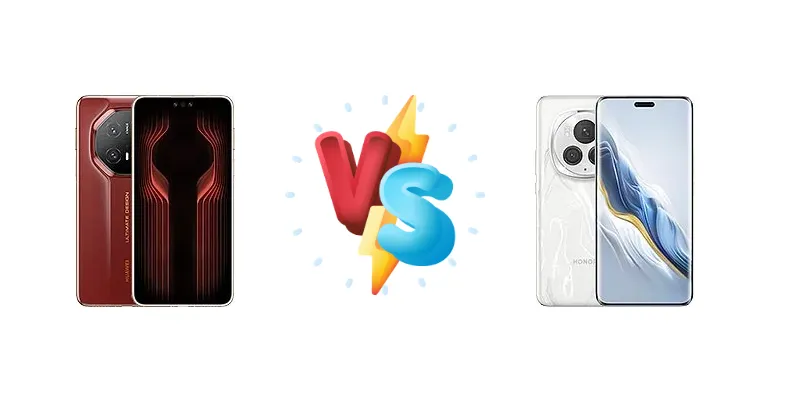
|
🏆 Quick Verdict
For the average user prioritizing raw performance and sustained gaming, the Honor Magic6 Pro is the clear winner. Its Snapdragon 8 Gen 3, built on a 4nm process, delivers superior efficiency and processing power. However, the Mate 70 RS Ultimate’s impressive charging speeds and unique design may appeal to a niche audience.
| PHONES | ||
|---|---|---|
| Phone Names | Huawei Mate 70 RS Ultimate | Honor Magic6 Pro |
| Network | ||
|---|---|---|
| 2G bands | GSM 850 / 900 / 1800 / 1900 | GSM 850 / 900 / 1800 / 1900 |
| 3G bands | HSDPA 800 / 850 / 900 / 1700(AWS) / 1900 / 2100 | HSDPA 800 / 850 / 900 / 1700(AWS) / 1900 / 2100 |
| 4G bands | LTE | LTE |
| 5G bands | SA/NSA | SA/NSA |
| Speed | HSPA, LTE, 5G | HSPA, LTE, 5G |
| Technology | GSM / CDMA / HSPA / CDMA2000 / LTE / 5G | GSM / CDMA / HSPA / CDMA2000 / LTE / 5G |
| Launch | ||
|---|---|---|
| Announced | 2024, November 26 | 2024, January 11 |
| Status | Available. Released 2024, December 19 | Available. Released 2024, January 18 |
| Body | ||
|---|---|---|
| Build | Glass front, titanium alloy frame | Glass front (NanoCrystal Shield), glass back or silicone polymer back (eco leather) |
| Dimensions | 164.6 x 79.5 x 8.3 mm (6.48 x 3.13 x 0.33 in) | 162.5 x 75.8 x 8.9 mm (6.40 x 2.98 x 0.35 in) |
| SIM | Nano-SIM + Nano-SIM | · Nano-SIM + eSIM· Nano-SIM + Nano-SIM |
| Weight | 251 g or 256 g (8.85 oz) | 225 g or 229 g (7.94 oz) |
| Display | ||
|---|---|---|
| Protection | Huawei Kunlun Glass (basalt tempered) | NanoCrystal Shield |
| Resolution | 1316 x 2832 pixels, 19.5:9 ratio (~453 ppi density) | 1280 x 2800 pixels, 19.5:9 ratio (~453 ppi density) |
| Size | 6.9 inches, 117.4 cm2 (~89.7% screen-to-body ratio) | 6.8 inches, 112.8 cm2 (~91.6% screen-to-body ratio) |
| Type | Dual-layer LTPO OLED, 1B colors, 120Hz, 3500 nits (peak) | LTPO OLED, 1B colors, 120Hz, Dolby Vision, HDR, 1600 nits (HBM), 5000 nits (peak) |
| Platform | ||
|---|---|---|
| CPU | Octa-core (1x2.5 GHz & 3x2.15 GHz & 4x1.6 GHz) | Octa-core (1x3.3 GHz Cortex-X4 & 3x3.2 GHz Cortex-A720 & 2x3.0 GHz Cortex-A720 & 2x2.3 GHz Cortex-A520) |
| Chipset | Kirin 9020 (7 nm) | Qualcomm SM8650-AB Snapdragon 8 Gen 3 (4 nm) |
| GPU | Maleoon 920 | Adreno 750 |
| OS | HarmonyOS 4.3 | Android 14, up to 4 major Android upgrades, MagicOS 8 |
| Memory | ||
|---|---|---|
| Card slot | No | No |
| Internal | 512GB 16GB RAM, 1TB 16GB RAM | 256GB 12GB RAM, 256GB 16GB RAM, 512GB 12GB RAM, 512GB 16GB RAM, 1TB 16GB RAM |
| Main Camera | ||
|---|---|---|
| Features | Laser AF, color spectrum sensor, LED flash, panorama, HDR | Laser AF, color spectrum sensor, LED flash, HDR, panorama |
| Triple | 50 MP, f/1.4-f/4.0, 24mm (wide), PDAF, OIS 48 MP, f/2.1, 93mm (periscope telephoto), PDAF, OIS, 3.5x optical zoom 40 MP, f/2.2, 13mm, 120˚ (ultrawide), PDAF | 50 MP, f/1.4-2.0, 23mm (wide), 1/1.3", 1.2µm, PDAF, OIS 180 MP, f/2.6, (periscope telephoto), 1/1.49", 0.56µm, PDAF, OIS, 2.5x optical zoom 50 MP, f/2.0, 13mm, 122˚ (ultrawide), 1/2.88", 0.61µm, AF |
| Video | 4K, 1080p, HDR, gyro-EIS, OIS | 4K@24/30/60fps, 1080p@30/60/120/240fps, gyro-EIS, OIS, HDR, 10-bit video |
| Selfie camera | ||
|---|---|---|
| Features | HDR, panorama | - |
| Single | 13 MP, f/2.4, 18mm (ultrawide) TOF 3D, (depth/biometrics sensor) | 50 MP, f/2.0, 22mm (wide), 1/2.93", 0.6µm, AF TOF 3D, (depth/biometrics sensor) |
| Video | 4K, 1080p | 4K@30fps, 1080p@30/60fps, gyro-EIS |
| Sound | ||
|---|---|---|
| 35mm jack | No | No |
| Loudspeaker | Yes, with stereo speakers | Yes, with stereo speakers |
| Comms | ||
|---|---|---|
| Bluetooth | 5.2, A2DP, LE, L2HC | 5.3, A2DP, LE, aptX HD |
| Infrared port | Yes | Yes |
| NFC | Yes | Yes |
| Positioning | GPS (L1+L5), GLONASS (L1), BDS (B1I+B1c+B2a+B2b), GALILEO (E1+E5a+E5b), QZSS (L1+L5), NavIC | GPS (L1+L5), GLONASS, BDS (B1I+B1c+B2a), GALILEO (E1+E5a) |
| Radio | No | No |
| USB | USB Type-C 3.1, OTG, DisplayPort 1.2 | USB Type-C 3.2, DisplayPort 1.2, OTG |
| WLAN | Wi-Fi 802.11 a/b/g/n/ac/6/7, dual-band, Wi-Fi Direct | Wi-Fi 802.11 a/b/g/n/ac/6/7, dual-band, Wi-Fi Direct |
| Features | ||
|---|---|---|
| Sensors | Face ID, fingerprint (side-mounted), accelerometer, gyro, proximity, barometer, compass | Fingerprint (under display, optical), Face ID, accelerometer, gyro, proximity, compass |
| Battery | ||
|---|---|---|
| Charging | 100W wired 80W wireless 20W reverse wireless 18W reverse wired | 80W wired 66W wireless Reverse wireless 5W reverse wired |
| Type | Si/C Li-Ion 5700 mAh | Si/C Li-Ion 5600 mAh |
| Misc | ||
|---|---|---|
| Colors | Black, White, Red | Black, Green, Blue, Purple, White |
| Models | PLU-AL10 | BVL-AN16, BVL-N49 |
| Price | About 1580 EUR | € 455.54 / $ 899.00 / £ 598.99 |
Huawei Mate 70 RS Ultimate
- Industry-leading 100W wired charging
- Fast 80W wireless charging
- Unique and luxurious design (RS Ultimate)
- 20W reverse wired charging
- Kirin 9020 chipset likely lags behind Snapdragon 8 Gen 3 in performance
- Limited information on display specifications
Honor Magic6 Pro
- Snapdragon 8 Gen 3 delivers superior performance
- Exceptional battery life (14:06h active use)
- Bright 1578 nit display for outdoor visibility
- Efficient 4nm fabrication process
- Slower charging speeds compared to Mate 70 RS Ultimate
- Lower reverse wireless charging wattage
Display Comparison
The Honor Magic6 Pro boasts a significantly brighter display, reaching a measured 1578 nits, making it ideal for outdoor visibility. While the Mate 70 RS Ultimate’s display specs are not provided, the Magic6 Pro’s brightness advantage is substantial. The Magic6 Pro likely utilizes LTPO technology for adaptive refresh rates, contributing to power efficiency. The absence of detailed display information for the Mate 70 RS Ultimate makes a direct comparison difficult, but the Magic6 Pro clearly leads in peak brightness.
Camera Comparison
Without detailed camera specifications for the Mate 70 RS Ultimate, a direct comparison is limited. However, both devices are expected to feature advanced camera systems. The Magic6 Pro’s image processing, powered by the Snapdragon’s ISP, is likely to offer superior noise reduction and dynamic range. The absence of sensor size information for the Mate 70 RS Ultimate prevents a definitive assessment, but the Snapdragon’s image signal processing capabilities give the Magic6 Pro an edge.
Performance
The core difference lies in the chipsets. The Honor Magic6 Pro’s Snapdragon 8 Gen 3 (4nm) features a Cortex-X4 prime core clocked at 3.3 GHz, promising substantial performance gains over the Huawei Mate 70 RS Ultimate’s Kirin 9020 (7nm). The Snapdragon’s 4nm fabrication process translates to improved thermal efficiency, reducing the likelihood of throttling during extended use. The Kirin 9020’s octa-core configuration, while capable, is likely to lag behind the Snapdragon in both single-core and multi-core performance. The Magic6 Pro’s LPDDR5x RAM further enhances its performance capabilities.
Battery Life
The Honor Magic6 Pro demonstrates impressive battery life, achieving 14:06 hours of active use. While the Mate 70 RS Ultimate’s battery capacity is unknown, its charging capabilities are a standout feature. The 100W wired charging and 80W wireless charging significantly outperform the Magic6 Pro’s 80W wired and 66W wireless charging. The Mate 70 RS Ultimate also offers 20W reverse wired charging, compared to the Magic6 Pro’s 5W, making it more versatile for charging accessories.
Buying Guide
Buy the Huawei Mate 70 RS Ultimate if you prioritize cutting-edge charging technology (100W wired, 80W wireless) and a distinctive, luxurious design aesthetic. Buy the Honor Magic6 Pro if you demand the highest possible performance for demanding tasks like gaming and video editing, coupled with exceptional battery life and a brighter display.