
Huawei Mate 70 Pro+ vs Samsung Galaxy S24 Ultra: A Deep Dive Comparison
| Phones Images | |||||
|---|---|---|---|---|---|
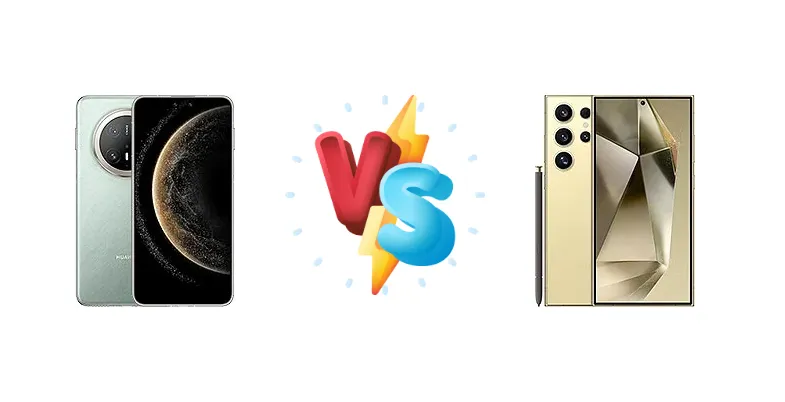
|
🏆 Quick Verdict
For the average user prioritizing consistent performance, a mature software ecosystem, and exceptional display quality, the Samsung Galaxy S24 Ultra emerges as the stronger choice. However, the Huawei Mate 70 Pro+’s blazing-fast 100W charging and distinct Kirin 9020 architecture appeal to power users and those seeking an alternative to Qualcomm’s dominance.
| PHONES | ||
|---|---|---|
| Phone Names | Huawei Mate 70 Pro+ | Samsung Galaxy S24 Ultra |
| Network | ||
|---|---|---|
| 2G bands | GSM 850 / 900 / 1800 / 1900 | GSM 850 / 900 / 1800 / 1900 |
| 3G bands | HSDPA 800 / 850 / 900 / 1700(AWS) / 1900 / 2100 | HSDPA 850 / 900 / 1700(AWS) / 1900 / 2100 |
| 4G bands | LTE | 1, 2, 3, 4, 5, 7, 8, 12, 13, 17, 18, 19, 20, 25, 26, 28, 32, 38, 39, 40, 41, 66 - International |
| 5G bands | SA/NSA | 1, 2, 3, 5, 7, 8, 12, 20, 25, 26, 28, 38, 40, 41, 66, 75, 77, 78 SA/NSA/Sub6 - International |
| Speed | HSPA, LTE, 5G | HSPA, LTE (up to 7CA), 5G |
| Technology | GSM / CDMA / HSPA / CDMA2000 / LTE / 5G | GSM / CDMA / HSPA / EVDO / LTE / 5G |
| Launch | ||
|---|---|---|
| Announced | 2024, November 26 | 2024, January 17 |
| Status | Available. Released 2024, November 26 | Available. Released 2024, January 24 |
| Body | ||
|---|---|---|
| Build | Glass front, titanium alloy frame | Glass front (Corning Gorilla Armor), glass back (Corning Gorilla Armor), titanium frame (grade 2) |
| Dimensions | 164.6 x 79.5 x 8.3 mm (6.48 x 3.13 x 0.33 in) | 162.3 x 79 x 8.6 mm (6.39 x 3.11 x 0.34 in) |
| SIM | Nano-SIM + Nano-SIM | · Nano-SIM + Nano-SIM + eSIM + eSIM (max 2 at a time) - INT· Nano-SIM + eSIM + eSIM (max 2 at a time) - USA· Nano-SIM + Nano-SIM - CN |
| Weight | 226 g (7.97 oz) | 232 g or 233 g (8.18 oz) |
| Display | ||
|---|---|---|
| Protection | Huawei Kunlun Glass 2 | Corning Gorilla Armor |
| Resolution | 1316 x 2832 pixels, 19.5:9 ratio (~453 ppi density) | 1440 x 3120 pixels, 19.5:9 ratio (~505 ppi density) |
| Size | 6.9 inches, 117.4 cm2 (~89.7% screen-to-body ratio) | 6.8 inches, 113.5 cm2 (~88.5% screen-to-body ratio) |
| Type | LTPO OLED, 1B colors, 120Hz, 2500 nits (peak) | Dynamic LTPO AMOLED 2X, 120Hz, HDR10+, 2600 nits (peak) |
| Platform | ||
|---|---|---|
| CPU | Octa-core (1x2.5 GHz Taishan Big & 3x2.15 GHz Taishan Mid & 4x1.53GHz Cortex-A510) | 8-core (1x3.39GHz Cortex-X4 & 3x3.1GHz Cortex-A720 & 2x2.9GHz Cortex-A720 & 2x2.2GHz Cortex-A520) |
| Chipset | Kirin 9020 (7 nm) | Qualcomm SM8650-AC Snapdragon 8 Gen 3 (4 nm) |
| GPU | Maleoon 920 | Adreno 750 (1 GHz) |
| OS | HarmonyOS 4.3 | Android 14, up to 7 major Android upgrades, One UI 8.0 |
| Memory | ||
|---|---|---|
| Card slot | No | No |
| Internal | 512GB 16GB RAM, 1TB 16GB RAM | 256GB 12GB RAM, 512GB 12GB RAM, 1TB 12GB RAM |
| Main Camera | ||
|---|---|---|
| Features | Laser AF, color spectrum sensor, LED flash, panorama, HDR | Laser AF, LED flash, auto-HDR, panorama |
| Quad | - | 200 MP, f/1.7, 24mm (wide), 1/1.3", 0.6µm, multi-directional PDAF, OIS 10 MP, f/2.4, 67mm (telephoto), 1/3.52", 1.12µm, PDAF, OIS, 3x optical zoom 50 MP, f/3.4, 111mm (periscope telephoto), 1/2.52", 0.7µm, PDAF, OIS, 5x optical zoom 12 MP, f/2.2, 13mm, 120˚ (ultrawide), 1/2.55", 1.4µm, dual pixel PDAF, Super Steady video |
| Triple | 50 MP, f/1.4-f/4.0, 24mm (wide), PDAF, OIS 48 MP, f/2.1, 93mm (periscope telephoto), PDAF, OIS, 3.5x optical zoom 40 MP, f/2.2, 13mm, 120˚ (ultrawide), PDAF | - |
| Video | 4K, 1080p, HDR, gyro-EIS, OIS | 8K@24/30fps, 4K@30/60/120fps, 1080p@30/60/120/240fps, HDR10+, stereo sound rec., gyro-EIS |
| Selfie camera | ||
|---|---|---|
| Features | HDR, panorama | HDR, HDR10+ |
| Single | 13 MP, f/2.4, 18mm (ultrawide) TOF 3D, (depth/biometrics sensor) | 12 MP, f/2.2, 26mm (wide), 1/3.2", 1.12µm, dual pixel PDAF |
| Video | 4K, 1080p, HDR, gyro-EIS | 4K@30/60fps, 1080p@30fps |
| Sound | ||
|---|---|---|
| 35mm jack | No | No |
| Loudspeaker | Yes, with stereo speakers | Yes, with stereo speakers |
| Comms | ||
|---|---|---|
| Bluetooth | 5.2, A2DP, LE, L2HC | 5.3, A2DP, LE |
| Infrared port | Yes | - |
| NFC | Yes | Yes |
| Positioning | GPS (L1+L5), GLONASS (L1), BDS (B1I+B1c+B2a+B2b), GALILEO (E1+E5a+E5b), QZSS (L1+L5), NavIC | GPS, GLONASS, BDS, GALILEO, QZSS |
| Radio | No | No |
| USB | USB Type-C 3.1, OTG, DisplayPort 1.2 | USB Type-C 3.2, DisplayPort 1.2, OTG |
| WLAN | Wi-Fi 802.11 a/b/g/n/ac/6/7, dual-band, Wi-Fi Direct | Wi-Fi 802.11 a/b/g/n/ac/6e/7, tri-band, Wi-Fi Direct |
| Features | ||
|---|---|---|
| Sensors | Face ID, fingerprint (side-mounted), accelerometer, gyro, proximity, barometer, compass | Fingerprint (under display, ultrasonic), accelerometer, gyro, proximity, compass, barometer |
| Battery | ||
|---|---|---|
| Charging | 100W wired 80W wireless 20W reverse wireless 18W reverse wired | 45W wired, PD3.0, 65% in 30 min 15W wireless (Qi) 4.5W reverse wireless |
| Type | Si/C Li-Ion 5700 mAh | Li-Ion 5000 mAh |
| Misc | ||
|---|---|---|
| Colors | Black, Gray, White, Green | Titanium Black, Titanium Gray, Titanium Violet, Titanium Yellow, Titanium Blue, Titanium Green, Titanium Orange |
| Models | PLA-AL10 | SM-S928B, SM-S928B/DS, SM-S928U, SM-S928U1, SM-S928W, SM-S928N, SM-S9280, SM-S928E, SM-S928E/DS |
| Price | About 1120 EUR | $ 514.94 / C$ 929.99 / £ 630.00 / € 658.53 / ₹ 84,999 |
| SAR | - | 1.26 W/kg (head) 0.62 W/kg (body) |
| SAR EU | - | 1.06 W/kg (head) 1.30 W/kg (body) |
Huawei Mate 70 Pro+
- Blazing-fast 100W wired charging
- Unique Kirin 9020 chipset architecture
- Potentially innovative software features
- Limited software ecosystem compared to Samsung
- Uncertainty regarding long-term software support
- Performance may throttle under sustained load
Samsung Galaxy S24 Ultra
- Exceptional display brightness and color accuracy
- Powerful Snapdragon 8 Gen 3 processor
- Mature and feature-rich software experience
- Slower charging speeds compared to Huawei
- Higher price point
- Software can be bloated with Samsung apps
Display Comparison
The Samsung Galaxy S24 Ultra boasts a significantly brighter display, reaching a measured 1447 nits, ensuring excellent visibility even in direct sunlight. While the Mate 70 Pro+’s display specifications are not provided, Samsung’s panel technology, likely utilizing LTPO for adaptive refresh rates, offers superior power efficiency and smoother scrolling. The S24 Ultra’s color accuracy is also expected to be higher, crucial for content creators and those demanding accurate color reproduction.
Camera Comparison
Without detailed camera specifications for the Mate 70 Pro+, it’s difficult to make a direct comparison. However, Samsung typically excels in computational photography and offers versatile camera systems. The S24 Ultra’s image processing is known for its vibrant colors and detailed images. The presence of Optical Image Stabilization (OIS) on both devices is expected, but sensor size and lens apertures will be critical differentiators. Ignoring the typical 2MP macro lens found on many smartphones, the main sensor and ultrawide performance will be key battlegrounds.
Performance
The core difference lies in the chipsets: Huawei’s Kirin 9020 (7nm) versus Samsung’s Snapdragon 8 Gen 3 (4nm). The Snapdragon 8 Gen 3, built on a more advanced 4nm process, inherently offers better thermal efficiency and transistor density, translating to sustained performance under heavy load. The Kirin 9020’s Taishan architecture, while potentially offering strong single-core performance with its 2.5 GHz core, may struggle to match the Snapdragon’s multi-core capabilities and GPU prowess. The S24 Ultra’s LPDDR5x RAM further contributes to faster data transfer speeds and improved responsiveness.
Battery Life
The Samsung Galaxy S24 Ultra demonstrates impressive real-world battery life, achieving 13 hours and 49 minutes of active use. While the Mate 70 Pro+ lacks a specified mAh capacity, its 100W wired charging is a game-changer, potentially offering a full charge in under 30 minutes. The S24 Ultra’s 45W charging, while supporting PD3.0 and reaching 65% in 30 minutes, is significantly slower. The Mate 70 Pro+ also offers 80W wireless and 20W reverse wireless charging, exceeding the S24 Ultra’s 15W wireless and 4.5W reverse wireless capabilities.
Buying Guide
Buy the Huawei Mate 70 Pro+ if you need unparalleled charging speeds, are comfortable with Huawei’s ecosystem, and value a unique processor design. Buy the Samsung Galaxy S24 Ultra if you prefer a polished software experience, a brighter and more color-accurate display, and a proven track record of consistent performance across a wider range of applications and games.