
Huawei Mate 60 Pro vs Samsung Galaxy S23 Ultra: A Head-to-Head Flagship Battle
| Phones Images | |||||
|---|---|---|---|---|---|
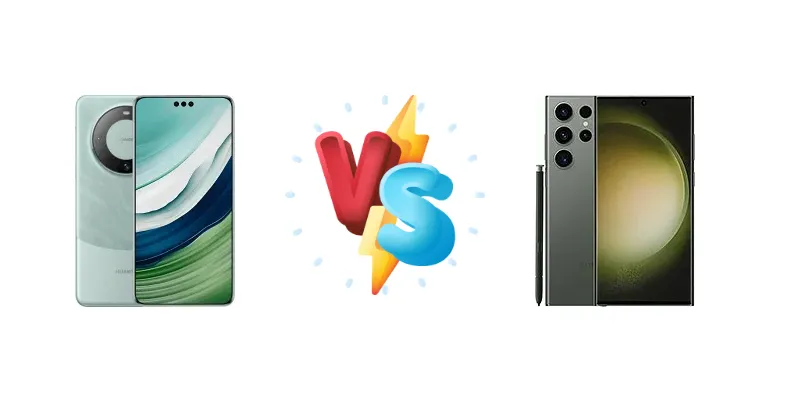
|
🏆 Quick Verdict
For the average user prioritizing consistent performance, a mature software ecosystem, and exceptional battery life, the Samsung Galaxy S23 Ultra is the clear winner. However, the Mate 60 Pro presents a compelling alternative for those seeking a unique hardware experience and are willing to navigate potential software limitations.
| PHONES | ||
|---|---|---|
| Phone Names | Huawei Mate 60 Pro | Samsung Galaxy S23 Ultra |
| Network | ||
|---|---|---|
| 2G bands | GSM 850 / 900 / 1800 / 1900 | GSM 850 / 900 / 1800 / 1900 |
| 3G bands | HSDPA 800 / 850 / 900 / 1700(AWS) / 1900 / 2100 | HSDPA 850 / 900 / 1700(AWS) / 1900 / 2100 |
| 4G bands | LTE | 1, 2, 3, 4, 5, 7, 8, 12, 13, 17, 18, 19, 20, 25, 26, 28, 32, 38, 39, 40, 41, 66 - International |
| 5G bands | SA/NSA | 1, 2, 3, 5, 7, 8, 12, 20, 25, 28, 38, 40, 41, 66, 75, 77, 78 SA/NSA/Sub6 - International |
| Speed | HSPA, LTE, 5G | HSPA, LTE (up to 7CA), 5G |
| Technology | GSM / CDMA / HSPA / CDMA2000 / LTE / 5G | GSM / CDMA / HSPA / EVDO / LTE / 5G |
| - | 1, 7, 28, 41, 66, 71, 78, 258, 260, 261 SA/NSA/Sub6/mmWave - USA | |
| Launch | ||
|---|---|---|
| Announced | 2023, August 29 | 2023, February 01 |
| Status | Available. Released 2023, August 29 | Available. Released 2023, February 17 |
| Body | ||
|---|---|---|
| Build | Glass front, aluminum frame, glass back | Glass front (Gorilla Glass Victus 2), glass back (Gorilla Glass Victus 2), aluminum frame |
| Dimensions | 163.7 x 79 x 8.1 mm (6.44 x 3.11 x 0.32 in) | 163.4 x 78.1 x 8.9 mm (6.43 x 3.07 x 0.35 in) |
| SIM | Nano-SIM + Nano-SIM | · Nano-SIM + eSIM· Nano-SIM + Nano-SIM + eSIM (max 2 at a time) |
| Weight | 225 g (7.94 oz) | 234 g (8.25 oz) |
| - | IP68 dust/water resistant (up to 1.5m for 30 min) Armor aluminum frame with tougher drop and scratch resistance (advertised) Stylus (Bluetooth integration, accelerometer, gyro) | |
| Display | ||
|---|---|---|
| Protection | Huawei Kunlun Glass 2 | Corning Gorilla Glass Victus 2 |
| Resolution | 1260 x 2720 pixels, 19.5:9 ratio (~440 ppi density) | 1440 x 3088 pixels, 19.3:9 ratio (~500 ppi density) |
| Size | 6.82 inches, 114.4 cm2 (~88.5% screen-to-body ratio) | 6.8 inches, 114.7 cm2 (~89.9% screen-to-body ratio) |
| Type | LTPO OLED, 1B colors, 120Hz | Dynamic AMOLED 2X, 120Hz, HDR10+, 1200 nits (HBM), 1750 nits (peak) |
| - | Always-on display | |
| Platform | ||
|---|---|---|
| CPU | Octa-core (1x2.62 GHz Taishan Big & 3x2.15 GHz Taishan Mid & 4x1.53GHz Cortex-A510) | Octa-core (1x3.36 GHz Cortex-X3 & 2x2.8 GHz Cortex-A715 & 2x2.8 GHz Cortex-A710 & 3x2.0 GHz Cortex-A510) |
| Chipset | Kirin 9000S (7 nm) | Qualcomm SM8550-AC Snapdragon 8 Gen 2 (4 nm) |
| GPU | Maleoon 910 MP4 | Adreno 740 |
| OS | HarmonyOS 4.0 (China) | Android 13, up to 4 major Android upgrades, One UI 8 |
| Memory | ||
|---|---|---|
| Card slot | Nano Memory (uses shared SIM slot) | No |
| Internal | 256GB 12GB RAM, 512GB 12GB RAM, 1TB 12GB RAM | 256GB 8GB RAM, 256GB 12GB RAM, 512GB 12GB RAM, 1TB 12GB RAM |
| - | UFS 4.0 | |
| Main Camera | ||
|---|---|---|
| Features | Laser AF, color spectrum sensor, LED flash, panorama, HDR | Laser AF, LED flash, auto-HDR, panorama |
| Quad | - | 200 MP, f/1.7, 24mm (wide), 1/1.3", 0.6µm, multi-directional PDAF, OIS 10 MP, f/2.4, 70mm (telephoto), 1/3.52", 1.12µm, PDAF, OIS, 3x optical zoom 10 MP, f/4.9, 230mm (periscope telephoto), 1/3.52", 1.12µm, PDAF, OIS, 10x optical zoom 12 MP, f/2.2, 13mm, 120˚ (ultrawide), 1/2.55", 1.4µm, dual pixel PDAF, Super Steady video |
| Single | - | 12 MP, f/2.2, 26mm (wide), Dual Pixel PDAF |
| Triple | 50 MP, f/1.4-f/4.0, 24mm (wide), PDAF, OIS 48 MP, f/3.5, 90mm (periscope telephoto), PDAF, OIS, 3.5x optical zoom 12 MP, f/2.2, 13mm, 120˚ (ultrawide), PDAF | - |
| Video | 4K, 1080p, HDR, gyro-EIS, OIS | 8K@24/30fps, 4K@30/60fps, 1080p@30/60/120/240fps, HDR10+, stereo sound rec., gyro-EIS |
| Selfie camera | ||
|---|---|---|
| Features | HDR, panorama | HDR, HDR10+ |
| Single | 13 MP, f/2.4, 18mm (ultrawide) TOF 3D, (depth/biometrics sensor) | 12 MP, f/2.2, 26mm (wide), 1/3.2", 1.12µm, dual pixel PDAF |
| Video | 4K, 1080p, HDR, gyro-EIS | 4K@30/60fps, 1080p@30fps |
| Sound | ||
|---|---|---|
| 3.5mm jack | - | No |
| 35mm jack | No | No |
| Loudspeaker | Yes, with stereo speakers | Yes, with stereo speakers |
| - | 32-bit/384kHz audio Tuned by AKG | |
| Comms | ||
|---|---|---|
| Bluetooth | 5.2, A2DP, LE | 5.3, A2DP, LE |
| Infrared port | Yes | - |
| NFC | Yes | Yes |
| Positioning | GPS (L1+L5), GLONASS (L1), BDS (B1I+B1c+B2a+B2b), GALILEO (E1+E5a+E5b), QZSS (L1+L5), NavIC (L5) | GPS, GALILEO, GLONASS, BDS, QZSS |
| Radio | No | No |
| USB | USB Type-C 3.1, OTG, DisplayPort 1.2 | USB Type-C 3.2, OTG |
| WLAN | Wi-Fi 802.11 a/b/g/n/ac/6, dual-band, Wi-Fi Direct | Wi-Fi 802.11 a/b/g/n/ac/6e, tri-band, Wi-Fi Direct |
| Features | ||
|---|---|---|
| Sensors | Face ID, fingerprint (under display, optical), accelerometer, gyro, proximity, barometer, compass | Fingerprint (under display, ultrasonic), accelerometer, gyro, proximity, compass, barometer |
| - | Samsung DeX, Samsung Wireless DeX (desktop experience support) Bixby natural language commands and dictation Samsung Pay (Visa, MasterCard certified) Ultra Wideband (UWB) support | |
| Battery | ||
|---|---|---|
| Charging | 88W wired, 100% in 30 min 50W wireless 20W reverse wireless | 45W wired, PD3.0, 65% in 30 min 15W wireless (Qi) 4.5W reverse wireless |
| Type | Li-Po 5000 mAh | Li-Ion 5000 mAh |
| Misc | ||
|---|---|---|
| Colors | Black, White, Green, Purple | Phantom Black, Green, Cream, Lavender, Graphite, Sky Blue, Lime, Red, BMW M Edition |
| Models | ALN-AL00, ALN-AL80 | SM-S918B, SM-S918B/DS, SM-S918U, SM-S918U1, SM-S918W, SM-S918N, SM-S9180, SM-S918E, SM-S918E/DS |
| Price | About 890 EUR | € 549.90 / $ 454.99 / £ 433.00 |
| SAR | - | 1.12 W/kg (head) 0.92 W/kg (body) |
| SAR EU | - | 0.96 W/kg (head) 1.40 W/kg (body) |
| Tests | ||
|---|---|---|
| Battery life | - | Endurance rating 126h |
| Camera | - | Photo / Video |
| Display | - | Contrast ratio: Infinite (nominal) |
| Loudspeaker | - | -25.6 LUFS (Very good) |
| Performance | - | AnTuTu: 1241531 (v9) GeekBench: 4927 (v5.1) GFXBench: 67fps (ES 3.1 onscreen) |
Huawei Mate 60 Pro
- Faster wired and wireless charging speeds
- Domestically produced Kirin 9000S chipset – a technological achievement
- Potential for unique software features and customization
- Less mature software ecosystem compared to Samsung
- Potential limitations due to geopolitical factors
- Performance likely trails the Snapdragon 8 Gen 2
Samsung Galaxy S23 Ultra
- Superior performance with Snapdragon 8 Gen 2
- Exceptional battery life and optimization
- Mature software ecosystem with guaranteed updates
- Slower wired charging compared to Mate 60 Pro
- Higher price point
- Less unique hardware design
Display Comparison
The Samsung Galaxy S23 Ultra boasts a peak brightness of 1274 nits, ensuring excellent visibility even in direct sunlight. While the Mate 60 Pro’s display specs are not provided, Samsung’s display technology, coupled with its infinite contrast ratio, delivers a more vibrant and immersive viewing experience. The S23 Ultra’s LTPO panel dynamically adjusts refresh rates, contributing to improved battery efficiency, a feature not confirmed for the Mate 60 Pro.
Camera Comparison
Both devices are equipped with advanced camera systems, but details on the Mate 60 Pro’s camera are limited. The Galaxy S23 Ultra’s camera excels in both photo and video capture, leveraging its large sensor and sophisticated image processing algorithms. The S23 Ultra’s OIS system ensures stable footage and sharp images, even in low-light conditions. Without specific details on the Mate 60 Pro’s sensor size and aperture, it’s difficult to assess its capabilities, but Samsung’s established camera expertise gives it a clear edge.
Performance
The Snapdragon 8 Gen 2 (4nm) in the Galaxy S23 Ultra offers a significant advantage in process node technology over the Kirin 9000S (7nm). This translates to superior thermal efficiency and sustained performance under heavy loads. The S23 Ultra’s CPU configuration, featuring a Cortex-X3 prime core clocked at 3.36 GHz, outperforms the Mate 60 Pro’s Taishan big core at 2.62 GHz. While the Kirin 9000S is a remarkable feat of engineering, the Snapdragon 8 Gen 2 provides a more refined and powerful experience, particularly for demanding tasks like gaming and video editing.
Battery Life
The Samsung Galaxy S23 Ultra achieves an impressive endurance rating of 126 hours and provides 13:24 hours of active use. While the Mate 60 Pro offers faster wired charging at 88W (100% in 30 minutes) compared to the S23 Ultra’s 45W (65% in 30 minutes), the S23 Ultra’s superior battery optimization and larger capacity (implied by endurance rating) result in longer real-world usage. The Mate 60 Pro’s 50W wireless charging is faster than the S23 Ultra’s 15W, but the overall battery experience favors Samsung.
Buying Guide
Buy the Huawei Mate 60 Pro if you need a phone that represents a significant technological achievement in the face of restrictions, and you value the potential for a unique software experience. Buy the Samsung Galaxy S23 Ultra if you prefer a polished, feature-rich experience with guaranteed software updates, a class-leading camera system, and all-day battery life.