
Huawei Mate 50E vs Xiaomi 12 Lite: A Clash of Mid-Range Titans
| Phones Images | |||||
|---|---|---|---|---|---|
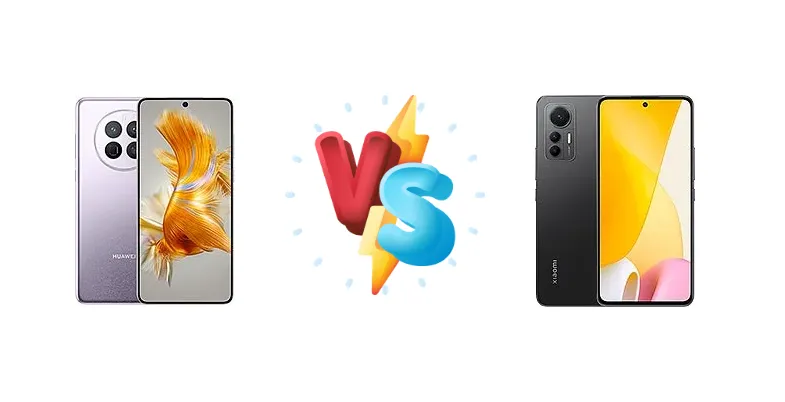
|
🏆 Quick Verdict
The Xiaomi 12 Lite edges out the Mate 50E thanks to its slightly faster charging, brighter display, and generally more polished software experience. However, the Mate 50E might appeal to those prioritizing Huawei's ecosystem and design aesthetics. Both offer excellent value for their price point.
| PHONES | ||
|---|---|---|
| Phone Names | Huawei Mate 50E | Xiaomi 12 Lite |
| Network | ||
|---|---|---|
| 2G bands | GSM 850 / 900 / 1800 / 1900 | GSM 850 / 900 / 1800 / 1900 |
| 3G bands | HSDPA 800 / 850 / 900 / 1700(AWS) / 1900 / 2100 | HSDPA 850 / 900 / 1700(AWS) / 1900 / 2100 |
| 4G bands | 1, 2, 3, 4, 5, 7, 8, 12, 17, 18, 19, 20, 26, 28, 34, 38, 39, 40, 41 | 1, 2, 3, 4, 5, 7, 8, 12, 13, 17, 18, 19, 20, 26, 28, 32, 38, 40, 41, 42, 48, 66 |
| 5G bands | - | 1, 3, 5, 7, 8, 20, 28, 38, 40, 41, 66, 77, 78 SA/NSA |
| Speed | HSPA, LTE | HSPA, LTE, 5G |
| Technology | GSM / CDMA / HSPA / CDMA2000 / LTE | GSM / HSPA / LTE / 5G |
| Launch | ||
|---|---|---|
| Announced | 2022, September 06 | 2022, July 09 |
| Status | Available. Released 2022, October 23 | Available. Released 2022, July 11 |
| Body | ||
|---|---|---|
| Build | - | Glass front (Gorilla Glass 5), glass back, plastic frame |
| Dimensions | 161.5 x 76.1 x 8 mm (6.36 x 3.00 x 0.31 in) | 159.3 x 73.7 x 7.3 mm (6.27 x 2.90 x 0.29 in) |
| SIM | · Nano-SIM· Nano-SIM + Nano-SIM | Nano-SIM + Nano-SIM |
| Weight | 201 g (7.09 oz) | 173 g (6.10 oz) |
| Display | ||
|---|---|---|
| Protection | - | Corning Gorilla Glass 5 |
| Resolution | 1224 x 2700 pixels (~442 ppi density) | 1080 x 2400 pixels, 20:9 ratio (~402 ppi density) |
| Size | 6.7 inches, 108.9 cm2 (~88.6% screen-to-body ratio) | 6.55 inches, 103.6 cm2 (~88.2% screen-to-body ratio) |
| Type | OLED, 1B colors, 90Hz | AMOLED, 68B colors, 120Hz, Dolby Vision, HDR10+, 950 nits (peak) |
| Platform | ||
|---|---|---|
| CPU | Octa-core (1x2.4 GHz Cortex-A78 & 3x2.2 GHz Cortex-A78 & 4x1.9 GHz Cortex-A55) | Octa-core (1x2.4 GHz Cortex-A78 & 3x2.2 GHz Cortex-A78 & 4x1.9 GHz Cortex-A55) |
| Chipset | Qualcomm SM7325 Snapdragon 778G 5G (6 nm) | Qualcomm SM7325 Snapdragon 778G 5G (6 nm) |
| GPU | Adreno 642L | Adreno 642L |
| OS | HarmonyOS 3.0 | Android 12, upgradable to Android 14, HyperOS |
| Memory | ||
|---|---|---|
| Card slot | Nano Memory (uses shared SIM slot) | No |
| Internal | 128GB 8GB RAM, 256GB 8GB RAM | 128GB 6GB RAM, 128GB 8GB RAM, 256GB 8GB RAM |
| - | UFS 2.2 | |
| Main Camera | ||
|---|---|---|
| Dual | 50 MP, f/1.4-f/4.0, 24mm (wide), PDAF, OIS 13 MP, f/2.2, 13mm, 120˚ (ultrawide), PDAF | - |
| Features | Laser AF, color spectrum sensor, LED flash, panorama, HDR | Dual-LED dual-tone flash, HDR, panorama |
| Single | - | 32 MP, f/2.5, (wide), 1/2.8", 0.8µm, AF |
| Triple | - | 108 MP, f/1.9, 26mm (wide), 1/1.52", 0.7µm, PDAF 8 MP, f/2.2, 120˚ (ultrawide), 1/4.0", 1.12µm 2 MP (macro) |
| Video | 4K@30/60fps, 1080p@30/60/120fps, gyro-EIS | 4K@30fps, 1080p@30/60/120fps; gyro-EIS |
| Selfie camera | ||
|---|---|---|
| Features | HDR, panorama | HDR, panorama |
| Single | 13 MP, f/2.4, 18mm (ultrawide) | 32 MP, f/2.5, (wide), 1/2.8", 0.8µm, AF |
| Video | 4K@30/60fps, 1080p@30/60fps | 1080p@30/60fps, 720p@120fps |
| Sound | ||
|---|---|---|
| 3.5mm jack | No | No |
| 35mm jack | No | No |
| Loudspeaker | Yes, with stereo speakers | Yes, with dual speakers |
| - | 24-bit/192kHz audio | |
| Comms | ||
|---|---|---|
| Bluetooth | 5.2, A2DP, LE | 5.2, A2DP, LE, aptX HD, aptX Adaptive |
| Infrared port | Yes | Yes |
| NFC | Yes | Yes (market/region dependent) |
| Positioning | GPS (L1+L5), GLONASS (L1), BDS (B1I+B1c+B2a), GALILEO (E1+E5a), QZSS (L1+L5), NavIC (L5) | GPS (L1), GLONASS (G1), BDS (B1I+B1c), GALILEO (E1), QZSS (L1) |
| Radio | No | No |
| USB | USB Type-C 3.1, OTG | USB Type-C 2.0, OTG |
| WLAN | Wi-Fi 802.11 a/b/g/n/ac/6, dual-band, Wi-Fi Direct | Wi-Fi 802.11 a/b/g/n/ac/6, dual-band, Wi-Fi Direct |
| Features | ||
|---|---|---|
| Sensors | Fingerprint (under display, optical), accelerometer, gyro, proximity, barometer, compass | Fingerprint (under display, optical), accelerometer, gyro, compass |
| - | Virtual proximity sensing | |
| Battery | ||
|---|---|---|
| Charging | 66W wired 5W reverse wired | 67W wired, PD3.0, QC4, 50% in 13 min |
| Type | Li-Po 4460 mAh | Li-Po 4300 mAh |
| Misc | ||
|---|---|---|
| Colors | Black, Silver, Purple | Black, Lite Green, Lite Pink |
| Models | CET-AL60 | 2203129G |
| Price | About 580 EUR | € 119.80 / $ 269.00 / £ 121.15 |
| SAR | - | 1.09 W/kg (head) 0.73 W/kg (body) |
| SAR EU | - | 0.60 W/kg (head) 1.00 W/kg (body) |
| Tests | ||
|---|---|---|
| Battery life | - | Endurance rating 100h |
| Camera | - | Photo / Video |
| Display | - | Contrast ratio: Infinite (nominal) |
| Loudspeaker | - | -25.2 LUFS (Very good) |
| Performance | - | AnTuTu: 528905 (v9) GeekBench: 2943 (v5.1) GFXBench: 29fps (ES 3.1 onscreen) |
Huawei Mate 50E
- Elegant design
- Reliable performance
- Good color accuracy in camera
- Slower charging
- Less bright display
- EMUI software can be divisive
Xiaomi 12 Lite
- Brighter display
- Faster charging (67W)
- Polished MIUI software
- Versatile camera system
- Design might be less distinctive
- Potential for MIUI bloatware
Display Comparison
Both phones feature OLED displays, but the Xiaomi 12 Lite boasts a measured peak brightness of 824 nits, significantly brighter than the Mate 50E. While the Mate 50E's display is still good, the Xiaomi 12 Lite offers better outdoor visibility. The Xiaomi also has a contrast ratio of 'Infinite' (nominal), suggesting excellent blacks and vibrant colors.
Camera Comparison
Camera performance is a key differentiator. While both offer capable cameras, the Xiaomi 12 Lite is expected to have a more versatile camera system with potentially better image processing. The Mate 50E's camera is known for its color accuracy, but may lack some of the advanced features found on the Xiaomi.
Performance
Powered by the Snapdragon 778G 5G, both phones deliver similar performance for everyday tasks and moderate gaming. However, software optimization can play a significant role. Xiaomi's MIUI is generally considered more polished and responsive than Huawei's EMUI, potentially giving the 12 Lite a slight edge in perceived speed.
Battery Life
The Xiaomi 12 Lite boasts an impressive endurance rating of 100 hours, suggesting excellent battery life. The Mate 50E's battery life is also good, but likely not as exceptional as the Xiaomi. The Xiaomi's 67W charging is also faster than the Mate 50E's 66W, allowing for quicker top-ups.
Buying Guide
The Huawei Mate 50E is ideal for users deeply invested in the Huawei ecosystem, appreciating its design, and seeking a reliable all-rounder. The Xiaomi 12 Lite is a better choice for those prioritizing a vibrant display, faster charging, and a more streamlined Android experience.