
Huawei Mate 50E vs Huawei P60 Pro: A Clash of Titans
| Phones Images | |||||
|---|---|---|---|---|---|
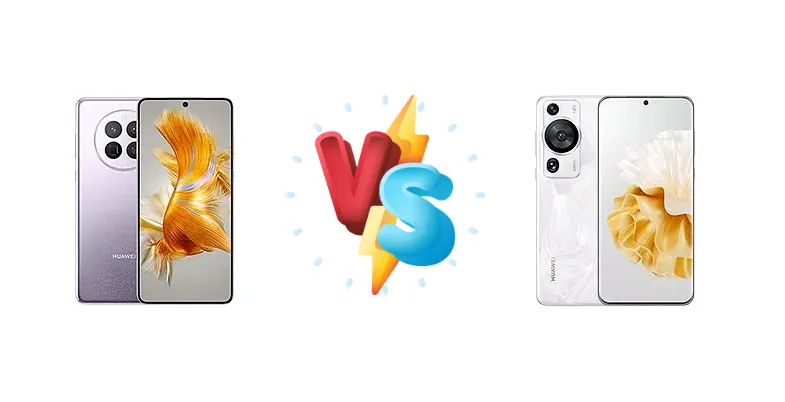
|
🏆 Quick Verdict
The Huawei P60 Pro is the clear winner, boasting a superior chipset, camera system, and faster charging. However, the Mate 50E provides excellent value for those seeking a capable smartphone without breaking the bank. It's a trade-off between premium features and affordability.
| PHONES | ||
|---|---|---|
| Phone Names | Huawei Mate 50E | Huawei P60 Pro |
| Network | ||
|---|---|---|
| 2G bands | GSM 850 / 900 / 1800 / 1900 | GSM 850 / 900 / 1800 / 1900 |
| 3G bands | HSDPA 800 / 850 / 900 / 1700(AWS) / 1900 / 2100 | HSDPA 800 / 850 / 900 / 1700(AWS) / 1900 / 2100 |
| 4G bands | 1, 2, 3, 4, 5, 7, 8, 12, 17, 18, 19, 20, 26, 28, 34, 38, 39, 40, 41 | 1, 2, 3, 4, 5, 7, 8, 12, 13, 17, 18, 19, 20, 26, 28, 32, 34, 38, 39, 40, 41, 66 - International |
| Speed | HSPA, LTE | HSPA, LTE |
| Technology | GSM / CDMA / HSPA / CDMA2000 / LTE | GSM / CDMA / HSPA / CDMA2000 / LTE |
| - | 1, 2, 3, 4, 5, 7, 8, 12, 17, 18, 19, 20, 26, 28, 34, 38, 39, 40, 41 - China | |
| Launch | ||
|---|---|---|
| Announced | 2022, September 06 | 2023, March 23 |
| Status | Available. Released 2022, October 23 | Available. Released 2023, March 31 |
| Body | ||
|---|---|---|
| Dimensions | 161.5 x 76.1 x 8 mm (6.36 x 3.00 x 0.31 in) | 161 x 74.5 x 8.3 mm (6.34 x 2.93 x 0.33 in) |
| SIM | · Nano-SIM· Nano-SIM + Nano-SIM | · Nano-SIM· Nano-SIM + Nano-SIM |
| Weight | 201 g (7.09 oz) | 200 g (7.05 oz) |
| - | IP68 dust/water resistant (up to 1.5m for 30 min) | |
| Display | ||
|---|---|---|
| Protection | - | Kunlun Glass |
| Resolution | 1224 x 2700 pixels (~442 ppi density) | 1220 x 2700 pixels (~444 ppi density) |
| Size | 6.7 inches, 108.9 cm2 (~88.6% screen-to-body ratio) | 6.67 inches, 107.7 cm2 (~89.8% screen-to-body ratio) |
| Type | OLED, 1B colors, 90Hz | LTPO OLED, 1B colors, 120Hz |
| Platform | ||
|---|---|---|
| CPU | Octa-core (1x2.4 GHz Cortex-A78 & 3x2.2 GHz Cortex-A78 & 4x1.9 GHz Cortex-A55) | Octa-core (1x3.19 GHz Cortex-X2 & 3x2.75 GHz Cortex-A710 & 4x2.0 GHz Cortex-A510) |
| Chipset | Qualcomm SM7325 Snapdragon 778G 5G (6 nm) | Qualcomm SM8475 Snapdragon 8+ Gen 1 4G (4 nm) |
| GPU | Adreno 642L | Adreno 730 |
| OS | HarmonyOS 3.0 | HarmonyOS 3.1 (China), EMUI 13.1 (Europe), no Google Play Services |
| Memory | ||
|---|---|---|
| Card slot | Nano Memory (uses shared SIM slot) | Nano Memory (uses shared SIM slot) |
| Internal | 128GB 8GB RAM, 256GB 8GB RAM | 256GB 8GB RAM, 256GB 12GB RAM, 512GB 12GB RAM |
| - | UFS | |
| Main Camera | ||
|---|---|---|
| Dual | 50 MP, f/1.4-f/4.0, 24mm (wide), PDAF, OIS 13 MP, f/2.2, 13mm, 120˚ (ultrawide), PDAF | - |
| Features | Laser AF, color spectrum sensor, LED flash, panorama, HDR | Laser AF, color spectrum sensor, LED flash, HDR, panorama |
| Triple | - | 48 MP, f/1.4-f/4.0, 25mm (wide), PDAF, OIS 48 MP, f/2.1, 90mm (telephoto), PDAF, sensor-shift OIS, 3.5x optical zoom 13 MP, f/2.2, 13mm (ultrawide), AF |
| Video | 4K@30/60fps, 1080p@30/60/120fps, gyro-EIS | 4K@30/60fps, 1080p@30/60fps, 1080p@960fps; gyro-EIS, HDR Vivid |
| Selfie camera | ||
|---|---|---|
| Features | HDR, panorama | Panorama, HDR |
| Single | 13 MP, f/2.4, 18mm (ultrawide) | 13 MP, f/2.4, (ultrawide) |
| Video | 4K@30/60fps, 1080p@30/60fps | 4K@30/60fps, 1080p@30fps, HDR Vivid |
| Sound | ||
|---|---|---|
| 3.5mm jack | No | No |
| 35mm jack | No | No |
| Loudspeaker | Yes, with stereo speakers | Yes, with stereo speakers |
| Comms | ||
|---|---|---|
| Bluetooth | 5.2, A2DP, LE | 5.2, A2DP, LE |
| Infrared port | Yes | Yes |
| NFC | Yes | Yes |
| Positioning | GPS (L1+L5), GLONASS (L1), BDS (B1I+B1c+B2a), GALILEO (E1+E5a), QZSS (L1+L5), NavIC (L5) | GPS (L1+L5), GLONASS (B1I+B1c+B2a), BDS (B1I+B1c+B2a), GALILEO (E1+E5a), QZSS (L1+L5), NavIC |
| Radio | No | No |
| USB | USB Type-C 3.1, OTG | USB Type-C 3.1, OTG |
| WLAN | Wi-Fi 802.11 a/b/g/n/ac/6, dual-band, Wi-Fi Direct | Wi-Fi 802.11 a/b/g/n/ac/6, dual-band, Wi-Fi Direct |
| Features | ||
|---|---|---|
| Sensors | Fingerprint (under display, optical), accelerometer, gyro, proximity, barometer, compass | Fingerprint (under display, optical), accelerometer, gyro, proximity, compass |
| - | BDS Satellite Message | |
| Battery | ||
|---|---|---|
| Charging | 66W wired 5W reverse wired | 88W wired 50W wireless Reverse wireless |
| Type | Li-Po 4460 mAh | Li-Po 4815 mAh |
| Misc | ||
|---|---|---|
| Colors | Black, Silver, Purple | Black, Green, Violet, Rococo Pearl |
| Models | CET-AL60 | MNA-AL00, MNA-LX9 |
| Price | About 580 EUR | € 738.50 |
| Tests | ||
|---|---|---|
| Battery life | - | Endurance rating 96h |
| Camera | - | Photo / Video |
| Display | - | Contrast ratio: Infinite (nominal) |
| Loudspeaker | - | -27.3 LUFS (Good) |
| Performance | - | AnTuTu: 1030473 (v9) GeekBench: 4422 (v6) GFXBench: 65fps (ES 3.1 onscreen) |
Huawei Mate 50E
- Excellent Value
- Smooth Performance for Everyday Tasks
- Decent Camera
- 66W Fast Charging
- Less Powerful Chipset
- Lower Display Quality
- Less Advanced Camera Features
- Slower Charging than P60 Pro
Huawei P60 Pro
- Flagship Performance
- Stunning Display
- Exceptional Camera System
- Fast Charging (Wired & Wireless)
- Premium Build Quality
- Higher Price
- 4G Connectivity Only
- Potentially Larger Size/Weight
Display Comparison
The P60 Pro's display shines with a measured 1135 nits peak brightness and an infinite contrast ratio, offering vibrant colors and deep blacks. The Mate 50E likely has a good display, but it won't match the P60 Pro's premium quality. Expect better outdoor visibility and overall visual impact on the P60 Pro.
Camera Comparison
The P60 Pro's camera system is a major highlight, likely featuring advanced sensors and image processing capabilities. While the Mate 50E has a capable camera, the P60 Pro will deliver superior image quality, especially in low light, and offer more advanced features like telephoto zoom.
Performance
The Snapdragon 8+ Gen 1 in the P60 Pro provides significantly faster performance than the Snapdragon 778G in the Mate 50E. Expect smoother multitasking, faster app loading times, and better gaming performance on the P60 Pro. The Mate 50E is still capable, but it won't handle demanding tasks as effortlessly.
Battery Life
Both phones boast impressive endurance ratings of 96 hours. However, the P60 Pro's 88W wired charging and 50W wireless charging offer significantly faster charging speeds compared to the Mate 50E's 66W wired charging and 5W reverse wired.
Buying Guide
The Huawei Mate 50E is ideal for budget-conscious users who prioritize a smooth everyday experience and decent camera capabilities. The Huawei P60 Pro is for photography enthusiasts and power users who demand top-tier performance, a stunning display, and advanced features.