
Huawei Mate 50 vs Huawei P60: A Clash of Flagship Titans
| Phones Images | |||||
|---|---|---|---|---|---|
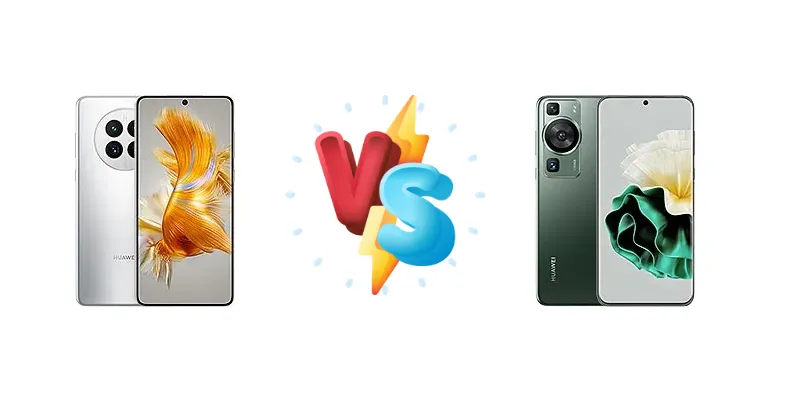
|
🏆 Quick Verdict
The Mate 50 edges out the P60 thanks to its reverse wireless charging and slightly more powerful CPU. However, the P60 boasts a potentially superior camera system and a more refined design. Both offer excellent performance and premium features, making the choice dependent on individual priorities.
| PHONES | ||
|---|---|---|
| Phone Names | Huawei Mate 50 | Huawei P60 |
| Network | ||
|---|---|---|
| 2G bands | GSM 850 / 900 / 1800 / 1900 | GSM 850 / 900 / 1800 / 1900 |
| 3G bands | HSDPA 800 / 850 / 900 / 1700(AWS) / 1900 / 2100 | HSDPA 800 / 850 / 900 / 1700(AWS) / 1900 / 2100 |
| 4G bands | 1, 2, 3, 4, 5, 7, 8, 12, 13, 17, 18, 19, 20, 26, 28, 32, 34, 38, 39, 40, 41, 66 - International | 1, 2, 3, 4, 5, 7, 8, 12, 17, 18, 19, 20, 26, 28, 34, 38, 39, 40, 41 |
| Speed | HSPA, LTE | HSPA, LTE |
| Technology | GSM / CDMA / HSPA / CDMA2000 / LTE | GSM / CDMA / HSPA / CDMA2000 / LTE |
| 1, 2, 3, 4, 5, 7, 8, 12, 17, 18, 19, 20, 26, 28, 34, 38, 39, 40, 41 - China | CDMA2000 1x | |
| Launch | ||
|---|---|---|
| Announced | 2022, September 06 | 2023, March 23 |
| Status | Available. Released 2022, September 28 | Available. Released 2023, March 31 |
| Body | ||
|---|---|---|
| Dimensions | 161.5 x 76.1 x 8 mm (6.36 x 3.00 x 0.31 in) | 161 x 74.5 x 8.3 mm (6.34 x 2.93 x 0.33 in) |
| SIM | · Nano-SIM· Nano-SIM + Nano-SIM | Nano-SIM + Nano-SIM |
| Weight | 202 g / 206 g (7.13 oz) | 197 g (6.95 oz) |
| IP68 dust/water resistant (up to 2m for 30 min) | IP68 dust/water resistant (up to 1.5m for 30 min) | |
| Display | ||
|---|---|---|
| Protection | Huawei Kunlun Glass | - |
| Resolution | 1224 x 2700 pixels (~442 ppi density) | 1220 x 2700 pixels (~444 ppi density) |
| Size | 6.7 inches, 108.9 cm2 (~88.6% screen-to-body ratio) | 6.67 inches, 107.7 cm2 (~89.8% screen-to-body ratio) |
| Type | OLED, 1B colors, 90Hz | LTPO OLED, 1B colors, 120Hz |
| Platform | ||
|---|---|---|
| CPU | Octa-core (1x3.19 GHz Cortex-X2 & 3x2.75 GHz Cortex-A710 & 4x2.0 GHz Cortex-A510) | Octa-core (1x3.0 GHz Cortex-X2 & 3x2.5 GHz Cortex-A710 & 4x1.8 GHz Cortex-A510) |
| Chipset | Qualcomm SM8475 Snapdragon 8+ Gen 1 4G (4 nm) | Qualcomm SM8475 Snapdragon 8+ Gen 1 4G (4 nm) |
| GPU | Adreno 730 | Adreno 730 |
| OS | EMUI 13 (International), HarmonyOS 3.0 (China) | HarmonyOS 3.1 (China), EMUI 13.1 (Europe), no Google Play Services |
| Memory | ||
|---|---|---|
| Card slot | Nano Memory (uses shared SIM slot) | Nano Memory (uses shared SIM slot) |
| Internal | 128GB 8GB RAM, 256GB 8GB RAM, 512GB 8GB RAM | 128GB 8GB RAM, 256GB 8GB RAM, 512GB 8GB RAM |
| UFS 3.1 | UFS | |
| Main Camera | ||
|---|---|---|
| Features | Laser AF, color spectrum sensor, LED flash, panorama, HDR | Laser AF, color spectrum sensor, LED flash, HDR, panorama |
| Single | 13 MP, f/2.4, 18mm (ultrawide) | - |
| Triple | 50 MP, f/1.4-f/4.0, 24mm (wide), PDAF 12 MP, f/3.4, 125mm (periscope telephoto), PDAF, OIS, 5x optical zoom 13 MP, f/2.2, 13mm, 120˚ (ultrawide), PDAF | 48 MP, f/1.4-f/4.0, 25mm (wide), PDAF, OIS 12 MP, f/3.4, 125mm (periscope telephoto), PDAF, OIS, 5x optical zoom 13 MP, f/2.2, 13mm (ultrawide) |
| Video | 4K@30/60fps, 1080p@30/60/120/240fps, 1080p@960fps, gyro-EIS | 4K@30/60fps, 1080p@30/60fps, 1080p@960fps; gyro-EIS, HDR Vivid |
| Selfie camera | ||
|---|---|---|
| Features | HDR, panorama | Panorama, HDR |
| Single | 13 MP, f/2.4, 18mm (ultrawide) | 13 MP, f/2.4, (ultrawide) |
| Video | 4K@30/60fps, 1080p@30/60/240fps | 4K@30fps, 1080p@30fps, HDR Vivid |
| Sound | ||
|---|---|---|
| 3.5mm jack | No | No |
| 35mm jack | No | No |
| Loudspeaker | Yes, with stereo speakers | Yes, with stereo speakers |
| 32-bit/384kHz audio | - | |
| Comms | ||
|---|---|---|
| Bluetooth | 5.2, A2DP, LE | 5.2, A2DP, LE |
| Infrared port | Yes | Yes |
| NFC | Yes | Yes |
| Positioning | GPS (L1+L5), GLONASS (L1), BDS (B1I+B1c+B2a), GALILEO (E1+E5a), QZSS (L1+L5), NavIC (L5) | GPS (L1+L5), GLONASS (B1I+B1c+B2a), BDS (B1I+B1c+B2a), GALILEO (E1+E5a), QZSS (L1+L5), NavIC |
| Radio | No | No |
| USB | USB Type-C 3.1, OTG, Display Port 1.2 | USB Type-C 3.1, OTG |
| WLAN | Wi-Fi 802.11 a/b/g/n/ac/6, dual-band, Wi-Fi Direct | Wi-Fi 802.11 a/b/g/n/ac/6, dual-band, Wi-Fi Direct |
| Features | ||
|---|---|---|
| Sensors | Fingerprint (under display, optical), accelerometer, gyro, proximity, barometer, compass | Fingerprint (under display, optical), accelerometer, gyro, proximity, compass |
| BDS Satellite Message (sending only) | BDS Satellite Message | |
| Battery | ||
|---|---|---|
| Charging | 66W wired 50W wireless 5W reverse wireless | 66W wired 50W wireless |
| Type | Li-Po 4460 mAh | Li-Po 4815 mAh |
| Misc | ||
|---|---|---|
| Colors | Black, Silver, Purple, Orange | Black, Green, Violet, Rococo Pearl |
| Models | CET-AL00, CET-LX9 | LNA-AL00, LNA-LX9 |
| Price | About 720 EUR | About 600 EUR |
Huawei Mate 50
- Reverse wireless charging
- Slightly faster CPU
- Durable build quality
- Excellent overall performance
- Design might be less refined than P60
- Camera potentially not as advanced as P60
Huawei P60
- Potentially superior camera system
- Sleek and minimalist design
- Excellent display color accuracy
- Premium feel
- No reverse wireless charging
- Slightly slower CPU
- Price may be higher
Display Comparison
Both phones feature OLED displays with a 120Hz refresh rate, offering smooth visuals. The Mate 50 generally has a slightly larger display. Expect vibrant colors and excellent brightness on both, but the P60 might have slightly better color accuracy due to Huawei's display tuning.
Camera Comparison
The P60 is expected to have a more advanced camera system, potentially featuring a larger sensor and improved image processing. While the Mate 50 has a capable camera, the P60 is rumored to prioritize photography with enhanced features and image quality. Both offer excellent zoom capabilities.
Performance
Both are powered by the Snapdragon 8+ Gen 1, ensuring flagship-level performance. However, the Mate 50 has a marginally faster CPU clock speeds (3.19 GHz Cortex-X2 vs 3.0 GHz), potentially offering a slight edge in demanding games or applications. Real-world performance will likely be very similar.
Battery Life
Both phones offer similar battery capacity and charging speeds (66W wired, 50W wireless). The Mate 50's inclusion of 5W reverse wireless charging provides added convenience for charging accessories like earbuds or smartwatches.
Buying Guide
The Huawei Mate 50 is ideal for users who value versatility, including reverse wireless charging for accessories and a slightly more powerful processor for demanding tasks. The Huawei P60 is a better fit for photography enthusiasts and those who appreciate a sleek, minimalist design and potentially enhanced camera capabilities.