
Huawei Mate 50 vs Mate 40: A Clash of Flagship Titans
| Phones Images | |||||
|---|---|---|---|---|---|
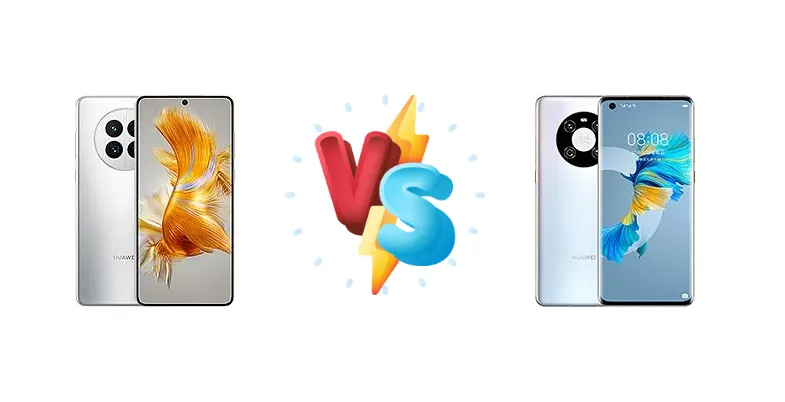
|
🏆 Quick Verdict
The Mate 50 edges out the Mate 40 thanks to its significantly faster Snapdragon 8+ Gen 1 chipset, improved charging speeds, and refined camera system. While the Mate 40 remains a capable device, the Mate 50 offers a noticeable performance boost and a more modern experience.
| PHONES | ||
|---|---|---|
| Phone Names | Huawei Mate 50 | Huawei Mate 40 |
| Network | ||
|---|---|---|
| 2G bands | GSM 850 / 900 / 1800 / 1900 | GSM 850 / 900 / 1800 / 1900 |
| 3G bands | HSDPA 800 / 850 / 900 / 1700(AWS) / 1900 / 2100 | HSDPA 800 / 850 / 900 / 1700(AWS) / 1900 / 2100 |
| 4G bands | 1, 2, 3, 4, 5, 7, 8, 12, 13, 17, 18, 19, 20, 26, 28, 32, 34, 38, 39, 40, 41, 66 - International | 1, 2, 3, 4, 5, 6, 7, 8, 9, 12, 17, 18, 19, 20, 26, 34, 38, 39, 40, 41 |
| 5G bands | - | 1, 3, 28, 38, 40, 41, 77, 78, 79, 80, 84 SA/NSA/Sub6 |
| Speed | HSPA, LTE | HSPA, LTE, 5G |
| Technology | GSM / CDMA / HSPA / CDMA2000 / LTE | GSM / HSPA / LTE / 5G |
| 1, 2, 3, 4, 5, 7, 8, 12, 17, 18, 19, 20, 26, 28, 34, 38, 39, 40, 41 - China | - | |
| Launch | ||
|---|---|---|
| Announced | 2022, September 06 | 2020, October 22 |
| Status | Available. Released 2022, September 28 | Available. Released 2020, December 21 |
| Body | ||
|---|---|---|
| Build | - | Glass front, glass back or eco leather back, aluminum frame |
| Dimensions | 161.5 x 76.1 x 8 mm (6.36 x 3.00 x 0.31 in) | 158.6 x 72.5 x 8.8 mm (Glass) / 9.2mm (Leather) |
| SIM | · Nano-SIM· Nano-SIM + Nano-SIM | · Nano-SIM· Nano-SIM + Nano-SIM |
| Weight | 202 g / 206 g (7.13 oz) | 188 g (Glass) / 184 g (Leather) (6.49 oz) |
| IP68 dust/water resistant (up to 2m for 30 min) | IP53, dust and splash resistant | |
| Display | ||
|---|---|---|
| Protection | Huawei Kunlun Glass | Asahi Dragontrail Glass |
| Resolution | 1224 x 2700 pixels (~442 ppi density) | 1080 x 2376 pixels (~402 ppi density) |
| Size | 6.7 inches, 108.9 cm2 (~88.6% screen-to-body ratio) | 6.5 inches, 102.7 cm2 (~89.3% screen-to-body ratio) |
| Type | OLED, 1B colors, 90Hz | OLED, HDR10, 90Hz |
| Platform | ||
|---|---|---|
| CPU | Octa-core (1x3.19 GHz Cortex-X2 & 3x2.75 GHz Cortex-A710 & 4x2.0 GHz Cortex-A510) | Octa-core (1x3.13 GHz Cortex-A77 & 3x2.54 GHz Cortex-A77 & 4x2.05 GHz Cortex-A55) |
| Chipset | Qualcomm SM8475 Snapdragon 8+ Gen 1 4G (4 nm) | Kirin 9000E 5G (5 nm) |
| GPU | Adreno 730 | Mali-G78 MP22 |
| OS | EMUI 13 (International), HarmonyOS 3.0 (China) | Android 10, EMUI 11, no Google Play Services |
| Memory | ||
|---|---|---|
| Card slot | Nano Memory (uses shared SIM slot) | Nano Memory (uses shared SIM slot) |
| Internal | 128GB 8GB RAM, 256GB 8GB RAM, 512GB 8GB RAM | 128GB 8GB RAM, 256GB 8GB RAM |
| UFS 3.1 | UFS 3.1 | |
| Main Camera | ||
|---|---|---|
| Features | Laser AF, color spectrum sensor, LED flash, panorama, HDR | Laser AF, color spectrum sensor, Leica optics, LED flash, panorama, HDR |
| Single | 13 MP, f/2.4, 18mm (ultrawide) | 13 MP, f/2.0, 1/3.1", 1.12µm, AF |
| Triple | 50 MP, f/1.4-f/4.0, 24mm (wide), PDAF 12 MP, f/3.4, 125mm (periscope telephoto), PDAF, OIS, 5x optical zoom 13 MP, f/2.2, 13mm, 120˚ (ultrawide), PDAF | 50 MP, f/1.9, 23mm (wide), 1/1.28", 1.22µm, multi-directional PDAF 8 MP, f/2.4, 85mm (telephoto), PDAF, OIS, 3x optical zoom 16 MP, f/2.2, 17mm (ultrawide) |
| Video | 4K@30/60fps, 1080p@30/60/120/240fps, 1080p@960fps, gyro-EIS | 4K@30/60fps, 1080p@30/60/120/240fps, 1080p@960fps, gyro-EIS |
| Selfie camera | ||
|---|---|---|
| Features | HDR, panorama | HDR, panorama |
| Single | 13 MP, f/2.4, 18mm (ultrawide) | 13 MP, f/2.4, 18mm (ultrawide) |
| Video | 4K@30/60fps, 1080p@30/60/240fps | 4K@30/60fps, 1080p@30/60/240fps |
| Sound | ||
|---|---|---|
| 3.5mm jack | No | Yes |
| 35mm jack | No | Yes |
| Loudspeaker | Yes, with stereo speakers | Yes |
| 32-bit/384kHz audio | 32-bit/384kHz audio | |
| Comms | ||
|---|---|---|
| Bluetooth | 5.2, A2DP, LE | 5.2, A2DP, LE |
| Infrared port | Yes | Yes |
| NFC | Yes | Yes |
| Positioning | GPS (L1+L5), GLONASS (L1), BDS (B1I+B1c+B2a), GALILEO (E1+E5a), QZSS (L1+L5), NavIC (L5) | GPS (L1+L5), GLONASS (L1), BDS (B1I+B1c+B2a+B2b), GALILEO (E1+E5a+E5b), QZSS (L1+L5), NavIC |
| Radio | No | No |
| USB | USB Type-C 3.1, OTG, Display Port 1.2 | USB Type-C 3.1, OTG |
| WLAN | Wi-Fi 802.11 a/b/g/n/ac/6, dual-band, Wi-Fi Direct | Wi-Fi 802.11 a/b/g/n/ac/6, dual-band, Wi-Fi Direct |
| Features | ||
|---|---|---|
| Sensors | Fingerprint (under display, optical), accelerometer, gyro, proximity, barometer, compass | Fingerprint (under display, optical), accelerometer, gyro, proximity, compass |
| BDS Satellite Message (sending only) | - | |
| Battery | ||
|---|---|---|
| Charging | 66W wired 50W wireless 5W reverse wireless | 40W wired 40W wireless 5W reverse wired |
| Type | Li-Po 4460 mAh | Li-Po 4200 mAh |
| Misc | ||
|---|---|---|
| Colors | Black, Silver, Purple, Orange | Silver, White, Black, Green, Yellow |
| Models | CET-AL00, CET-LX9 | OCE-AN10 |
| Price | About 720 EUR | About 630 EUR |
| SAR EU | - | 0.49 W/kg (head) 0.76 W/kg (body) |
Huawei Mate 50
- Significantly faster performance (Snapdragon 8+ Gen 1)
- Faster wired and wireless charging
- Improved camera system
- Refined design
- Potentially higher price
- 4G connectivity only
Huawei Mate 40
- Excellent camera system
- Premium build quality
- Potentially lower price (depending on retailer)
- Good battery life
- Slower charging speeds
- Less powerful chipset
- No 5G connectivity
Display Comparison
Both phones feature excellent OLED displays with vibrant colors and deep blacks. The Mate 50 generally has slightly better brightness and potentially a more refined color calibration, though both offer a premium viewing experience. The Mate 50 may also have a slightly higher refresh rate, contributing to smoother scrolling.
Camera Comparison
Both phones boast impressive camera systems. The Mate 50 features an enhanced main sensor and improved image processing algorithms, resulting in better low-light performance and more detailed photos. The Mate 40's camera is still excellent, but the Mate 50 takes the lead in overall image quality and versatility.
Performance
The Mate 50's Snapdragon 8+ Gen 1 is a clear winner here. It offers significantly improved CPU and GPU performance compared to the Kirin 9000E in the Mate 40. Expect faster app loading times, smoother multitasking, and better gaming performance on the Mate 50.
Battery Life
The Mate 50's 66W wired charging is a substantial upgrade over the Mate 40's 40W. Wireless charging is also faster on the Mate 50 (50W vs 40W). Battery life itself is likely comparable between the two, as both have similar capacity batteries, but the Mate 50's faster charging provides a significant convenience advantage.
Buying Guide
The Huawei Mate 50 is ideal for users prioritizing performance, fast charging, and the latest camera technology. It's a great choice for power users and photography enthusiasts. The Huawei Mate 40 is a solid option for those seeking a premium experience at a potentially lower price point, especially if 5G isn't a necessity.